

How AI-Driven Software Automation Reduced Deployment Failures by 40%?
Deployment failures cost millions and exhaust teams. Learn how software deployment automation helps prevent release issues and ensures smoother launches.
Join the DZone community and get the full member experience.
Join For FreeDeployment failures remain one of the most expensive and disruptive challenges in modern software development. Even with advancements in DevOps for traditional software workflows and AI/ML Ops for AI-integrated ones, the majority of organizations still struggle with production incidents and downtime.
The result? Millions are being lost in revenue, teams are fatigued, and everybody dreads the production-deployment day.
AI-powered software deployment automation is fundamentally changing this. By predicting risks, identifying vulnerabilities, and fixing potential errors well before the code reaches production, software release automation enables deployment to transition from reactive firefighting to proactive prevention.
This blog will look deeper into typical deployment failures and see how AI enhances success rates by over 40%.
Common Software Deployment Failures (And What All Can Go Wrong)
| Deployment mistakes | The failure | What can go wrong? |
|---|---|---|
|
Lack of Proper Version Control Systems |
Dev teams deploy code without tracking which version is in production or what changes were made between releases. |
|
|
Unclear Roll-Back Plans |
No predetermined strategy exists for reverting to the previous stable version. |
|
|
Insufficient Testing Before Release |
Code moves to production without adequate QA, integration, or performance testing. |
|
|
Dependency Management Failures |
External libraries, packages, or services aren't properly versioned or validated before deployment. |
|
|
Mismanaging Database Migrations |
Database schema changes aren't properly planned, tested, or synchronized with code deployments. |
|
|
Not Monitoring Deployment |
Teams deploy and assume success without watching system metrics, logs, or user impact. |
|
|
Overlooking Security Vulnerabilities |
Security testing isn't part of the deployment pipeline; vulnerabilities slip into production. |
|
|
Inadequate Documentation of the Deployment Process |
Deployment steps are either undocumented or outdated, relying on tribal knowledge. |
|
|
Deploying Without Backup |
No backup of data or previous system state before making changes. |
|
|
Underestimating Infrastructure Needs |
Deploying without verifying adequate CPU, memory, storage, or network capacity. |
|
How AI Improves Software Deployment and Reduces Deployment Failures?
AI automation for software deployment introduces cognitive capabilities to the release process, fundamentally addressing each failure point. Unlike traditional rule-based automation, which works on an 'if X then Y' approach, software deployment automation systems learn from historical data, identify patterns, and make intelligent decisions in real time.
Let’s see in detail how AI-driven software automation deployment addresses each critical failure scenario:
1. Intelligent Version Control Management
AI has not replaced versioning systems. Instead, AI software automation complements them by providing predictive insights based on code commits, previous versions, and other relevant data. AI/ML models can also identify risky version combinations that have caused issues when deployed together in the past.
2. Automated Rollback Decision-Making
AI-powered software deployment automation has significantly improved rollback strategies by recommending measures based on real-time health metrics. Instead of relying on manual judgment during high-pressure incidents, AI looks for success indicators, such as error rates, response times, etc., and triggers rollback if thresholds are crossed.
3. AI-Powered Testing Optimization
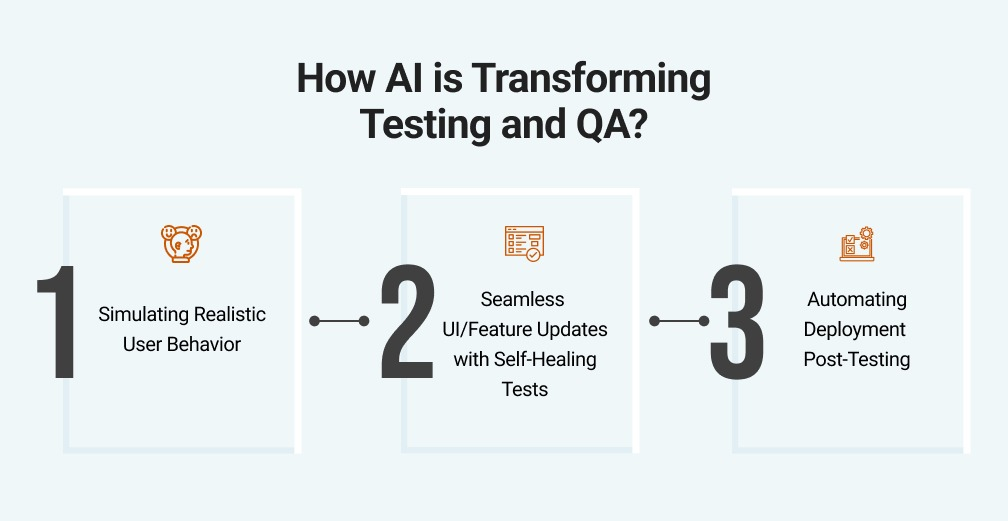
Software testing with AI has significantly improved deployment success rates via pre-release validation. Test automation tools automatically determine which tests are most critical for the specific modifications made. So rather than running entire test suites that consume hours, AI prioritizes only high-impact tests.
They can also simulate end-user behaviors to test the application in a realistic manner and then create corresponding self-healing test cases for the same.
Source: SunTec India
4. Proactive Dependency Management
AI software deployment systems can gain a quick yet comprehensive understanding of dependency repositories and vulnerability databases. This understanding enables them to predict potential compatibility issues before they arise.
For instance, if your team updates a library, the AI software deployment system forecasts the ripple effects across the entire application stack.
5. Smart Database Migration Handling
You can also secure data migration processes with software deployment automation. Utilize AI to scan migration scripts for potential issues, including missing rollback mechanisms and data type conflicts. AI-powered software automation systems can also validate data integrity post-migration by autonomously comparing record counts, checksums, and referential integrity to ensure nothing was corrupted during the transition.
6. Real-Time Deployment Monitoring and Observability
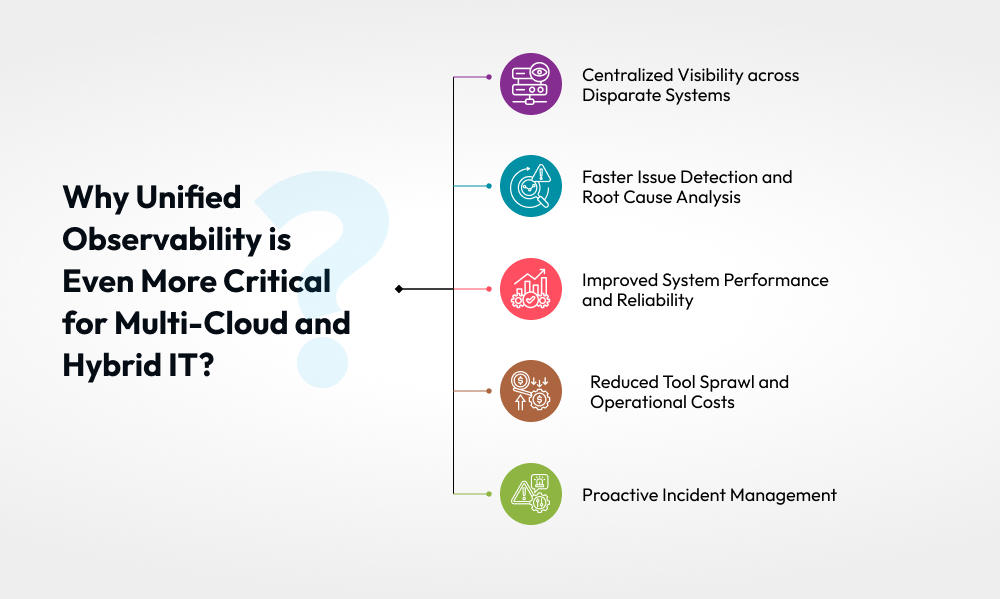
One of the most powerful AI software automation benefits is continuous, intelligent monitoring with a 360-degree view during and after deployment. AI-driven software automation deployment systems not only track and gather performance metrics but also establish thresholds/baselines for each application. These systems recognize that software behavior can vary over time, depending on factors such as the time of day, season, and user load.
In the event of an anomaly, the software deployment automation solution correlates it across multiple systems (hybrid/multi-cloud) to identify the actual cause, rather than just the symptom.
Source: TechnoScore
7. Automated Security Vulnerability Detection and Patch Management
AI-powered software deployment automation integrates vulnerability scanning and patch management directly into the deployment pipeline, ensuring seamless security throughout the process. In fact, AI-powered security tools can help overcome as many as 74% of data breaches caused by ‘manual’ management, making it one of the most used applications of AI in cybersecurity.
8. Self-Documenting Deployment Processes
With AI-powered software deployment automation, you can automatically generate and maintain deployment documentation. These tools incorporate natural language processing (NLP) and generative AI capabilities to understand existing logs and convert them into human-readable runbooks, ensuring that documentation remains synchronized with actual operations. This can reduce the documentation time by over 45-50%.
9. Intelligent Backup Verification
Application release automation software can also enhance backup and recovery protocols. They can identify which data and configurations are most critical for rapid recovery. Moreover, these tools not only create backups but also validate their integrity by making sure that the backups are actually reusable when needed.
10. Predictive Infrastructure Scaling
AI-driven software automation deployment eliminates infrastructure surprises by predicting resource requirements before deployment. Based on code changes, expected user load, and historical resource consumption, these tools forecast CPU, memory, storage, and network needs.
If needed, software deployment automation systems can also trigger auto-scaling, ensuring resources are available when the new version launches.
The Benefits of AI-Powered Software Deployment Automation
As AI-driven software deployment automation handles the technical complexities outlined above, organizations begin to witness several tangible benefits within a few months. Most prominent benefits of AI deployment automation include:
- More cost savings: Software deployment automation prevents major outages, saving hundreds of thousands to millions ($300,000-$1 million) in downtime costs.
- Reduced incident response costs: A significant decrease in emergency situation hours and overtime expenses can be achieved.
- Lower insurance premiums: Organizations with mature AI software deployment automation see reduced cyber insurance costs due to demonstrated risk mitigation.
- Faster deployment cycles: With software deployment automation, teams can test twice as fast and deploy 3-5x times faster.
- Reduced alert fatigue: Operations teams have to handle 65% fewer false alarms, focusing on genuine issues.
- Higher uptime: 99.95%+ availability becomes achievable without proportional infrastructure investment if software deployment automation is implemented thoughtfully. This is why many organizations go for AI software development services to work with experts for maximum ROI.
- Increased compliance confidence: Automated audit trails and security scanning ensure regulatory requirements are consistently met.
- Assured business continuity: Automated rollbacks and intelligent backup verification, enabled by software deployment automation, strengthen the disaster recovery posture.
Software Deployment Automation: The Future of Self-Healing Software Delivery
AI-powered software deployment automation has proven effective in reducing the frequency of deployment failures. But this is actually only the beginning. As these systems become more context-aware and integrated with more deployment data and natural language models, we are moving toward fully autonomous, self-healing deployment pipelines.
These software deployment automation pipelines will not only prevent failures but also continuously optimize themselves for speed, cost, and reliability. They will forecast business impact before a single line of code is written, recommend architectural changes to improve deployability, and orchestrate complex multi-cloud deployments with zero human intervention.
The decision is yours: whether your organization will embrace deployment and release automation or be forced to catch up when competitive pressure makes it unavoidable.
What will your deployment process look like a year from now — and who will be making that decision: you, or your competition?
Frequently Asked Questions
What are the best practices for AI-based software deployment?
Follow these best practices for successful software deployment automation implementation:
- Collect comprehensive historical deployment data to train AI models effectively.
- Integrate AI tools with existing CI/CD pipelines rather than replacing your entire infrastructure.
- Establish clear governance frameworks that define when AI acts autonomously versus when it requires human approval.
- Measure baseline metrics before implementation to accurately track improvement and ROI.
- Maintain human oversight for critical decisions while allowing AI to handle routine analysis and automated responses.
Can AI improve deployment success rates?
Yes, significantly. Organizations implementing AI-powered software deployment automation typically see a 40-50% improvement in first-time deployment success rates.
Which tools or technologies are used in AI deployment automation?
For AI-powered software deployment automation, you can utilize the following:
- Machine learning (ML) frameworks: TensorFlow, PyTorch, scikit-learn for pattern recognition and failure prediction.
- Natural language processing: spaCy, NLTK, Hugging Face Transformers for analyzing code changes and generating documentation.
- Anomaly detection: Prometheus with AI plugins, Datadog AI, and New Relic AI for real-time monitoring.
- AI/MLOps: AWS AI, GitHub Copilot, etc.
- AI-enhanced testing and security: Mabl, Selenium, Appium, Checkmarx, etc.
How can enterprises measure the ROI of AI-driven software automation?
Track direct metrics like deployment frequency, lead time for changes, change failure rate, and mean time to recovery (MTTR). Others that can also provide a better picture include defect escape rate and average deployment time.
Opinions expressed by DZone contributors are their own.
Comments