

Data-Driven Generative AI: Benefits for Data and Analytics
Generative AI is poised to revolutionize the data and analytics landscape, amplifying productivity and streamlining delivery timelines.
Over the past ten to eleven months, there has been a noticeable increase in discussions about generative AI and its significant impact across various industries, including healthcare, manufacturing, education, cybersecurity, digital media, banking, retail, and software development. This article focuses on how generative AI can benefit the data and analytics engineering workspace. We will explore how it can enhance the productivity of human resources and anticipate changes or improvements in the tools and frameworks used across data and analytics.
What Is Data and Analytics?
As per Gartner, data and analytics refers to the ways organizations manage data to support all its uses and analyze data to improve decisions, business processes, and outcomes, such as discovering new business risks, challenges, and opportunities.
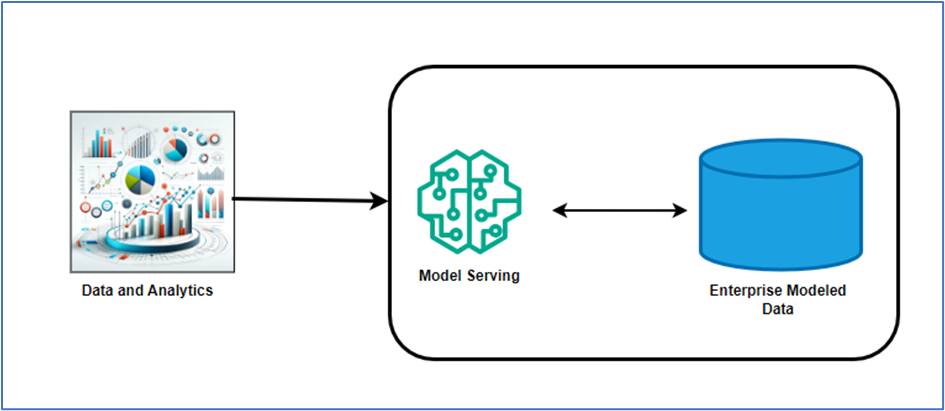 High-level Design for BI using the LLM model
The Advantages of Generative AI in Data and Analytics Area
Enhance User Access to Data: Build Chatbots
Data exists in various formats and platforms, including structured, unstructured, or semi-structured, such as SQL, Oracle DB, MySQL, HDFS, Object Storage, DB2, and NoSQL databases. Different companies employ their own set of tools and ecosystems. For end users, accessing data from these platforms may require them to become familiar with these toolsets, which may not be their primary focus. Is there an alternative where users can extract meaningful insights from an organization's data simply by using natural English prompts? Generative AI indeed provides this capability, allowing users (Business users, business liaisons, and data analysts) to input an English statement and receive relevant insights. This insight is in the form of tables, reports, or dashboards.
Benefits to IT Resources Such as Engineers, Developers, Testers, and Analysts: Productivity Enhancement
The developer community has received substantial assistance from generative AI tools such as OpenAI and bard.google.com. These tools aid in timesaving by providing solutions to problems offering pre-written code in desired languages that, with minor corrections, can be used in a production-ready state. The community benefits from help with environment setup, code writing, and troubleshooting. Testers can easily write test cases and generate synthetic data, which significantly saves time and costs, eliminating the need to wait for or pay for production data from archive locations. Data Architect teams can create data models using simple prompts passed into generative AI tools. These tools can generate UML models, leading to subsequent data models. BI Analysts can write prompts that facilitate the creation of reports and dashboards. A common benefit across these roles is the improvement in written communication, which leads to significant time savings.
Redefining Tools: Generative AI in Seamless Integrations With Tools
We anticipate enhancements in various toolsets through the integration of generative AI. Some tools have already embarked on this journey, while others are expected to follow in the near future. These tools will support prompts in English. For example, with Microsoft Copilot integrated into Power BI, users can input English prompts and receive corresponding outcomes. Copilot can also summarize data for easier understanding. Similarly, Soda GPT allows for English prompts to set data quality rules; you can input a prompt in English, and it will validate the data accordingly. Generative AI is also poised to assist engineers in generating ETL pipelines and performing data transformations. Furthermore, it will be beneficial in the area of Data Governance. With generative AI, it's possible to create a Data Catalog, establish data lineage, define rules, and execute them.
Conclusion
Generative AI is poised to revolutionize the Data and Analytics landscape, amplifying productivity and streamlining delivery timelines. Organizations can leverage their capabilities to enhance end-user experiences with organizational data and make informed decisions with greater agility. Generative AI will not replace Data and Analytics professionals but rather augment their efforts, empowering more organizations to harness the power of data-driven insights.
Opinions expressed by DZone contributors are their own.