

Data Processing for Real Estate: Enabling Smart Analysis and Decision-Making
Transform raw property data into strategic assets using advanced processing, real-time analytics, and automated governance.
Join the DZone community and get the full member experience.
Join For FreeDo you think real estate success still depends on gut feelings and market hunches? Those days are over. Data analysis has become the lifeline of modern real estate operations and has changed how property valuations, market trends, and investment decisions work.
Administrators in real estate firms now deal with diverse sets of information from various sources, including property records, market transactions, demographic changes, economic indicators, and customer interactions. These datasets remain unused without appropriate data processing techniques. Valuable insights remain concealed under heaps of unstructured data.
Market visibility stands as a compelling reason behind this move. Property developers, brokers, and investors who use advanced data analytics get complete views of market conditions, emerging opportunities, and potential risks before their competitors notice them. Data processing help real estate companies spot hidden patterns and connections that humans might miss.
Significance of Data Processing for Real Estate
Data processing services providers help real estate professionals turn raw property data into practical insights. These services help bridge the gap between large volumes of information and the strategic decisions that modern real estate operations just need.
Property data processing products cover everything from collection and organization to cleansing, analysis, and presentation of information. They work as detailed systems built for property market challenges, not just as separate tech tools.
Data processing providers act as enablers of change through several methods.
- They build reliable data systems that bring together scattered information from property records, transaction histories, tenant details, and maintenance logs to create unified knowledge bases.
- The combined data environment removes the information barriers that impact real estate operations.
- Processing solution providers bring in standard methods to handle property data. They use consistent classification systems, data validation protocols, and quality control measures to ensure reliable information.
These standards are the foundations for meaningful analysis. Companies usually adapt to these changes step by step instead of making sudden changes. Service providers know that changing company culture needs both tech solutions and good change management. They start with projects that show quick results but cause minimal disruption. This builds trust in evidence-based methods.
Real estate companies that use external data processing support get expert help without building internal teams. This partnership enables property firms to stick to their main business while making use of information analysis tools.
Steps Taken by Data Processing Experts to Enable Analysis and Decision-Making
Data processing in real estate follows a clear path that turns scattered information into valuable assets. Real estate enterprises can streamline their operations through professional data processing providers who use a well-laid-out approach.
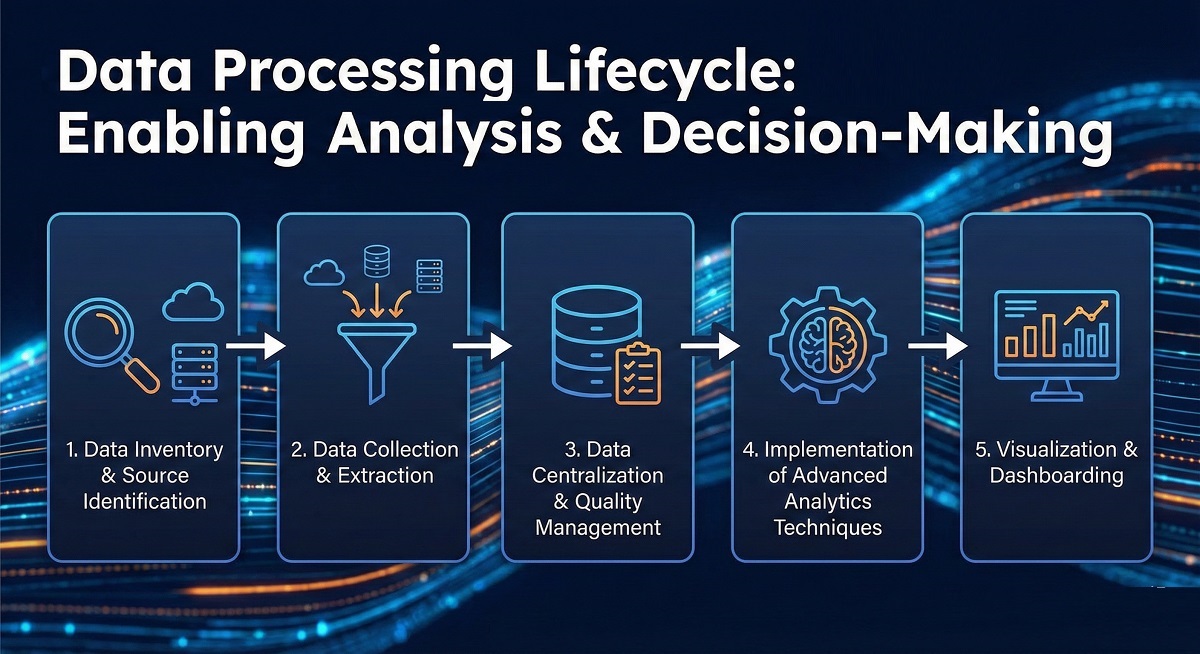
1. Data Inventory and Source Identification
Professional providers start with a full picture of existing information assets throughout the organization. They catalog all data sources from property management systems and transaction databases to CRM platforms and external market feeds. The experts identify information gaps and redundancies. Data maps outline how different sources connect within the real estate operational ecosystem.
2. Data Collection and Extraction
Specialized tools extract relevant information from various formats after source identification. Automated data processing techniques handle structured databases and unstructured sources like property descriptions, lease agreements, and maintenance records. Raw data preparation happens through standardized formats that preserve data integrity.
3. Data Centralization and Quality Management
Providers build central data repositories where scattered information exists together in unified structures. Through robust quality control mechanisms, experts discover imprecisions and duplications in datasets during this consolidation stage. The cleansing algorithms help data processing experts resolve errors and standardize naming conventions, street addresses, and property classifications. This creates a single source of truth for all real estate data assets.
4. Implementation of Advanced Analytics Techniques
Structured datasets transform into valuable insights through analytical solutions. Data processing experts implement advanced analytics algorithms in the real estate digital infrastructure to offer insights into property valuations, maintenance expenses, and market trends. This enables stakeholders to acquire smart forecasting capabilities without developing internal expertise.
5. Visualization and Dashboarding
Tailored dashboards showcase key performance indicators, market movement alerts, and predictive forecasts through smart visual components. Real estate professionals can assess the patterns behind recommendations and visualizations through drill-down capabilities. Stakeholders acquire instant access to complex analyses in visual formats.
Key Strengths Uncovered by Automated Data Processing for Real Estate Leaders
Leveraging smart data processing techniques enable real estate leaders to accelerate digital transformation initiatives and experience various technical strengths. These benefits enable realtors to modernize diverse operational areas and improve market positioning.
1. Continuous Market Monitoring and Forecasting
Real estate professionals receive constant property market intelligence by outsourcing data processing. Smart data processing systems enable realtors to monitor pricing variations, inventory changes, and demographic patterns in real time. Stakeholders can discover emerging geographical trends and investment opportunities before their market competitors. Through predictive modeling, realtors can forecast future market movements depending on historical patterns and current indicators.
2. Service Modernization and Cost Reduction
By implementing smart data processing solutions, relators can streamline operations that once required human intervention. The data processing automation improves property valuations, maintenance scheduling, and tenant communications. This modernization minimizes operational expenses while improving service delivery speed and precision.
3. Improving Client and Tenant Experiences
Data processing experts create individual-specific interactions based on detailed client profiles. Real estate administrators forecast tenant requirements through behavioral analysis and preference tracking. This strategic approach strengthens stronger relationships with customers and improves retention rates through tailored interaction and service offerings.
4. Strengthening Risk Management and Compliance
Smart data processing systems help realtors discover potential compliance issues before they transform into legal concerns. Property regulations, tax obligations, and insurance requirements are monitored by data processing tools. Proactive detection and remediation help real estate firms eliminate legal and financial risks.
Leveraging Advanced Data Processing Trends for Real Estate
Smart real estate companies can utilize advanced data processing techniques to remain ahead of market competition. These enterprises can leverage sophisticated processing capabilities by collaborating with outsourcing service providers under feasible resource investments.
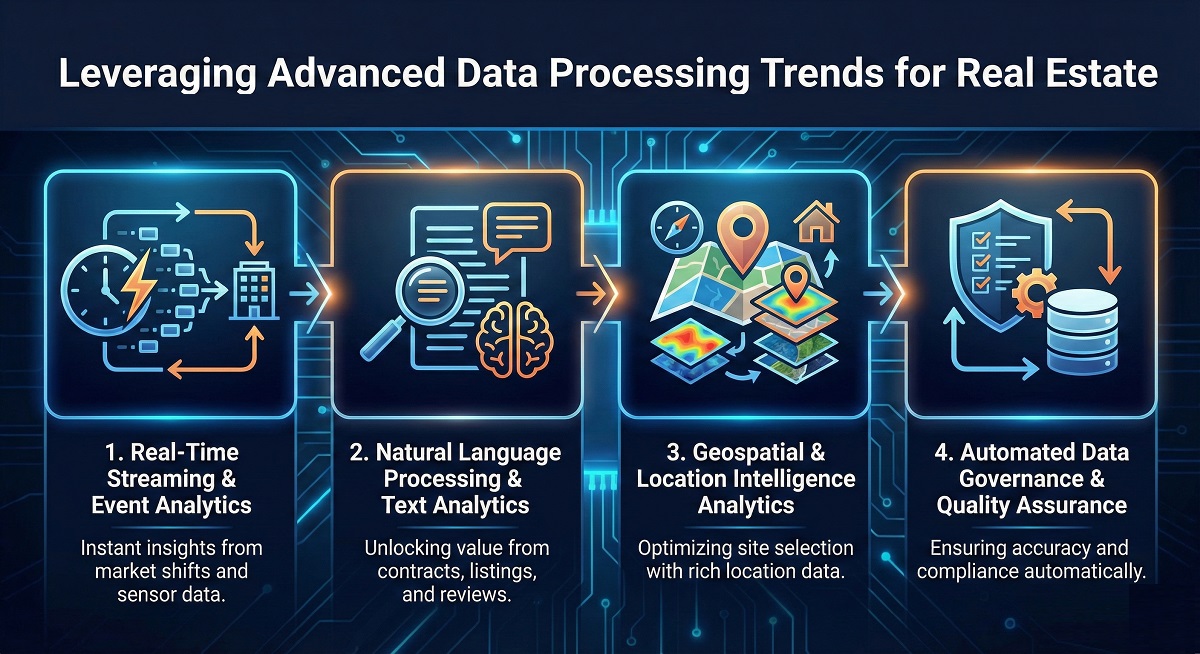
1. Real-Time Streaming and Event Analytics
Real estate companies that outsource data processing services get continuous data streams about property interactions. This visibility helps them respond quickly to market changes, tenant activities, and maintenance needs. Environmental data processing mechanisms alert property managers about potential issues before they get pricey.
2. Natural Language Processing and Text Analytics
Language processing technologies convert unstructured text from property listings, tenant messages, and market reports into useful data. These systems autonomously pull important details from documents and analyze client feedback sentiment. They also organize property features uniformly across portfolios.
3. Geospatial and Location Intelligence Analytics
Location analysis now goes beyond basic mapping. It includes complex modeling of neighborhood changes, traffic patterns, and development opportunities. Companies that outsource data processing can use expert knowledge to combine multiple geographical data layers. This helps them discover hidden factors that drive property values.
4. Automated Data Governance and Quality Assurance
Modern data processing systems can monitor themselves to check information accuracy and consistency. The processing systems highlight unusual patterns, observe data sources, and uphold compliance rules. The outcome is a regulated database that remains precise with minimal human intervention.
Final Words
Data processing has changed the real estate industry from gut-based decisions to informed operations. Real estate professionals now get detailed market visibility and spot hidden patterns to improve their operations. Those who use data analytics gain a major edge in today's complex property world.
Professional data processing providers help businesses turn scattered information into valuable assets. They build central data stores and set up quality checks that create a base for advanced analytics and easy-to-use visuals. Real estate enterprises that outsource data processing can access useful insights without building specialized teams.
Opinions expressed by DZone contributors are their own.
Comments