

Effective Strategies for AWS Cost Optimization
Proven tips and techniques for optimizing AWS costs, including monitoring usage, setting budgets, and leveraging cost-effective services
Join the DZone community and get the full member experience.
Join For FreeAmazon Web Services (AWS) provides a robust and flexible cloud platform that delivers significant cost optimization for its customers.
It's crucial to manage and optimize costs effectively to maximize the value of your investment. This article provides proven tips and techniques for optimizing AWS costs, including monitoring usage, setting budgets, and leveraging cost-effective services.
By implementing these strategies, you can ensure that your AWS infrastructure remains efficient, cost-effective, and aligned with your business objectives.
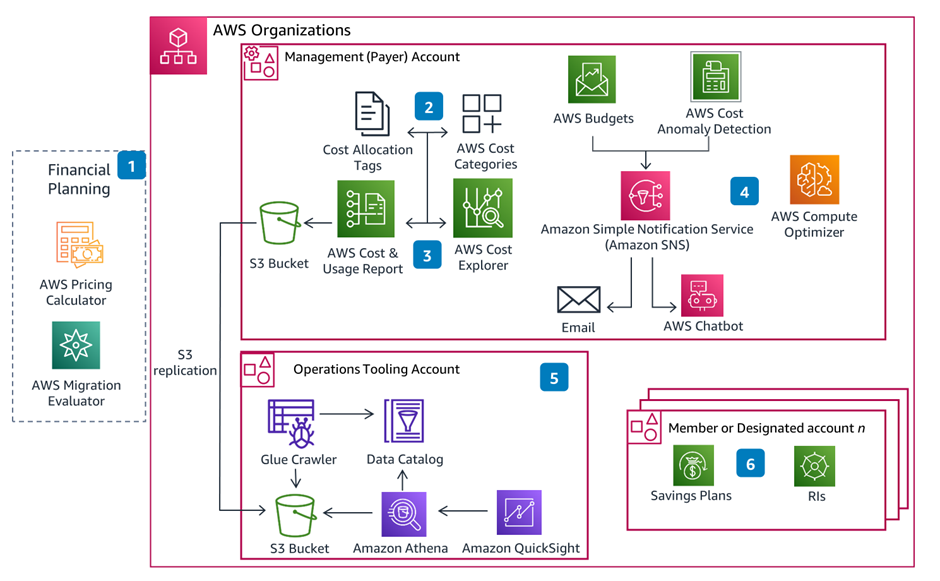
Architecting for Cost Optimization
AWS provides tools to centrally manage expenses and offer stakeholders targeted visibility for informed decision-making.
- Serverless Computing: Prioritize serverless architectures using AWS Lambda, API Gateway, and other serverless services to reduce costs and scale based on demand.
- Multi-AZ and Multi-Region Deployments: Design architectures for high availability and disaster recovery across multiple zones and regions while considering cost implications.
- Data Transfer Costs: Optimize data transfer costs between AWS services and regions, minimizing cross-region data transfer fees where possible.
- Global Accelerator: Use AWS Global Accelerator to enhance the availability and performance of applications across multiple regions.
Define the DR and HA Strategy
AWS offers multi-AZ and multi-region capabilities, making the definition of Disaster Recovery (DR) and High Availability (HA) strategies a crucial part of cloud cost optimization.
The decision to use single AZ, multi-AZ, or multi-region should be based on application and business needs, as this significantly impacts cost management. Although multi-AZ and multi-region setups can increase costs, they may be necessary for certain applications. Additionally, DR configurations can be active-active or active-passive, depending on architecture patterns and requirements. These considerations must be carefully evaluated during the architecture decision process.
AWS Marketplace and Cost Optimization Solutions
- AWS Marketplace: Explore cost optimization solutions available in AWS Marketplace, including third-party tools and software to identify cost-saving opportunities.
- Cost Management Tools: Implement third-party cost management tools like Apptio for additional features and insights beyond native AWS tools.
Rule-based AWS Billing, Budget, and Cost Allocation
AWS provides features for monitoring billing, defining the budget, and allocating costs based on the needs of your business applications. However, an important aspect is to define the rules of each layer, and whether it must trigger or execute based on the needs of business applications (scale and de-scale automatically)
- Consolidated Billing: If managing multiple AWS accounts, consider using AWS Organizations' Consolidated Billing to centralize billing and take advantage of volume discounts.
- Cost Allocation Tags: Implement cost allocation tags to categorize resources by business unit, project, or application. This helps identify cost drivers and optimize spending accordingly.
- AWS Cost Explorer: Utilize AWS Cost Explorer to analyse and visualize costs over time, assisting in identifying trends and areas for optimization.
- AWS Budgets: Establish AWS Budgets to track and manage costs. Set custom cost and usage thresholds and receive alerts when approaching or exceeding them.
- Cost Allocation Reports: Generate Cost Allocation Reports to gain insights into cost distribution across departments, teams, or projects, pinpointing areas where optimization efforts are most impactful.
Monitoring and Alerting
- AWS Trusted Advisor: Enable Trusted Advisor checks to receive cost optimization recommendations based on AWS best practices.
- CloudWatch Alarms: Configure CloudWatch alarms to receive notifications when specific cost thresholds are exceeded, enabling proactive cost management.
- AWS Cost Anomaly Detection: Use Anomaly Detection in AWS Cost Management to identify unusual spending patterns and investigate potential inefficiencies.
- AWS Compute Optimizer: Utilize AWS Compute Optimizer for recommendations on optimal Amazon EC2 instance types based on historical usage patterns.
Understanding AWS Pricing Models
- Pay-As-You-Go Model: Investghate AWS's pay-as-you-go pricing model, which allows you to pay only for the resources used without any upfront commitments.
- Reserved Instances (RIs): Explore the different types of RIs, such as Standard, Convertible, and Scheduled RIs, which provide significant savings for predictable workloads.
- Savings Plans: Consider Savings Plans, offering cost savings for a broader range of usage patterns compared to traditional RIs.
- Spot Instances and Spot Blocks: Understand the pricing models for Spot Instances and Spot Blocks, which offer substantial cost reductions for workloads with flexible start and end times.
Conclusions
AWS provides various services, and it is crucial to right-size them based on the solution's needs, design, and architecture during a thorough application assessment. Organizations must consider these factors to adopt better services and use resilient solutions. Following these steps will help optimize costs, ensuring that resources are used efficiently and enhancing the system's overall performance.
By carefully evaluating each service and making informed decisions, we can achieve a balance between cost and performance, leading to a more effective and sustainable system. Additionally, during the production phase, FinOps will help reduce costs and monitor day-to-day expenses, enabling timely optimization actions if required. This approach ensures long-term sustainability and efficiency, providing a robust framework for managing resources effectively while minimizing overheads.
Opinions expressed by DZone contributors are their own.
Comments