

Ethical AI and Responsible Data Science: What Can Developers Do?
This article examines AI ethics for responsible data science, tackling algorithmic bias, interpretability, and privacy protection.
In today's data-driven world, the rapid advancement of artificial intelligence (AI) and large language model (LLM) applications like ChatGPT has brought unprecedented opportunities and challenges. As AI systems become increasingly integrated into our daily lives, it is important to understand the ethical considerations that come with using LLM applications. This article aims to delve into the realm of ethical AI and responsible data science, exploring key concepts, challenges, and emerging solutions. By referencing some literature from literature and techniques in the field, we will highlight the importance of fostering trust, fairness, and transparency in AI technologies.
Understanding Ethical AI
Ethical AI involves designing and deploying AI systems that align with ethical principles, human values, and societal well-being. It encompasses a range of considerations, including fairness, transparency, accountability, privacy, and security. Researchers and practitioners are actively working towards developing ethical frameworks and guidelines to guide the development and deployment of AI systems.
One important aspect of ethical AI is addressing algorithmic bias. Numerous studies have demonstrated the presence of bias in AI systems, leading to discriminatory outcomes. Researchers have proposed various techniques, such as algorithmic auditing, fairness metrics, and debiasing methods, to mitigate bias and promote fairness in AI.
Responsible Data Science Practices
Responsible data science focuses on adopting ethical and socially responsible practices throughout the data lifecycle. It involves careful data collection, processing, and usage while respecting privacy rights and complying with relevant regulations. Responsible data science also emphasizes the importance of data governance and data management, including ensuring data quality, security, and consent.
To ensure responsible data science, organizations should implement comprehensive data governance frameworks, establish clear policies and procedures, and provide ongoing education and training to data scientists and practitioners. It is crucial to maintain transparency in data practices, inform users about data usage, and provide them with meaningful choices and control over their data.
Addressing Ethical Challenges
Ethical challenges in AI and data science are multifaceted and require holistic solutions. One critical challenge is the lack of interpretability in AI models, commonly referred to as the "black box" problem. Researchers have proposed methods such as explainable AI (XAI) and interpretable machine learning (ML) techniques to shed light on the decision-making process of AI models, making them more transparent and understandable to users.
Another challenge is ensuring privacy in the era of big data. With the increasing volume of personal data being collected, it is essential to protect individual privacy and prevent unauthorized access or misuse. Techniques such as differential privacy, federated learning, and secure multiparty computation provide privacy-enhancing mechanisms while enabling valuable insights to be extracted from sensitive data.
Promoting Ethical AI Adoption
To foster the widespread adoption of ethical AI and responsible data science, collaboration between academia, industry, policymakers, and civil society is crucial. It is imperative to establish interdisciplinary research collaborations to address ethical challenges, share best practices, and develop standardized guidelines.
Education and awareness programs can play a vital role in promoting ethical AI practices. By integrating ethics and responsible data science into educational curricula, professionals in the field can be equipped with the necessary knowledge and skills to make ethical decisions throughout the AI lifecycle.
Conclusion
Ethical AI and responsible data science are paramount to building trustworthy and fair technology. By adhering to ethical principles, mitigating bias, ensuring transparency, and respecting privacy, we can create AI systems that empower individuals, enhance societal well-being, and drive positive change. As the field of AI continues to evolve, it is our collective responsibility to prioritize ethical considerations and develop responsibly.
What Programmers Can Do
As a programmer, you are likely familiar with the challenges of crafting clean, optimized code that fulfills all requirements. Fortunately, there exists a valuable tool that can simplify and expedite this process: Large Language Models (LLMs). These sophisticated machine-learning models are capable of generating code snippets, completing functions, and even assisting with error debugging.
Here's how developers can leverage LLMs to elevate their coding proficiency and enhance code quality:
1. Code Generation: LLMs excel at producing code snippets for various programming languages like Python, Java, and JavaScript. By providing a prompt that outlines the desired functionality, you can request an LLM to generate a code snippet tailored to your needs. For instance, you could ask the LLM to generate a snippet for a function that calculates the average of a list of numbers.
Harnessing the power of LLMs empowers programmers to streamline their coding workflows, boost productivity, and create high-quality code with greater ease.
2. Enhancing coding skills: In addition to its capabilities in generating code snippets, completing functions, and debugging errors, an LLM can serve as a valuable resource for enhancing your coding skills. By utilizing an LLM, you can seek explanations of programming concepts and obtain examples of best practices, fostering continuous learning and improvement in your coding abilities.
For instance:
Prompt: "Explain the difference between a list and a tuple in Python."
Explanation: A list is a mutable collection of elements, allowing for modifications such as additions, removals, or modifications of its contents. On the other hand, a tuple is an immutable collection of elements, meaning that its contents cannot be changed once created. Tuples are often employed to represent fixed data collections, such as coordinates or records.
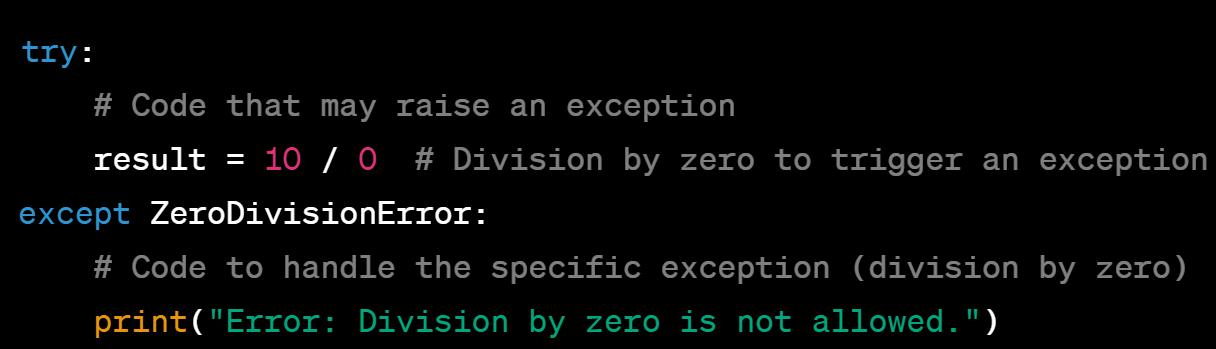
Prompt: "Provide an example of how to use the try-except block in Python to handle exceptions."
Opinions expressed by DZone contributors are their own.