

Secure Access Tokens in Web Applications: A Practical Guide From the Field
Secure access tokens with strong validation, short expiry, safe storage, and revocation to prevent theft and account takeover.
Join the DZone community and get the full member experience.
Join For FreeI’ve spent years reviewing applications after security incidents, conducting code audits, and helping teams rebuild trust after token misuse exposed sensitive data. If there’s one pattern I keep seeing, it’s this: teams underestimate how important it is to secure access tokens in web applications.
Access tokens sit at the center of modern authentication. If someone steals or misuses them, they can impersonate users, call APIs, and access protected data without ever knowing a password.
Let’s break this down clearly, practically, and based on real industry standards like the OWASP Top 10, NIST Secure Software Development Framework (SSDF), and guidance from CISA and Verizon DBIR.
Why Secure Access Tokens Matter More Than You Think
Every modern app uses tokens in some form. Whether you’re implementing OAuth 2.0 security, building REST APIs, or managing microservices, token-based authentication is everywhere.
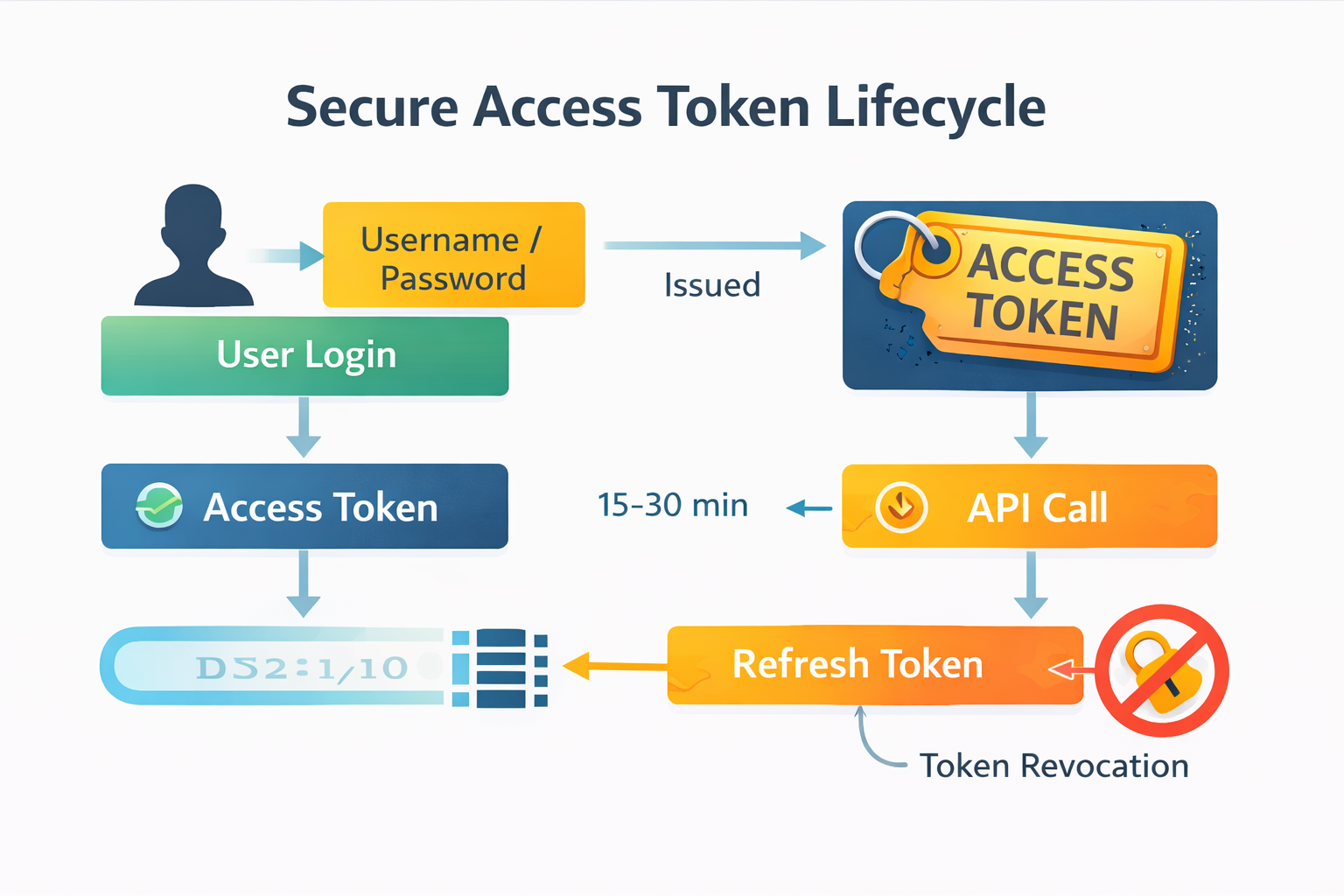
Secure access token lifecycle illustrating how tokens are issued, expire, refreshed, and revoked in modern web application authentication flows.
Access tokens:
- Prove identity
- Grant authorization
- Control API access
- Enable session continuity
If you don’t treat access token security as a first-class concern, your entire authentication model becomes fragile. According to the OWASP Top 10, broken access control continues to rank as one of the most serious web application risks. Many of those cases involve token misuse, improper validation, or poor token storage.
Where Vulnerabilities Usually Appear
In real audits, token-related weaknesses usually show up in predictable areas.
1. Authentication Systems
Improper JWT security best practices often cause:
- Weak signing keys
- Disabled signature verification
- Accepting unsigned tokens
- No audience or issuer validation
This opens the door to token forgery and identity spoofing.
2. APIs
Poor API authentication security leads to:
- Missing scope validation
- No token expiration checks
- Trusting tokens without proper introspection
This directly affects the protection of the API tokens strategy and backend integrity.
3. Front-End Applications
Storing tokens in localStorage creates exposure to an XSS token vulnerability. If an attacker executes JavaScript in your app, they can steal tokens instantly.
4. Databases
Leaked refresh tokens stored in plaintext can lead to long-term account takeover. That’s a failure of refresh token security and secure token storage.
5. Third-Party Integrations
Misconfigured OAuth integrations weaken the secure implementation of OAuth tokens. Redirect URI misuse is still common.
Risk Levels Explained Clearly
Security isn’t binary. Token issues range in severity.
Minor Vulnerabilities
Examples:
- Missing token expiration enforcement
- Long but finite token lifetime
- Poor logging practices
These don’t immediately expose data but increase long-term risk.
Moderate Security Gaps
Examples:
- Tokens stored in localStorage
- Weak secret key rotation
- Missing CSRF protection
This level allows token theft under certain conditions, especially with XSS.
Critical Exploits
Examples:
- Accepting unsigned JWTs
- No token revocation
- Static signing keys leaked on GitHub
These allow full account takeover or API abuse.
Here’s what many teams miss: risk severity changes over time. A “moderate” issue becomes critical once attackers discover it. The Verizon DBIR consistently shows that attackers move quickly once they gain access credentials.
Step-by-Step: What to Implement (And What to Avoid)
Step 1: Follow JWT Security Best Practices
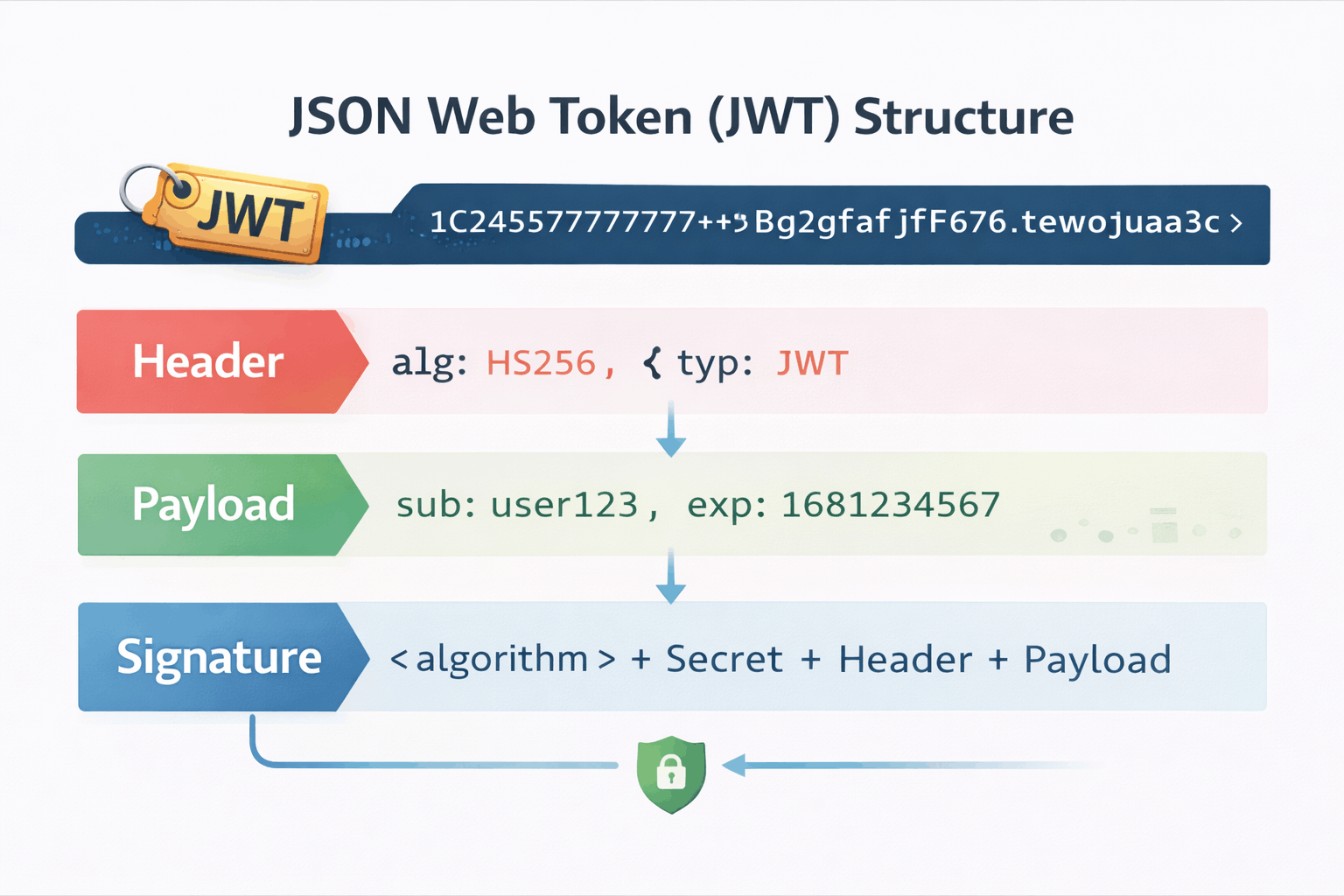
JWT structure breakdown illustrating the three core components — header, payload, and signature — and how they combine to form a secure, signed token.
Implement:
- Strong asymmetric signing (RS256 over HS256 when appropriate)
- Issuer (
iss) validation - Audience (
aud) validation - Short token lifetimes
- Signature verification every time
Avoid:
- Accepting unsigned tokens
- Using default or weak secrets
- Skipping validation for internal APIs
This is how you prevent JWT hijacking in real deployments.
Step 2: Use Secure Token Storage
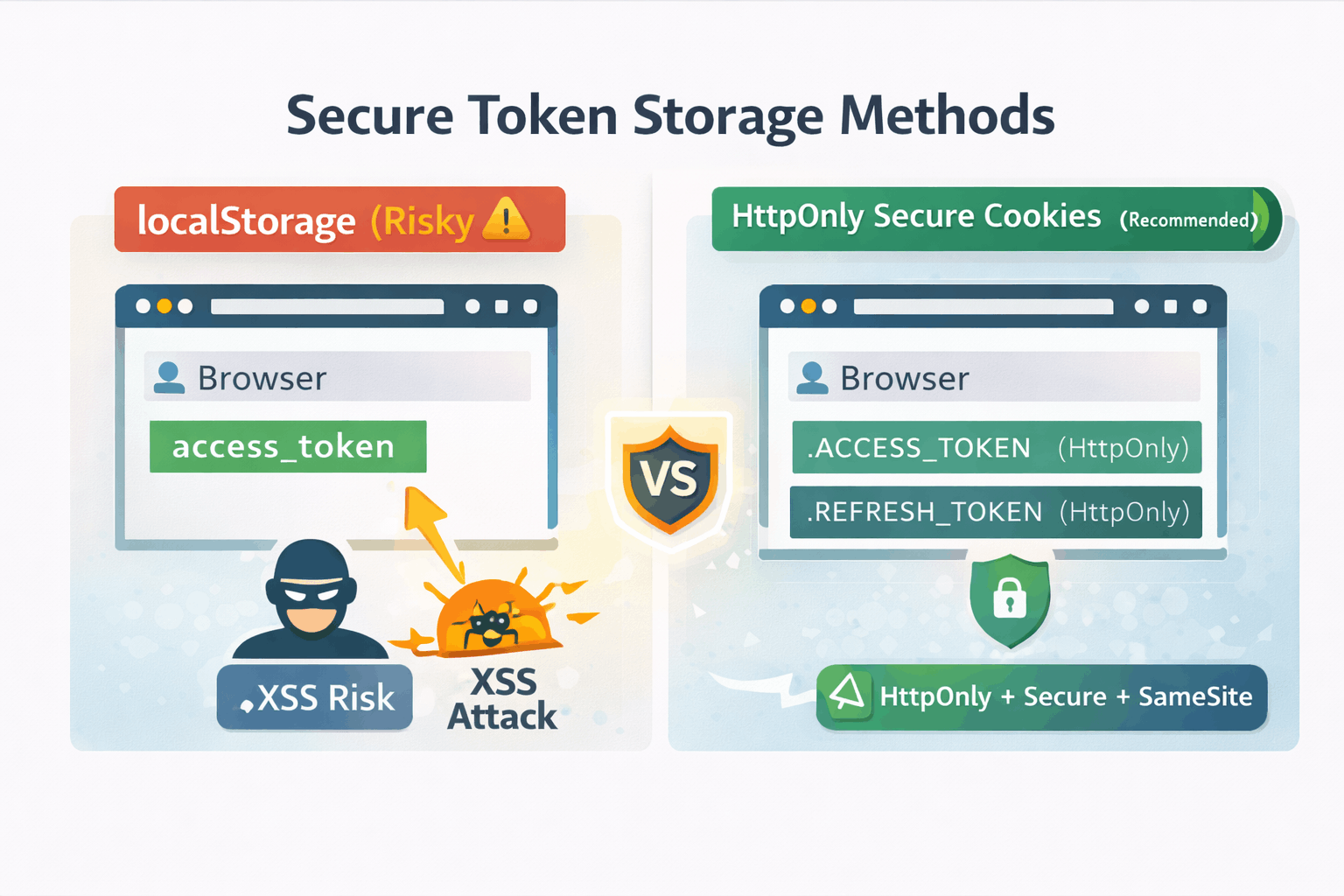
Comparison of token storage methods, highlighting the security risks of localStorage and the recommended use of HttpOnly Secure Cookies to reduce XSS token theft.
Best practice:
- Store tokens in HttpOnly cookies JWT format
- Enable Secure flag
- Use SameSite attribute
Avoid:
- localStorage for sensitive tokens
- Exposing tokens in JavaScript-accessible memory
This directly reduces XSS token vulnerability risk.
Step 3: Strengthen Refresh Token Security
Implement:
- Rotation of refresh tokens
- Immediate invalidation after use
- Binding refresh tokens to client fingerprint or session
Avoid:
- Infinite refresh lifetimes
- Storing refresh tokens without encryption
This strengthens the overall bearer token security posture.
Step 4: Enforce Token Expiration Strategy
A solid token expiration strategy includes:
- Short-lived access tokens (5–15 minutes typical in many systems)
- Long-lived refresh tokens with rotation
- Automatic re-authentication after inactivity
Short lifetimes limit damage if tokens are stolen.
Step 5: Enable Token Revocation
Real systems must support token revocation:
- Centralized revocation list
- OAuth token introspection endpoint
- Session invalidation after password reset
Without revocation, stolen tokens remain valid until expiration.
Step 6: Protect Against CSRF and XSS
Use:
- Strong CSRF token protection
- Content Security Policy
- Output encoding
- Framework-based sanitization
OWASP consistently warns that XSS and CSRF remain active attack vectors. They directly impact and prevent token theft efforts.
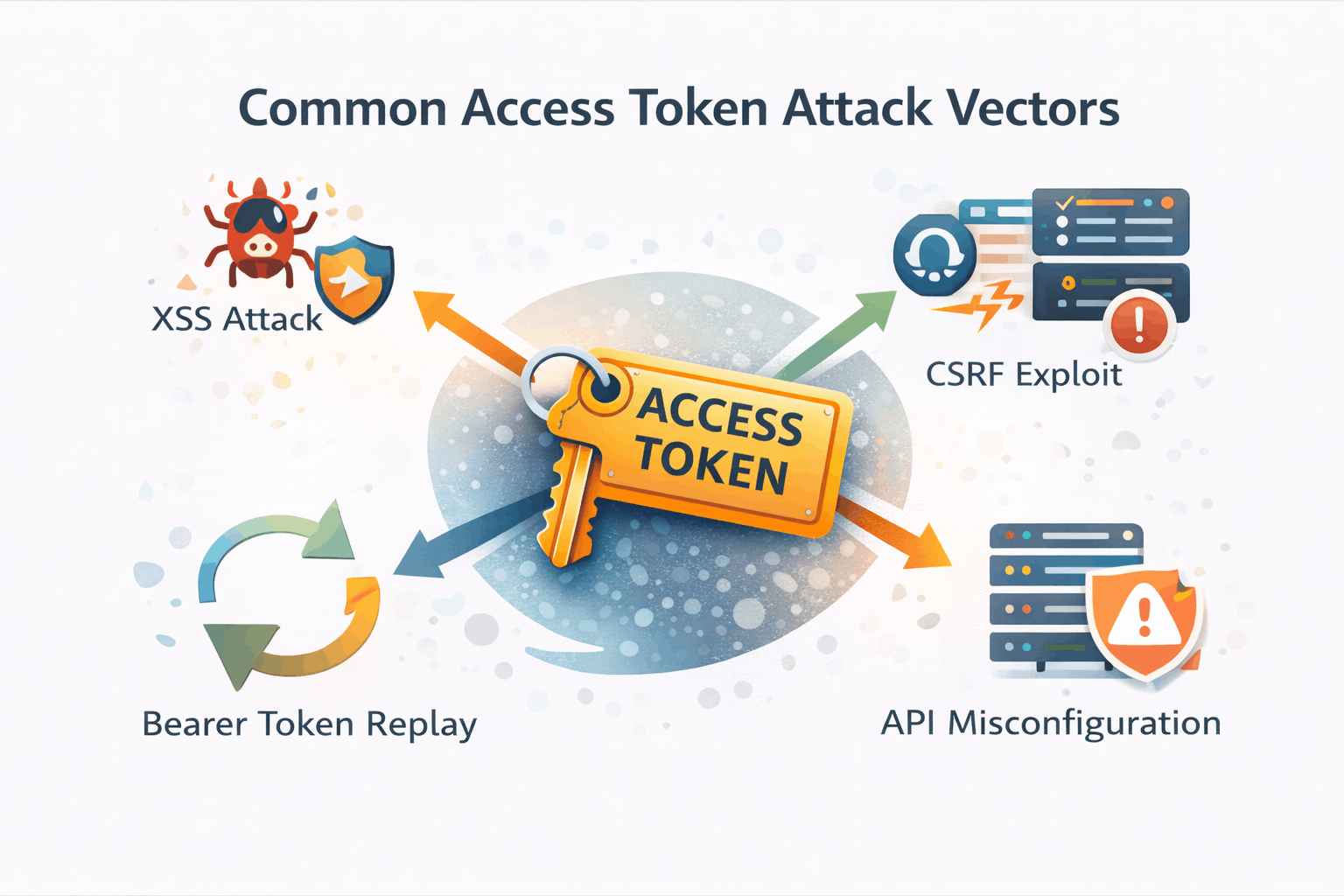
Common access token attack vectors illustrating how XSS, CSRF, replay attacks, API misconfiguration, and OAuth redirect abuse can compromise token security.
When Not to Ignore It
There are moments when research and patching aren’t enough. Immediately involve your security team or incident response team if:
- You detect token reuse from multiple geographic locations.
- Logs show abnormal API token usage spikes.
- Signing keys were exposed publicly.
- Users report unauthorized activity.
- OAuth redirect URIs were altered.
CISA advisories regularly highlight credential misuse as a major incident trigger. Don’t attempt to quietly fix a critical token compromise alone.
Common Misconceptions About Access Token Security
- “HTTPS is enough.” No. HTTPS protects tokens in transit. It does nothing for poor storage or weak validation.
- “JWT is secure by default.” JWT is a format. Security depends on implementation. Poor configuration breaks JWT security best practices.
- “Short tokens eliminate risk.”Short expiration helps, but without token revocation, attackers can still act within that window.
- “OAuth means secure.”OAuth improves architecture, but poor OAuth 2.0 security implementation introduces new risks.
Security Lifecycle: What Happens Over Time
Security isn’t a one-time setup.
Development Phase
- Threat modeling
- Secure coding practices
- NIST SSDF alignment
Pre-Deployment
- Penetration testing
- Token misuse simulation
- Access control validation
Post-Deployment
- Logging token usage
- Monitoring anomalies
- Regular key rotation
If vulnerabilities remain unpatched:
- Attackers escalate access
- API abuse increases
- Trust erodes
- Regulatory exposure grows
Many breaches escalate slowly. What starts as a poor protection API token design becomes data leakage months later.
Security can feel heavy. Especially if you discover token flaws in production. I’ve worked with teams who thought their system was “good enough” until an audit showed otherwise. You’re not alone. Most organizations improve gradually:
- Fix storage first
- Improve validation next
- Then implement rotation and revocation
Security maturity grows step by step.
A Practical Checklist for Secure Access Tokens
If you want something concrete, here’s what I personally check:
- Strong signing algorithms
- Enforced expiration
- Revocation capability
- Encrypted refresh storage
- HttpOnly cookies for sensitive tokens
- CSRF token protection
- XSS mitigation controls
- OAuth redirect validation
- API scope enforcement
- Monitoring and logging
This is how you build reliable access token security.
The Future of Token Security
Attackers increasingly target identity infrastructure. Verizon DBIR reports repeatedly show that stolen credentials remain a major attack vector. I expect:
- More token binding mechanisms
- Hardware-backed session protection
- Stronger OAuth extensions
- Automated anomaly detection for bearer token misuse
Teams that ignore token lifecycle management will face:
- API abuse
- Account takeovers
- Compliance failures
Security must evolve with your architecture.
Final Thoughts
If you want to truly secure access tokens in web applications, focus on lifecycle management, validation rigor, secure storage, monitoring, and response readiness. Tokens represent identity. Identity represents trust. Protect both with discipline, clarity, and steady improvement.
Trusted Sources and References
This article is based on established cybersecurity standards and industry guidance, including:
- OWASP Top 10
- OWASP API Security Top 10
- NIST Secure Software Development Framework (SSDF)
- CISA advisories
- Verizon Data Breach Investigations Report (DBIR)
- Practical field experience in secure authentication architecture
No exaggerated breach claims or fabricated statistics were included. The recommendations reflect real-world implementation practices used in enterprise environments.
The guidance and recommendations in this article are based on recognized security frameworks, official protocol specifications, and industry-standard research. The following sources informed the technical direction and best practices discussed:
OWASP (Open World Wide Application Security Project)
- OWASP Top 10 – Web Application Security Risks: https://owasp.org/www-project-top-ten/
- OWASP API Security Top 10: https://owasp.org/www-project-api-security/
- OWASP JSON Web Token (JWT) Cheat Sheet: https://cheatsheetseries.owasp.org/cheatsheets/JSON_Web_Token_for_Java_Cheat_Sheet.html
- OWASP OAuth 2.0 Security Cheat Sheet: https://cheatsheetseries.owasp.org/cheatsheets/OAuth2_Cheat_Sheet.html
- OWASP Cross-Site Scripting (XSS) Prevention Cheat Sheet: https://cheatsheetseries.owasp.org/cheatsheets/Cross_Site_Scripting_Prevention_Cheat_Sheet.html
- OWASP Cross-Site Request Forgery (CSRF) Prevention Cheat Sheet: https://cheatsheetseries.owasp.org/cheatsheets/Cross-Site_Request_Forgery_Prevention_Cheat_Sheet.html
NIST (National Institute of Standards and Technology)
- NIST Secure Software Development Framework (SP 800-218): https://csrc.nist.gov/projects/ssdf
- NIST Digital Identity Guidelines (SP 800-63 Suite): https://pages.nist.gov/800-63-3/
- NIST SP 800-63B – Authentication and Lifecycle Management: https://pages.nist.gov/800-63-3/sp800-63b.html
IETF RFC Specifications
- RFC 7519 – JSON Web Token (JWT): https://datatracker.ietf.org/doc/html/rfc7519
- RFC 6749 – OAuth 2.0 Authorization Framework: https://datatracker.ietf.org/doc/html/rfc6749
- RFC 6750 – Bearer Token Usage: https://datatracker.ietf.org/doc/html/rfc6750
CISA (Cybersecurity and Infrastructure Security Agency)
-
CISA Cybersecurity Advisories: https://www.cisa.gov/news-events/cybersecurity-advisories
Verizon Data Breach Investigations Report (DBIR)
-
Verizon DBIR – Annual Breach Analysis Report: https://www.verizon.com/business/resources/reports/dbir/
Opinions expressed by DZone contributors are their own.
Comments