

Serverless vs. Containerized Applications: Which is the Best Choice?
Choosing between Serverless and Containerized Applications mainly depends on the complexity, scalability, and cost goals of your applications.
 ·
·
Join the DZone community and get the full member experience.
Join For FreeChoosing the best architecture for your application can be one of the toughest decisions if you want to achieve better performance, scalability, and cost efficiency. Two prominent methodologies, Serverless and Containers, both offer distinct functionalities and are powerful. But what is the right for you? In this article, we will explore technicalities, key differences, when to use each, and much more!
About Serverless Architecture
As the term "Serverless" implies, it refers to developers developing and executing applications without managing infrastructure. Cloud providers like AWS, Google Cloud Platform, and Azure manage maintenance, scaling, and provisioning themselves.
How does it work?
In Serverless applications, developers write small, single-purpose functions that are explicitly for specified events. HTTP requests, file uploads, or database events activate these functionalities. It's the responsibility of the cloud service provider to ensure that these functions are executed when needed.
Code Snippet: AWS Lambda with Python
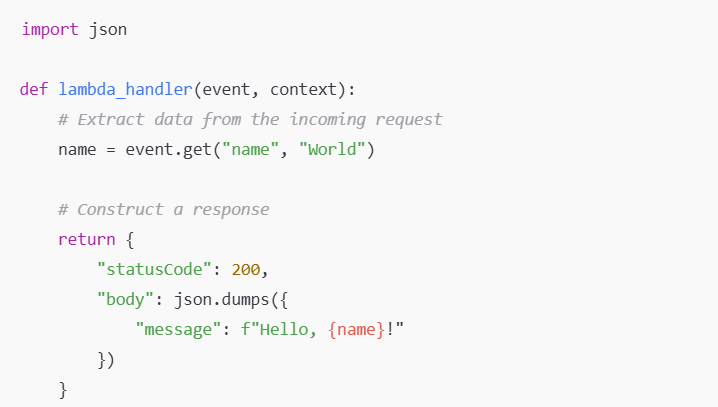
In this snippet, the AWS function executes only when activated, and the user is charged for the duration of the execution.
About Containerized Applications
Containers are a type of operating system-level virtualization that packages an application and its dependencies into a portable unit, allowing it to run consistently across different environments. Services like Docker and Amazon’s Elastic Container Service (ECS) are used to deploy such containers. Kubernetes is the backbone of this approach.
How does it work?
Containers comprise the application, execution time, APIs, and tools, ensuring consistency between development, testing, and production environments.
Code Snippet: Docker file for Node.js App
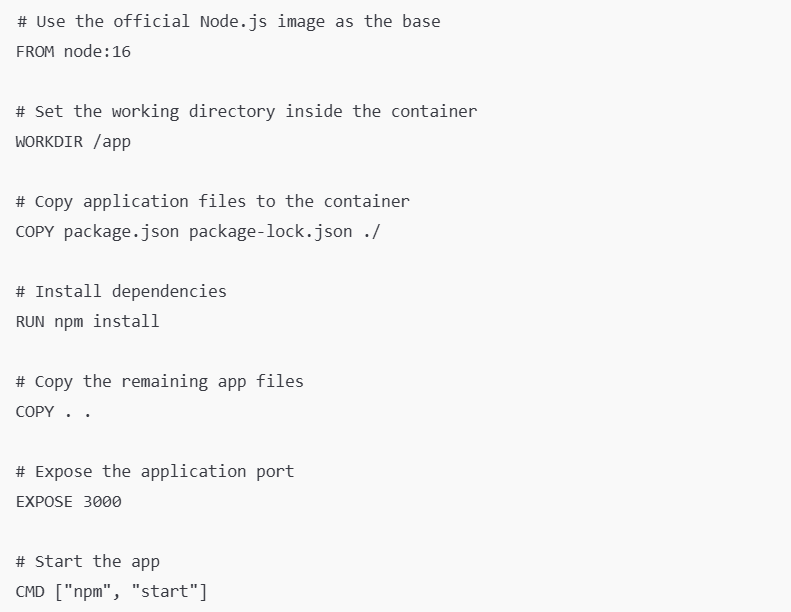
In the above code snippet, the application and its dependencies are compressed into a container, allowing it to be run in a Docker environment.
Key Technical Differences
|
feature
|
Serverless
|
container
|
|---|---|---|
|
Deployment Model
|
Easy to deploy with minimum configurations.
|
Need more complex configurations. Suitable for complex applications.
|
|
Performance |
Performance can be rendered due to event driven applications |
Provide good performance & constant response time |
|
Scalability |
Auto-scales based on function invocations. |
Requires configuration, e.g., Kubernetes auto-scaling. |
|
State Management |
Stateless by default, external storage is required. |
Can maintain state within containers if needed. |
|
Startup Time |
Cold starts can cause latency. |
Starts quickly but requires pre-provisioned resources. |
|
Billing |
Pay-per-invocation and execution time. |
Pay for resources (CPU, memory) regardless of usage. |
|
Infrastructure
|
Fully abstracted and managed by the cloud provider.
|
Developer-defined and requires orchestration.
|
|
Memory Allocations
|
Allocated by the Cloud Service provider
|
Can be customized per request but a little tough to manage.
|
|
Software Licensing
|
Mainly managed by the Cloud Service Provider
|
Developers manage the licensing themselves for containerized applications
|
|
Responsibility Model
|
Infrastructure Security and Application Security is handled by cloud service providers and developers respectively.
|
Both form of securities is handled by developers
|
Use Cases
When to Use Serverless Architecture?
- Serverless architecture is well-suited for event-driven applications and scenarios that require real-time data processing, where functions respond to specific events.
- It can also be used when you need API backends, as it simplifies API development by using frameworks like AWS API Gateway with Lambda.
- Moreover, this type of architecture is well-suited for applications with low traffic, as the cost of infrequently used apps is minimized.
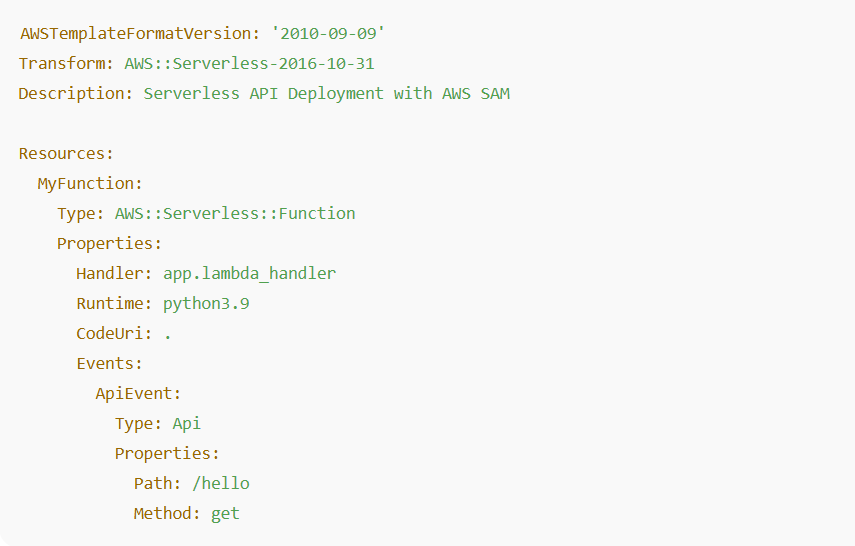
Example: Serverless API Deployment with AWS SAM
When to Use Containerized Architecture?
- Containerized architecture is used in applications with complex dependencies or where a specific runtime is required
- In Stateful applications, in which caches, databases, and application requires persistent sessions
- In microservices, the goal is to run and deploy multiple independent services.
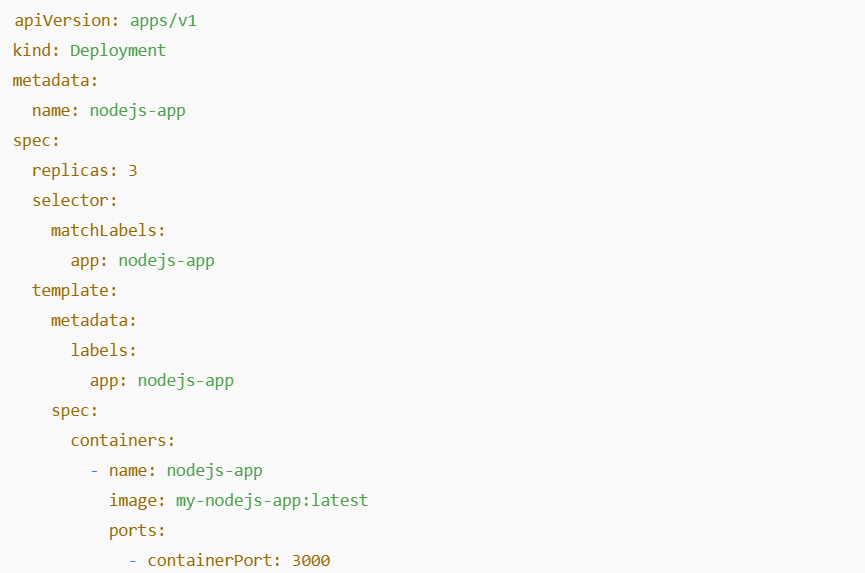
Example: Kubernetes Deployment for a Node.js App
Performance
Serverless
- A delay may occur when a function remains idle for an extended period of time.
- Cloud service providers can impose limits on the number of concurrent executions.
Containers
- Improve resource management by providing control over resource allocation to the CPU or memory.
- Containers offer a persistent state that can maintain in-memory data for performance optimization.
Security
Serverless
- Functions are isolated at the initiation stage.
- Minimal vulnerabilities, as only specific events are activated upon function call.
Containers
- Containers misconfigured can be vulnerable and expose entire environments.
- Old or free images can be exploited easily.
How to Choose between Serverless or Containerized Architecture for your Application?
When deciding whether to choose Serverless or containers for your application, consider the above-mentioned use cases. Most importantly, the architecture size and structure of your application highly influence your decision at this point.
Moreover, it's not compulsory that you have to choose one or the other. Depending on the need, Serverless and Containers can be used in a mutually complementary manner as a hybrid approach. You can use containers where needed and switch to Serverless, where your event runs in response to a specific trigger. Furthermore, you can use Serverless, where your costs are minimized, and Containers, where reliability/functionality are more important than cost.
Conclusion
Serverless and containerized architectures offer distinct purposes, and their suitability depends on the application requirements. There is no explicit answer in this debate. The best choice depends on the application's needs, not personal preference.
Serverless delivers unequaled speed and simplicity for getting started, along with elastic scaling that can meet unanticipated demand. Particularly for intricate and prolonged applications, containers provide flexibility, control, and consistency.
The best of both worlds can be achieved with a hybrid strategy that uses containers for some components and Serverless for others. Although many people perceive Serverless and cloud native as separate concepts, Serverless is essentially a maximal abstraction implementation of cloud-native architecture. The important thing is to see it as a spectrum of tools rather than an either/or choice.
Opinions expressed by DZone contributors are their own.
Comments