

Shipping Responsible AI Without Slowing Down
Add robustness, monitoring, alignment, and systemic safety into the normal delivery pipeline using plain-language objectives and policy-as-code SLOs.
Join the DZone community and get the full member experience.
Join For FreeIn software engineering, launch day rarely fails because a unit test was missing; in machine learning (ML), that’s not the case. Inputs far from training data, adversarial prompts, proxies that drift away from human goals, or an upstream artefact that isn’t what it claims to be can all sink a release. The question is not “can every failure be prevented?” but “can failures be bounded, detected quickly, and recovered from predictably?”
Two research threads shape this approach. The first maps where ML goes wrong in production: robustness gaps, weak runtime monitoring, misalignment with real human objectives, and systemic issues across the stack (supply chain, access, blast radius). The second focuses on how teams make decisions that stand up to scrutiny: a deliberative loop that’s open, informed, multi-vocal, and responsive. Put together, the operating model feels like standard software engineering — just opinionated for ML.
ML Safety Contract
ML safety work can be organized into four clauses. When these are wired into the process, systems become more trustworthy, responsible, and accountable.
| Clauses | Definition |
|---|---|
| Robustness | Distribution shift, tail inputs, and obvious misuse should be tested — not just benchmark deltas. “Once-a-year” scenarios should be first-class in evaluation. |
| Monitoring | Detection should be treated as a product feature. Systems should recognise when they are out of depth and degrade gracefully without heroics. |
| Alignment | The human objective should be stated in plain language, the proxies being optimised should be acknowledged, and guardrails should be set for behaviour that must never occur. |
| Systemic safety | Pipelines should be reproducible, artefacts signed, access tight, and rollbacks as easy as deploys. |
The goal is to connect these clauses to machinery already trusted — CI/CD, SRE practices, and product reviews — so no parallel process is created that people route around.
The Loop: From Idea to Incident and Back
A lightweight safety review should run monthly or on any significant capability change. It acts as a decision log with real inputs. Pre-reads explain what’s changing and why, show evaluation dashboards, and call out potential impact. Product, ML, SRE, security, and support bring different failure modes to the table. Disagreement is documented briefly. Outcomes are actionable: thresholds to set, tests to add, rollouts to stage, owners to assign. Decisions are published because traceability is part of the safety surface.
On sprint cadence, that review pairs with two touchpoints: a CI gate that blocks on safety regressions like any other SLO, and a post-incident loop that upgrades evaluations with whatever just failed. The loop doesn’t slow shipping; it prevents shipping the same mistake twice.
What Lands in the Repo
Three small artifacts make the contract real and reviewable:
- Human objective. A one-sentence statement at the top of the model card, followed by the proxies being optimized and how those proxies can fail when over-optimized. This paragraph aligns engineers, PMs, and reviewers.
- Deliberation note.
deliberation-note.mdshould live next to the model. In plain language, it states the change, alternatives considered, who might be affected (including non-users), and what feedback changed the plan. It is short and versioned with code. - Policy-as-code SLOs. Gates and alerts should be deterministic.
Example SLO policy:
# safety-slos.yaml
slos:
- name: ood_recall_7d
objective: "Detect distribution shift before harm."
target: ">= 0.90"
window: "7d"
action_on_breach: "degrade_to_safe_mode"

- name: decision_ece_p95_24h
objective: "Keep calibration error low on high-impact endpoints."
target: "<= 0.05"
window: "24h"
action_on_breach: "route_to_human_review"

- name: never_event_violations
objective: "Zero violations of policy-defined 'never events'."
target: "== 0"
window: "rolling"
action_on_breach: "kill_switch"
The Pipeline Already Trusted
The release path stays familiar:
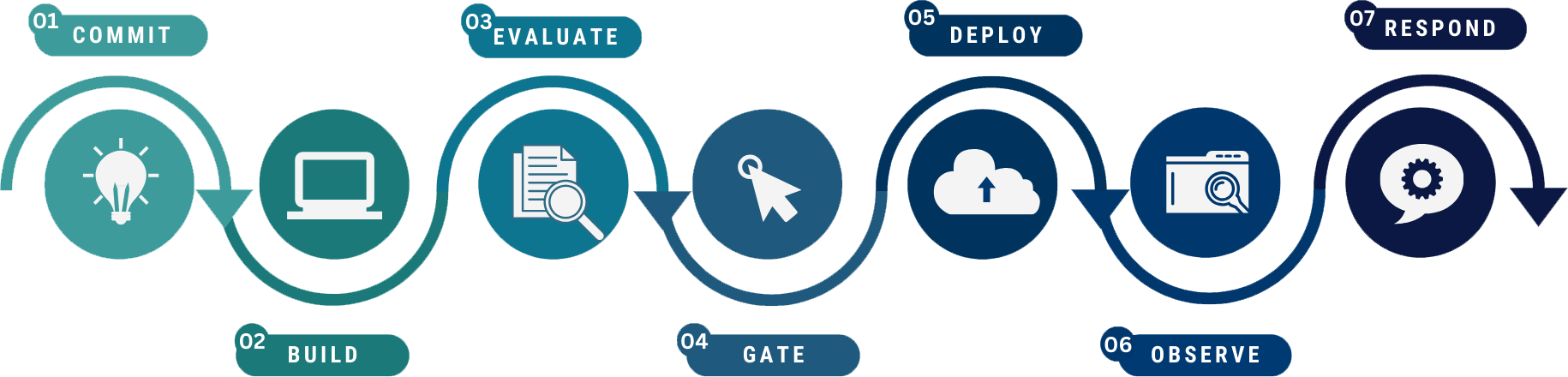
- Evaluate. A robustness pack should be run: tail scenarios, simple adversarial sweeps suited to the domain, and checks for hidden functionality (e.g., backdoors in weights or data). Red-team prompts or misuse cases should reflect the product surface.
- Gate. Two things are required: a green SLO diff and the deliberation note. Artifacts should be signed, and the build reproducible.
- Deploy. Canary by tenant or traffic slice with clean isolation. A “safe baseline” should be kept warm so rollback is lossless.
- Observe. OOD and drift signals, calibration telemetry for decision endpoints, and privacy-aware abuse logs should stream into the same on-call rotation as other SEVs.
- Respond. The playbook should be baked: repeated OOD triggers auto-degrade; any “never event” trips the kill switch. Post-incident, the failure should be converted into a test and added to the robustness pack.
A Concrete Rollout Story
Consider a claims-triage classifier.
Before Launch
The human objective is defined (“route risky claims to expert review without delaying legitimate claims”), proxies are listed (AUROC, latency, review rate), and never events are codified (“never auto-deny when uncertainty exceeds threshold Z”). A small robustness pack is assembled: rare claim types, obvious prompt/payload abuse for text components, and a basic backdoor scan on third-party artifacts. The Safety Review trims scope: expert-only for two jurisdictions at first, with per-tenant throttles.
Launch Week
A canary goes to 10% of traffic for two enterprise tenants. OOD detectors track feature drift; calibration metrics automatically drive the review threshold. A few hours in, OOD triggers for unfamiliar supplier codes. The system degrades to human-review-only for that segment; SREs confirm rather than scramble.
After the Incident
Those supplier codes are added to the eval pack, and a brittle feature transform that amplified drift is relaxed. The deliberation note is updated with the change and rationale. The next rollout is wider, safer, and documented.
What Changes for the Team
Observability and predictability around ML behavior increase. Three shifts matter most: (1) objectives and constraints become explicit and reviewable, (2) failures are promoted to code (tests/SLOs) instead of tribal memory, and (3) the kill switch is practiced like disaster recovery. Engineering ships with more confidence; stakeholders can see decisions and the reasoning.
Closing
Most teams already run CI/CD, SRE, and security reviews. Making ML “safe enough to ship” means threading robustness, monitoring, alignment, and systemic safety through those same muscles, backed by a decision loop that can be explained later. It isn’t slower; it’s saner.
Opinions expressed by DZone contributors are their own.
Comments