

Scaling Boldly, Securing Relentlessly: A Tailored Approach to a Startup’s Cloud Security
Learn how SaaS startups can scale securely from MVP to enterprise in this phased, developer-first guide to cloud, app, and zero-trust security maturity.
Join the DZone community and get the full member experience.
Join For FreeLaunching a SaaS startup is like riding a rocket. At first, you’re just trying not to burn up in the atmosphere — delivering features, delighting users, hustling for feedback. But, as you start to scale, you realize: security isn’t just a cost center — it’s an accelerant for growth, trust, and resilience.
For SaaS startups racing from MVP to unicorn, robust security isn’t just about compliance; it fuels innovation, safeguards reputation, and unlocks enterprise sales. But faced with fierce market demands and thin resources, how can founders, engineers, and security leads scale infrastructure and build trust — all without slowing the agile hustle?
This phased and tailored approach distills the wisdom of security approach research, startup battle scars, and practical frameworks to take your cloud security journey from survival mode to true maturity. This is not a handheld guide but critical directional steps to highlight.
Why Startup Cloud Security Is Different (And Why Agility Is Your Superpower)
- Small teams, huge accountability: Startups need to deliver enterprise-grade security on a bootstrap budget.
- Unpredictable scaling: A post goes viral, a new client lands, regulations shift. Security needs to evolve faster than your product.
- Winning trust: Enterprise prospects, regulators, and savvy users expect real answers about risk, compliance, and resilience.
| Phase | Team/Customer Size | Security Priority |
|---|---|---|
| Inception | Small/early | Essentials, hygiene |
| Maturing | Growing | Formalization, automation |
| Growth | Large, enterprise | Advanced controls |
Phase I: Build Strong Foundations — Don’t Wait for Disaster
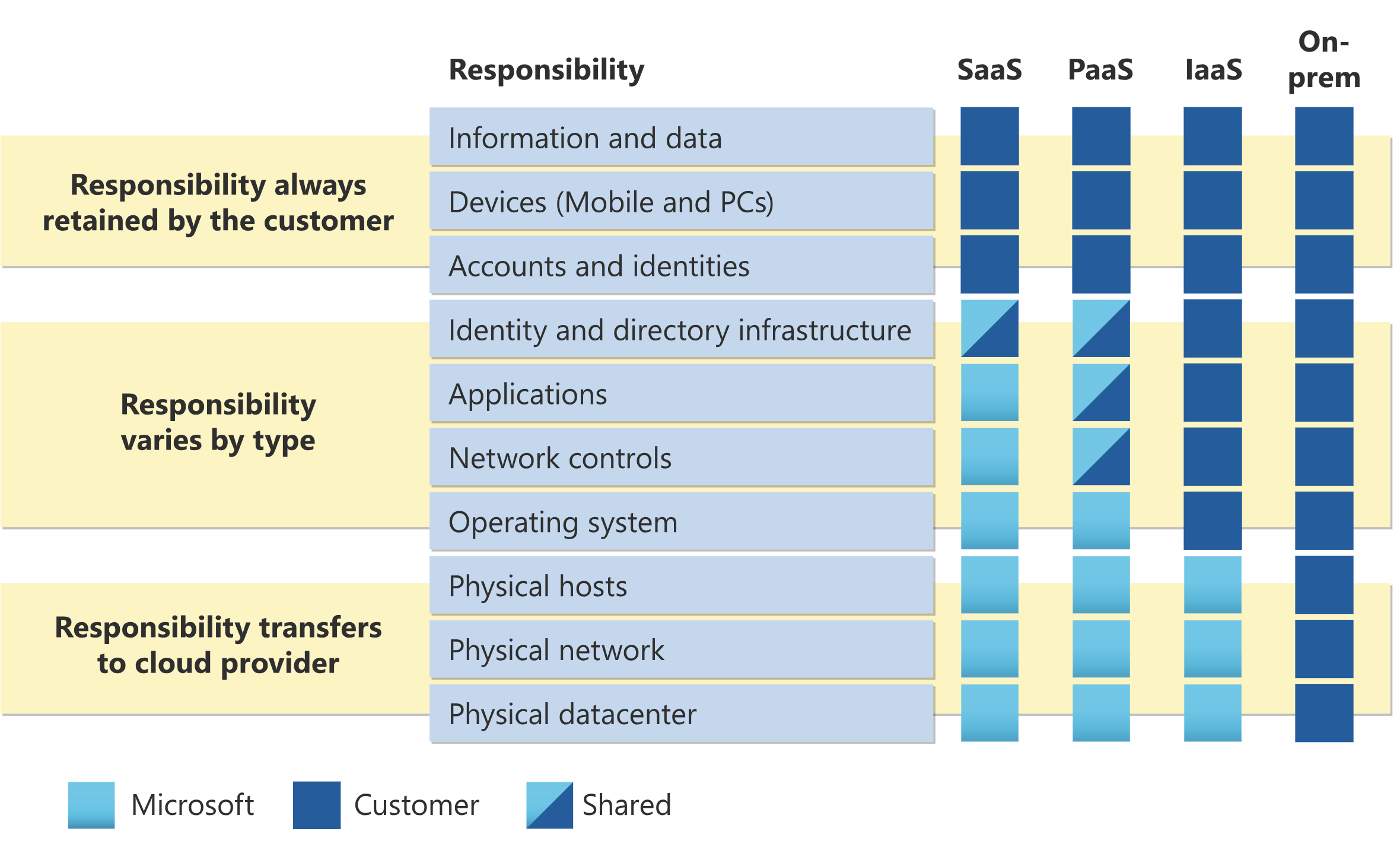
You can’t outsource everything. The Shared Responsibility Model is not just a legal shield: as a customer, you own data security, identity, app config, and compliance — even if AWS/Azure/GCP handle “steel doors” and hypervisors.
Quick, impactful wins:
- Enable built-in tools like IAM, encryption, and activity logs.
- Apply the principle of least privilege—give “just enough access” and rotate credentials frequently.
- Patch, update, automate. Legacy debt grows exponentially.
Phase II: Architect for Resilience — Blast Radius Reduction and Segmentation
What happens if dev gets breached? Can an attacker exfiltrate production data, pivot to finance, or shut down your core APIs?
Network segmentation is your safety mechanism:
- Separate environments (Dev, Test, Prod) using VPCs, subnets, resource groups, with firewalls and strict access rules.
- Infrastructure as Code (IaC) and repeatable templates allow you to rebuild compromised systems, keep configs airtight, and automate DR (disaster recovery).
- Multi-zone, multi-region deployments mitigate downtime, regulatory risk, and improve scalability.
Real story:
Imagine an OAuth misconfiguration in Dev exposes test tokens publicly. If Dev is “coupled” to Prod with open rules, you’re looking at a business-ending breach. But if it’s segmented, attackers hit a wall.
Phase III: App Security — Code, Supply Chain, and User-Facing Interfaces
Security isn’t just about “don’t get breached” — it’s how you build code and manage change through every phase.
- Embed secure software development lifecycle (SSDLC) practices: threat modeling, code reviews, automated tests (SAST, DAST).
- Supply chain security: Audit open-source components with SBOMs, use mature packages with regular updates, and review third-party API contracts.
- Secure CI/CD: Isolate pipelines, scan for secrets, ensure role-based access, automate vulnerability checks.
- Protect APIs and web apps: Use WAFs, enforce authentication, validate inputs, and throttle excessive use.
Practical tip:
Start simple with the OWASP Top 10 — layer more advanced testing as you grow (interactive testing, bug bounties). Make “security” a user story in your backlog.
Phase IV: Governance, Risk, and Compliance — Turning Security into a Market Advantage
Enterprise clients don’t just want cool features; they want to know you’re SOC 2-ready or GDPR-compliant.
- Set up a risk register: Map assets, estimate threats, record mitigations.
- Create policies for data classification, backup, encryption, and resilience (immutable storage = forensic gold after an incident).
- Implement third-party risk management: vet vendors for compliance, security controls, and breach history.
Framework choices:
Startups often begin aligning with ISO 27001 or NIST. Embed controls early, document everything — auditors and customers will ask.
Phase V: IT Security — From Endpoints to Remote Work
Cloud security isn’t just about VMs and S3 buckets. Every laptop is a potential front door.
- Use MDM/UEM for device management and patching.
- Enforce disk encryption, endpoint antivirus/EDR, strong passwords, and MFA policies.
- For remote teams, use Zero Trust Network Access (ZTNA) or SASE — VPNs alone aren’t enough.
Pro tip: The risk of credential theft, device compromise, and shadow IT is highest when teams scale quickly — centralized management and routine training pay dividends.
Phase VI: Security Monitoring, Incident Response, and Automation
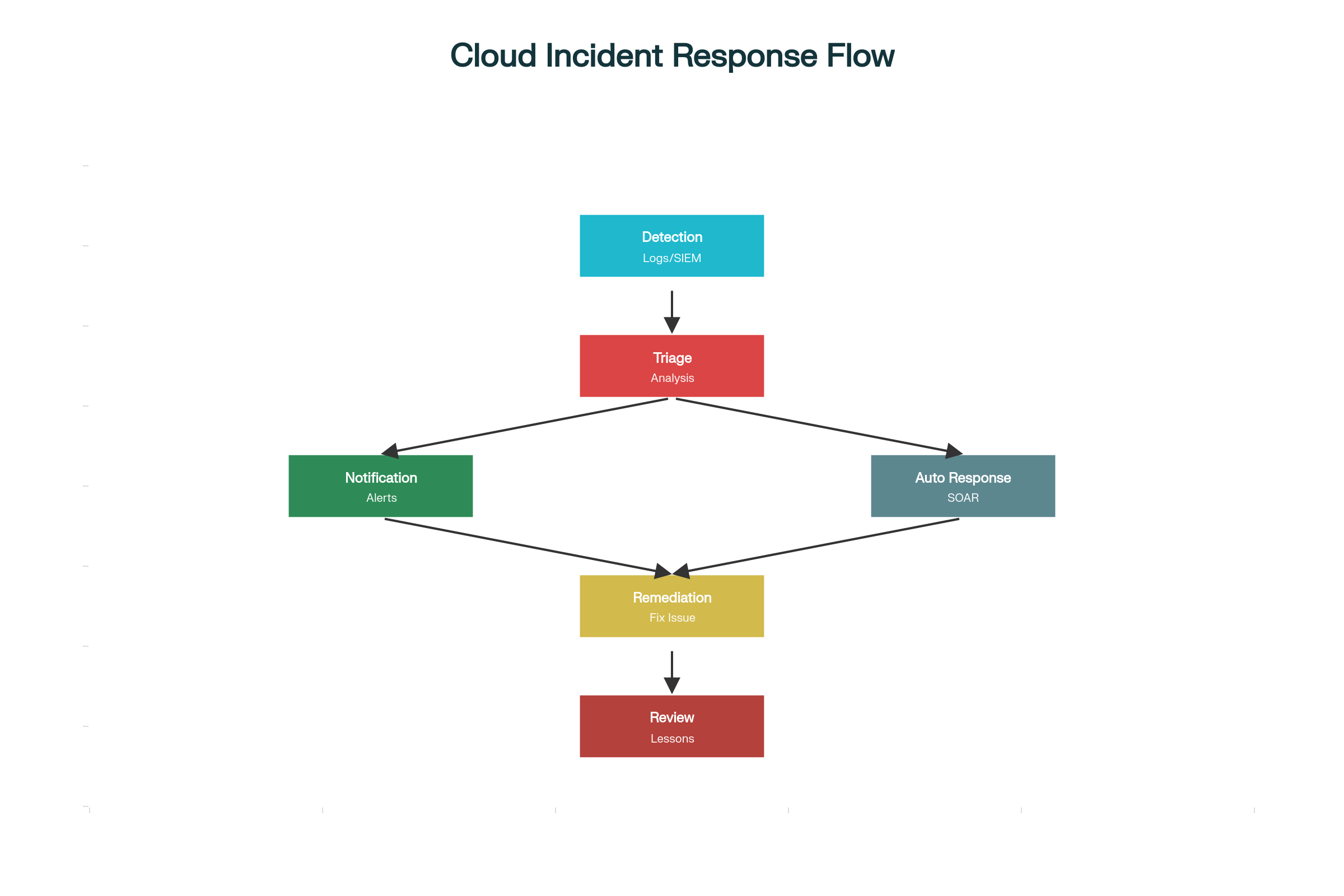
Detection is everything. Can you spot suspicious logins, exfiltration attempts, or privilege escalation in real time?
- Start with basic log collection and cloud-native security dashboards (AWS Security Hub, Azure Security Center).
- Scale up: Add SIEM data lakes, automate alerting (SOAR), and enable periodic threat hunting.
- Practice incident response: establish a runbook, rehearse the process, have escalation contacts and external experts on call.
If a breach happens, speed is crucial — customers forgive honest communication and fast remediation over stealth and denial.
 The Zero Trust Mindset—Never Trust, Always Verify
Zero Trust isn’t vendor hype. Assume every device, user, and API call could be compromised.
- Implement device posture checks, adaptive authentication, micro-segmentation, and least-privileged access.
- Use behavior analytics to flag anomalies and automate dynamic controls.
As more startups embrace remote work, every login is an untrusted action — gate everything with context, not geography.
Appendix 1: Practical Cloud Security Milestones
Below are phased milestones for each security area. Startups progress from “basic hygiene” to “automated resilience.”
| Phase | Architecture | AppSec Testing | Monitoring/IR | IT Security | Governance & Compliance |
|---|---|---|---|---|---|
| Inception | Single region, IAC templates | Basic code reviews, OWASP | Alerts for failed logins | Manual device updates, MFA | Risk register, simple policies |
| Maturing | Multi-zone/region, blast radius | SAST/DAST, SBOM, CI/CD sec | SIEM, daily reviews | Automated patching, MDM | Map frameworks, TPRM |
| Growth | Multi-cloud, advanced DR | Threat modeling, bug bounties | SOAR, full automation | UEM, centralized dashboards | Audits, compliance sustained |
Appendix 2: Cyber Attacks and Results
Below are some of the recent notable cyber attack incidents and critical lessons learned from the same. These can shed some light on how the startups can build their defence and response strategies
Pandora Jewelers: Salesforce Data Breach
Pandora, the jewelry retailer, suffered a cyberattack in August 2025 when threat actors gained access to its Salesforce environment through successful social engineering and vishing calls targeting a third-party provider. The attackers tricked staff into authorizing a fraudulent app, then used OAuth tokens to pull customer names, emails, and birthdates.
Lessons learned:
- Vendor and integration risks: Monitor and assess third-party SaaS access continually.
- Staff training: Regularly educate against phishing and social engineering threats.
- Restrict access: Use least-privilege permissions and enforce MFA on all platforms.
- Act fast: Quick incident response and transparent communication are critical after a breach.
The Pandora attack underscores how attackers abuse trusted integrations, making proactive vendor oversight and employee vigilance essential.
United Natural Foods: Cyberattack, forcing system shutdowns
United Natural Foods, Inc. (UNFI) — the primary food distributor for Whole Foods and all US Military retail exchanges — was hit by a suspected ransomware attack. UNFI detected unauthorized activity, took some systems offline, and publicly disclosed that the breach disrupted its ability to fulfill customer orders, impacting over 30,000 retail locations across the US and Canada. The attack triggered supply chain delays and required workarounds to continue limited operations while forensic and law enforcement investigations began.
Lessons learned:
- Critical infrastructure is vulnerable: Even essential supply chains are high-value and susceptible targets.
- Incident response is key: Quickly taking systems offline and communicating with stakeholders helps contain damage and maintain trust.
- Resilience matters: Food distributors and other critical sectors should focus on both prevention and operational resilience, not just response.
- Vendor and software supply chain risks: With large, complex distribution networks, security gaps in technology or third-party software can have outsized operational impacts.
The UNFI incident underscores the urgent need for modern, resilient cybersecurity practices in every tier of the supply chain, especially within essential infrastructure
Marks & Spencer (M&S): Theft of customer information
UK retailer Marks & Spencer (M&S) was hit by a cyberattack that resulted in the theft of customer information — including phone numbers, addresses, and dates of birth. No payment card details or account passwords were exposed, but as a precaution, M&S forced password resets for customers and paused online orders temporarily. The attack was later attributed to the DragonForce ransomware group, also responsible for recent attacks on other UK retailers.
Lessons learned:
- Limit sensitive data storage: Avoid retaining payment info on systems wherever possible.
- Customer communication: Prompt notification and offering guidance build trust.
- Preventative security: Prepare for ransomware threats and syndicate attacks with regular incident response exercises.
- Password hygiene: Enforce password changes and multi-factor authentication in the wake of any suspected breach.
This incident highlights the value of quickly securing accounts, maintaining transparency, and ensuring data minimization practices for retailers handling customer data.
23andMe: Went Bankrupt
23andMe suffered a major data breach when attackers used "credential stuffing" — trying to reuse passwords from other breaches — to access about 14,000 accounts. Because of the company's "DNA Relatives" feature, the attackers then scraped data linked to nearly 7 million users. Exposed data included names, birth years, locations, family trees, profile pictures, ancestry details, and sometimes health reports, impacting especially customers of Ashkenazi Jewish and Chinese heritage. No raw genetic files were leaked, but the personal and genealogical data could not be changed, making the impact severe. The breach led to lawsuits, regulatory fines, and significant damage to the company's reputation and business.
Lessons learned:
- Weak password practices (password reuse) expose even the most sensitive accounts — enforce strong, unique passwords and enable multi-factor authentication for all users.
- Features that connect users (like DNA Relatives) may increase risk if a single account compromise gives wide data access; strict access controls and data segmentation are essential.
- Data minimization and regular security audits help reduce risk and regulatory exposure in highly sensitive sectors.
- Transparency, prompt breach response, and proactive communication are necessary to maintain customer trust and regulatory compliance
Final Thoughts: Security as Growth Multiplier
Cloud security for startups is not a checklist — it’s a journey. Foundational hygiene, architecture that segments and automates, smart app security, and incident response muscle: these drive innovation, win deals, and scale trust.
Scale as boldly as you dare — just do it securely.
Opinions expressed by DZone contributors are their own.
Comments