

The Meta-Retrospective
The Meta-Retrospective fosters collaboration and creates a shared understanding of the big picture between teams and stakeholders.
 CORE
·
The Meta-Retrospective is an excellent exercise to foster collaboration within the extended team, create a shared understanding of the big picture, and immediately create valuable action items. It comprises team members of one or several product teams — or a representative from those — and stakeholders. Participants from the stakeholder side are people from the business as well as customers. Meta-retrospectives are useful both as a regular event, say once a quarter, or after achieving a particular milestone, for example, a specific release of the product.
The Benefits of the Meta-Retrospectives
Your stakeholders are your allies, not an impediment!
When we’re open about our goals and processes, collaboration with our stakeholders can shift from challenging or annoying to an extraordinary experience for all parties involved. Therefore, inviting our stakeholders to Retrospectives is a smart move. It’s a proven first step toward building trust, fostering open communication, and improving our collaboration with each other.
To help facilitate this kind of Retrospective, I developed a brand-new Meta-Retrospectives template. This tool is not just for you but for your stakeholders, too, fostering a collaborative environment and strengthening your relationships. In four simple steps, your team and your stakeholders will identify:
- Areas where the team has improvement potential and the agency to act.
- Areas where the team and stakeholders need support from the leadership to improve value creation.
Run the Meta Retrospectives regularly, and you will:
- Create a shared understanding of how you work,
- Set reasonable expectations and
- Open a channel to discuss how you can improve your cooperation.
I also included an in-depth video walkthrough with the template to share my tips for getting the most out of this template.
How To Run a Meta-Retrospective
The Meta-Retrospective format I describe in the following text is partly based on Zach Bonaker’s WADE-matrix, extended by an additional practice at the beginning of the retrospective. To frame the level of (necessary) openness of the upcoming conversation, I run a short exercise bringing the Scrum values back into the hearts and minds of the attendees. After all, we are organizing the Meta-Retrospective to also address the elephants in the room.
The Meta-Retrospective itself does not require any knowledge of agile practices and is hence suited for practically everyone. This format can easily handle 15-plus people, provided the room is large enough. It works best when there is space available where people can get together for discussions. Also, we need at least one large whiteboard in the room as most of the work will happen initially on this wall.
The Scrum Values Exercise
Running the Scrum values exercise is simple:
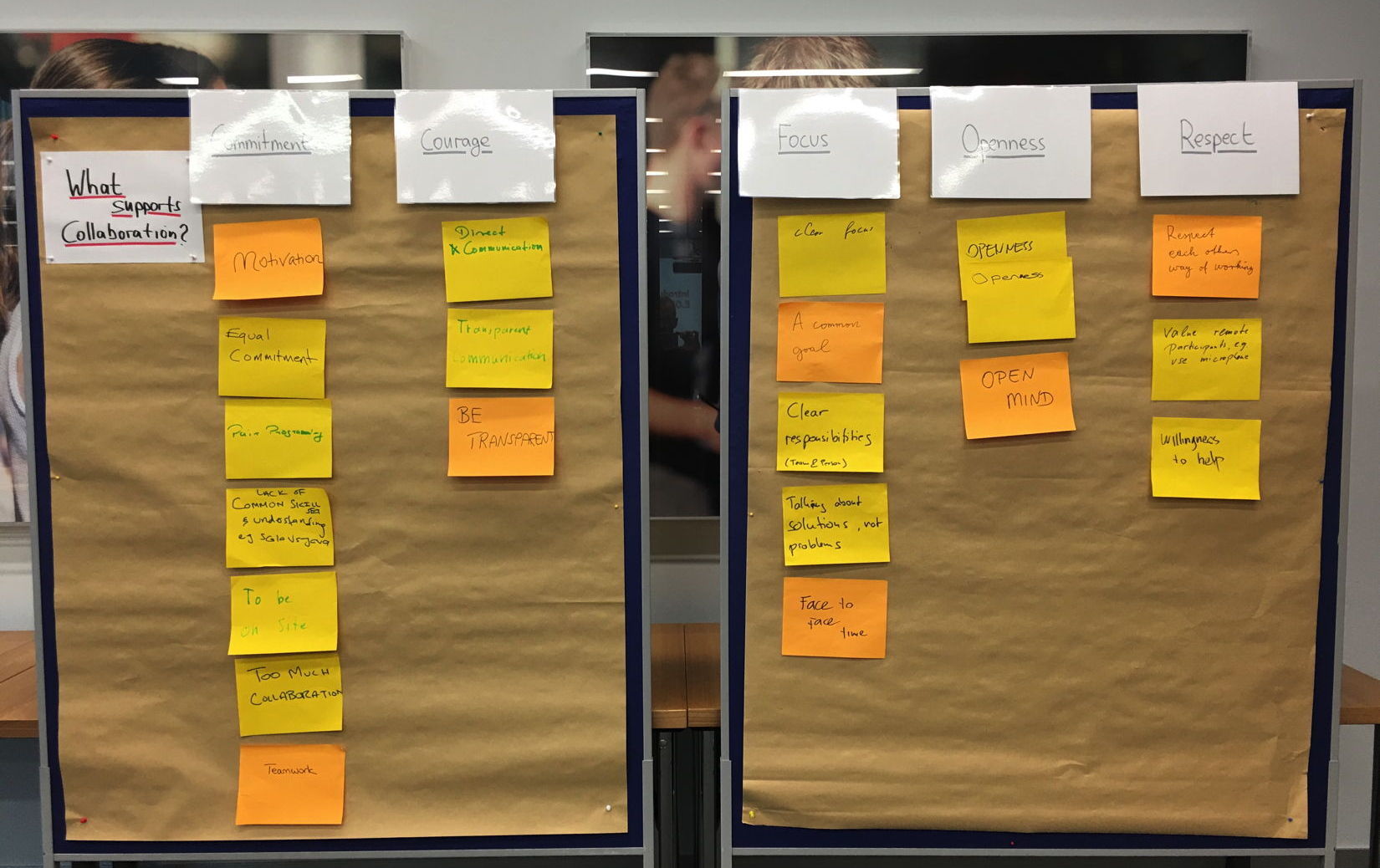
- Ask the participants to pair up and identify within three minutes their choice of the three most important traits that will support collaborating as a team. (I usually provide an example of what is not helpful such as yelling or pointing fingers.)
- Then ask every pair to introduce their choices to the rest of the attendees and put them on the whiteboard. If similar traits are already available, I ask to cluster them.
- Once all stickies are on the whiteboard, the facilitator steps forward and explains what Scrum values are about and why they are helping to guide a team to accomplish its task. (Make sure that you mention the topic of prospective elephants in the room that needs to be addressed in a civilized manner if Kaizen proves to be more than just a buzzword in your organization.)
- The facilitator then puts five stickies with the Scrum values written on them — courage, focus, commitment, respect, and openness — onto the whiteboard and asks the attendees to align their findings with the Scrum values.
Once that is done, you are good to go with the Meta-Retrospective.
The Meta-Retrospective Exercise
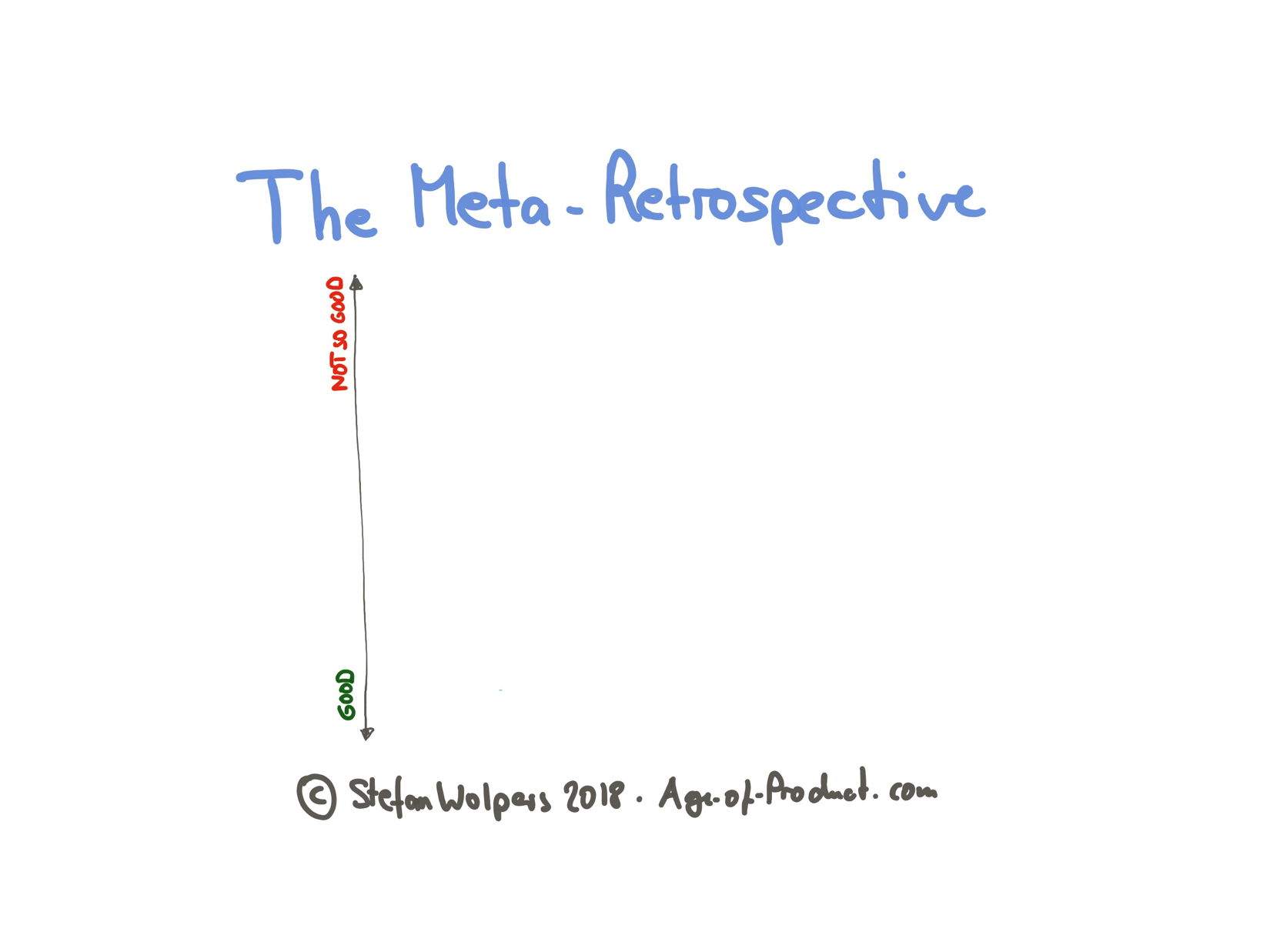
Start the Meta-Retrospective by drawing the first axis onto the whiteboard and note that the axis represents a continuum. Then ask the attendees to pair up again but choose a different partner than before.
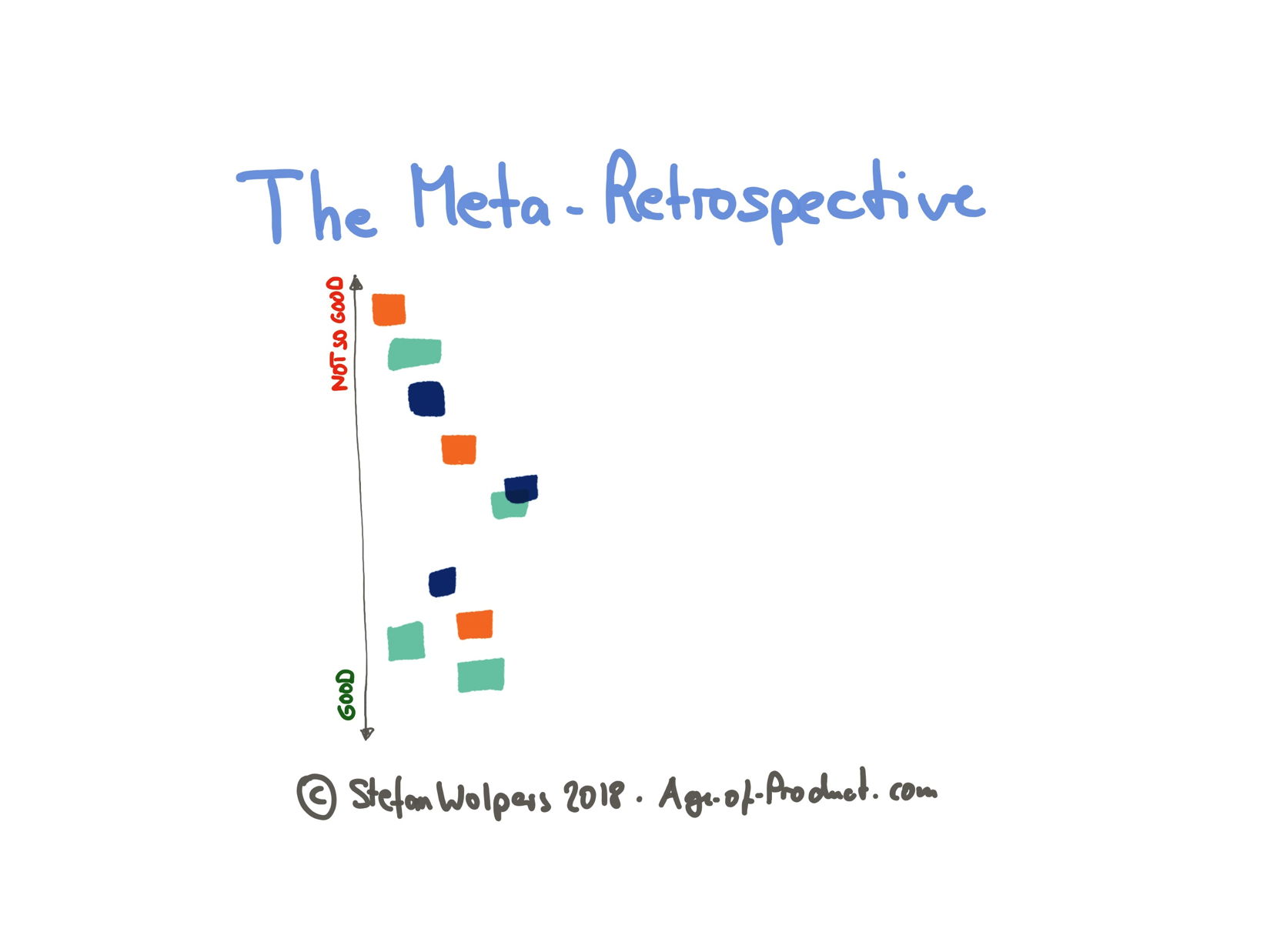
Now ask them to pick their three most important learnings looking back. Time-box this creation phase to 3-5 minutes. After the stickies with the learnings are available, ask every pair to introduce them to the rest of the attendees and put them on the whiteboard. (Again, they shall cluster stickies where appropriate.)
In the next step, introduce the second axis — the “influence” axis — which again is a continuum.
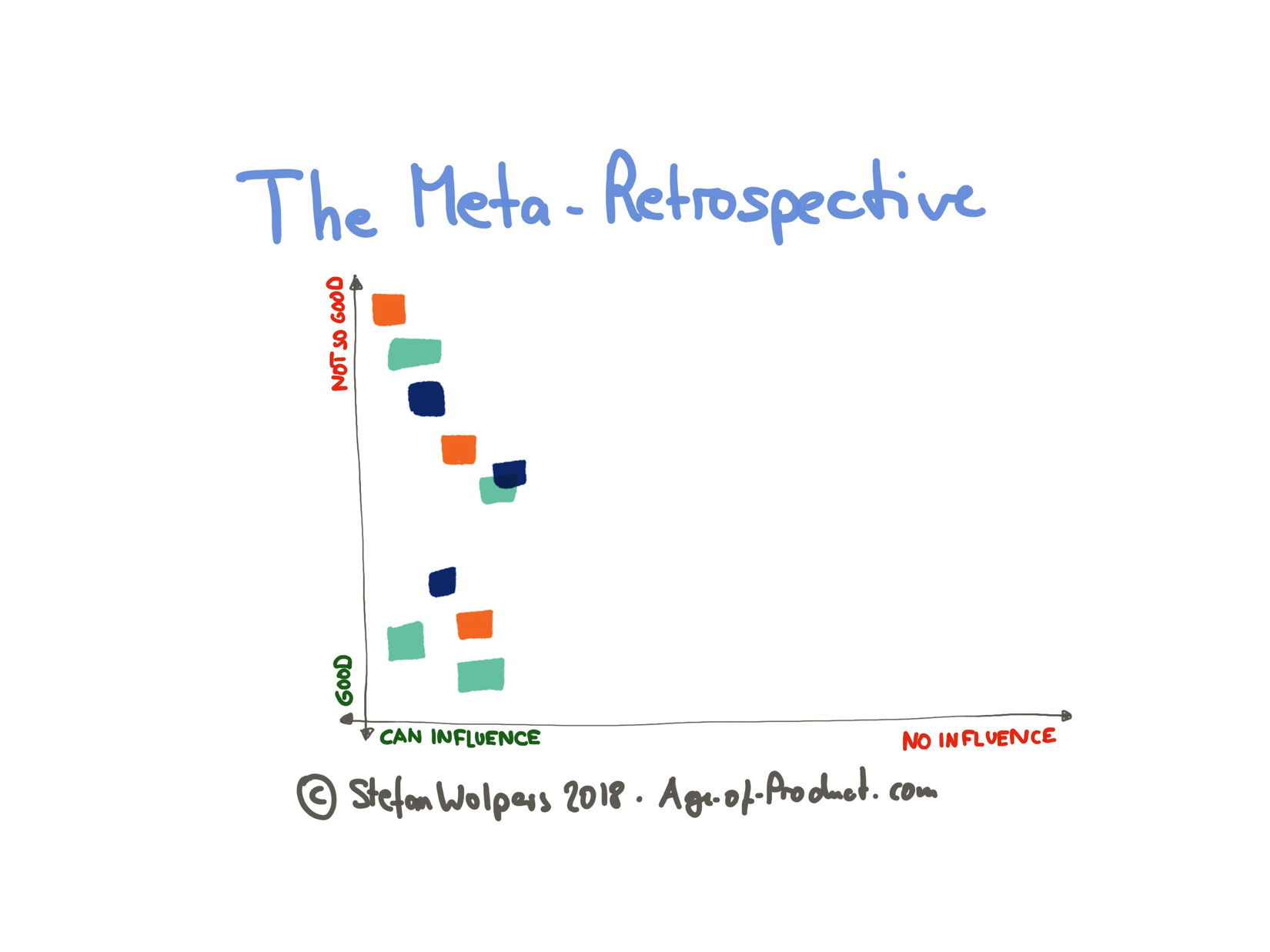
Then ask the participants to align all stickies on the whiteboard also with the second axis. You can stop this once stickies are no longer moved on the whiteboard.
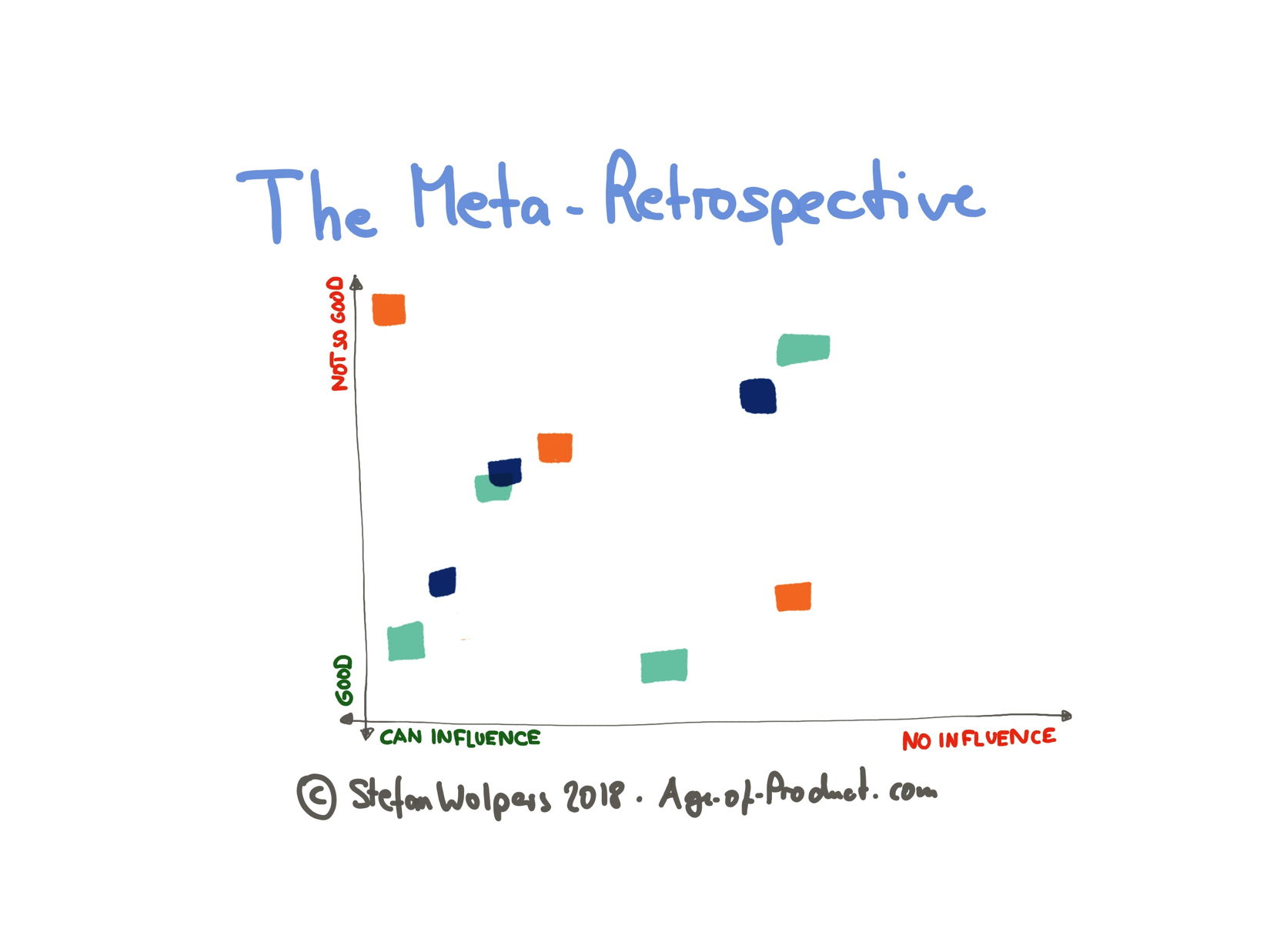
Now it is time to turn the pattern into a 2-by-2 matrix and label the four quadrants accordingly:
- Get to work: This is the area of immediate impact.
- Talk to the management: These issues are impeding you; escalate them to the management.
- Luck: That went well but do not invest any effort in here.
- Keep doing: Nothing to change here at the moment.
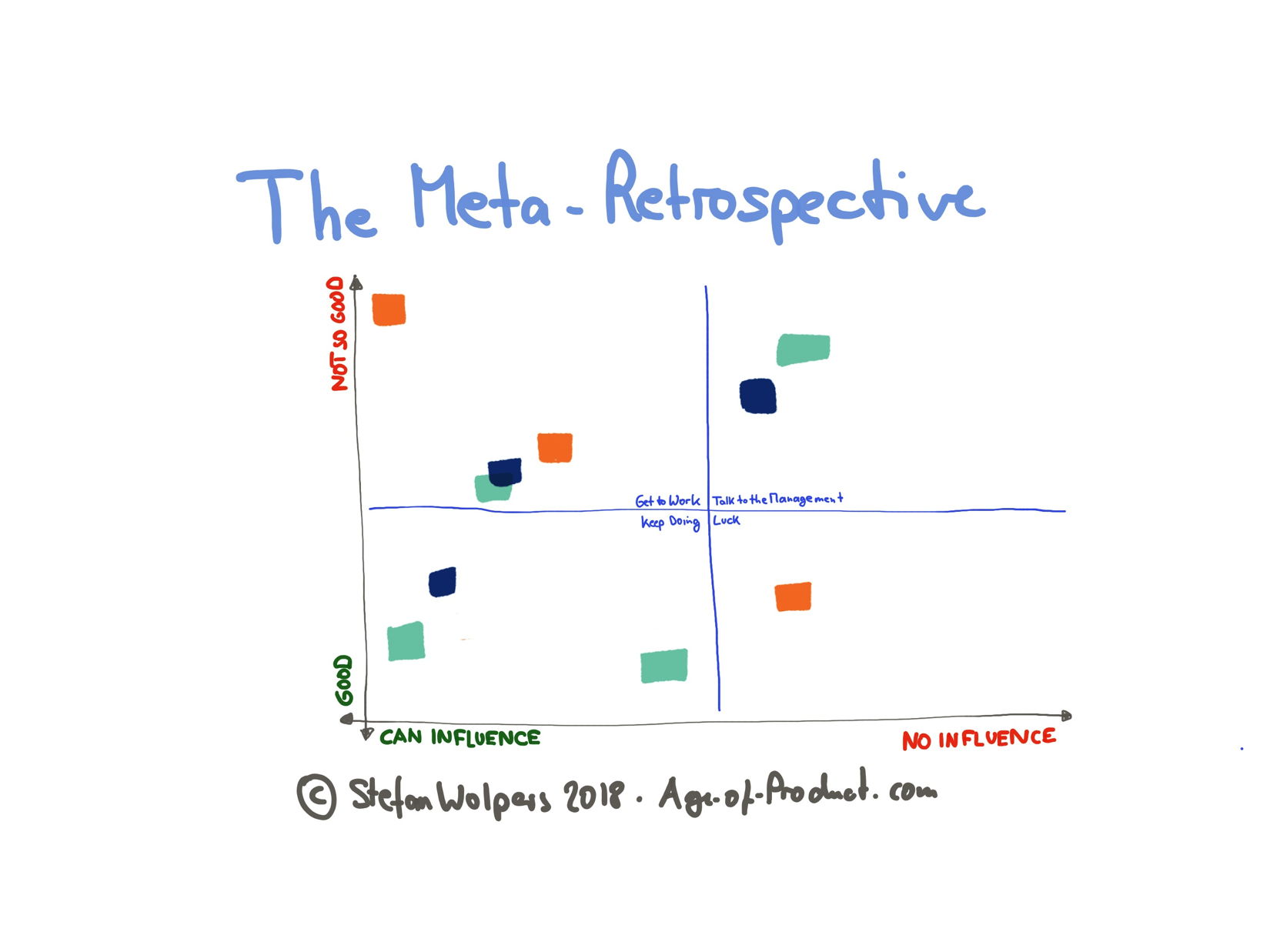
For the next step, focus on the upper left quadrant — “Get to Work” — and ignore the bottom two quadrants. Probably, there will also be time to address the upper right quadrant. (“Talk to the management.”) Start by moving the stickies from the upper left quadrant to a different part of the whiteboard and prepare them for dot-voting to figure out the ranking of the issues. (I usually issue 3-5 dots to each attendee for this purpose. The voting may take up to five minutes.) Once the voting is accomplished, generate some action items by running a lean coffee-style discussion based on the ranked issues.
Meta-Retrospective: Conclusion
Running a Meta-Retrospective is an excellent exercise to foster collaboration within the extended team, create a shared understanding of the big picture, and immediately create valuable action items. Best of all: it takes less than two hours to make the ideas of avoiding ‘Muda’ and practicing ‘Kaizen’ tangible to everyone.
Published at DZone with permission of Stefan Wolpers. See the original article here.
Opinions expressed by DZone contributors are their own.