

You Don’t Get Paid to Practice Scrum
Scrum is just a tool; your job is to solve real customer problems and deliver value. It’s time to reassess what truly drives your success.
 CORE
·
CORE
·
Join the DZone community and get the full member experience.
Join For FreeTL; DR: Why Solving Customer Problems Instead Matters
Scrum is just a tool; your job is to solve real customer problems and deliver value. Stop focusing on perfecting frameworks and start prioritizing outcomes that matter. It’s time to reassess what truly drives your success, particularly given the challenging business environment.
Why Solving Customer Problems Matters More Than Perfecting Scrum
Agile practices, particularly within Scrum, often captivate practitioners with their events, roles, principles, rules, and stickies. However, practitioners tend to overlook two crucial truths — both veterans and newcomers alike:
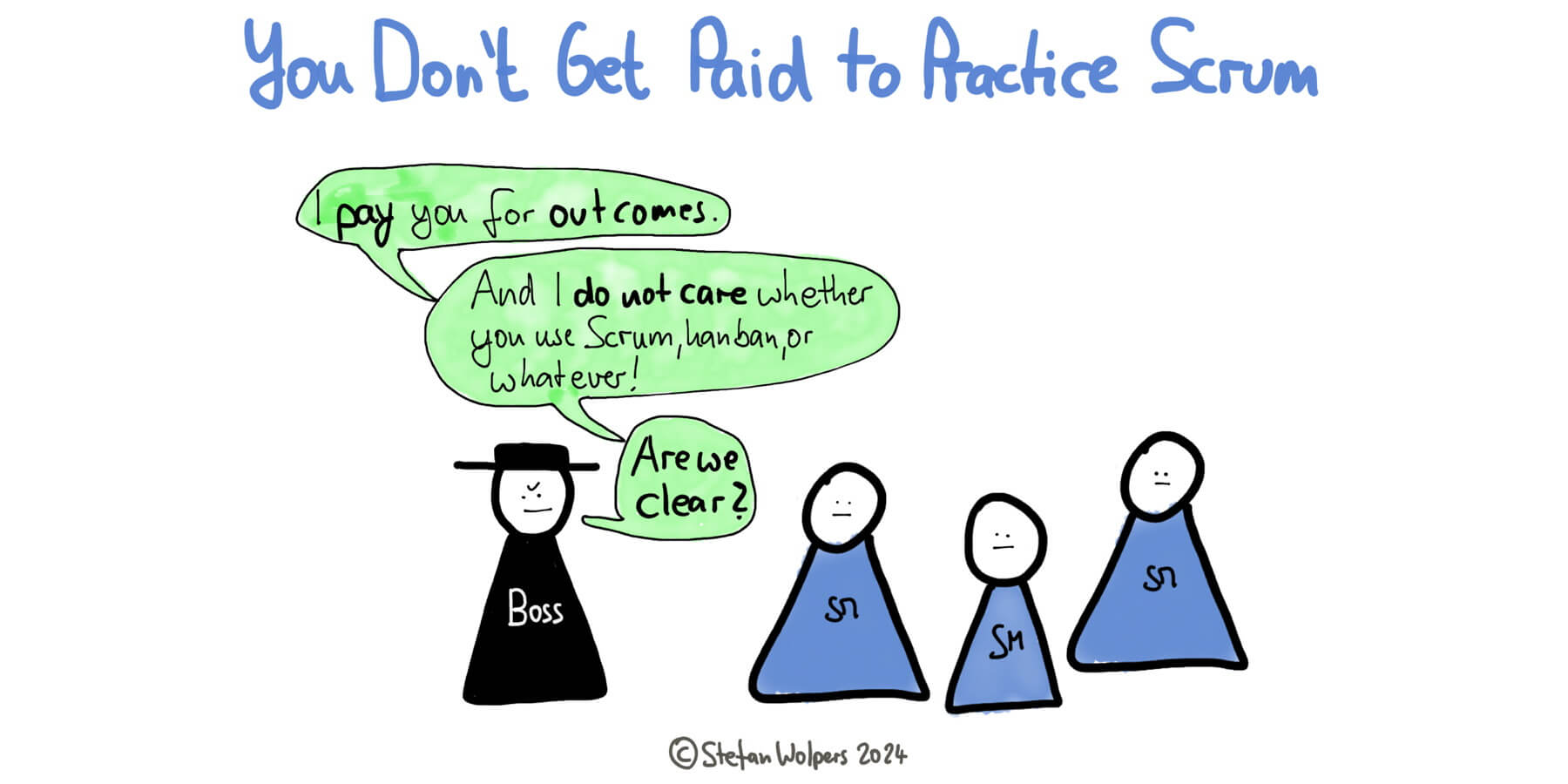
- First, we are not paid to practice Scrum — or any other specific agile framework — but to solve our customers’ problems within the given constraints while contributing to the organization’s sustainability. Remembering that our primary responsibility — helping create valuable outcomes — goes beyond simply adhering to a framework is essential. Our value lies in navigating complex challenges, delivering meaningful solutions, and supporting the organization’s long-term health and profitability.
- Second, as long as we deliver business value ethically, legally, sustainably, and in a financially viable manner, no one cares about the specific tools or frameworks we use. And rightfully so. The reality is that customers, stakeholders, and executives are not interested in the mechanics of how you deliver value — they care about the outcomes. Whether through Scrum, Kanban, or any other method, the tangible business value you create matters.
These basic principles are often overshadowed by a focus on perfecting using agile frameworks, which can lead to a dangerous complacency. Regardless of experience, Agile practitioners may fall into the trap of believing that mastering Scrum — or any other Agile framework — guarantees success. However, the practical, real-life measure of success lies in the business value delivered, not in the flawless execution of a framework.
Suggested Calls to Action
I encourage you to reflect on your current practices. Are you indeed focused on delivering value, or have you been caught up in the pursuit of perfecting your use of a framework?
Are you solving real customer problems or simply following processes without questioning their impact?
You can quickly start analyzing your current situation:
- Reassess your priorities: Take time to critically evaluate whether your current focus is on solving customer problems or simply following Scrum’s motions. Adjust your approach accordingly.
- Engage with stakeholders: Start conversations with your stakeholders and customers to ensure you align on what they perceive as value. Use this feedback to inform your team’s efforts.
- Challenge the status quo: Regularly question whether your practices and tools are the best fit for delivering value in your current context. Be willing to adapt and change when necessary.
- Emphasize outcomes over outputs: Shift your team’s focus from completing tasks to achieving outcomes that make a meaningful difference to your organization and its customers.
- Reflect and adapt: Build a habit of personal reflection. Regularly reflect on your role and contributions and make adjustments to ensure that you are not just practicing Scrum but genuinely delivering value.
Conclusion
Let’s cut to the chase: If you’re still equating your success with how well you adhere to Scrum events or how strictly you follow the rules of any framework, you’re missing the point. Agile, at its core, isn’t about religiously practicing Scrum or any other practice. It’s about solving real customer problems, delivering tangible value, and doing so in a way that sustains the organization.
Scrum and other frameworks are merely tools in your toolbox. They’re helpful, but they’re not the endgame. The real question is: Are you using these tools to create something that matters? If you’re more concerned with the process than the outcomes, it’s time to reassess your priorities.
Take a moment to reflect: Are your practices driving value, or are they just going through the motions? Are you challenging the status quo, or are you complacent, mistaking adherence to a framework for progress? Your role as a Scrum Master or Agile Coach isn’t about being a gatekeeper of Scrum but a catalyst for change and delivering value.
In the end, nobody cares about the tools you use if you’re not delivering results. It matters whether you’re helping your team and organization solve the right problems and achieve meaningful outcomes. So, take a hard look at your approach and ask yourself: Are you delivering the value your customers and stakeholders need, or are you just ticking boxes?
To stay relevant and valuable, focus on what truly counts. Remember, it’s not about Scrum — it’s about delivering results that matter.
Published at DZone with permission of Stefan Wolpers. See the original article here.
Opinions expressed by DZone contributors are their own.
Comments