

An Overview of 3 Java Embedded Databases
Embedded databases move management from standalone systems to your app. Let's take a look at HSQLDB, H2, and Apache Derby to see how they can work with Java apps.
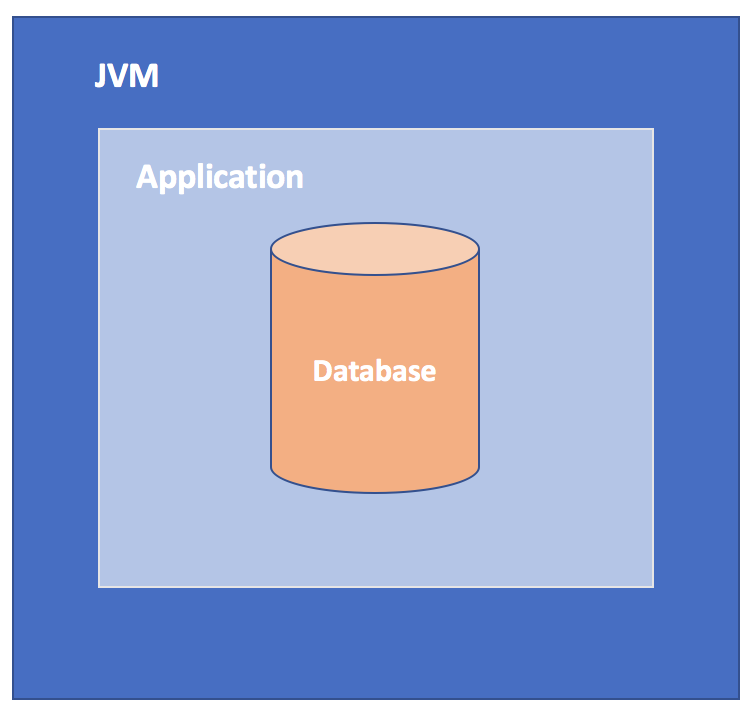
An embedded database is a database that is incorporated as a connected part of an application.
Embedded databases can be very helpful during the development or testing phases because they are lightweight, fast, improve testability, and ease of configuration. We have plenty of choices for incorporating embedded databases. Be sure to apply pragmatism while picking one because each has their own pros and cons.
In this article, I will go over some of the embedded databases for working with Java.
HSQLDB (HyperSQL Database)
HyperSQL Database conforms to the SQL standard and JDBC specifications.
It supports all the core features that are expected from a modern relational database. It can be run either in embedded or server mode. HyperSQL database is built in pure Java and supports JDK 5, 6, 7 and 8 in HyperSQL 2.x.
It provides support for CallableStatement and PreparedStatement, including batch executions to speed up data processing. With version 2.3.x onwards, it supports two-phased locking and multiversion concurrency control.
The package contains a JAR file which contains the required components such as HyperSQL RDBMS Engine and the JDBC driver for embedding HyperSQL in a Java application.
Connection
A connection can be established as follows:
//load the JDBC driver
Class.forName("org.hsqldb.jdbcDriver" );
Connection connection = DriverManager.getConnection("jdbc:hsqldb:testdb", "sa", "");
Check the official documentation for more details.
H2
H2 is the Java SQL database. It's open source and supports the JDBC API. It supports both embedded and server modes and provides support for row-level locking and multiversion concurrency.
Connection
A connection can be established as follows:
//load the driver
Class.forName("org.h2.Driver" );
Connection connection = DriverManager.getConnection("jdbc:h2:~/test", "sa", "");
Here, ~/ indicates user home directory.
In their official documentation, the comparison of H2 with other database engines is quite comprehensive, which makes it easier to pick the one of your choice.
Apache Derby
Apache Derby is an open source relational database implemented entirely in Java and available under the Apache License, Version 2.0. It is based on Java, JDBC, and SQL standards.
It supports client/server and embedded modes. All the standard features of a relational database are supported by Derby.
Connection
Use derby.jar in your application. A connection can be established as follows:
//load the driver
Class.forName(“org.apache.derby.jdbc.EmbeddedDriver”);
Connection c = DriverManager.getConnection("jdbc:derby:testdb1;create=true”);
Summary
The JAR files provided by these database providers contain all the necessary components for CRUD operations. Working with embedded databases is easy and fun. You just need to remember a few tips to make your application work with embedded databases successful!
Published at DZone with permission of Swathi Prasad. See the original article here.
Opinions expressed by DZone contributors are their own.