

Blockchain, AI, and Edge Computing: Redefining Modern App Development
Blockchain, AI, and edge computing are enhancing modern app development by enhancing security, performance, and automation.
Join the DZone community and get the full member experience.
Join For FreeThe overall landscape of app development is continuing with a transformative shift that is driven by various latest technologies, including AI or artificial intelligence, edge computing, and blockchain. These innovations are enhancing the efficiency and functionality of the apps, catering to new layers of security, improving scalability, and enhancing the user experience. The use of the latest technologies is high among app development companies, and they are trying to optimize app performance through this technology.
This article will examine the interconnection of these technologies with others and their specific contributions and impacts on the development process of modern apps.
Role of Blockchain in App Development
In recent times, blockchain is the most useful technology for app development, and it is mostly known for its cryptocurrencies, including Bitcoin, which is required for app development (Gad et al. 2022). Blockchain is decentralized and delivers huge benefits, including transparency, improved security, and data immutability. Over the past two decades, the emergence of smartphones, mobile internet, and applications has significantly contributed to the e-commerce industry, playing a substantial role in the country's economic growth. It can mitigate all the requirements for a central authority and minimize the risk to avoid failure.
In addition, the latest cryptographic techniques always protect the data from uncertified access. In this context, transaction history is visible and verified by all the people. This has a significant impact on application development by automating the process through the agreement, delivering secure identities, and ensuring better transparency in the supply chain and logistics.
Roles of AI in App Development
AI is improving how apps are developed and the way they function. By activating the apps, it is able to learn the behavior of users and implement it in real time. In recent times, AI has improved decision-making, automation, and personalization (Badmus et al. 2024). The contribution of AI is everywhere, in ML models, which help with dynamic adaptability and predictive analytics. The NLP is effective in improving communication through voice assistants and chatbots.
In addition to that, it enables image recognition as well as augmented reality features. In recent times, the latest technologies have addressed the bandwidth and latency issues that exist in cloud computing architecture, and they primarily support the 5G network. In this context, MEC, or "mobile edge computing," is used to deliver emerging solutions that overcome various cloud computing issues. It is used in different sectors in different ways. For healthcare apps, it diagnoses the patient's conditions through data analysis. For retail, it helps to personalize the shopping experience, and for financial institutions such as banks, it is adopted for risk management and fraud detection.
Role of Edge Computing in App Development
Edge computing evaluated the overall limitations of centralized cloud systems by processing data from its nearest resources, resulting in reduced latency, enhanced performance, and improved privacy (Mansouri and Babar, 2021). Low latency is important for some real-time applications, including IoT and gaming, and it reduces the need for high-end data transfers and maintains the privacy of the data. Edge computing has various applications; it is widely used in IoT devices such as autonomous vehicles, smart home products, and wearable gadgets.
This technology is also used in VR and AR for real-time processing to deliver immersive experiences to the user. In addition, this technology is widely usable for telecommunication app development as it improves 5G network capabilities, which enhances customers' experiences. Currently, various stakeholders, including Google, IBM, Microsoft, and other MNCs, are enabling cloud-based services for steering enterprise computations based on edge computing.
Code Snippets
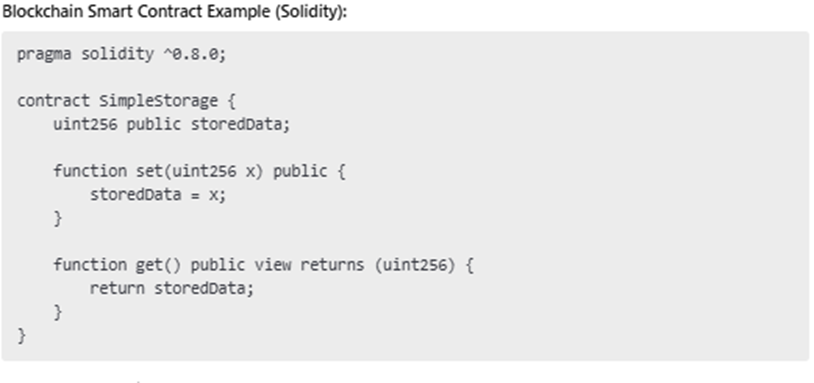
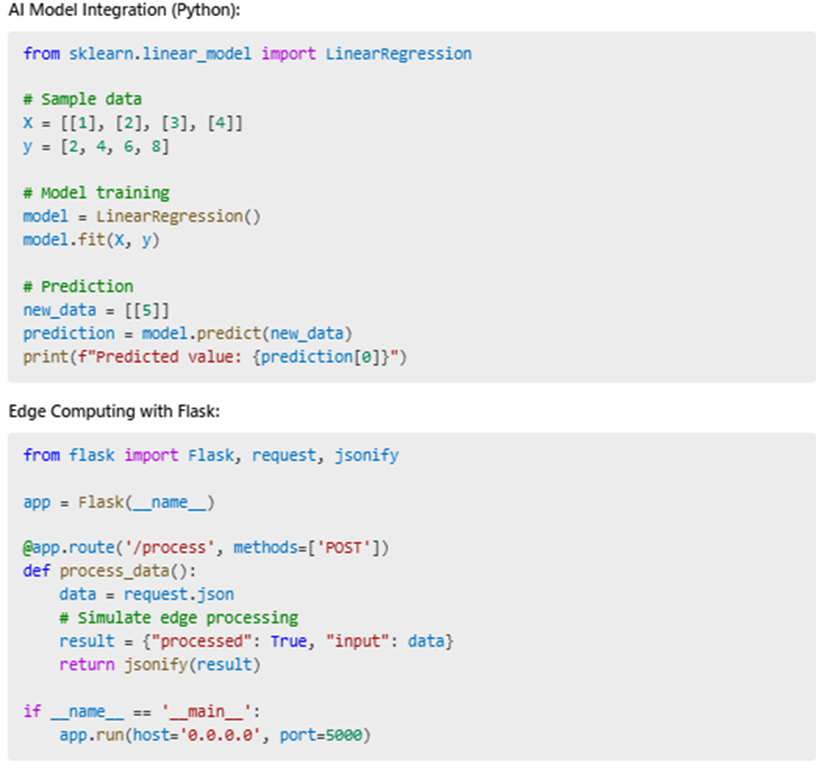
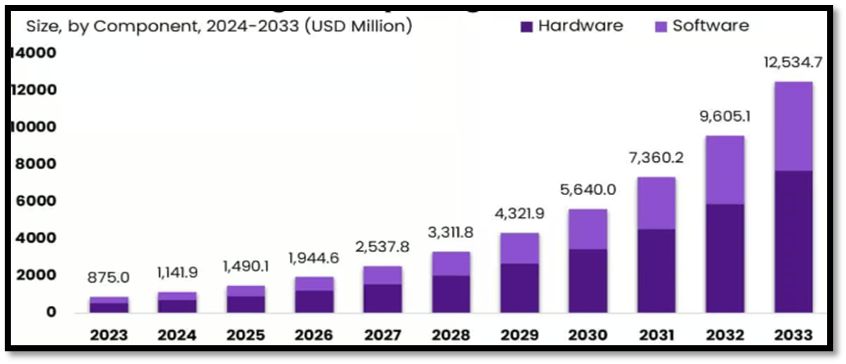
The global edge computing market is growing steadily worldwide. The above figure shows that the use of edge computing is significant in app development, and it will reach its maximum at the end of 2033.
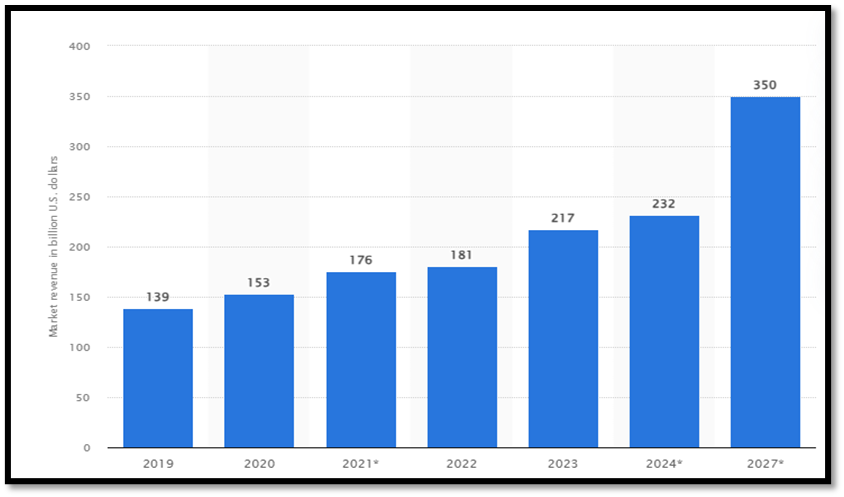
The global edge computing market is expected to reach nearly $ 350 billion by the end of 2027. The above figure shows that the use of this technology is increasing, and it delivers computing, network capabilities, and storage to the local network, which reduces latency, improves performance, and minimizes cost.
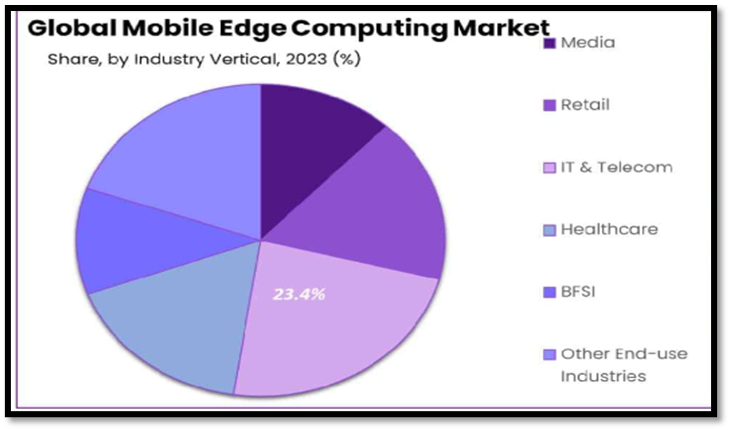
The above figure shows the use of edge computing in app development in various sectors. From the above figure, it is visible that the IT and telecom industries mostly use this technology in developing their apps.
Conclusion
The adoption of AI, edge computing, and blockchain has redefined the boundaries of app development in modern days. These technologies are working collaboratively and address all the critical challenges while unlocking innovation opportunities.
Blockchain is widely important for app development in recent times, as it ensures a high level of trust and security. AI mainly provides intelligent automation, which boosts the overall performance of the application, including operations. On the other hand, the contribution of edge computing is to provide high performance and maintain this in the app, which improves user experience. By embracing the triad, developers may create apps that are not only technologically latest but also linked with the current demands and support the digital landscape.
Further Improvement
To improve AI, blockchain, and edge computing, it will be possible to enhance the app development process, and several steps can be taken to further improve it. It is required to focus on standardization by developing some protocols for interoperability. Along with that, it is important to focus on scalability by addressing all the limitations in the blockchain and the capabilities of edge devices. Better ethical considerations are also required, which ensure that the AI models are fair and transparent.
Additionally, it is necessary to provide proper training and resources for developing expertise in these three technologies. By focusing on all these areas, the integration and adoption of all the transformative technologies may be improved, and it will be important for developing smarter apps.
Opinions expressed by DZone contributors are their own.
Comments