

Cloud Automation Excellence: Terraform, Ansible, and Nomad for Enterprise Architecture
Enterprise cloud architecture demands sophisticated orchestration of infrastructure, configuration, and workload management across diverse computing platforms.
 CORE
·
CORE
·
Join the DZone community and get the full member experience.
Join For FreeEnterprise cloud architecture demands sophisticated orchestration of infrastructure, configuration, and workload management across diverse computing platforms. The traditional approach of manual provisioning and siloed tool adoption has become a bottleneck for organizations seeking cloud-native agility while maintaining operational excellence.
This article explores the strategic integration of three complementary automation technologies: Terraform for infrastructure provisioning, Ansible for configuration management, and HashiCorp Nomad, which serves as a lightweight workload orchestrator, managing application deployment, scaling, and scheduling across diverse infrastructure environments with minimal operational overhead. Unlike monolithic solutions, this ecosystem approach leverages specialized tools that excel in their respective domains while maintaining platform-agnostic capabilities across AWS, Azure, Google Cloud, IBM Cloud, and hybrid environments.
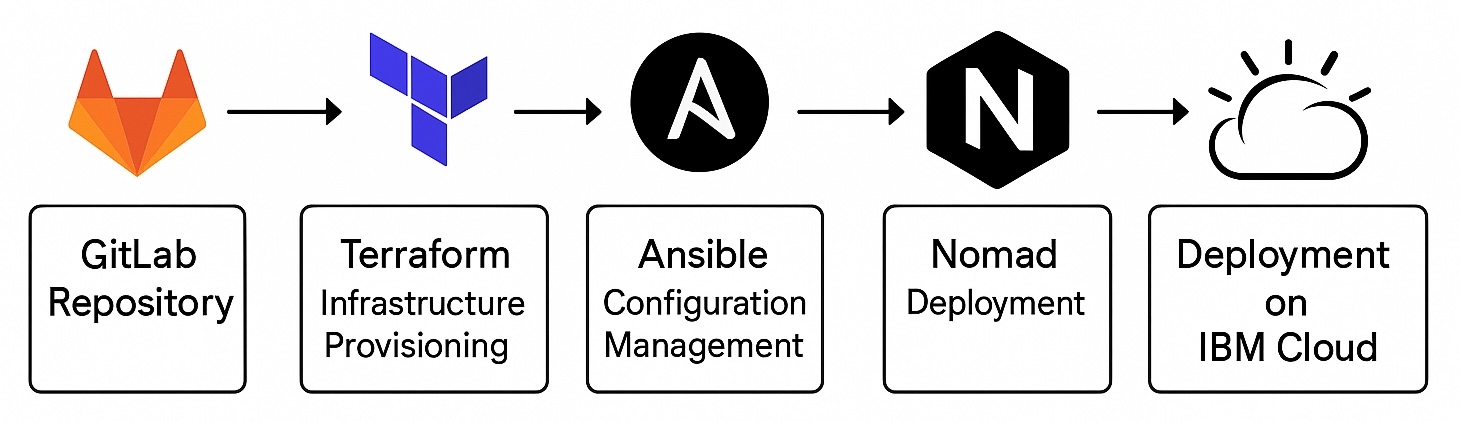
The convergence of Infrastructure as Code (IaC) principles with flexible orchestration platforms enables enterprises to achieve unprecedented consistency, scalability, and operational efficiency. By adopting compute platform agnostic strategies, organizations reduce vendor lock-in while optimizing for specific workload requirements across their multi-cloud infrastructure. The strategic approach is to use Terraform for Day 0 infrastructure creation, Ansible for Day 1+ configuration management and ongoing maintenance, and Nomad for Day 2+ application orchestration and workload management across your enterprise platform.
Strategic Tool Positioning and Enterprise Value
Core Technology Comparison
| Tool | Primary Domain | Enterprise Value Proposition | Strategic Use Cases |
|---|---|---|---|
| Terraform | Infrastructure Provisioning | Declarative infrastructure definition with state management | Cloud resource provisioning, network topology design, and multi-cloud consistency |
| Ansible | Configuration Management | Agentless automation with an extensive ecosystem | OS hardening, application deployment, compliance enforcement |
| Nomad | Workload Orchestration | Lightweight, flexible scheduling across diverse workloads | Container orchestration, batch processing, service mesh integration |
Architecture Decision Framework
- Operational complexity: Terraform's declarative approach eliminates configuration drift at the infrastructure layer, while Ansible ensures consistent system-level configuration. Nomad provides simplified orchestration without the operational overhead of more complex platforms.
- Multi-cloud strategy: All three tools support cloud-agnostic deployments, enabling organizations to implement true multi-cloud architectures without platform-specific automation lock in.
- Team structure alignment: This toolkit naturally distributes responsibilities — infrastructure teams own Terraform modules, system administrators manage Ansible playbooks, and application teams define Nomad job specifications.
Infrastructure Provisioning Excellence With Terraform
Platform Agnostic Infrastructure Patterns
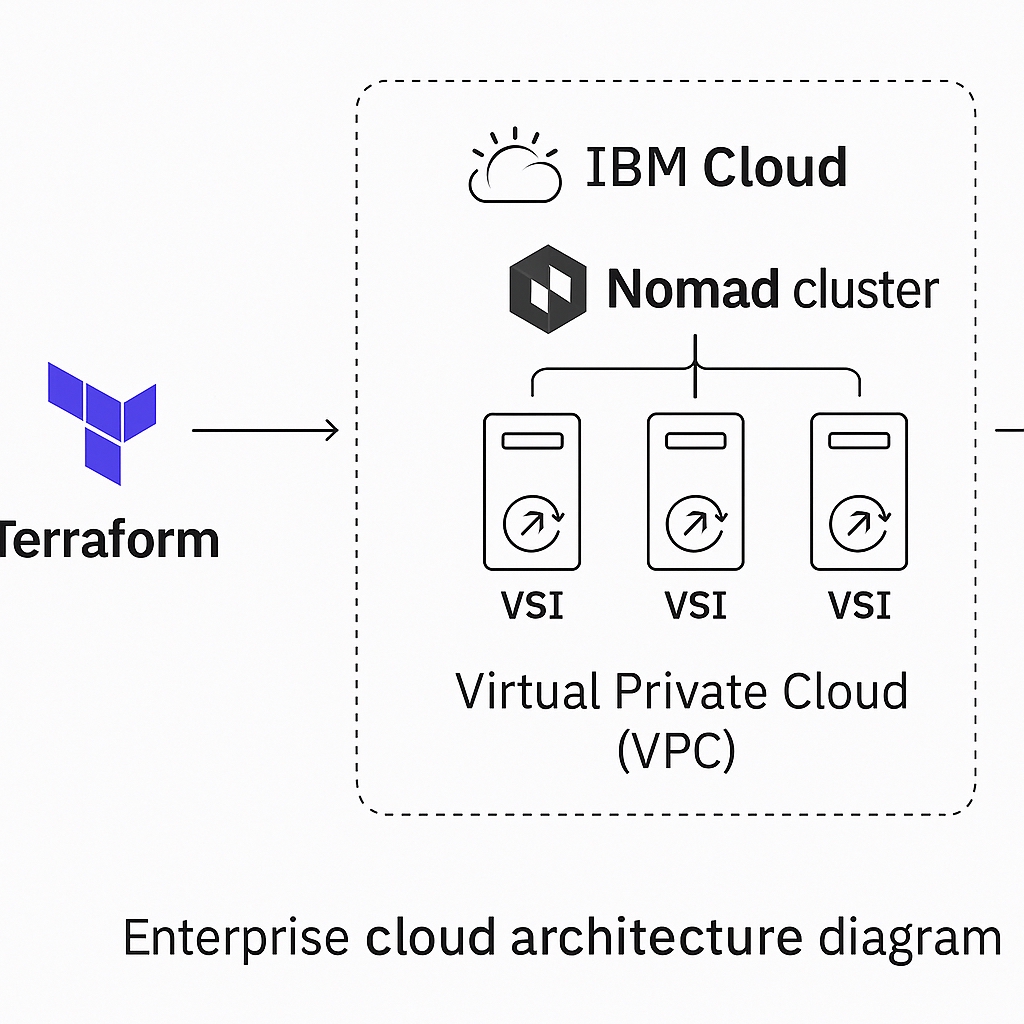
Terraform's provider ecosystem enables consistent infrastructure patterns across cloud platforms. Organizations can define standardized network topologies, security policies, and resource configurations that adapt to platform-specific implementations while maintaining architectural consistency.
Network Architecture Standardization
Enterprise applications require sophisticated network segmentation regardless of cloud provider. Terraform modules can abstract platform differences while implementing consistent security boundaries.
Resource Lifecycle Management
Complex enterprise applications often span multiple clouds for disaster recovery or cost optimization. Terraform's dependency resolution ensures coordinated provisioning across heterogeneous environments.
Governance Integration
Policy-as-code frameworks like Sentinel or Open Policy Agent integrate with Terraform to enforce compliance requirements automatically, regardless of the target platform.
# Enterprise VPC Foundation
resource "ibm_is_vpc" "enterprise_vpc" {
  name = var.environment_name
  tags = local.common_tags
}

# Multi-tier subnet architecture
resource "ibm_is_subnet" "application_tiers" {
  for_each = var.subnet_configuration

  name            = "${var.environment_name}-${each.key}-subnet"
  vpc             = ibm_is_vpc.enterprise_vpc.id
  zone            = each.value.zone
  ipv4_cidr_block = each.value.cidr
}
Configuration Management With Ansible
Universal System Configuration
Ansible's agentless architecture and extensive module library make it ideal for managing diverse enterprise environments spanning traditional servers, containers, network devices, and cloud services across any compute platform.
Security Baseline Enforcement
Enterprise security policies must apply consistently across all compute platforms. Ansible playbooks codify security hardening procedures that adapt to platform-specific requirements while maintaining security standards.
Application Runtime Standardization
Complex enterprise applications require specific configurations regardless of the deployment target. Ansible ensures runtime environments meet application requirements across diverse platforms.
Compliance Automation
Regulatory requirements often mandate specific system configurations. Ansible automates compliance verification and remediation across heterogeneous infrastructure.
# Platform agnostic security hardening
- name: Enterprise Security Baseline
  hosts: all
  become: yes
  tasks:
    - name: Configure security policies
      include_tasks: "security/{{ ansible_os_family | lower }}.yml"
    - name: Apply compliance settings
      include_role:
        name: "compliance.{{ compliance_framework }}"
Workload Orchestration With HashiCorp Nomad
Introduction to Simplified Enterprise Orchestration
HashiCorp Nomad addresses enterprise workload management through a fundamentally different approach than complex orchestration platforms. While maintaining enterprise-grade features, Nomad prioritizes operational simplicity and workload diversity support.
Nomad vs. Kubernetes: Strategic Comparison
| ASPECT | Nomad | Kubernetes |
|---|---|---|
| Architecture | Simple, single binary (servers, clients) | Complex, modular (many components: API, etcd) |
| Workload Types | Containers, VMs, executables, legacy apps | Primarily containers (extensions for VMs) |
| Setup & Management | Fast, easy, minimal dependencies | Steep learning curve, many moving parts |
| Resource Use | Lightweight, cost-effective, performant | Heavier, optimized for large-scale clusters |
| Service Discovery | Integrates with Consul (external) | Built-in (CoreDNS, Services) |
| Secrets Management | Vault integration (external) | Built-in |
| Ecosystem | Focused integration with HashiCorp tools | Massive, broad, numerous plugins/tools |
| Scalability | 10,000+ nodes, 2M+ tasks | Up to 5,000 nodes, 300K containers per cluster |
| Platform Support | Platform-agnostic, any OS, any cloud | Linux only (Windows beta), mostly cloud-native |
Summary of Key Points
- Nomad’s simplicity means it can be quickly deployed and managed by smaller teams. It is perfect for enterprises that want orchestration with minimal operational complexity, regardless of the underlying compute platform.
- Kubernetes offers unparalleled power for container-centric workflows, especially where advanced networking, multi-cluster, and ecosystem features are critical.
- Nomad is better for diverse workload environments, enabling side-by-side deployment of containers, legacy binaries, and VMs. Kubernetes usually requires “containerizing everything,” or using third-party plugins to manage non-container workloads.
- Operational efficiency: Nomad uses fewer resources, is easier to upgrade, and requires less expertise to operate. Kubernetes offers enhanced power but demands dedicated platform engineering.
Enterprise Workload Management Advantages
Workload Diversity
Unlike Kubernetes's container-centric approach, Nomad orchestrates containers, traditional applications, batch jobs, and system services within a unified scheduling framework. This flexibility proves crucial for enterprises with diverse application portfolios.
Operational Simplicity
Kubernetes complexity often becomes an operational bottleneck in enterprise environments. Nomad's streamlined architecture reduces operational burden while delivering enterprise features like multi-region federation and comprehensive security integration.
Platform Flexibility
Nomad runs consistently across any compute platform, enabling true workload portability without platform-specific orchestration dependencies.
Resource Efficiency
Advanced bin-packing algorithms and flexible resource constraints optimize infrastructure utilization across diverse workload types and compute platforms.
# Multi-workload orchestration example
job "enterprise_workloads" {
  datacenters = ["aws-east", "azure-west", "on-premise"]

  group "web_services" {
    count = 3
    task "api" {
      driver = "docker"
      # Container workload
    }
  }

  group "batch_processing" {
    count = 1
    task "data_processor" {
      driver = "exec"
      # Traditional binary execution
    }
  }
}
Integration Architecture and Workflow
Unified Automation Pipeline Design
Enterprise success requires these tools to operate as an integrated ecosystem rather than isolated solutions. Effective integration leverages each tool's strengths while maintaining clear responsibility boundaries.
| Phase | Primary Tool | Key Activities | Integration Points |
|---|---|---|---|
| Planning | Terraform | Cross-platform resource planning | Generate inventory for Ansible |
| Provisioning | Terraform | Infrastructure creation across clouds | Trigger configuration management |
| Configuration | Ansible | Universal system setup | Prepare orchestration targets |
| Deployment | Nomad | Multi-platform workload scheduling | Integrate with load balancers |
| Operations | All Tools | Coordinated lifecycle management | Unified monitoring and alerting |
Platform Agnostic Pipeline Benefits
- Vendor independence: Organizations avoid platform-specific automation dependencies, enabling strategic cloud provider decisions based on business requirements rather than technical constraints.
- Consistent operations: Identical automation patterns apply across different cloud platforms, reducing operational complexity and training requirements.
- Cost optimization: Platform flexibility enables workload placement optimization based on cost, performance, or regulatory requirements.
Enterprise Implementation Best Practices
- Define environments and resources in Terraform for repeatability and version control.
- Automate configuration with Ansible to keep systems secure and up to date.
- Use Nomad for portable, scalable workload orchestration—across compute platforms and cloud boundaries.
- Integrate monitoring and logging using observability tools; Nomad and Kubernetes both work well with Prometheus/Grafana.
- Plan for disaster recovery, security, and compliance: use Vault for secrets, security groups in infrastructure code, and automate backups.
Organizational Excellence
- Cross-platform expertise: Teams develop transferable skills focused on automation principles rather than platform-specific implementations, improving organizational agility and reducing vendor dependency.
- Governance framework: Enterprise policies apply consistently across all platforms through code-driven enforcement, ensuring compliance regardless of deployment target.
- Security integration: Identity management, secrets handling, and network security policies maintain consistency across heterogeneous environments.
Technical Excellence Patterns
- Modularity: Reusable components adapt to different platforms while maintaining functional consistency, reducing development effort, and improving maintainability.
- Testing strategy: Automation validation must work across multiple platforms, requiring comprehensive testing approaches that verify both platform-specific implementations and cross-platform consistency.
- Monitoring integration: Unified observability across diverse platforms provides consistent operational visibility regardless of underlying infrastructure.
Security and Compliance Considerations
Platform Agnostic Security
Enterprise security requirements must apply consistently across all compute platforms. This automation ecosystem enables security policy implementation that adapts to platform capabilities while maintaining security standards.
- Identity integration: Authentication and authorization policies integrate with enterprise identity providers regardless of the target platform.
- Network security: Security group policies and network segmentation rules translate appropriately across different cloud networking models.
- Compliance automation: Regulatory requirements implementation adapts to platform-specific capabilities while maintaining compliance objectives.
Cost Optimization and Resource Efficiency
Multi-Platform Cost Strategy
Platform-agnostic automation enables sophisticated cost optimization strategies that leverage pricing differences and feature variations across cloud providers.
- Workload placement: Applications can be deployed on optimal platforms based on cost, performance, and regulatory requirements without automation rework.
- Resource right-sizing: Consistent resource allocation policies apply across platforms while adapting to platform-specific instance types and pricing models.
- Environment management: Automated environment provisioning and deprovisioning work identically across platforms, eliminating resource waste.
Performance and Scalability
Enterprise Scale Considerations
- Geographic distribution: Workloads can be distributed across multiple cloud providers and regions based on performance requirements rather than automation limitations.
- Disaster recovery: Cross-platform capabilities enable sophisticated disaster recovery strategies that span multiple cloud providers.
- Capacity management: Dynamic scaling policies adapt to platform-specific capabilities while maintaining consistent application behavior.
Future-Proofing Strategy
Technology Evolution Adaptation
Platform-agnostic automation approaches provide flexibility to adopt new cloud services and technologies without wholesale automation replacement.
- Innovation adoption: New platform capabilities can be integrated into existing automation workflows without disrupting operational patterns.
- Vendor negotiation: Reduced vendor lock-in improves negotiating position with cloud providers and enables strategic platform decisions.
- Skill investment: Team capabilities focus on transferable automation principles rather than platform-specific knowledge that may become obsolete.
Conclusion
The strategic integration of Terraform, Ansible, and HashiCorp Nomad represents a maturation of enterprise cloud automation that prioritizes operational excellence over technological complexity. By adopting platform-agnostic approaches, organizations achieve true cloud flexibility while maintaining operational discipline.
The choice of Nomad over Kubernetes reflects enterprise priorities of operational simplicity and workload diversity over container-centric complexity. This decision enables organizations to orchestrate their complete application portfolio through unified platforms while avoiding the operational overhead associated with more complex orchestration systems.
Enterprise success with cloud automation is measured by business outcomes rather than technological sophistication. This toolkit provides the foundation for achieving improved agility, reduced operational risk, and enhanced innovation capacity while maintaining the governance and compliance requirements essential for regulated environments.
The platform-agnostic approach enables organizations to optimize their cloud strategies based on business requirements rather than technical constraints. This flexibility becomes a strategic asset that supports sustainable growth and competitive advantage in an increasingly digital business environment, while providing the operational foundation necessary for long-term success across diverse computing platforms.
Opinions expressed by DZone contributors are their own.
Comments