

Beyond Buzzwords: Demystifying Agentic AI
Understand agentic AI: how AI agents use tools, planning, and retrieval-augmented generation (RAG) to act, reason, and solve tasks effectively.
Join the DZone community and get the full member experience.
Join For FreeAI discussions today are filled with buzzwords — autonomy, orchestration, reasoning, context-awareness, and more. These terms often get used loosely, yet they are central to understanding the shift toward agentic AI. In this article, I’ll unpack the most common buzzwords tied to AI agents, explain what they really mean, and show how they come together to shape agentic AI.
What Are Agents Anyway?
First, let us understand what an agent is. Why does everyone want to build an agent?
To be honest, there’s no widely accepted definition. But here’s a simple and useful one for our purposes:
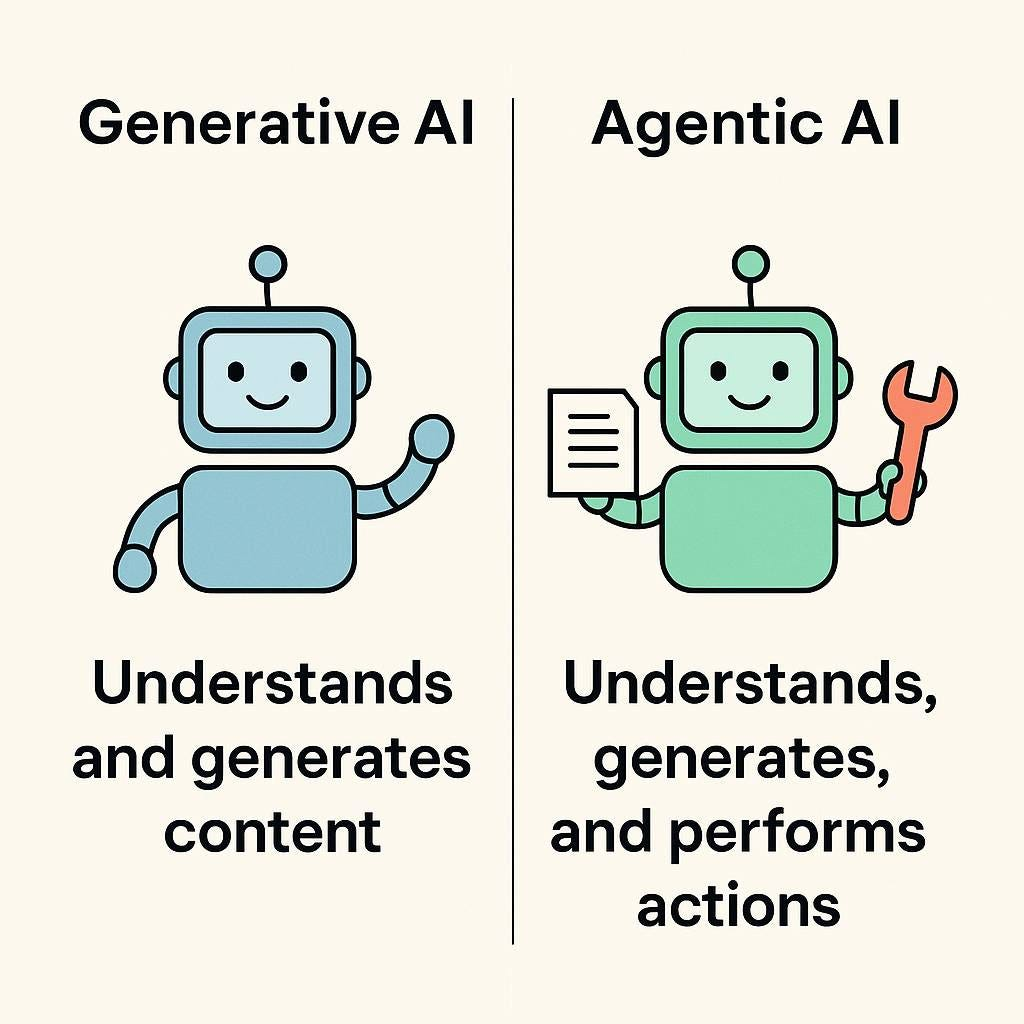
This makes agents far more than chatbots that just generate text — they can plan, act, and adapt in real-world scenarios.
Agent Actions: What They Are and How They Work
At the core of an agent’s capabilities are tools. These tools can be APIs, database queries, function calls, or storage lookups that retrieve knowledge bases (RAG) or plugins that connect to external systems. We’ll explore Tools and RAG in more detail later.
Unlike a simple chatbot that only returns text, an agent can issue structured commands, such as:
send_email()with defined inputsfetch_records()from a CRM using a specific query
The agent is made aware of which tools are available and then decides when — and how — to use them, often guided by a reasoning or planning mechanism. This is what transforms an LLM from a passive responder into an active problem solver.
Adding to this, the Model Context Protocol (MCP) standardizes how agents discover and interact with tools. MCP provides a consistent way for agents to connect with APIs, plugins, and external resources without custom wiring each time. This allows agents to dynamically extend their capabilities, ensuring interoperability and easier integration across diverse ecosystems.
Now that we’ve seen how an agent works at a high level, let’s look at the different types of agents you can build to solve problems.
Types of Agents: Choosing the Right One
The first step is to identify what business problem the agent should address and how much autonomy you’re willing to give it. This isn’t a one-size-fits-all choice — context matters. Different problems call for different levels of agent involvement and control.
There are mainly four types of agents that can solve most of the real-world scenarios. Based on the context, the user can choose the type of agent to build.
|
Problem Type |
Suggested Agent Type |
Enterprise Example** |
|---|---|---|
|
Structured, rules-based |
Rule-Based System |
Automatically approve reimbursements under $100 or trigger invoice processing based on fixed thresholds |
|
Human-led process needs speed |
Workflow Agent |
Suggesting first-draft responses to support tickets in Zendesk, or summarizing meeting transcripts for Slack follow-up |
|
Multi-step, repeatable, bounded |
Semi-Autonomous Agent |
Lead enrichment and follow-up: fetch CRM info → draft outreach → send email → log interaction |
|
Complex, async, cross-system |
Autonomous Agent |
A competitive intelligence agent that monitors public news, pulls data from multiple APIs, clusters insights, and generates weekly market reports |
These approaches aren’t mutually exclusive. A single system may mix them — some parts needing high control, others benefiting from higher autonomy. And each task may be handled by a single agent or a group of collaborating agents.
Tools: The Building Blocks of Agents
We talked about different types of agents, from rule-based to fully autonomous, and how the right level of autonomy depends on the problem you're solving.
But here's a shared trait across all agent types, no matter how simple or complex: They rely on tools to perform actions. So what are tools anyway?
What Are “Tools” in AI?
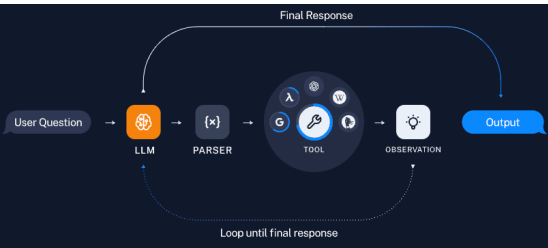
In the context of agentic AI, tools are external capabilities the LLM can invoke, things like:
- APIs
- Database queries
- Internal services
- Third-party systems
- Internal functions written in code
They turn the LLM from something that just talks into something that can act. Remember, LLMs on their own are stateless, have no access to real-time systems, and can’t take action.
Why these tools matter:
- They unlock execution. Without tools, your agent is just an assistant who makes suggestions. With tools, it can complete workflows end-to-end.
- They increase precision. Rather than hallucinating, the LLM can ask the right system directly — “What’s the actual order status?” instead of making up a delay reason.
- They let you control risk. You define what’s exposed. The LLM can’t do anything outside of the tools you register.
- They enable composability. If you want to combine your CRM, calendar, and email stack into one assistant, you can expose each of those as tools and let the LLM orchestrate them.
I really like the following diagram from LangChain on how tools help to execute.
RAG in the Age of Agents
What is RAG, and how does it fit into the agentic AI world?
So far, we’ve looked at how tools help agents interact with systems. But what if an agent doesn’t need to act — it just needs the right information? That’s where retrieval-augmented generation (RAG) comes in.
RAG is a design pattern where a model retrieves relevant information from your enterprise data before generating a response. Instead of relying only on what the LLM was trained on, RAG grounds answers in live, contextual information from your systems.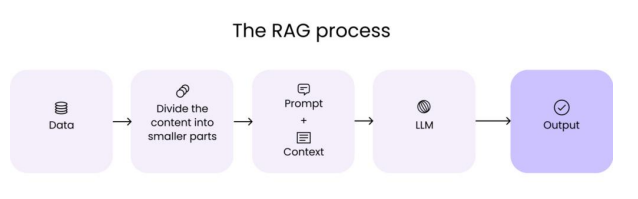
RAG process at glance
- Data – Your internal content (PDFs, emails, notes, wikis)
- Chunking – It’s broken into smaller parts for better indexing
- Prompt + context – At query time, the system retrieves relevant pieces (this is also called the retrieval phase)
- LLM – The model uses that context to generate a response
- Output – The result is based on your data, not just what the model "knows"
From RAG to Agentic RAG
In the agentic era, RAG is evolving. Instead of a single retrieve-and-respond cycle, agents now plan, retrieve, reflect, and re-retrieve as often as needed. This iterative process is called agentic RAG.
This diagram illustrates agentic RAG.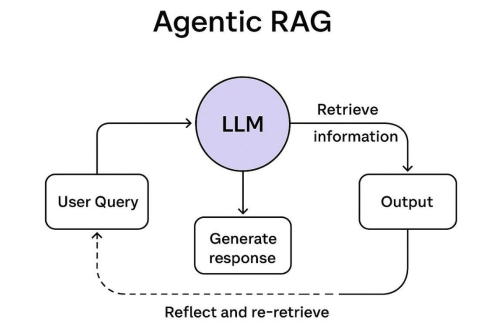
Think of agentic RAG as turning retrieval into a first-class decision-making loop. It acts like a tool — but instead of triggering actions, it continuously pulls the right information at the right time.
In practice, powerful agents often combine RAG + tools + planning to complete complex, context-rich tasks.
The following table explains in detail the difference between traditional and agentic RAG.
| Aspect | Traditional RAG | Agentic RAG |
|---|---|---|
| Retrieval Cycle | Single query → single retrieval → single response | Iterative: plan → retrieve → reflect → re-retrieve as needed |
| Adaptability | Fixed to initial query | Dynamically adjusts retrievals during reasoning |
| Problem-Solving | Limited to surface-level answers | Enables deeper exploration and multi-step reasoning |
| Role of Agent | Passive consumer of retrieved content | Active orchestrator of retrieval and reflection |
| Outcome | One-shot answer | Context-aware, refined, and higher-quality output |
I will not go into details of MCP. I have explained MCP in depth in my previous blog. But it’s worth noting that MCP is becoming a critical standard for making agents extensible and interoperable.
Final Thoughts
We are entering an agentic AI era where buzzwords like autonomy, orchestration, reasoning, and context-awareness are no longer just hype — they represent real capabilities shaping how AI systems operate. Agents are no longer passive responders; they are becoming active problem solvers that can plan, act, reflect, and adapt. With tools, RAG, and emerging standards like MCP, we’re seeing the foundation of scalable, interoperable agent ecosystems.
Looking ahead, the organizations that embrace agentic AI will be best positioned to unlock new efficiencies, accelerate innovation, and build AI solutions that aren’t just smart — but also reliable, adaptable, and enterprise-ready.
Opinions expressed by DZone contributors are their own.
Comments