

Enterprise Java Applications: A Practical Guide to Securing Enterprise Applications with a Risk-Driven Architecture
A risk-driven security architecture for enterprise Java-based applications, which prioritizes security controls according to the impact of the risk.
 ·
·
Join the DZone community and get the full member experience.
Join For FreeEnterprise Java applications still serve business-critical processes but are becoming vulnerable to changing security threats and regulatory demands. Traditional compliance-based security methods tend to respond to audits or attacks, instead of stopping them. This paper introduces a risk-based security architecture, which focuses on protection according to the impact of the business, the probability of the threat, and exposure. The threat modeling, dependency risk analysis, and layered security controls help organizations to minimize the attack surfaces beforehand without impacting on performance and delivery velocity. The strategy is explained with the help of real-life examples of enterprise Java to facilitate its use in practice.
Intended Audience
The audience targeted in the article is those an enterprise architect, senior Java developer, security architect, and DevSecOps teams who are required to design, modernize or secure large-scale Java applications. In recent years, there are a number of breaches of enterprises that have not been initiated by a zero-day exploit but a known vulnerability, which has not been prioritized e.g. an outdated library, an open API, or a poorly configured integration In a number of instances, the organizations were technically compliant but still exposed because of the homogenous, checklist-driven security measures that did not concentrate on the high-risk elements.
This article describes how a risk-based security architecture can help enterprise Java teams transition to business-oriented, proactive, and not reactive security. Readers will gain knowledge of how to determine high-impact risks, selectively apply layered security controls, and incorporate security decisions into modernization efforts like Java version upgrades or framework migrations.
Problem Definition and Motivation
Enterprise Java systems are usually made up of several layers such as web APIs, messaging systems, databases, identity providers, and external integrations. The consideration of all the components in equal terms in terms of security results in inefficient controls and blind spots.
Risk Prioritization Logic
An early decision-making can be made with the help of a simple risk matrix:
- Likelihood: How easy is exploitation?
- Impact: What does the business impact?
- Exposure: Does the component face the internet or is internal?
- Criticality: Does it support revenue, identity or compliance data?
This prioritization at an early stage makes sure that security is being done on what is important.
Threat Modeling in Practice
Threat modeling should be maintained as practical and not theoretical.
Mini Example: REST API Threat Modeling (STRIDE)
Take the example of an enterprise Java REST API that deals with authentication:
- Spoofing: Weak validation token impersonation.
- Tampering: Manipulation of payloads in unsecured endpoints.
- Repudiation: Privileged action audit logs are missing.
- Information Disclosure: Overwhelming error messages.
- Denial of Service: Unthrottled endpoints.
- Elevation of Privilege: Role bypass through improperly configured filters.
This analysis identifies the endpoints that need more authentication, logging, and rate limiting- prior to the incidence. This workflow is presented in Figure 1, where the priorities of assets, threats, and mitigations are established in a systematic manner.
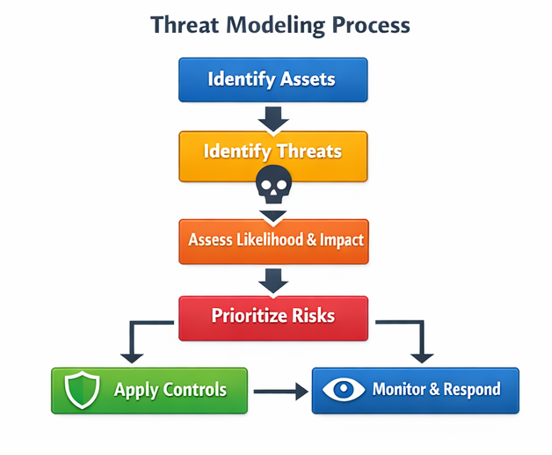
Figure 1: The risk-based security threat-modelling workflow.
The audit helps to understand what modules should be covered at once and which ones can be covered progressively.
Dependency and Vulnerability Management
Enterprise Java applications are highly dependent on third-party libraries and dependency risk management is very important.
Practical Prioritization Rule
Rather than reacting to every CVE:
Priority Score = CVSS × Exposure × Business Criticality
- A medium CVSS vulnerability in an external authentication component can be more pressing than a critical CVE in an internal utility library.
- This will eliminate churn in upgrades that are not necessary and will deal with actual threats.
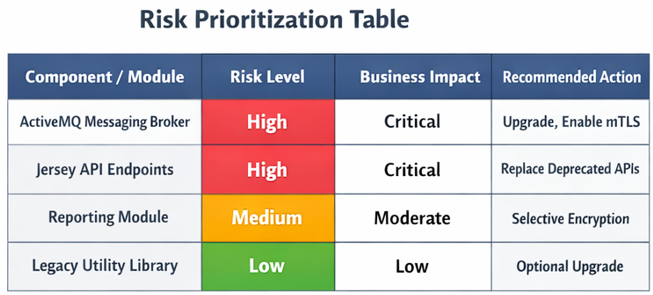
Table 1 provides a summary of how enterprise teams can categorize dependencies and implement specific remediation.
Table 1: Enterprise Java systems risk components and recommendations.
Layered Security Controls
Risk-driven architecture implements selective controls at layers:
- Application Layer: Token hardening, secure authentication, input validation.
- Integration Layer: OAuth2, mTLS, API gateway enforcement.
- Data Layer: Data masking, access control, encryption.
Figure 2 visually illustrates the correspondence of these controls to architectural layers and the areas of high risk that should be enforced more.
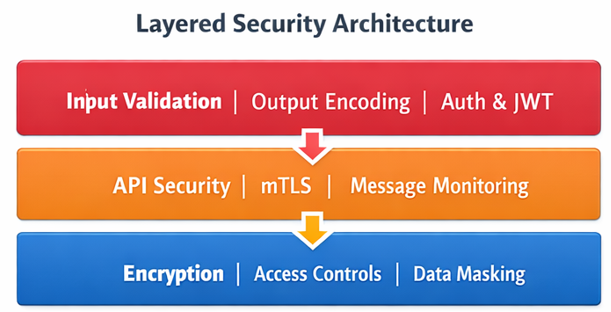
Figure 2: Application, Integration, and Data layers of security controls.
The controlling systems may be more rigorous with high-risk modules and may assist low-risk areas, without affecting performance and security.
Continuous Monitoring and Response
The implementation of risk-driven security is not the end.
The high-risk components should consist of:
- Selective logging and monitoring.
- Real-time alerting
- Clear incident response playbooks.
This ensures early detection and rapid response, especially for authentication flows and external integrations.
Case Study: Java-based Legacy SAP-Integrated System Modernization
A large enterprise found during a Java 8 to Java 17 migration:
- ActiveMQ endpoints that can be intercepted.
- Obsolete Jersey APIs with no input validation.
- Reporting modules that are performance sensitive.
Instead of using the same level of controls, the team focused on high-risk parts first.
Figure 3 shows the modernization roadmap, audit to monitoring.
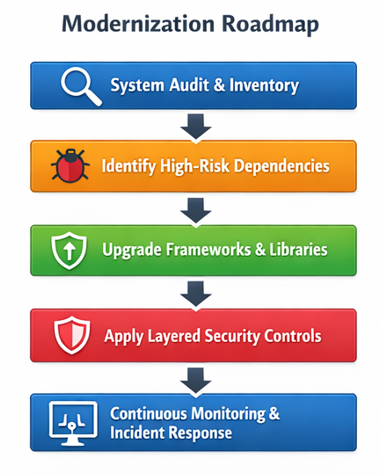
Figure 3: Implementation plan for risk-driven security methodologies.
The outcome was a safe modernization that had little performance consequences and reduced delivery schedules.
What to Do Next: Action Checklist
- List all enterprise Java components and integrations.
- Determine risky assets with a simple risk matrix.
- Lightweight threat modeling of critical APIs.
- Rank dependencies based on CVSS + exposure + business impact.
- Use layered security where the risk is greatest.
- Introduce high-risk workflow monitoring.
- Reevaluate risks when upgrading or changing architecture.
Conclusion
Risk-based security architecture helps enterprise Java teams to shift their compliance-driven efforts to proactive, business-oriented protection. Through prioritization of risks, intelligent application of layered controls and integration of security into modernization initiatives, organizations can go a long way in minimizing exposure without compromising performance or agility.
By taking this path, security can be transformed into a defensive requirement as well as a strategic facilitator of enterprise systems.
Opinions expressed by DZone contributors are their own.
Comments