

Exploring MCP, A2A, and Functional Calling: The Modern Innovations for Enterprise LLM Architecture
MCP, A2A, and functional calling are crucial for next-generation AI ecosystems. Learn more about integrating these approaches in your organizational AI strategies.
Join the DZone community and get the full member experience.
Join For FreeArtificial intelligence is moving away from experimental prototypes to mission-critical enterprise-level infrastructure. Creating systems that work under the constraints and requirements present in the enterprise world has never been more challenging for developers. There are three innovative architectural patterns that will define production-grade AI solutions: model-context protocol (MCP), agent-to-agent Protocol (A2A), and functional calling.
Model-Context Protocol (MCP): Context Execution Modality
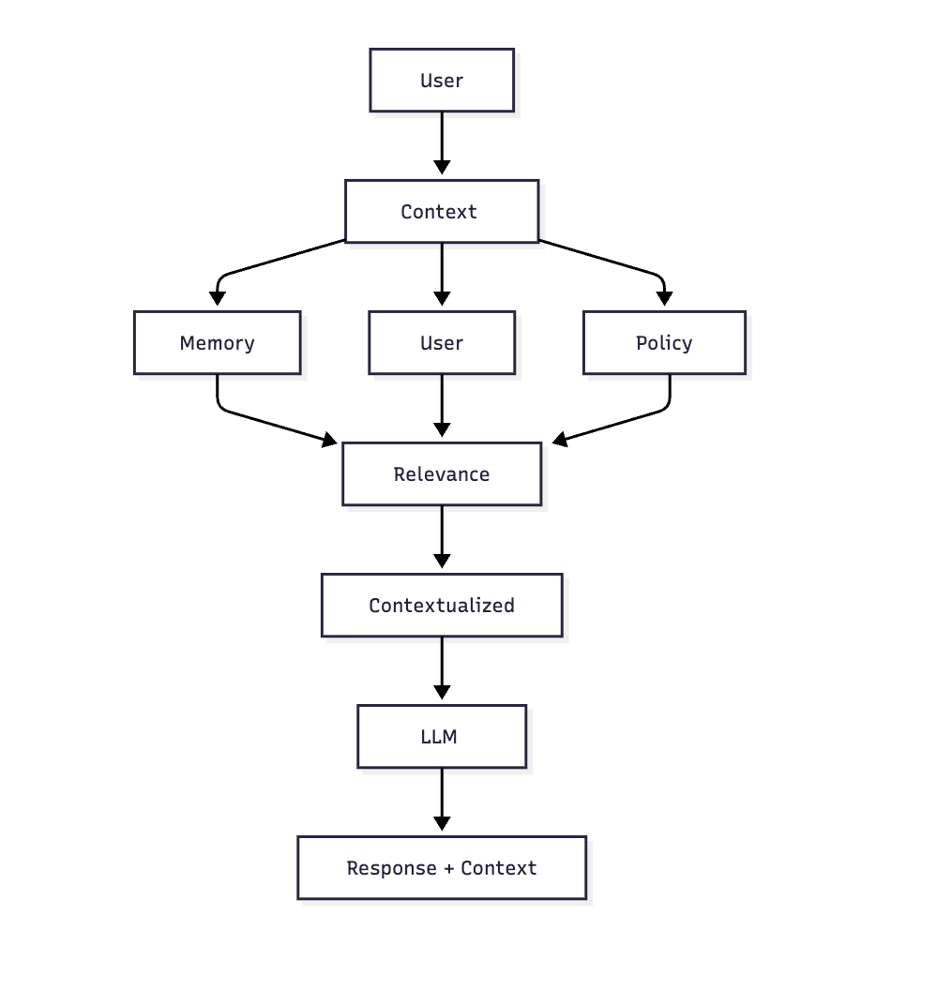
LLMs are limited in their handling of state, memory specific to the application, and context window. MCP addresses these issues by treating context as an architectural component. In MCP, context is not static but dynamic, based on sophisticated retrieval that injects the relevant data just in time.
How MCP Works
MCP does not include static instructions from previous user actions; rather, it indexes and retrieves data most relevant to the given conversation history, current usage metadata, and operational context. Hence, it has continuity, and organizational policies are encoded without the need for some kind of ad hoc prompt engineering.
Enterprise Use Cases
MCP is ideal for direct customer support functions, personalized chatbots, and compliance-heavy applications where maintaining conversation history and user-configured preferences is central. Financial services companies use MCP to ensure their intelligence-enabled assistants record whatever preferences customers input while adhering to any regulatory constraints.
Agent-to-Agent Protocol (A2A): AI Agents Collaborating
In multi-agent systems, agents must work together under standardized communication protocols to be successful. A2A sets out to create agent communication levels, delegation protocols, and methods to share state directly — much like the collaboration of humans.
Implementation Details
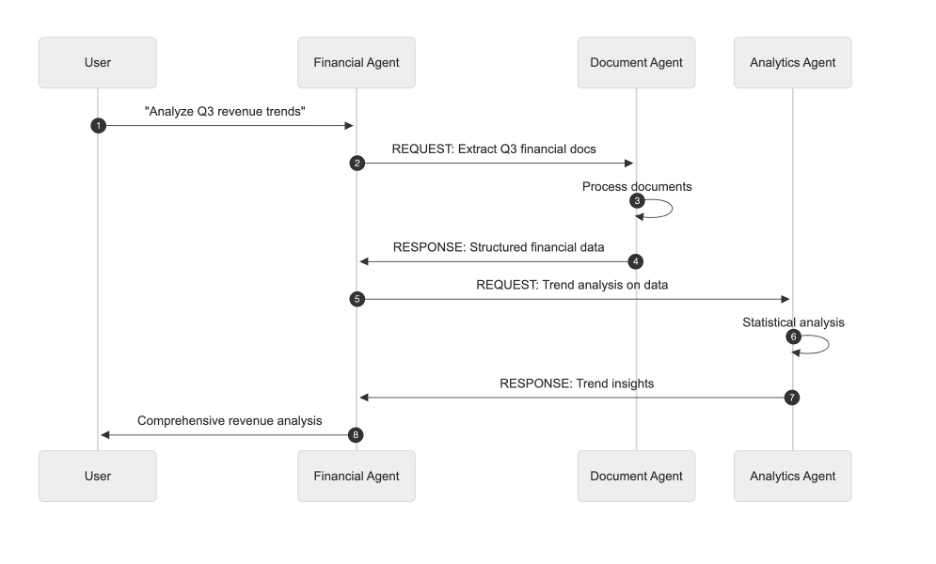
A2A focuses on agents using shared schema, message formats, and handshake protocols. Agents can negotiate and collaborate autonomously, rather than interacting in a traditional request-response model.
Based on the above example, we see we have a workflow that uses A2A as an agent design pattern catering to a complicated workflow of tasks. For example, in financial analysis, the coordinating financial agent is a more general agent (agent type), and it delegates document extraction to a financial document specialist agent and then trend analysis to an analytics agent. Each agent is able to focus on their specialist areas of potential capability, delivering a more complex human user task.
Functional Calling: LLMs as Intelligent Orchestrators
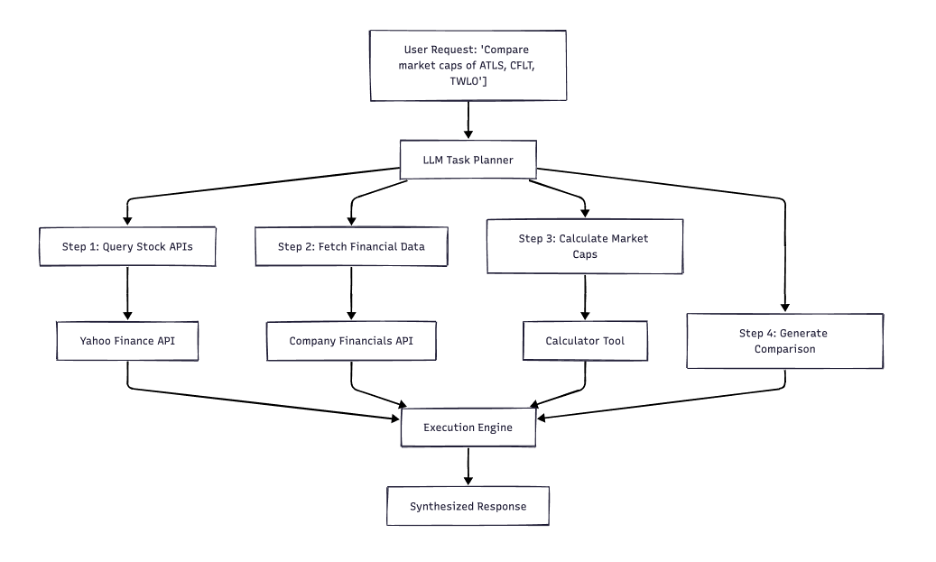
Functional calling shifts LLMs from just text generators to task orchestration, which focuses on interpreting complex or simple requests into a workflow of actions that use external tools and APIs.
Architecture Overview
The LLM serves as the planning engine. The LLM produces an output comprising a sequence of atomic actions that are considered inappropriate. It organizes them as directed acyclic graphs (DAG), and it orchestrates the execution of the tools without you. With the implementation of the three architectural patterns, we will see end-to-end agent coverage across the different levels to leverage enterprise context for workflows.
Feasibility of Implementation
Agile development approaches have many advantages, considering they make the seamless, accountable, and auditable usage of application functionality possible. The LLM will oversee the big picture and the execution of roles that the LLM brokered to appropriate tools to ensure that the tasks are not lost in translation or accountability.
Selecting the Pattern
|
Pattern |
Focus |
Best for |
Key benefit |
|
MCP |
Context management |
Personalized experience, compliance |
Capable of finishing from past experiences |
|
A2A |
Agent-to-agent collaboration |
Multi-domain knowledge, complex workflows |
Coordinate among all specialist agents |
|
Functional calling |
Execution of tasks |
Integrate tools or data with a clear execution plan for tasks |
Accurate orchestration of workflows |
Path to Implementation
Start small.
Like with functional calling, the best way to go is to build your layers. Incorporate functional calling into your structural tool integrations, and then apply MCP as context for the future experience using A2A only after you have developed practices with the interdependent agents.
Architectural Considerations
MCP: A good vector DB with appropriate context retrieval, privacy compliance, and memory management
A2A: Clarify agent boundaries and use API-first management practice to monitor inter-agent communication.
Functional calling involves implementing error handling and a circuit breaker process to manage dependencies on external APIs.
Production Considerations
All three patterns require advanced levels of monitoring, logging, and failover, which is an architectural concern. Furthermore, roll out in increments and do incremental A/B testing and automated performance validation using established techniques.
Benefits of Convergence
The real benefit comes from integrating MCP, A2A, and functional calling. The overarching goal is to create an enterprise AI ecosystem. The MCP agent will provide a personalized experience, the A2A agent will collaborate with specialist agents working together across the same question, and the functional calling agent will leverage the requirement for a decision enabled by distributed "local" domain expertise.
Companies with mature customer service operations have a hybrid of these, leading to their own personalized contact experience. They would use MCP for the personalization, A2A to merge with the specialists for a customer question, and functional calling to execute different sources of reporting at the same time (turning data into information).
This converged version of this approach is the future of enterprise AI — scalable, meaningful intelligence, the enterprise future of workflows.
In Summary
MCP, A2A, and functional calling are not just architectural patterns to advise usage in agile development; they are foundational tools for next-generation enterprise AI solutions. Each of the three patterns provides unique views to assist in understanding when and how the different agential moving parts come together to build solutions leading to effective, maintainable, and scalable quality solutions.
As we move forward in moderating these patterns, we will gain maturity in how we apply standards and tooling to democratize more complex AI software architectural approaches for larger numbers of organizations. This leads to the inevitable question of not whether organizations will adopt these patterns, but more about how quickly organizations will adopt these patterns as part of their organizational AI strategies.
Are you preparing to adopt these architectural patterns? The best entry point is to define the primary use case of context continuity (MCP), multi-agent coordination (A2A), or tool orchestration (functional calling). Each of the three patterns will be able to provide some immediate benefit while still providing opportunities to evolve better AI architectural approaches.
Opinions expressed by DZone contributors are their own.
Comments