

How Big Data Impacts Smart Cities
In a smart city, big data plays an important role in processing data collected through IoT devices so that further analysis can be made to recognize the patterns and needs in the city.
It seems like every city is trying to modify itself in a smart city. There are many elements that make a city smart. Water management, waste management, transportation, and safety are some of the many areas of focus. Future smart cities comprise the basic necessities and higher technologies for effortless and elementary living. There are various areas of development in a city that must be identified to reshape the current situation. A simple definition of a smart city is "a city that is equipped with basic infrastructure to provide quality lifestyle to its citizens."
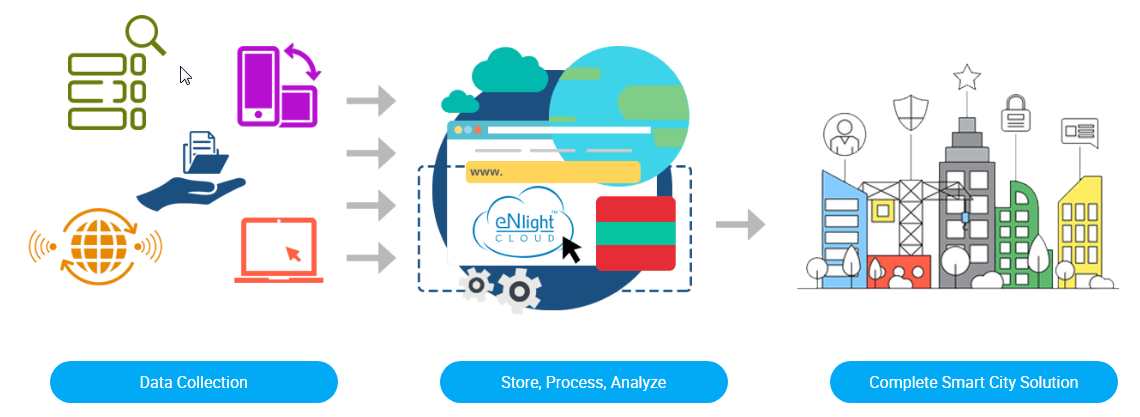
A relatively newer technology, big data, has huge potential to increase and make use of smart city services. Big data is basically huge amounts of data that can be analyzed by businesses to make appropriate strategic moves and business decisions. Big data analysis is implemented to study large volumes of data to uncover patterns and get insights to extract valuable information.
Information and communications technology (ICT) plays a major role in smart cities by making data that's collected through information technology components available. This technology, also called the Internet of Things (IoT), works by communicating between connected devices while exchanging data that requires internet, wireless connections, and other communication mediums. Mainly, smart cities make use of IoT devices to fetch data and efficiently process it for implementing it in a particular area. Smart city sensors and connected devices collect data from various smart city gateways installed in a city and then analyze it for better decision-making. Making use of ICT in smart cities will help reduce environmental footprints and result in the optimum use of resources.
Let’s have a look at some of the areas in a smart city where big data has the biggest impact.
Security
Ensuring the safety of citizens is a top priority for any city and it is important to protect them in any scenario. To avoid any troubles within the city, predictive analysis can be of help to study historical and geographical data to recognize when and where crimes are likely to happen. A significant amount of improvement will be seen when the desired data turns a city into a much safer place.
City Planning
The sensors embedded in the city provide a clear picture of what exactly is lacking in a city and how the current situation can be developed. Studying the current requirements in a city through the effective use of data can help in identifying areas that need improvement and upgrading. Mapping infrastructure needs in a city is easy when you make use of highly accurate data to pinpoint exactly where development is needed.
Transport
Transportation can be easily managed when big data comes to rescue. Everyone hates traffic — but it is possible to curb traffic through the proper utilization of historical data. Through the analysis of data collected from transport authorities, you can study the patterns that will result in decreased traffic congestion and help transport authorities come up with intelligent ways to manage and monitor transport within the city. Big data analytics will also help in reducing accidents.
Future-Proofing
With increasing urbanization, our cities are getting smarter by the day — and there are still various other plans to fully modify the smart cities of the future. There is automation within the city for intelligent traffic routing with real-time management and monitoring. Data collected from various sources can be utilized to provide a sustainable environment with higher energy efficiency and less wastage of resources. Through predictive analysis, it's possible to analyze the growth of current infrastructure and plan for future needs of the city.
Sustainability
Constantly monitoring the growth of a city will provide continuous development updates to make the necessary changes whenever there is a need. The amount of output being generated after implementing the technology will give a clear idea about the development needed, which is one of the keys to sustainability. Data is an important factor to determine the results of development within the city. Changes can be made in the city but it is difficult to sustain the level of development.
Effective Spending
It takes a lot of investment to make the necessary changes and bring about the desired results that will transform a city. Sometimes, money is spent on the renovation or remodeling of a city, which falls under minor changes in the infrastructure. Using big data analytics, data collected in a smart city can suggest the majorly impacted areas and what type of upgrades are needed. Through proper analysis, investments can be made accordingly in the required fields.
Conclusion
In a smart city, big data plays an important role in processing data collected through IoT devices so that further analysis can be made to recognize the patterns and needs in the city. Sensors installed all over the city generate huge amounts of data, but if it's used effectively, there are many improvements that can be done.
Opinions expressed by DZone contributors are their own.
Comments