
DZone
Thanks for visiting DZone today,
Edit Profile
  • Manage Email Subscriptions
  • How to Post to DZone
  • Article Submission Guidelines
Sign Out View Profile
  • Post an Article
  • Manage My Drafts
Newsletter
Log In / Join
Refcards Trend Reports
Events Video Library
Refcards
Trend Reports

Events

View Events Video Library

Related

  • How to Use Jenkins Effectively With ECS/EKS Cluster
  • Mastering Shift-Left: The Ultimate Guide to Input Validation in Jenkins Pipelines
  • Integrating Jenkins With Playwright TypeScript: A Complete Guide
  • Jenkins Pipelines With Centralized Error Codes and Fail-Fast

Trending

  • Why AI Agents Need a Shared Enterprise Ontology
  • Build a Voice Assistant With Gemini Live API
  • Stop Writing Database Migration Scripts: Declarative Schema Sync for Java
  • Should Developers Switch From SQLite to DuckDB?

Draft This article hasn't been published, so readers can't see it.

In moderation This article is waiting for review, so readers can't see it yet.

Deleted This article has been deleted, so readers can't see it.

  1. DZone
  2. Testing, Deployment, and Maintenance
  3. Deployment
  4. How to Install Jenkins With a WAR File

How to Install Jenkins With a WAR File

Jenkins is an open source tool that can be used for test automation with continuous integration and deployment. Check out this post to learn how to install Jenkins!

By 
Phi Nguyen
·
Jul. 27, 18 · Tutorial
Post on X (opens in a new tab) Share on LinkedIn (opens in a new tab)
95.9K Views

Join the DZone community Save articles, join the discussion, and download Refcards and Trend Reports with a free account.

Join for free Already a member? Log in

Open source Jenkins is a popular tool for test automation and implementing shifting left through continuous integration and continuous deployment. Followed by two blogs introducing how to install Jenkins on Windows (click here) and on Ubuntu (click here), a third way is to install Jenkins with a WAR (Web application ARchive) file version of Jenkins. This option can be used on any Java-supporting platform or OS.

First, you will need to install JDK. Jenkins supports Java 8. If you don’t know how to install Java, look at this blog. Now that Java is installed, we can proceed with Jenkins.

Installing Jenkins

1. Click here to download the latest Jenkins WAR file.

2. Copy the jenkins.war file to the folder you want. I created a folder named Jenkins in the path C:\Program Files (x86) and copied the jenkins.war file to it.

installing jenkins with war

3. Open the command prompt window and browse to the directory where the jenkins.war file is present, through the command cd C:\Program Files (x86)\Jenkins.
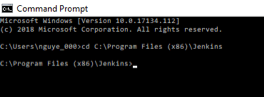
jenkins war installation

4. Run the command java -jar jenkins.war.
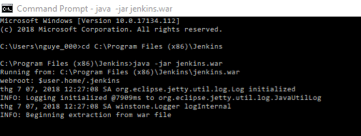
jenkins installation tutorial

5. Wait until the process is complete.
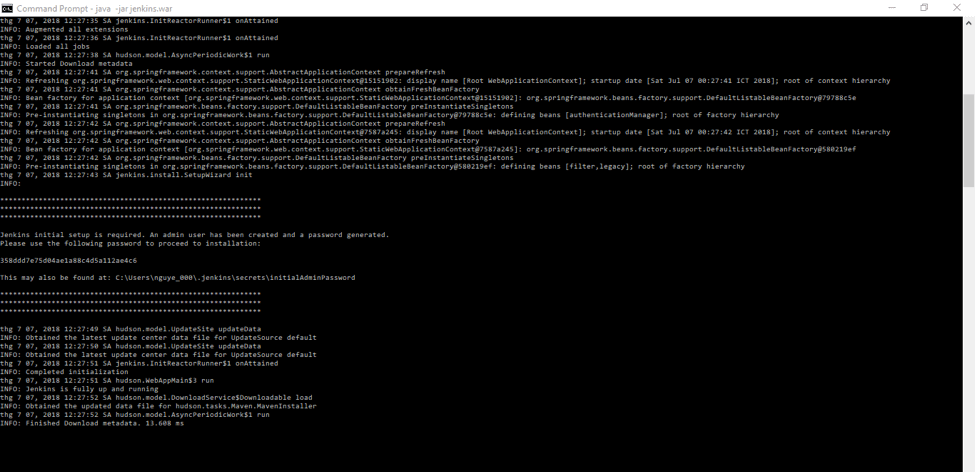
jenkins installation guide

6. Take a look at the line “INFO: Jenkins is fully up and running” that indicates that Jenkins is running. Write down the random password that is auto-generated. We will use this password for the initial login later.
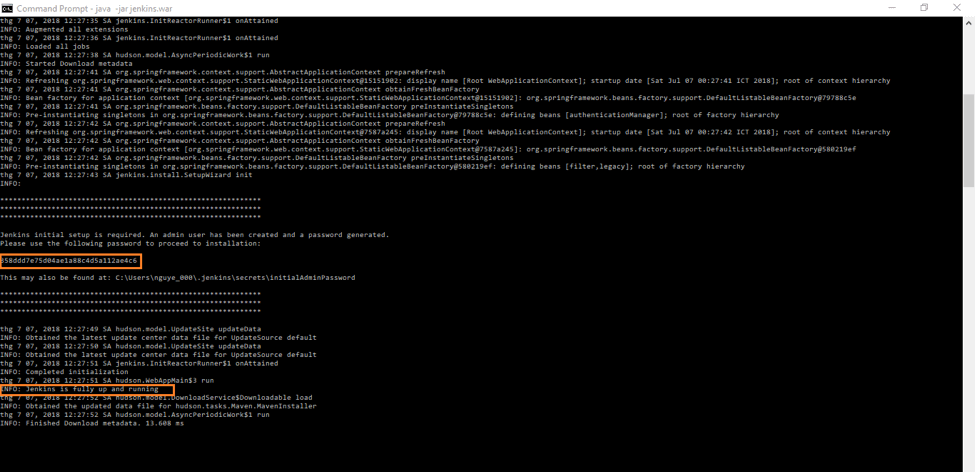
jenkins, installation, war file, open source, standalone machine

7. Paste the URL http://localhost:8080 in your browser to browse to the Jenkins page.
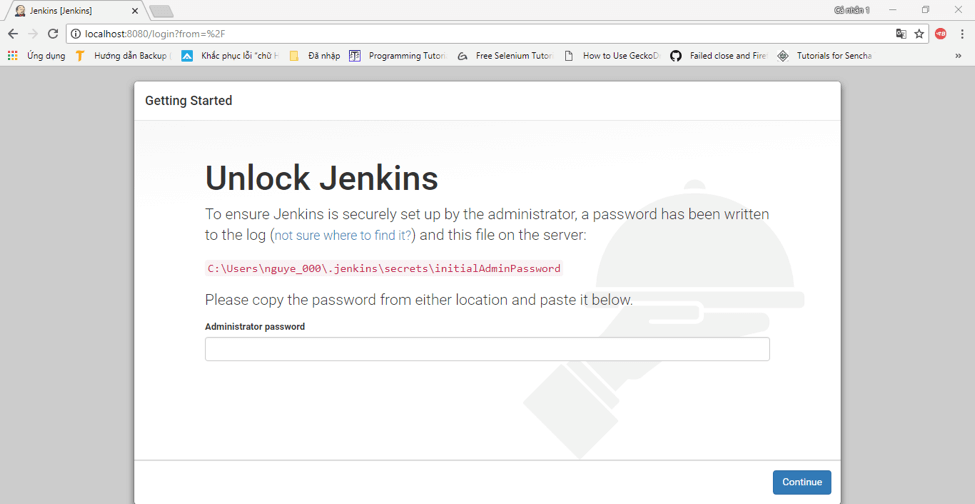
jenkins configuration

8. To unlock Jenkins, paste the random password that you wrote down in the previous step or copy it from the user account folder, from the file C:\Users\<your_user_account_folder_name>\.jenkins\secrets\initialAdminPassword. Paste it in the Administrator password field and click on the “Continue” button.
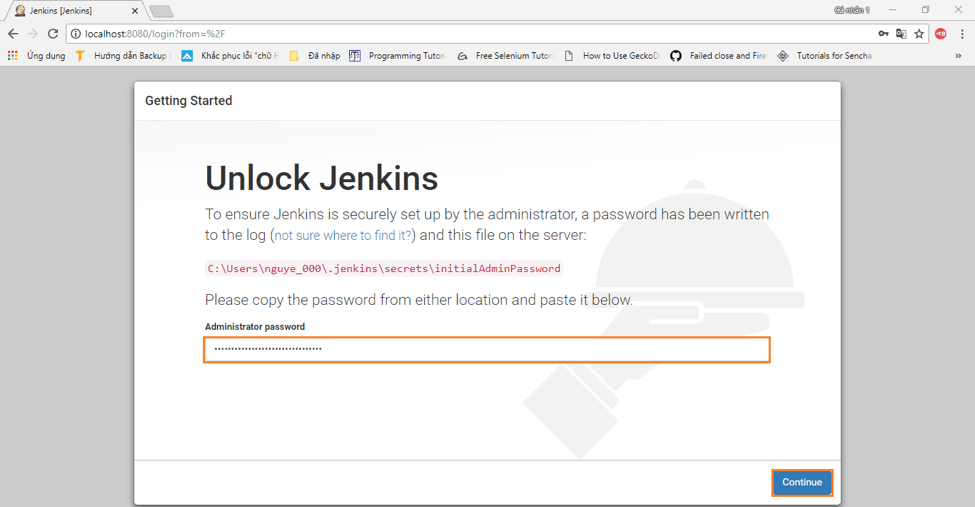
setting up jenkins

9. Install the suggested plugins or customize plugins installation according to your needs. We will install the default suggested plugins.
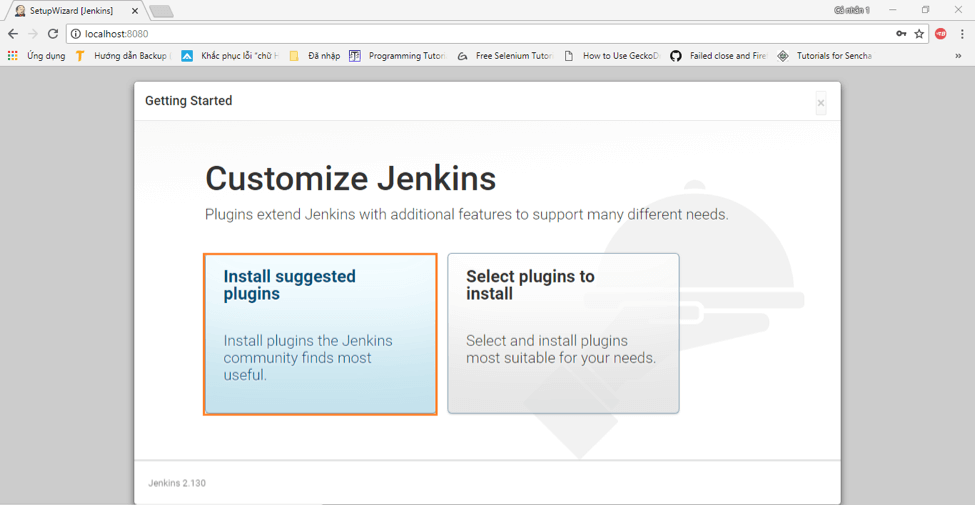
getting started with jenkins

10. Wait for the plugins to complete the installation.
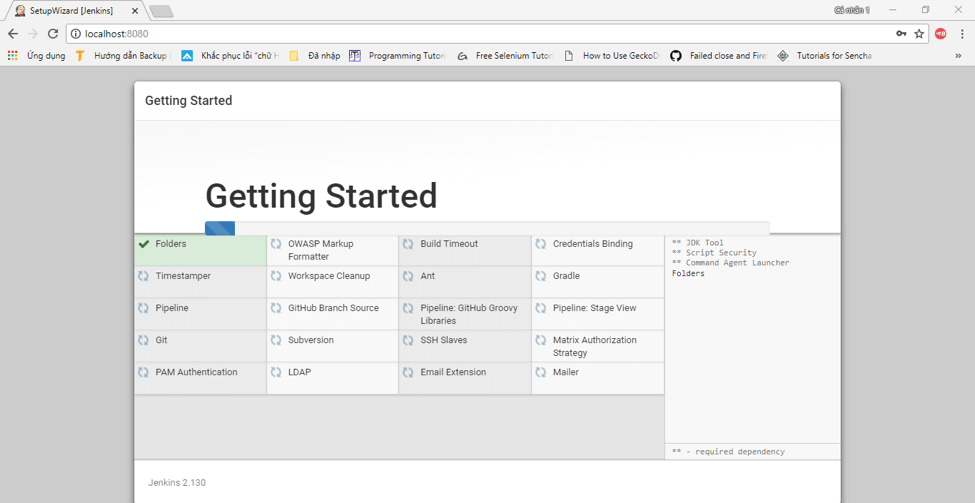
jenkins plugin installation

11. Create an admin user and click “Save and Continue.”
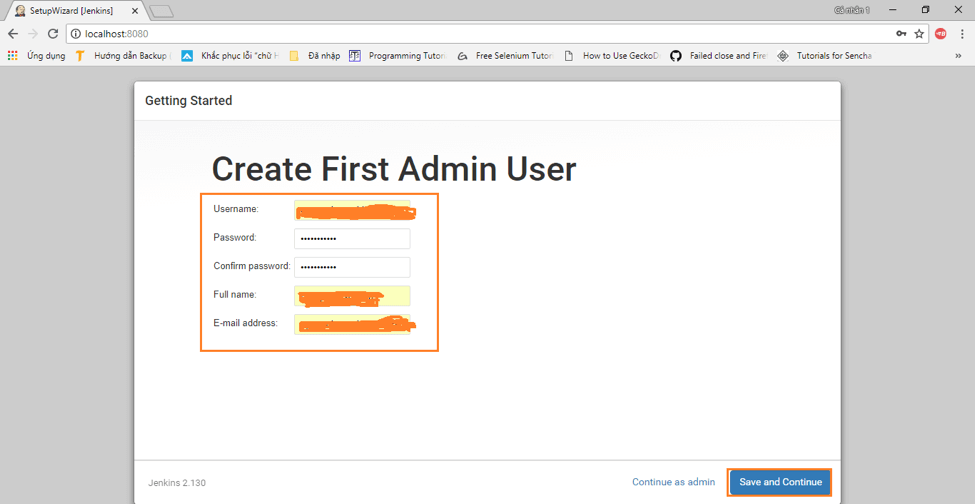
jenkins, admin user creation

12. Click “Save and Finish” to complete the process.
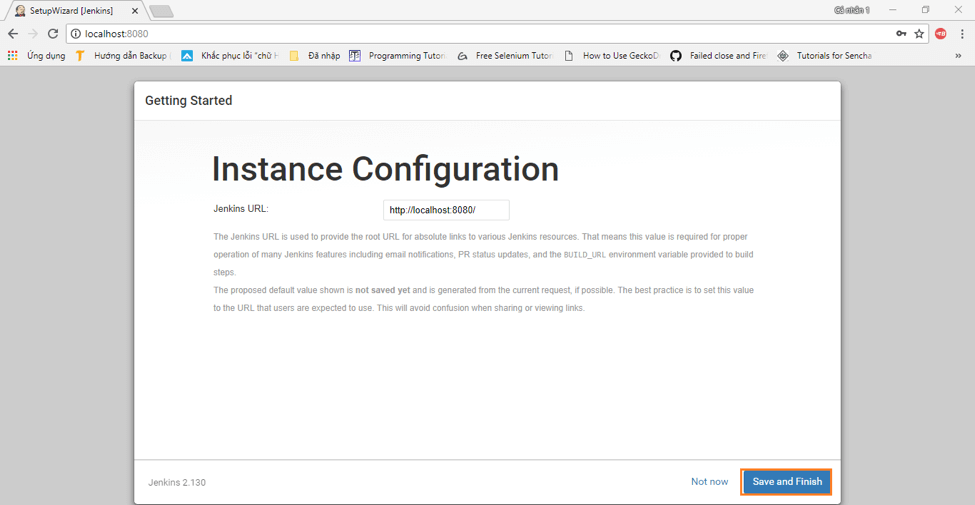
installing jenkins with a war file read how

13. Finally! Click “Start using Jenkins” to start Jenkins.
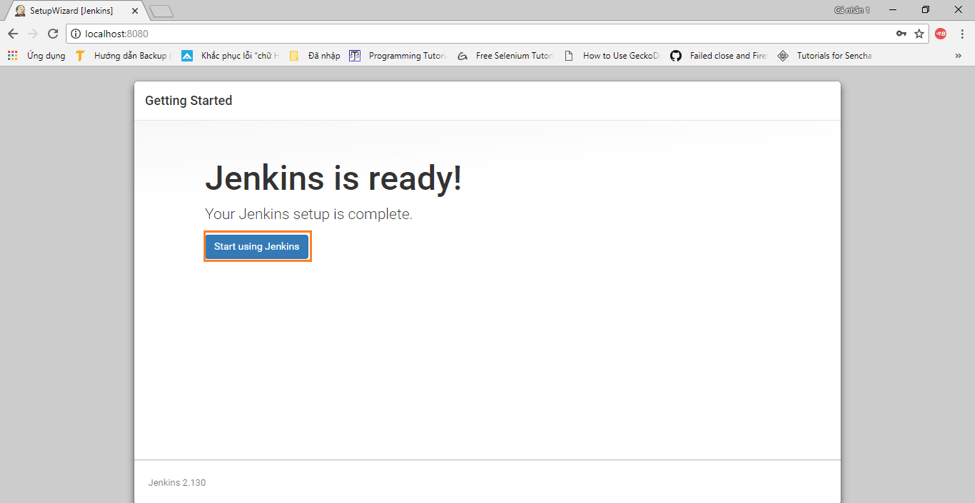
start using jenkins

14. Here is the default Jenkins page. You can create your first job!
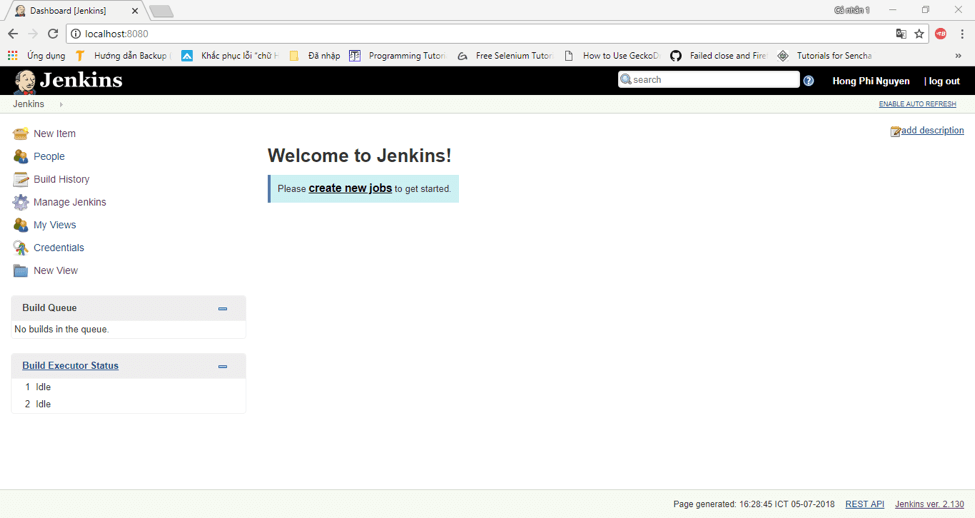
jenkins in 1 2 3

Great! Everything is ready! Now, you can start creating your workflows. To learn how to use Jenkins, check out these resources:

  • The Continuous Testing academy
  • 2 Ways to Integrate JMeter Tests into Jenkins
  • How to Include Load Testing in your Continuous Integration Environment
  • Are You Using Jenkins the Right Way?
  • Running a JMeter Test via Jenkins Pipeline - A Tutorial
  • BlazeMeter’s Jenkins Plugin
  • Top Jenkins Plugins You Can’t Miss
Jenkins (software) WAR (file format)

Published at DZone with permission of Phi Nguyen. See the original article here.

Opinions expressed by DZone contributors are their own.

Related

  • How to Use Jenkins Effectively With ECS/EKS Cluster
  • Mastering Shift-Left: The Ultimate Guide to Input Validation in Jenkins Pipelines
  • Integrating Jenkins With Playwright TypeScript: A Complete Guide
  • Jenkins Pipelines With Centralized Error Codes and Fail-Fast

Partner Resources

×

Comments

Loading comments

The comments didn't load

Please try again in a moment.

Likes

Loading

The next likes didn't load. Please try again.

The likes didn't load

Please try again in a moment.

See who liked this

Log in or join DZone for free to see who liked this article.

Log in Join for free
  • RSS
  • X
  • Facebook

ABOUT US

  • About DZone
  • Support and feedback
  • Community research

ADVERTISE

  • Advertise with DZone

CONTRIBUTE ON DZONE

  • Article Submission Guidelines
  • Become a Contributor
  • Core Program
  • Visit the Writers' Zone

LEGAL

  • Terms of Service
  • Privacy Policy

CONTACT US

  • 3343 Perimeter Hill Drive
  • Suite 215
  • Nashville, TN 37211
  • [email protected]

Let's be friends:

  • RSS
  • X
  • Facebook