

Is TestOps the Future of Software Testing?
Discover the latest trend in software testing; TestOps. Learn how TestOps can streamline your testing processes and improve your software quality.
 ·
·
Join the DZone community and get the full member experience.
Join For FreeTestOps is an emerging approach to software testing that combines the principles of DevOps with testing practices. TestOps aims to improve the efficiency and effectiveness of testing by incorporating it earlier in the software development lifecycle and automating as much of the testing process as possible.
TestOps teams typically work in parallel with development teams, focusing on ensuring that testing is integrated throughout the development process. This includes testing early and often, using automation to speed up the testing process, and creating continuous testing and improvement.
TestOps also works closely with operations teams to ensure that the software is deployed in a stable and secure environment. TestOps is an approach to software testing that emphasizes collaboration between the testing and operations teams to improve the overall efficiency and quality of the software development and delivery processes.
Place of TestOps in Software Development
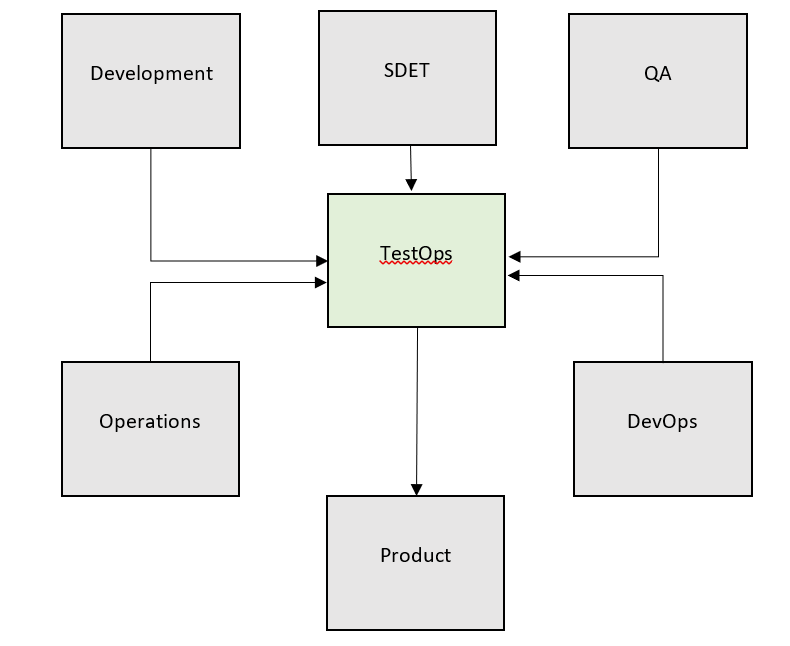
The Need for TestOps
Initial Investment
Adopting DevOps requires an initial investment of time, resources, and financial investment. This can be a significant barrier to adoption for some organizations, particularly those with limited budgets or resources.
Learning Curve
DevOps requires a significant cultural shift in the way that teams work together, and it can take time to learn new processes, tools, and techniques. This can be challenging for some organizations, particularly those with entrenched processes and cultures.
Security Risks
DevOps practices can increase the risk of security vulnerabilities if security measures are not properly integrated into the development process. This can be particularly problematic in industries with strict security requirements, such as finance and healthcare.
Automation Dependencies
DevOps relies heavily on automation, which can create dependencies on tools and technologies that may be difficult to maintain or update. This can lead to challenges in keeping up with new technologies or changing requirements.
Cultural Resistance
DevOps requires a collaborative and cross-functional culture, which may be difficult to achieve in organizations with siloed teams or where there is resistance to change.
Advantages of the TestOps
Continuous Testing
TestOps allows continuous testing that enables organizations to detect defects early in the development process. This reduces the cost and effort required to fix defects and ensures that software applications can be delivered with high quality.
Improved Quality
By integrating testing processes into the DevOps pipeline, TestOps ensures that quality is built into software applications from the outset. This reduces the risk of defects and improves the overall quality of the software.
Greater Efficiency
TestOps enables the automation of testing processes, which can help organizations reduce the time and effort required to test software applications. This can also reduce the costs associated with testing.
Increased Collaboration
TestOps promotes collaboration between development and testing teams, which can help identify and resolve issues earlier in the development process. This can lead to faster feedback and better communication between teams.
Faster Time-to-Market
TestOps allows the automation of testing processes, which reduces the time required to test software applications. This enables organizations to release software applications faster, which can give them a competitive advantage in the marketplace.
Scope of TestOps in the Future
The scope of TestOps in the future is significant as software development continues to become more complex and fast-paced. TestOps combines software testing with DevOps practices. As a result, it is becoming increasingly important for organizations to implement TestOps to ensure that they can deliver high-quality software applications to market quickly.
Some of the trends that are likely to shape the future of TestOps include:
Increasing Adoption of Agile and DevOps Methodologies
Agile and DevOps methodologies are becoming increasingly popular among organizations that want to deliver software applications faster and more efficiently. TestOps is a natural extension of these methodologies, which are likely to become an essential component of Agile and DevOps practices in the future.
Greater Focus on Automation
Automation is a critical aspect of TestOps and will likely become even more important in the future. The use of automation tools and techniques can help organizations reduce the time and effort required to test software applications while also improving the accuracy and consistency of testing.
The Growing Importance of Cloud Computing
Cloud computing is becoming increasingly popular among organizations that want to reduce their IT infrastructure costs and improve scalability. TestOps can be implemented in cloud environments, and they are likely to become even more important as more organizations move their software applications to the cloud.
Overall, the scope of TestOps in the future is vast, and it is likely to become an essential component of software development practices in the coming years.
Conclusion
Is TestOps the future of software testing? Obliviously Yes.
With the increasing adoption of Agile and DevOps methodologies, there is a growing need for software testing processes that can keep pace with rapid development and deployment cycles. TestOps can help organizations achieve this by integrating testing into the software development lifecycle and ensuring that testing is a continuous and automated process.
Furthermore, as more and more software is deployed in cloud environments, TestOps will become even more important in ensuring that applications are secure, scalable, and reliable.
In summary, TestOps is a key trend in software testing that is likely to continue to grow in the future as organizations look for ways to improve the efficiency and quality of their software development and delivery processes.
Opinions expressed by DZone contributors are their own.
Comments