

Multi-Agent (Multi-Function) Orchestration With AWS Step Functions
Learn about multi-agent (multi-function) orchestration with AWS step functions, which helps to orchestrate the different functionalities to work as a task.
Join the DZone community and get the full member experience.
Join For FreeMulti-agent orchestration with AWS Step Functions is a robust architectural pattern for coordinating multiple, specialized agents (such as Lambda functions, microservices, or dedicated AI modules) into a unified, scalable workflow. This approach is especially useful when complex tasks require the collaboration of several autonomous agents without hard-coding their interactions — a strategy that not only simplifies development but also enhances reliability and scalability.
These agents are going to increase efficiency and productivity, enhance decision-making, improve customer experiences, adaptability, and scalability, and hence reduce operational costs.
How It Works
1. Dynamic Routing and Task Delegation
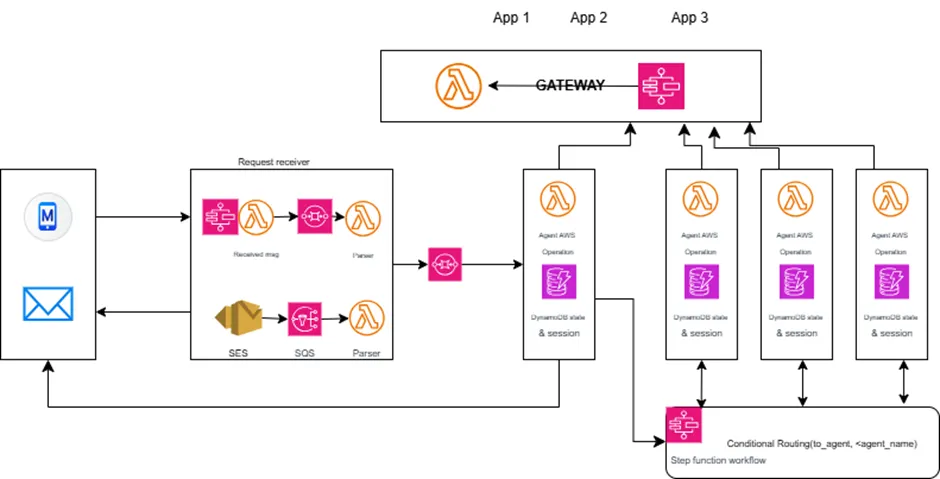
A central router (often implemented as a Lambda function) intercepts incoming messages or events — possibly from services like Amazon SQS or API Gateway. The router examines based on application metadata (e.g., to_agent, session_id) to determine which specialized agent should handle the task next. The Step Functions state machine then orchestrates the workflow, conditionally branching or invoking parallel tasks based on the content and state of the message.
2. State Management and Session Handling
AWS Step Functions maintain state throughout the journey of a task. Each agent, though stateless in execution, can pull session context (often stored in DynamoDB or passed explicitly as part of the workflow) so that the entire orchestration has continuity. This persistent context is essential for long-running workflows or interactions that span multiple steps.
3. Error Handling, Retries, and Scalability
With built-in support for retries and error handling, Step Functions allow dynamic reattempts or fallback behaviors without manual intervention. If an individual agent fails, the workflow can catch the error and either retry or branch to an alternative execution path. This makes the orchestration resilient, even as the number of participating agents and the complexity of interactions grow.
4. Agent Specialization and Independent Scaling
Each agent can be designed to perform a distinct function — for example, processing natural language queries, fetching order information, or generating personalized recommendations. By isolating these responsibilities, you ensure that each service can scale independently while the Step Functions state machine coordinates their interactions into a seamless, unified process.
Real-World Use Cases
Intelligent Customer Support
Multiple agents can work together to handle a customer request; one agent might analyze the text query using NLP, another could fetch data regarding order status, and yet another might look up product recommendations. The Step Functions workflow maintains context and directs the flow from one agent to the next, ensuring a personalized and complete response.
Large-Scale AI Workflows
In an environment where hundreds or even thousands of AI agents must operate in concert (for instance, in fraud detection or real-time analytics), Step Functions provide the orchestration needed to ensure seamless interaction while maintaining fault tolerance and performance at scale.
AI-Based Chatbot Workflows
Using a chatbot agent can serve the helpdesk work as an AI agent, it allows for resolving basic queries related to any travel-related query (travel-based chatbot), banking chatbot (banking-based). Initial queries can be answered, and if required, take the help of another agent to resolve the query.
Example of a microservices architecture application or batch-related processes where large setup data is required for sync and async data processing using an AI model. It can create a flow using a step function and orchestrate shell scripts, monitoring scripts, and reconciliation scripts to achieve success in transaction closure.
Getting Started
Typical steps to implement multi-agent orchestration might include:
- Define the workflow: Use AWS Step Functions to create a state machine that encapsulates the conditional logic, branching, and retry strategies for your agents.
- Implement the agents: Develop Lambda functions (or containerized microservices) for each isolated task. Each agent (as a service) should be designed to be stateless, pulling necessary context from external storage if needed.
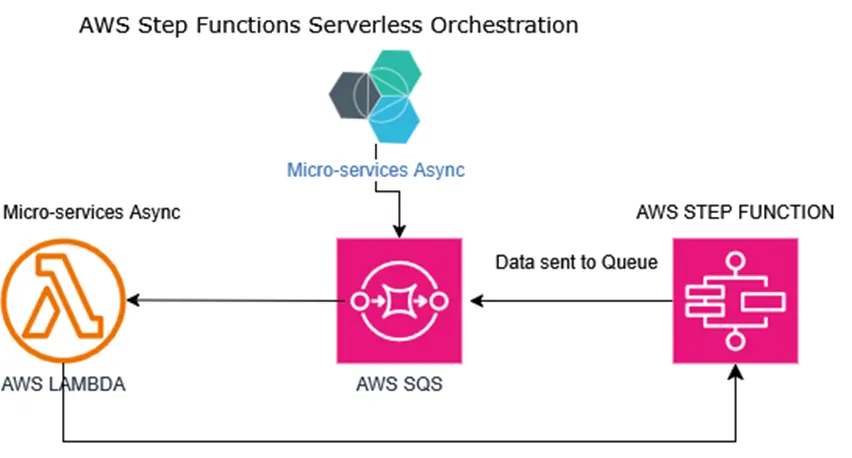
- Integrate state management: Use DynamoDB or a similar service to store and retrieve session state, ensuring that context flows seamlessly between agent invocations.
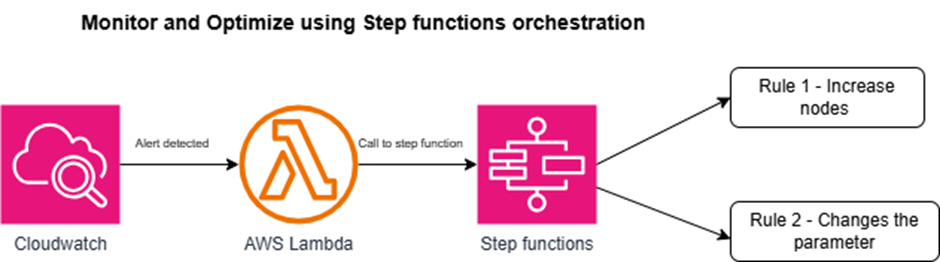
- Monitor and optimize: Utilize Step Functions’ built-in monitoring and logging capabilities to analyze execution flows, pinpoint failures, and optimize the orchestration logic over time.
Would you like a deeper dive into designing your state machine definition or best practices for scaling these systems? The snippet below would describe the steps, functions, and execution.
Example of Execution Status Change: Execution Succeeded
{
  "version": "0",
  "id": "34378–83973–8r463473927243–532143",
  "detail-type": "Step Functions Execution Status Change",
  "source": "aws.states",
  "account": "account-id",
  "time": "2025–06–24T13:22:08Z",
  "region": "us-east-1",
  "resources": [
    "arn:aws:states:us-east-1:account-id:execution:state-machine-name:execution-name"
  ],
  "detail": {
    "executionArn": "arn:aws:states:us-east-1:account-id:execution:state-machine-name:execution-name",
    "stateMachineArn": "arn:aws:states:us-east-1:account-id:stateMachine:state-machine",
    "name": "stepfunction-execution",
    "status": "SUCCEEDED",
    "startDate": 1548148840101,
    "stopDate": 1548148840122,
    "input": "{}",
    "inputDetails": {
      "included": true
    },
    "output": "\"Trigged the Prabhakar Mishra! \"",
    "outputDetails": {
      "included": true
    }
  }
}
Conclusion
AWS Step Functions provide a flexible, scalable, and resilient way to orchestrate multi-agent systems. Whether orchestrating AI-driven workflows, complex customer support systems, or any scenario where multiple specialized agents need to work in harmony, this approach abstracts much of the inherent complexity while delivering robust, production-ready solutions. The best part is that it can be easy to write and use as a FaaS (Function as a Service) for different agents.
Opinions expressed by DZone contributors are their own.
Comments