

DZone
Thanks for visiting DZone today,
Edit Profile
  • Manage Email Subscriptions
  • How to Post to DZone
  • Article Submission Guidelines
Sign Out View Profile
  • Post an Article
  • Manage My Drafts
Newsletter
Log In / Join
Refcards Trend Reports
Events Video Library
Refcards
Trend Reports

Events

View Events Video Library

Related

  • Delegated Transport, Forked Authorization: Where Chat and AI-Agent Integrations Actually Break
  • A Non-Expiring AKS Deployment Token Could Read Secrets Across Three Namespaces
  • The Permission Was Valid. The Action Was Not Authorized.
  • Why AI Agents Need a Shared Enterprise Ontology

Trending

  • Building a Real Pipeline With senro: Monorepos, Caching, and Triggers
  • Introducing senro: A Pipeline Engine You Program in Go
  • A Walk-Through of the DZone Article Editor
  • The Context Window Trap: Why More Context Doesn’t Mean Better AI

Draft This article hasn't been published, so readers can't see it.

In moderation This article is waiting for review, so readers can't see it yet.

Deleted This article has been deleted, so readers can't see it.

  1. DZone
  2. Data Engineering
  3. Databases
  4. OAS 3.0 in Anypoint Platform

OAS 3.0 in Anypoint Platform

In a recent upgrade in the platform, MuleSoft has started supporting OAS 3.0 operation in Anypoint platform like design API specification. Check it out!

By 
Sadik Ali
·
Aug. 27, 20 · Tutorial
Post on X (opens in a new tab) Share on LinkedIn (opens in a new tab)
8.5K Views

Join the DZone community Save articles, join the discussion, and download Refcards and Trend Reports with a free account.

Join for free Already a member? Log in

While working in Non-Mule assets like design API in Open API specification, there are few challenges to keep non-mule and mule assets together and one of them is OAS assets. OAS3.0 assets were not supported by the Anypoint Platform. Now, it is past. 

In a recent upgrade in the platform, MuleSoft has started supporting OAS3.0 operation in Anypoint platform like design API specification OAS3.0, publish it in exchange and export in Anypoint studio.

Here are a few limitations of release to support OAS3.0...

  • Anypoint platform supports to create an OAS 3 API specification or import one from Anypoint Exchange.
  • With current support, it facilitates to convert OAS 3 APIs to RAML or OAS 2 to complete the API life cycle.
  • Developers need to convert OAS 3 APIs to RAML or OAS 2 to complete the API life cycle.
  • Developers need to follow and convert OAS 3 APIs to RAML or OAS 2 to complete the API life cycle, including applying policies and implementing API proxies with API Manager.
  • Can be imported an OAS 3.0 API specification from Design Center as an editable API project in Studio.
  • It can be downloaded and published an OAS 3 specification, and view the specification documentation in Anypoint Exchange.
  • It can publish an OAS 3.0 specification and view the specification documentation.
  • In most cases, any OAS 3.0 features that REST Connect does not support are ignored and the connector will not generate. In some cases, a connector can't be generated. In all cases, API specifications are published normally from API Designer to Anypoint Exchange.

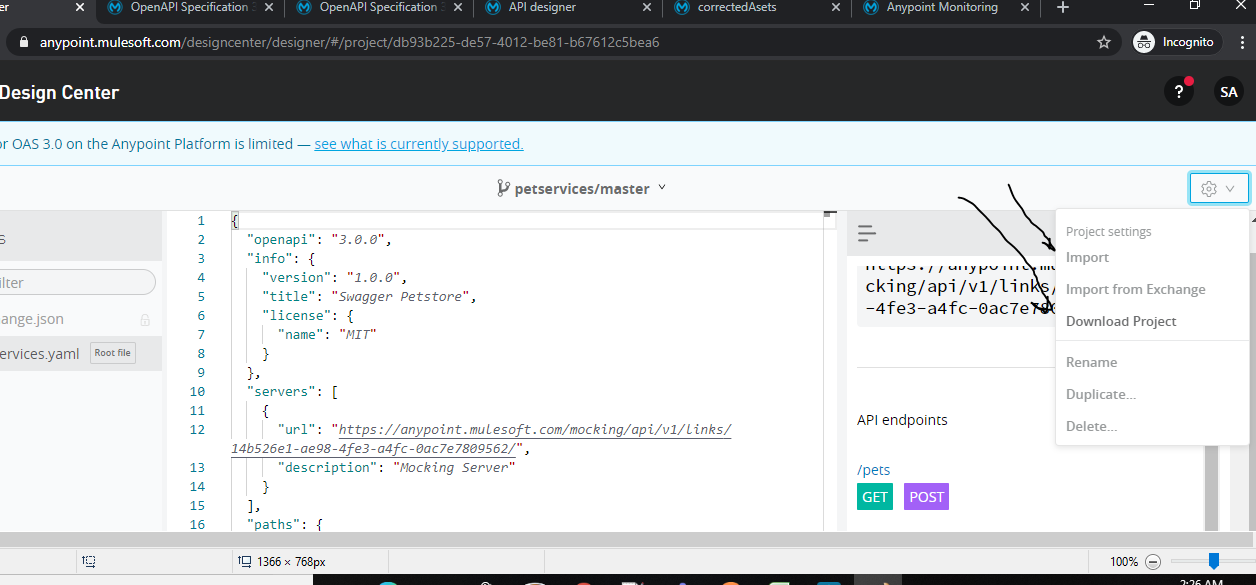
OAS 3.0 specification API designed in anypoint design center which supported HTTP verbs.

* Anypoint supports to publish specification to exchange... 
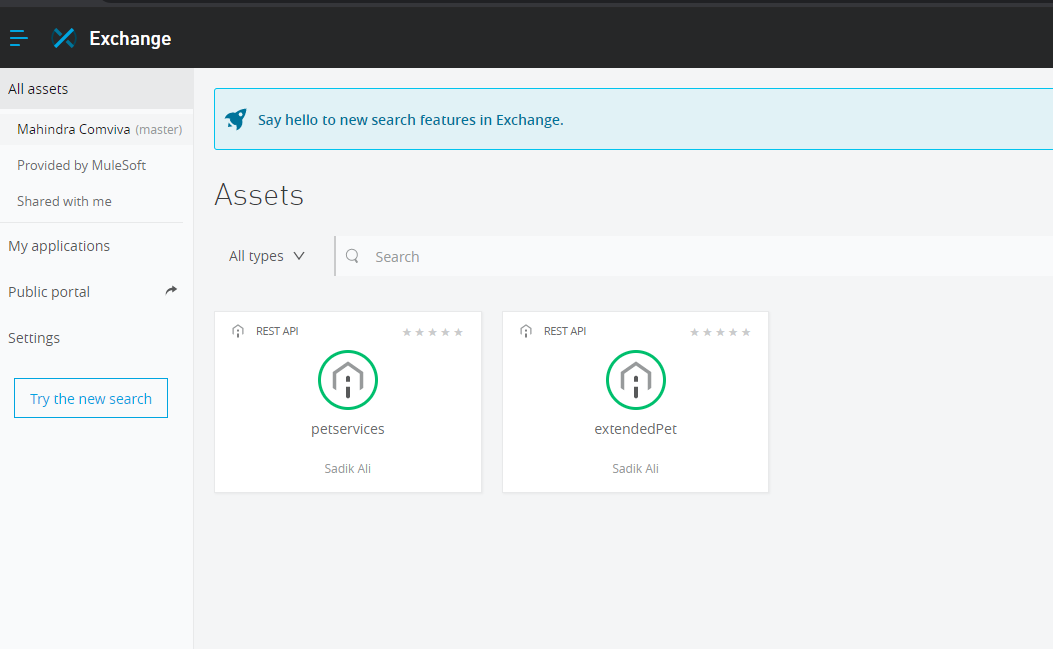
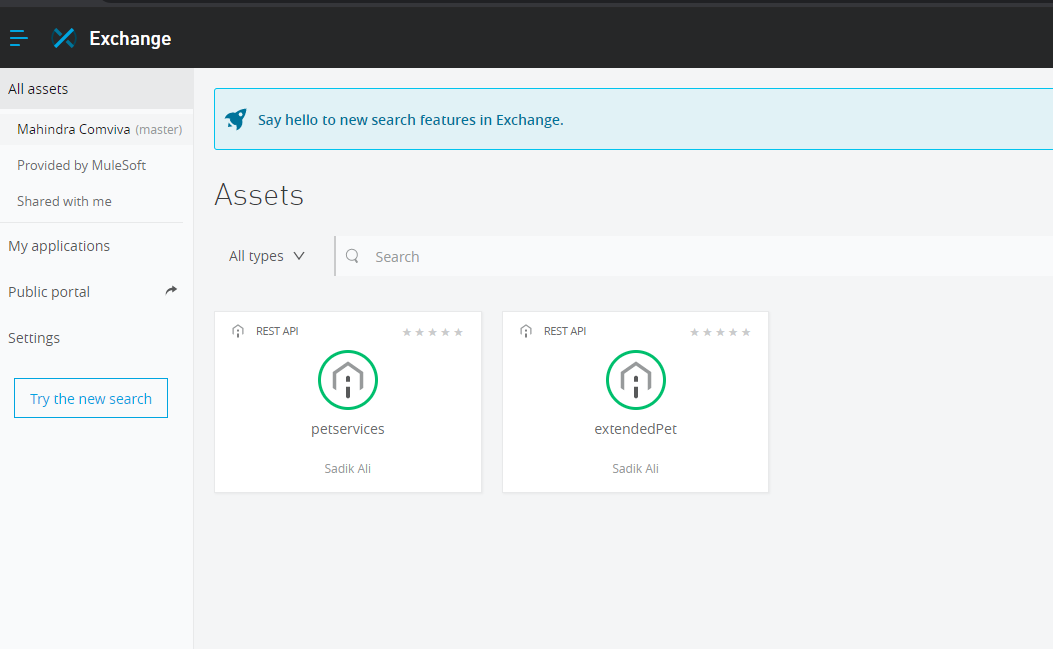
* We can import assets from exchange to design center to develop or perform modification in OAS3 based design.. 
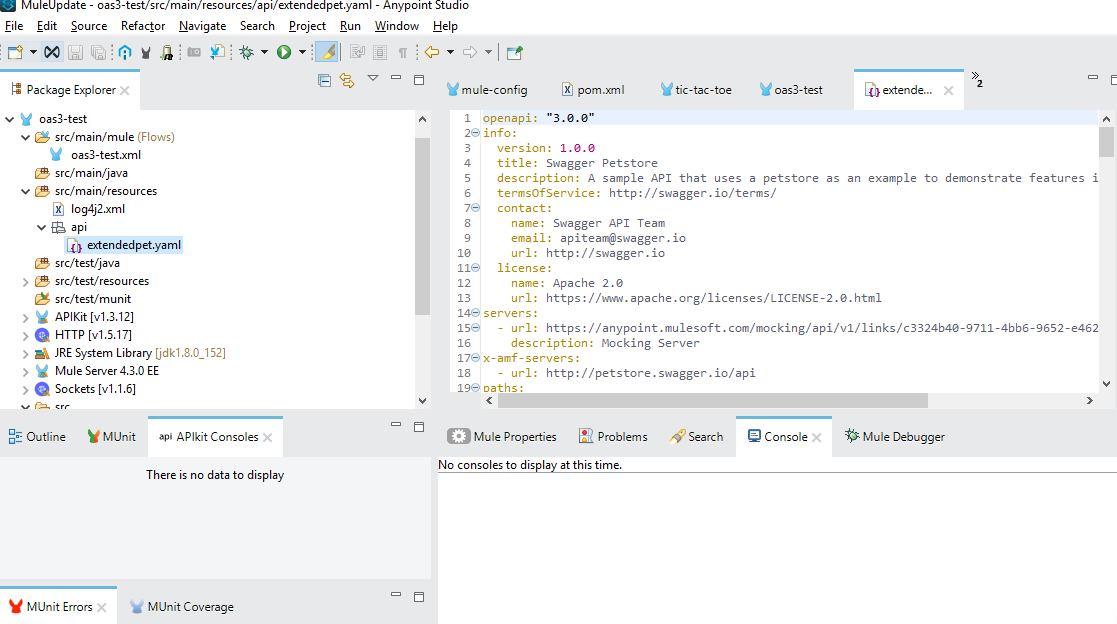
It can be downloaded in the studio and modify and release to exchange again.
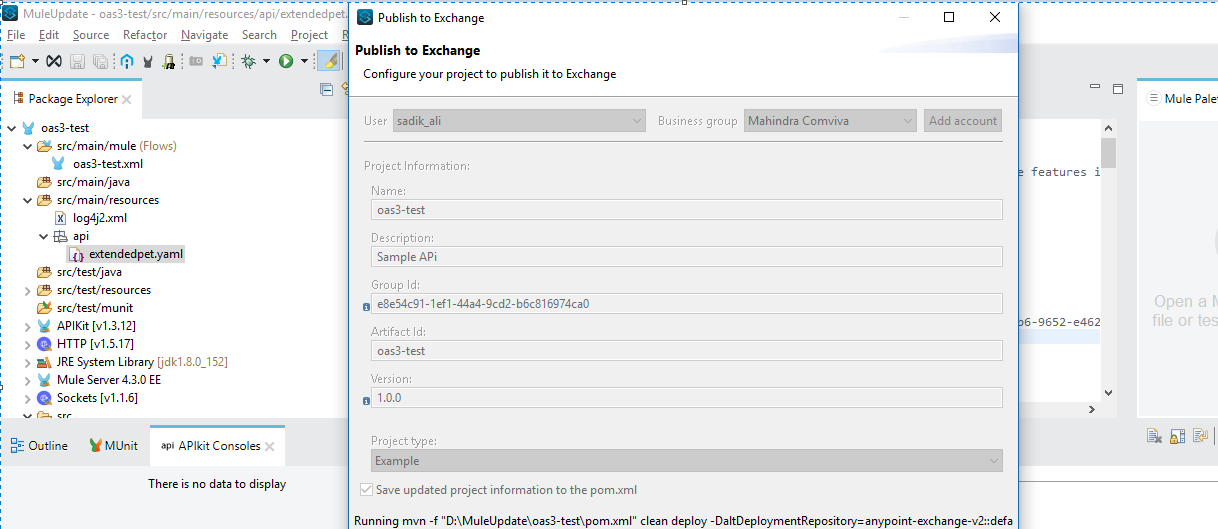
After required changes, it can be published in exchange from studio...
OAS 3, the specification can be downloaded from exchange for further development in the required tool...
An incremental approach to moving forward to a single tool for all purposes.

API

Opinions expressed by DZone contributors are their own.

Related

  • Delegated Transport, Forked Authorization: Where Chat and AI-Agent Integrations Actually Break
  • A Non-Expiring AKS Deployment Token Could Read Secrets Across Three Namespaces
  • The Permission Was Valid. The Action Was Not Authorized.
  • Why AI Agents Need a Shared Enterprise Ontology

Partner Resources

×

Comments

Loading comments

The comments didn't load

Please try again in a moment.

Likes

Loading

The next likes didn't load. Please try again.

The likes didn't load

Please try again in a moment.

See who liked this

Log in or join DZone for free to see who liked this article.

Log in Join for free
  • RSS
  • X
  • Facebook

ABOUT US

  • About DZone
  • Support and feedback
  • Community research

ADVERTISE

  • Advertise with DZone

CONTRIBUTE ON DZONE

  • Article Submission Guidelines
  • Become a Contributor
  • Core Program
  • Visit the Writers' Zone

LEGAL

  • Terms of Service
  • Privacy Policy

CONTACT US

  • 3343 Perimeter Hill Drive
  • Suite 215
  • Nashville, TN 37211
  • [email protected]

Let's be friends:

  • RSS
  • X
  • Facebook