

Point of View on API Platforms
API platforms in the digital transformation journey enable companies to think towards a digital economy. Here, explore challenges organizations can face while developing APIs.
 ·
·
Join the DZone community and get the full member experience.
Join For FreeAPIs are foundational technology platforms in the digital transformation journey that enable companies to think towards a digital economy. APIs enable internal or external integration of data, services, and processes in the application development process. API management is essential in the digital economy to determine how to distribute, control, monitor, analyze and monetize. The common platform capabilities include developer portal, API gateway, API lifecycle management, and API analytics.
Some of the challenges faced by organizations while developing APIs are:
- API-first is the core requirement in digital transformation. If the applications require to be built with a large number of APIs, it might take a long time to develop.
- Business analysts, developers, and testers work in silos while implementing APIs and are not able to connect the story, as they may be using different tools.
- Developing applications requires multiple ways of connecting such as data, application, services, processes, etc.
- Challenges in getting the data out of legacy applications
- Implementation of security aspects for the APIs while exposing or accessing the APIs
- Managing and governing the APIs developed becomes even more complicated when you have a large number of APIs and different versions are used.
It is a good practice to have an API management platform to address the above challenges. The below diagram gives a high-level overview of platform capabilities.
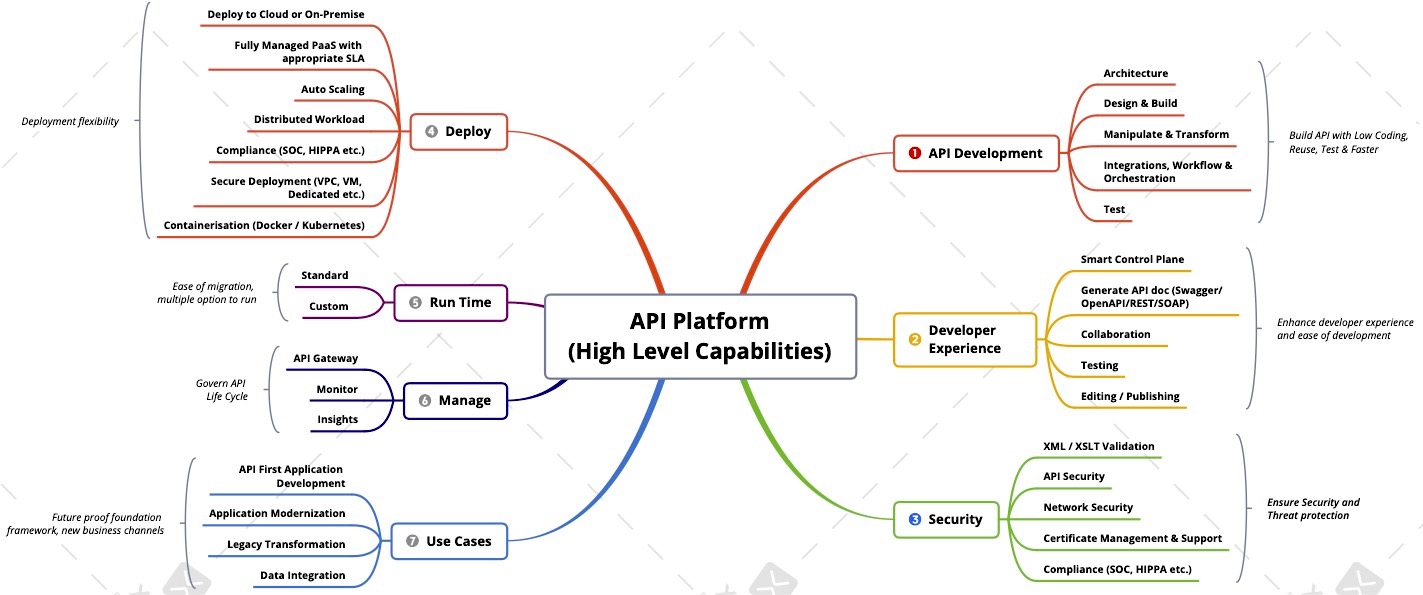
The mind map below gives a detailed view of API Platform capabilities required for a digital transformation during the development life cycle.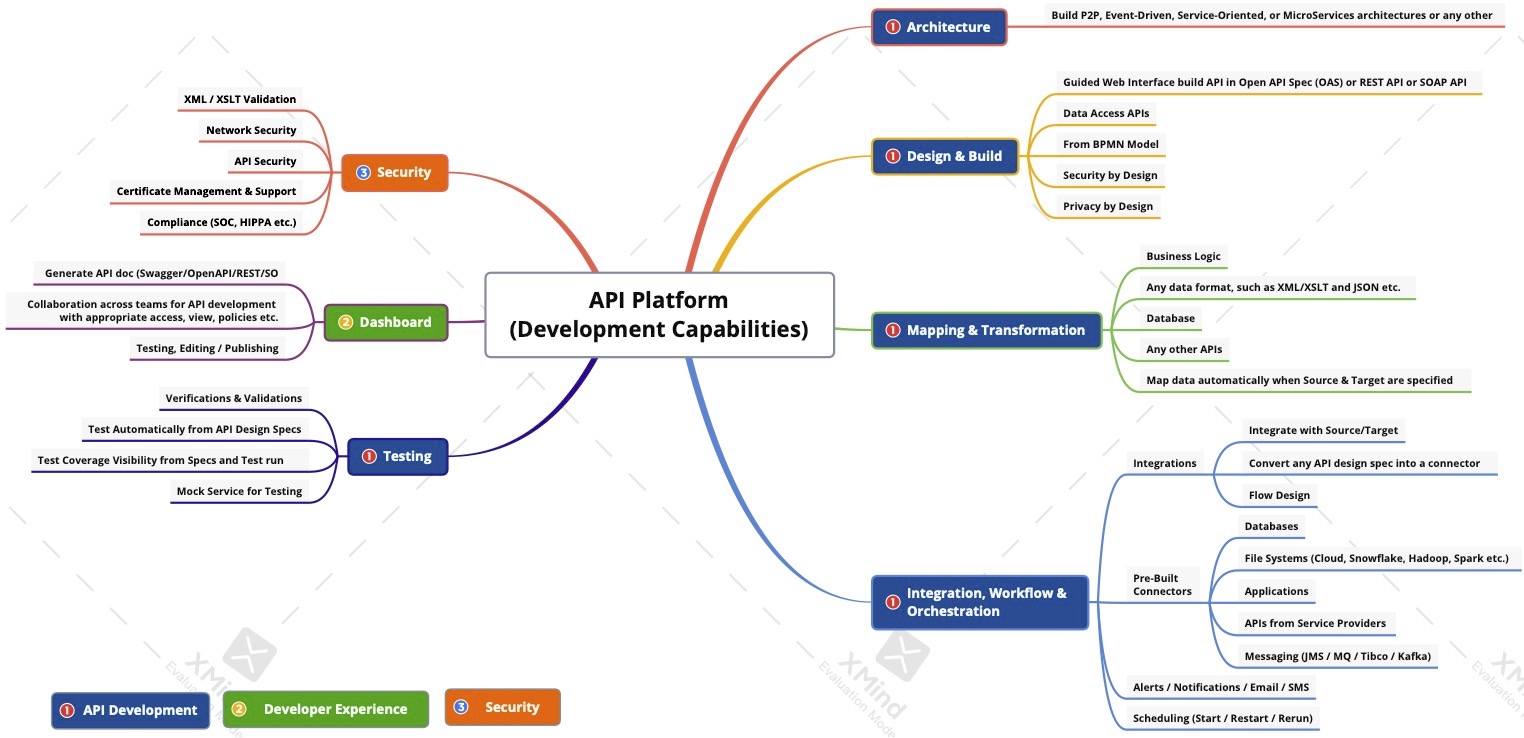
The mind map below gives a detailed view of API Platform capabilities required for a digital transformation during the deploy and manage life cycle.
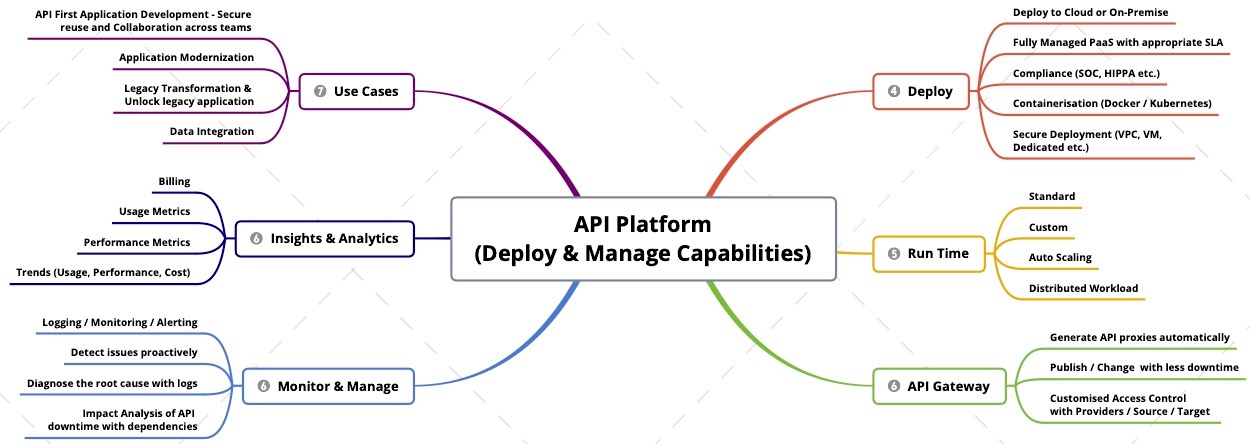
The methodology for building API-first applications is below.
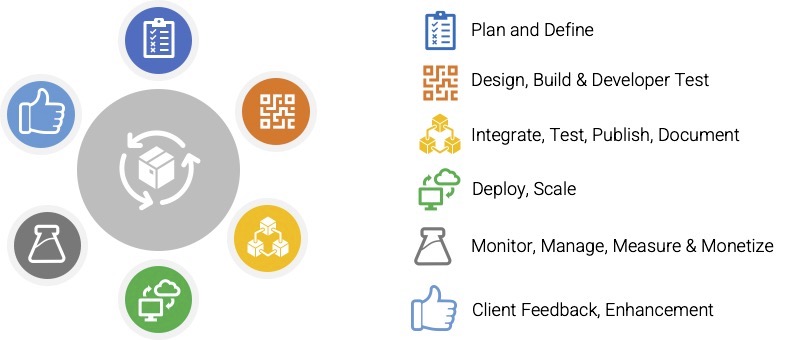
This blog provides a generic perspective about what the API Platforms should have capabilities for developing API-centric applications. There are many tools in the market which provide these capabilities, and one can choose the platform by evaluating them based on their fitment requirements. Below are some of the API platform providers available in the market. This is not a full list, as many more are available.
- MuleSoft Anypoint (Salesforce)
- Apigee (Google)
- Amplify API Management (Axway)
- IBM API Connect
- Azure API Management
- Oracle API Platform Cloud Service
- Red Hat 3scale API Management
- TIBCO Cloud Mashery API Management Platform
- Software AG webMethods API Cloud
- WSO2
- DellBoomi
Published at DZone with permission of Chandra Manohar. See the original article here.
Opinions expressed by DZone contributors are their own.
Comments