

Red Routes — Critical Design Paths That Make or Break Your App
Identifying and optimizing the most critical UX journeys, or red routes, will help you retain customers on the most frequently-used user journeys.
Join the DZone community and get the full member experience.
Join For FreeRed routes are the critical tasks that deliver the most value to your users. These routes are the foundational user journeys that make your product valuable and typically capture 90% or more of your user’s actions.
Origin of the Red Route
Introduced in London in 1991, red routes are major roads on which vehicles are not permitted to stop. Their goal is to allow high traffic volumes to flow freely without obstruction. Typically, red routes are marked with red lines on the sides of the road.
When applied to design, these red routes are the critical and frequent paths that users take to complete their tasks.
Identify Red Routes
Red routes are:
- Critical. Without these routes, your product would not deliver any value.
- End-to-end tasks with multiple steps or actions, not single events. For example, clicking a “Sign Up” button is an action, not a route. However, user registration from beginning to end would be a route.
- Frequently utilized. They will often capture the use cases of 90%+ of all users.
- Built for scale. They are high volume user journeys that funnel a majority of your product traffic.
- Key value drivers. They drive your key business metrics.
- Objectively successful. You should be able to clearly define what success looks like.
- Tied to critical product metrics. Your red routes directly impact your bottom line and have a substantial impact on user experience.
Building a Red Route Matrix
A great exercise is to think about the applications that you use daily and think about your habitual and repetitive tasks. Could these tasks be optimized? Would you still use the app if more friction was introduced to these tasks? Here are some red route examples from more common apps:
Uber
- Rider Red Route: Requesting a ride
- Rider Normal Route: Adding a payment method
- Driver Red Route: Accepting a ride
- Driver Normal Route: Changing profile settings
Airbnb
- Guest Red Route: Booking a room
- Guest Normal Route: Leaving a review
- Host Red Route: Managing reservations
- Host Normal Route: Updating listing pictures
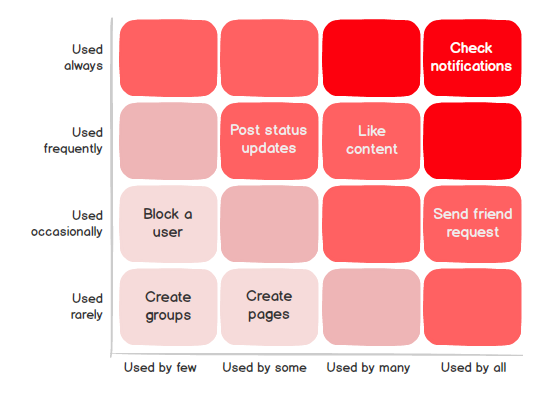
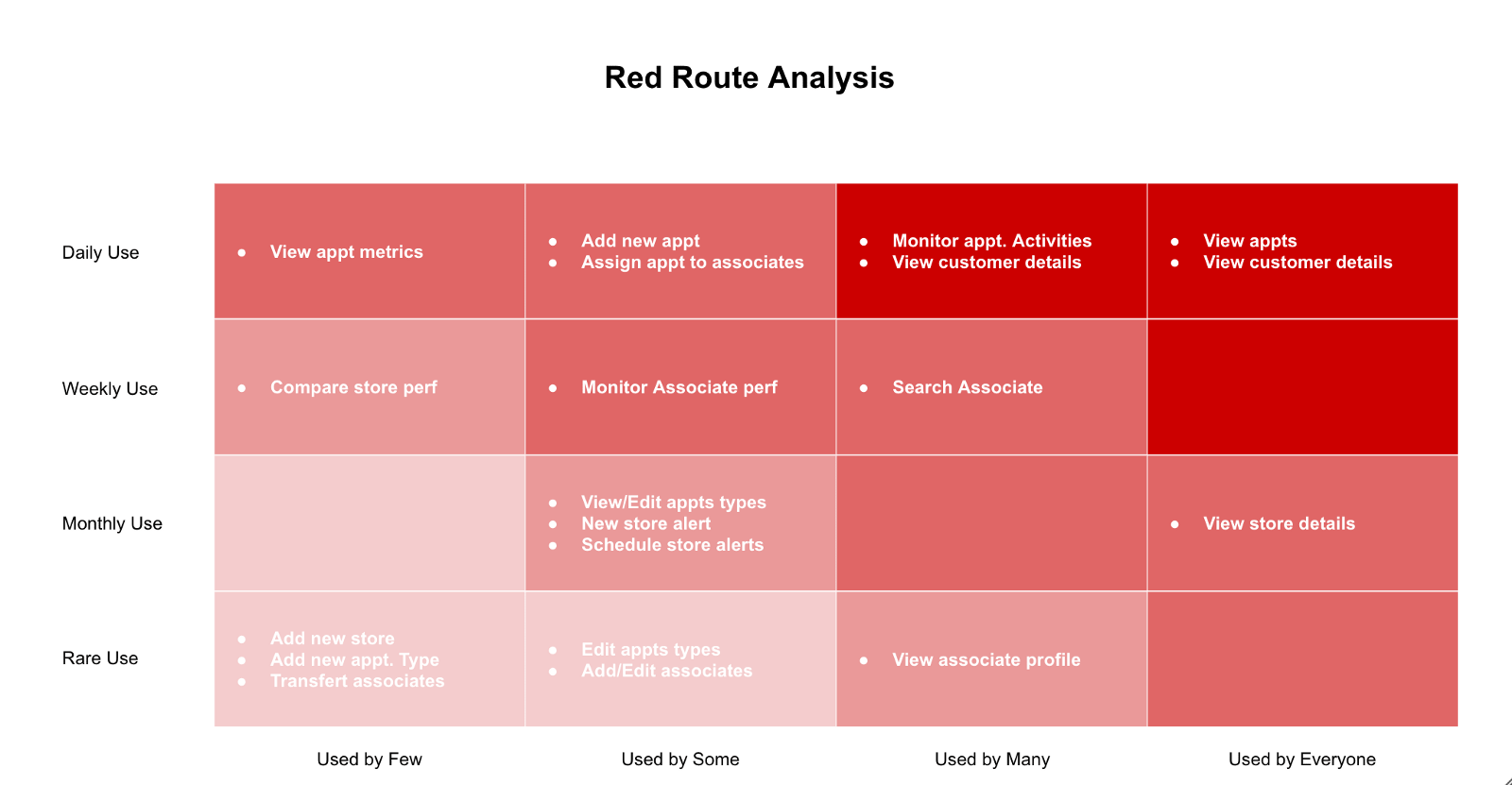
Here are some examples of red route matrixes that you can build. The top right is your most frequently and widely used feature, while the bottom left is your least used and more narrowly tailored feature.
Younes
Benefits of Identifying Red Routes
Identifying red routes helps your team prioritize user needs and facilitate alignment amongst your stakeholders. It also helps avoid scope creep and the introduction of extraneous/ancillary features.
Most importantly, it helps your team build and optimize product features that deliver the most value to your customers and drive your key metrics.
Opinions expressed by DZone contributors are their own.
Comments