

DZone
Thanks for visiting DZone today,
Edit Profile
  • Manage Email Subscriptions
  • How to Post to DZone
  • Article Submission Guidelines
Sign Out View Profile
  • Post an Article
  • Manage My Drafts
Newsletter
Log In / Join
Refcards Trend Reports
Events Video Library
Refcards
Trend Reports

Events

View Events Video Library

Related

  • How to Secure Your Raspberry Pi and Enable Safe, Resilient Updates
  • IoT Needs To Get Serious About Security
  • Recognizing Music Genres With the Raspberry Pi Pico
  • Remote Control With Node.js, React.js, and Raspberry Pi

Trending

  • Multi-Agent Orchestration on AWS With AgentCore Runtime and A2A
  • Vision-Language Models in 2026: From Research Breakthroughs to Cloud-Native Production Systems
  • Part 2: Securing and Scaling Goose-to-Java Agent Traffic With agentgateway
  • Why Your AI Agent Works in the Demo and Fails in Production

Draft This article hasn't been published, so readers can't see it.

In moderation This article is waiting for review, so readers can't see it yet.

Deleted This article has been deleted, so readers can't see it.

  1. DZone
  2. Data Engineering
  3. IoT
  4. RetroPie N64 Emulator Performance Tweaks

RetroPie N64 Emulator Performance Tweaks

RetroPie is great for your retro gaming needs, but unfortunately, N64 ROM performance is decidedly hit or miss. The Runcommand Launch allows emulator-switching, for selection of the best emulator for a specific ROM. Check out how to install additional emulators, boot into the Runcommand menu, and see a user-aggregated list of ROM performance.

By 
Moe Long
DZone Core CORE ·
Feb. 16, 16 · Tutorial
Post on X (opens in a new tab) Share on LinkedIn (opens in a new tab)
63.2K Views

Join the DZone community Save articles, join the discussion, and download Refcards and Trend Reports with a free account.

Join for free Already a member? Log in

One of my first Raspberry Pi projects, and one that I’m particularly fond of as an avid gamer, was installing RetroPie for old school gaming purposes. The Nintendo 64 being a favorite console of mine, I was brimming with excitement to play several N64 titles. Much to my dismay, N64 ROMs, I soon discovered, exhibited haphazard performance at best. Lag, video, audio, and often both, black screens, you name it, I encountered it.

A quick Google search revealed that well, I’m not exactly the only individual experiencing such issues. There’s unfortunately no singular solution, but a simple workaround alleviated a bit of frustration: installing additional emulators, and switching back and forth using the Runcommand Launch.

First, I exited EmulationStation by hitting F4, and proceeded to input the following command line prompt:

cd RetroPie-Setup
sudo ./retropie_setup.sh

and select "Install individual emulators from binary or source." I strongly suggest binaries-based installation, as it’s a much shorter install time compared to source-based.  
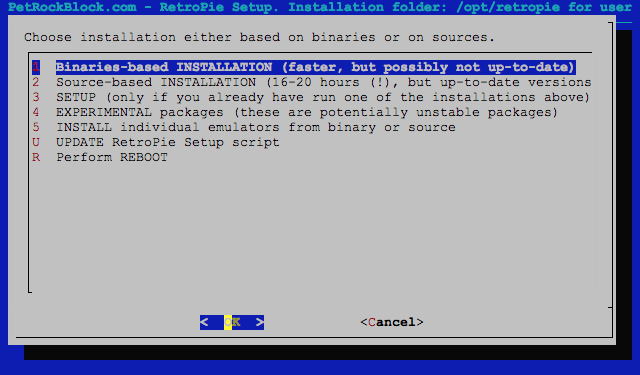
Image title

Alternately, if you’d rather just navigate through the EmulationStation frontend:

RetroPie > RetroPie-Setup > Install individual emulators from binary or source.
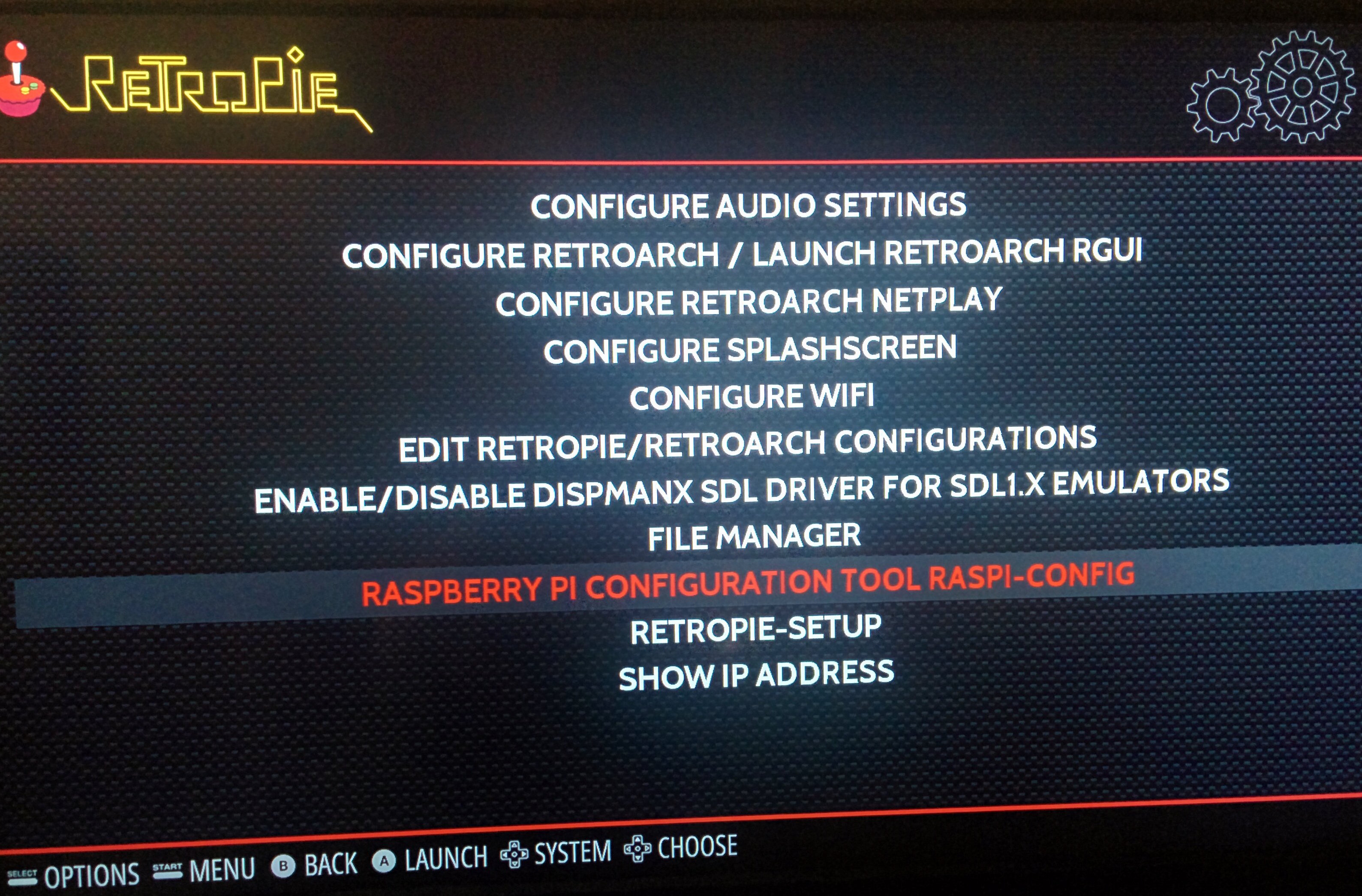
Image title

Go ahead and ensure Mupen64Plus and mupen64plus-libretreo core are both installed. Once those are installed, you can open up the Runcommand menu. When selecting a ROM, before the game loads, press any key on your keyboard, or button 0 on your joypad (if you have this assigned).

From here, you’ll receive the Runcommand menu, and you can select the default emulator. The RetroPie GitHub suggests that Mupen64Plus packs an improved performance pumch, while mupel64plus-libretro core has RetroArch configurations.

The various potential video plugins are:

  • Gles2N64

  • Gles2rice

  • GLideN64

For 1080p, gles2N64 is your best bet, while gles2rice is better suited to 720p, and GLideN64 for VGA. There’s even a great, up to date ROM compatibility list, which gives user-curated information on individual game ROMs.

raspberry pi

Opinions expressed by DZone contributors are their own.

Related

  • How to Secure Your Raspberry Pi and Enable Safe, Resilient Updates
  • IoT Needs To Get Serious About Security
  • Recognizing Music Genres With the Raspberry Pi Pico
  • Remote Control With Node.js, React.js, and Raspberry Pi

Partner Resources

×

Comments

Loading comments

The comments didn't load

Please try again in a moment.

Likes

Loading

The next likes didn't load. Please try again.

The likes didn't load

Please try again in a moment.

See who liked this

Log in or join DZone for free to see who liked this article.

Log in Join for free
  • RSS
  • X
  • Facebook

ABOUT US

  • About DZone
  • Support and feedback
  • Community research

ADVERTISE

  • Advertise with DZone

CONTRIBUTE ON DZONE

  • Article Submission Guidelines
  • Become a Contributor
  • Core Program
  • Visit the Writers' Zone

LEGAL

  • Terms of Service
  • Privacy Policy

CONTACT US

  • 3343 Perimeter Hill Drive
  • Suite 215
  • Nashville, TN 37211
  • [email protected]

Let's be friends:

  • RSS
  • X
  • Facebook