

6 Books That Changed How I Think About Software Engineering in 2026
These six reshaped how I think about engineering: strategy, emotional intelligence, team effectiveness, software design coupling, ultralearning, and docs-as-code.
 CORE
·
CORE
·
Join the DZone community and get the full member experience.
Join For FreeReading is essential for everyone, and especially for software engineers. Our field centers on managing and advancing knowledge. As technologies and architectural paradigms evolve and challenges grow more complex, continuous learning becomes fundamental.
In 2025, I read 34 books spanning philosophy, history, economics, and software engineering. While these subjects may seem unrelated to coding, they all aim to deepen our understanding of systems, whether in societies, economies, or software architectures.
This article highlights six books that stood out for software engineers. Each offers lessons beyond technical implementation, covering strategy, leadership, learning, and design — skills that grow in importance as engineers progress in their careers.
Some of these books are rereads. Revisiting valuable books often reveals new insights as our perspectives evolve. What once seemed theoretical may become highly practical when we encounter similar situations in real projects.
Let’s start with a book that addresses one of the most misunderstood topics in engineering organizations: strategy.
Crafting Engineering Strategy
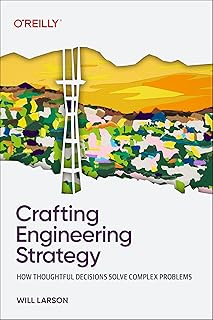
One of the most impactful books I read in 2025 was Crafting Engineering Strategy: How Thoughtful Decisions Solve Complex Problems by Will Larson.
Many engineers assume their organization lacks an engineering strategy. In reality, most organizations already have one — it just might not be effective, explicit, or aligned with the company’s goals.
Will Larson, also known for An Elegant Puzzle and as a staff engineer, provides a practical guide to navigating technical and organizational complexity through structured strategy. The book is especially valuable for senior engineers, architects, and engineering leaders who influence decisions beyond code.
The author presents a repeatable process for building actionable engineering strategies, from diagnosing problems to communicating and implementing initiatives. Real-world examples from companies like Stripe, Uber, and Calm show how strategy shapes decisions on platform migrations, API deprecations, and infrastructure investments.
Some of the most valuable lessons include:
- Building durable engineering strategies from first principles
- Applying techniques such as Wardley Mapping and systems modeling
- Leading strategic initiatives as a staff+ engineer or engineering executive
- Learning from real case studies across different industries
- Improving long-term influence through structured thinking
Engineering strategy is often seen as abstract or reserved for executives. This book clarifies that strategy is the structured alignment of technical decisions with long-term goals.
While strategy and technical insight are essential, they are not the only factors in a successful engineering career. Often, the real differentiator is less technical.
Emotional Intelligence
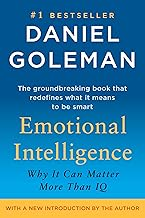
Emotional Intelligence by Daniel Goleman offers an important perspective for software engineers: technical skills alone are not enough. In many organizations, engineers with strong technical capabilities are surprised when others — sometimes with less technical expertise — reach leadership positions faster. It is tempting to assume that the system is unfair. In reality, another factor is often at play: emotional intelligence.
Daniel Goleman’s groundbreaking work explores how human behavior is shaped by two complementary systems: the rational mind and the emotional mind. While traditional intelligence (IQ) measures analytical ability, emotional intelligence (EI) includes qualities such as:
- Self-awareness
- Self-regulation
- Empathy
- Social skills
- Motivation
These capabilities strongly influence collaboration, conflict resolution, communication, and leadership.
Drawing on psychological and neurological research, Goleman explains why some with high IQs struggle professionally while others with moderate IQs succeed. Emotional intelligence shapes our ability to build trust, influence others, and navigate complex social environments — skills that grow in importance as engineers move into architectural or leadership roles.
Another powerful insight from the book is that emotional intelligence is not fixed at birth. While childhood experiences shape it, EI can be developed throughout adulthood through reflection, feedback, and intentional practice.
Recognizing this aspect of growth changes how we view engineering careers. The most successful engineers are not only technically strong but also understand people, teams, and organizational dynamics.
This naturally brings us to the next topic: how engineering teams actually function and succeed in practice.
Leading Effective Engineering Teams
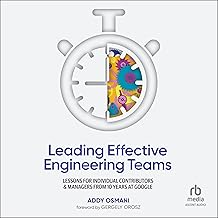
Leading Effective Engineering Teams by Addy Osmani is another standout book from my 2025 reading list.
Drawing on over a decade with the Chrome team at Google, Osmani examines what makes engineering teams effective. The book addresses both individual contributors and engineering managers.
One of the key themes of the book is the distinction between efficiency, effectiveness, and productivity — three concepts that are often used interchangeably but actually represent very different things.
- Efficiency focuses on doing tasks quickly.
- Productivity measures output.
- Effectiveness measures whether the work actually delivers meaningful impact.
In engineering teams, optimizing the wrong metric can cause problems. Teams focused solely on productivity may generate large volumes of code without delivering real value.
Osmani emphasizes that effective teams are built on trust, accountability, and clear communication. The book offers practical guidance on topics such as hiring, mentoring, career growth, and building sustainable engineering culture.
Some highlights include:
- Traits of highly effective engineers and teams
- Techniques for fostering trust and accountability
- Strategies to minimize friction in collaboration
- Systems thinking approaches for daily engineering decisions.
- Methods for improving visibility and recognition within organizations
The most valuable lesson is that engineering excellence is rarely achieved alone. It almost always results from a healthy team culture.
Once we understand how teams function, the next natural question becomes: how should we design the systems those teams build?
This leads us to a topic that is often misunderstood in software architecture.
Balancing Coupling in Software Design
When software engineers first study architecture, one concept appears repeatedly: coupling. The message is almost always the same: coupling is bad.
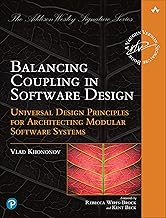
However, Balancing Coupling in Software Design by Vlad Khononov challenges this simplistic perspective.
Coupling is not inherently bad. In fact, it is unavoidable. Every design decision we make introduces some form of coupling. The real challenge is understanding and controlling it.
Khononov explores how coupling affects modularity, system evolution, and long-term maintainability. The book builds upon decades of research in software engineering while adapting those concepts to modern architectural practices such as microservices, domain-driven design, and distributed systems.
Rather than treating coupling as something to eliminate, the book presents it as a design dimension that must be balanced.
Some key insights include:
- Understanding different types of coupling in software systems
- Using coupling intentionally to manage complexity
- Recognizing trade-offs between modularity and system cohesion
- Applying design principles that support long-term evolution
This perspective is especially valuable for architects and senior engineers who must balance flexibility, performance, and maintainability.
Even the best design principles are ineffective if engineers cannot continuously learn and adapt. Given the rapid pace of change in our industry, learning is a core engineering skill.
Ultralearning
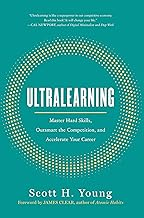
Ultralearning: The Essential Guide to Mastering Hard Skills and Future-Proofing Your Career by Scott H. Young focuses on one of the most critical abilities for modern professionals: learning efficiently.
Software engineers constantly encounter new frameworks, languages, architectures, and methodologies. The challenge is not only learning new technologies but also deciding what is worth learning.
Young introduces the concept of ultralearning, an intense and structured approach to mastering complex skills quickly. The book presents nine principles that help individuals learn deeply and effectively through self-directed education.
Some of the ideas explored include:
- Direct learning through real projects
- Strategic practice and feedback loops
- Retrieval-based learning instead of passive reading
- Experimentation and adaptation of learning strategies
The book highlights historical and modern ultralearners, such as Benjamin Franklin, Richard Feynman, and Judit Polgár, showing that structured self-learning has long driven mastery.
For software engineers, this mindset is particularly valuable. The industry evolves rapidly, and those who learn efficiently gain a significant advantage over time.
However, learning and design are only part of the equation. Without effective knowledge sharing, teams and organizations struggle to stay aligned.
Docs Like Code
Documentation remains one of the most underestimated aspects of software engineering.
In many organizations, teams fall into one of two extremes. Either documentation is almost nonexistent, forcing engineers to rely on meetings and tribal knowledge, or there is an overwhelming amount of documentation that becomes outdated and ignored.
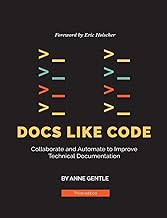
Docs Like Code: Collaborate and Automate to Improve Technical Documentation introduces a more balanced approach.
The core idea is simple: Treat documentation the same way we treat code.
This means applying practices such as:
- Version control
- Code reviews
- Continuous integration
- Automated validation
- Collaborative workflows
By integrating documentation into the development lifecycle, teams can ensure that knowledge evolves alongside the codebase.
The result is documentation that remains relevant, maintainable, and useful, rather than becoming an abandoned artifact.
For engineers focused on system design and long-term maintainability, this approach transforms documentation from a bureaucratic task into an essential engineering practice.
Final Thoughts
Reading remains one of the most powerful habits a software engineer can develop.
The books highlighted here address various aspects of engineering growth: strategy, emotional intelligence, team dynamics, architectural design, learning, and documentation. Together, they offer a broader perspective on growing beyond coding to become a more complete engineer.
Software engineering is not only about building systems. It also involves understanding complex environments, collaborating with others, making strategic decisions, and continuously learning.
Sometimes, the best way to improve as an engineer is simply to start with a good book.
Opinions expressed by DZone contributors are their own.
Comments