

State of DevOps 2023 Report: Key Findings and Insights
The annual survey results are here, with ground-breaking discoveries. The report goes deep into the impact of AI and documentation in productivity and job satifaction.
Join the DZone community and get the full member experience.
Join For FreeThe much-anticipated State of DevOps 2023 report is finally out. Developed by the DORA team at Google, this annual report is a synthesis of trends and insights collected from professionals and organizations working in the realm of DevOps.
Key Takeaways:
- The ramifications of AI on productivity
- What factors contribute to job satisfaction and burnout?
- What matters when choosing a cloud?
- The non-linear nature of investing in reliability and SRE practices.
I've published a video covering all the key insights. Scroll down to see a summary.
Here’s a summarized look at some of the major takeaways. You can download the report for free from Google: 2023 State of DevOps Report
Key Findings
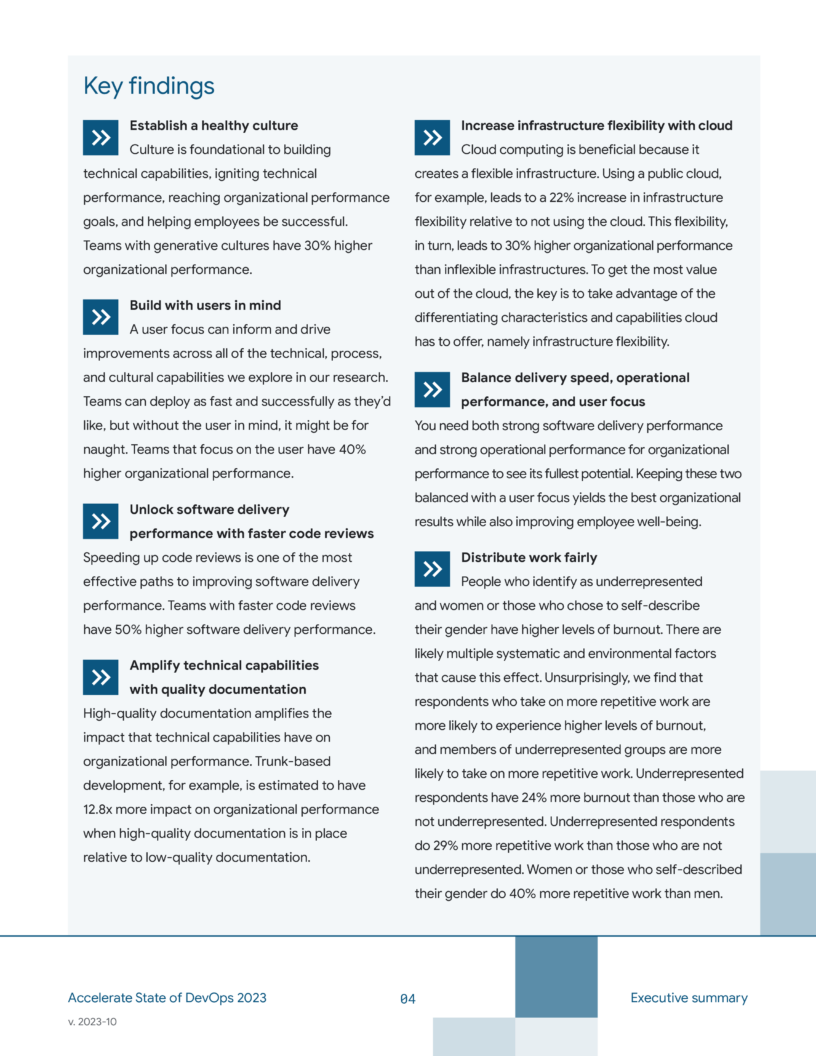
From the outset, the report presented several new areas of focus. On page 4, the spotlight was on:
- The pivotal role documentation plays in the ecosystem.
- How underrepresented groups are at a higher risk of burnout.
- The growing emphasis on prioritizing user feedback and needs.
- The role of the cloud in boosting productivity and job satisfaction.
Page 6 of the report outlines key organizational outcomes like enhancing productivity and job satisfaction while curbing burnout.
Prioritizing Users
One of the standout findings is how tuning into users during the developmental stages can amplify performance metrics. Whether they are customers, developers, analysts or testers, when we focus on the needs of our users there is a substantial increase in performance and reliability across the board.
Taking a user-centric approach reaps multifold benefits. It not only fosters an environment conducive to enhanced performance, CI/CD, job satisfaction, and productivity, but also plays a role in mitigating burnout.
The Technical Capabilities That Matter
New technologies call for a refreshed set of metrics. The results show that the impact of AI on team performance was less pronounced than expected. Instead, more foundational capabilities like CI/CD, robust documentation, trunk-based development, and rapid code reviews emerged as stronger pillars of performance.
The Power of Flexibility
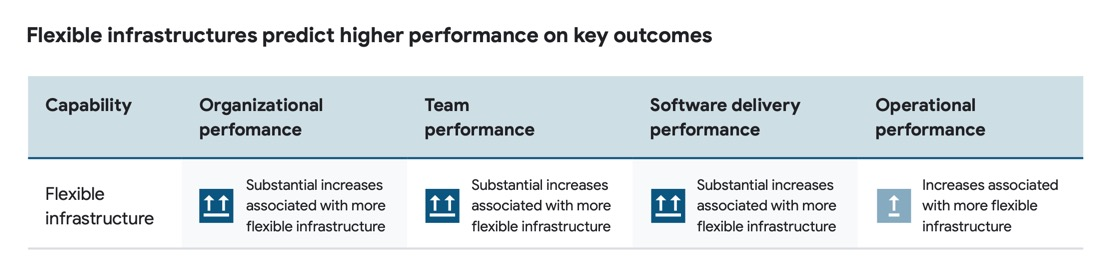
The flexibility of infrastructure directly correlates with performance, with most organizations turning to the cloud for this adaptability. However, the type of cloud chosen holds significance:
- Private clouds improve operational and team performance.
- Public clouds enhance organizational and team performance at the expense of operational and software delivery effectiveness. This dip in performance may be due teams shifting to the cloud and encountering unfamiliar tools.
Documentation: An Amplifier of Technical Capabilities
State of DevOps 2023 underscored the immense value of quality documentation. Beyond being foundational, it magnifies other technical capabilities, with the potential to boost performance by nearly 13x when paired with trunk-based development.
In addition, well-maintained documentation also positively influences the human side of development, elevating job satisfaction and productivity and reducing burnout tendencies.
Cultivating a Generative Culture
The idea of a generative culture has been a recurring theme in the State of DevOps reports. Rooted in the studies of American sociologist Ron Westrum, a generative culture paves the way for innovation, higher productivity, and a more fulfilling work environment.
The data confirms that a generative culture is a robust indicator of high performance.
Wrapping Up
I have only scratched the surface of the insights that State of DevOps 2023 reveals.
Thanks for reading!
Published at DZone with permission of Tomas Fernandez. See the original article here.
Opinions expressed by DZone contributors are their own.
Comments