

Beyond Chatbots: Supercharging Feather Wand With Claude Code Integration
When I first introduced Feather Wand, the goal was simple: to make performance testing more accessible and efficient by leveraging the power of AI.
 CORE
·
CORE
·
Join the DZone community and get the full member experience.
Join For FreePerformance testing has always been a bit of a “dark art.” It requires a unique blend of coding skills, architectural knowledge, and the patience to debug complex .jmx files. When I first introduced Feather Wand, the goal was simple: to make performance testing more accessible and efficient by leveraging the power of AI.
Today, I’m excited to share a massive update that takes this mission to a whole new level. We’ve officially integrated Claude Code into the Feather Wand ecosystem.
If you thought AI in testing was just about generating boilerplate scripts, think again. This isn’t just an update; it’s a paradigm shift in how we interact with our performance testing assets.
A Quick Refresher: What Is Feather Wand?
For those who missed the initial launch, Feather Wand is an AI-powered toolkit specifically designed for the JMeter and performance testing community. It acts as an agentic layer that understands the nuances of load testing, helping you generate scripts, analyze results, and optimize configurations without the manual heavy lifting.
You can catch up on the original announcement here.
The New Powerhouse: Claude Code Integration
So, why Claude Code?
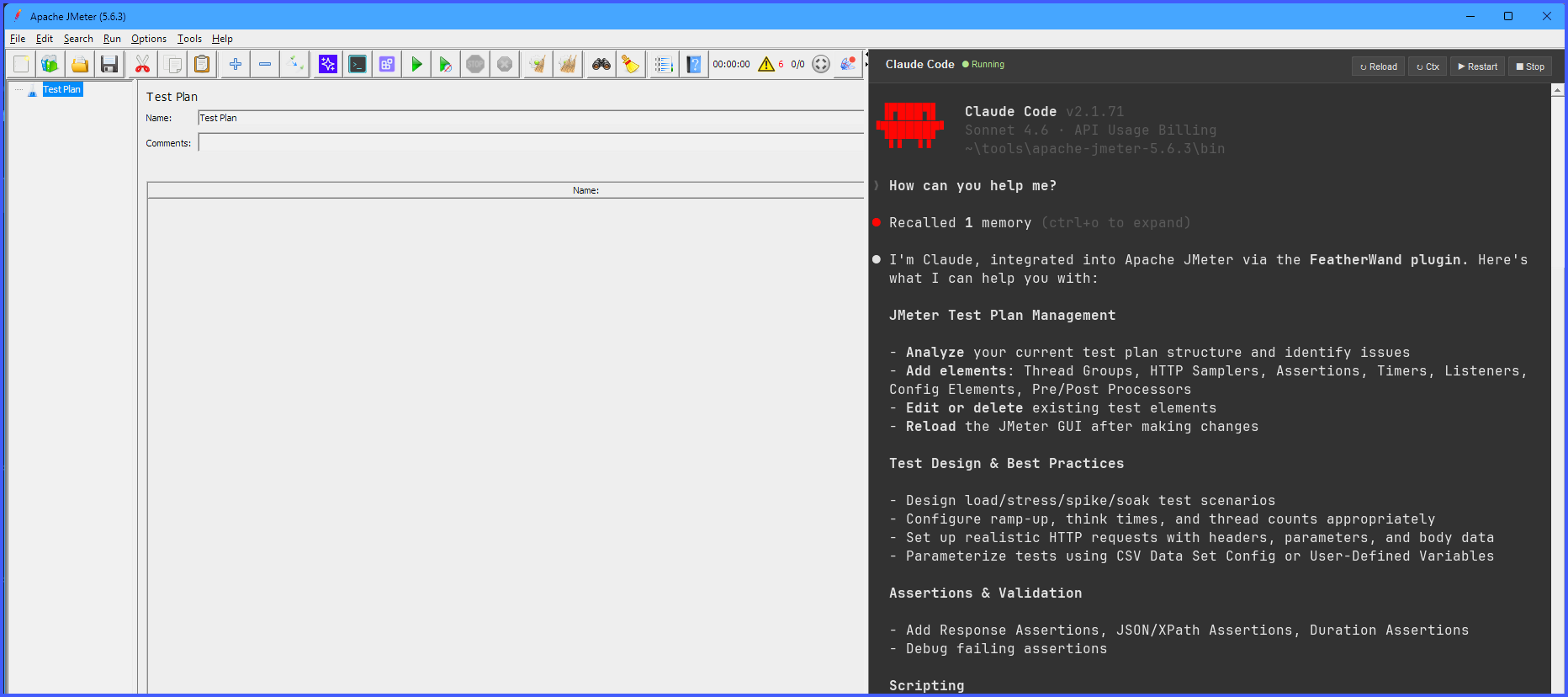
Anthropic recently released Claude Code — a research preview of a command-line tool that can literally “code itself.” It doesn’t just suggest snippets; it understands entire file structures, executes terminal commands, and debugs in real-time.
By bringing Claude Code into the Feather Wand (jmeter-ai) repo, we’ve given the agent “hands.”
What Does This Actually Mean For You?
Instead of copying and pasting code from a browser into JMeter, Feather Wand can now leverage Claude’s agentic capabilities to:
- Refactor complex JSR223 scripts: Have a messy Groovy script that’s causing bottlenecks? Feather Wand can now analyze the logic and rewrite it for better performance.
- Autonomous debugging: It can look at your JMeter logs, identify the root cause of a 500 error, and propose (or even apply) the fix directly to your script.
- Intelligent script conversions: Moving from a legacy tool to JMeter? The integration makes the translation of logic much more reliable because it understands the intent behind the code.
- Terminal-first workflow: Since it’s integrated at the CLI level, you never have to leave your development environment.
Why This Feels Different
We’ve all experienced the frustration of generic AI. You ask for a JMeter script, and it gives you something that doesn’t quite work.
The integration with Claude Code feels different because it’s context-aware. It knows it’s working within the Feather Wand framework. It knows it’s dealing with performance testing constraints. It’s less like talking to a search engine and more like having a Senior Performance Engineer sitting right next to you, typing on your keyboard.
See It in Action
Words only go so far. To truly understand how this changes the workflow, you need to see the agent think, execute, and solve problems in real-time.
Getting Started With the New Feature
If you’re already using Feather Wand, getting the Claude Code integration up and running is straightforward. I’ve updated the GitHub repository with all the necessary documentation and setup instructions.
- Clone/Update the repo:
git pullthe latest changes from thejmeter-airepository. - Configure your API keys: Ensure your Anthropic keys are set up.
- Run the agent: Start exploring the new commands designed to trigger Claude’s agentic workflows.
Why This Matters for Modern Performance Teams
In the world of shift left testing, speed is everything. We are being asked to do more with less time. Tools like Feather Wand aren’t about replacing the tester; they are about removing the friction.
By using an AI agent that can actually manipulate code and understand the terminal, we reduce the “to-and-fro” between the IDE and the browser. This is the future of performance engineering — less manual configuration, more strategic analysis, and faster delivery cycles.
Final Thoughts
Feather Wand is evolving fast. The community feedback since the first version has been incredible, and this Claude Code integration is a direct response to the need for more “doer” agents in the QA space.
I’d love for you to take it for a spin, break it, and tell me how it can be better. Head over to the GitHub repo, give it a star, and let’s redefine what’s possible in performance testing.
What are your thoughts on using agentic AI for JMeter scripts? Let’s chat in the comments!
Published at DZone with permission of NaveenKumar Namachivayam. See the original article here.
Opinions expressed by DZone contributors are their own.
Comments