

The Uncomfortable Truth of Scaling ‘Agile’
Merely implementing one of several frameworks for scaling Agile from the team level to the whole organization won’t fix agility issues without an Agile mindset shift.
 CORE
·
CORE
·
Join the DZone community and get the full member experience.
Join For FreeAgile transformations, scaling Agile from a team level to the whole organization, are more than implementing frameworks like SAFe®. They require a radical shift from rigid, top-down management to flexible, people-centric operations rooted in simplified structures, autonomous teams, and frequent, sustainable value delivery rather than promising quicker, cheaper results.
The Background of Scaling Agile
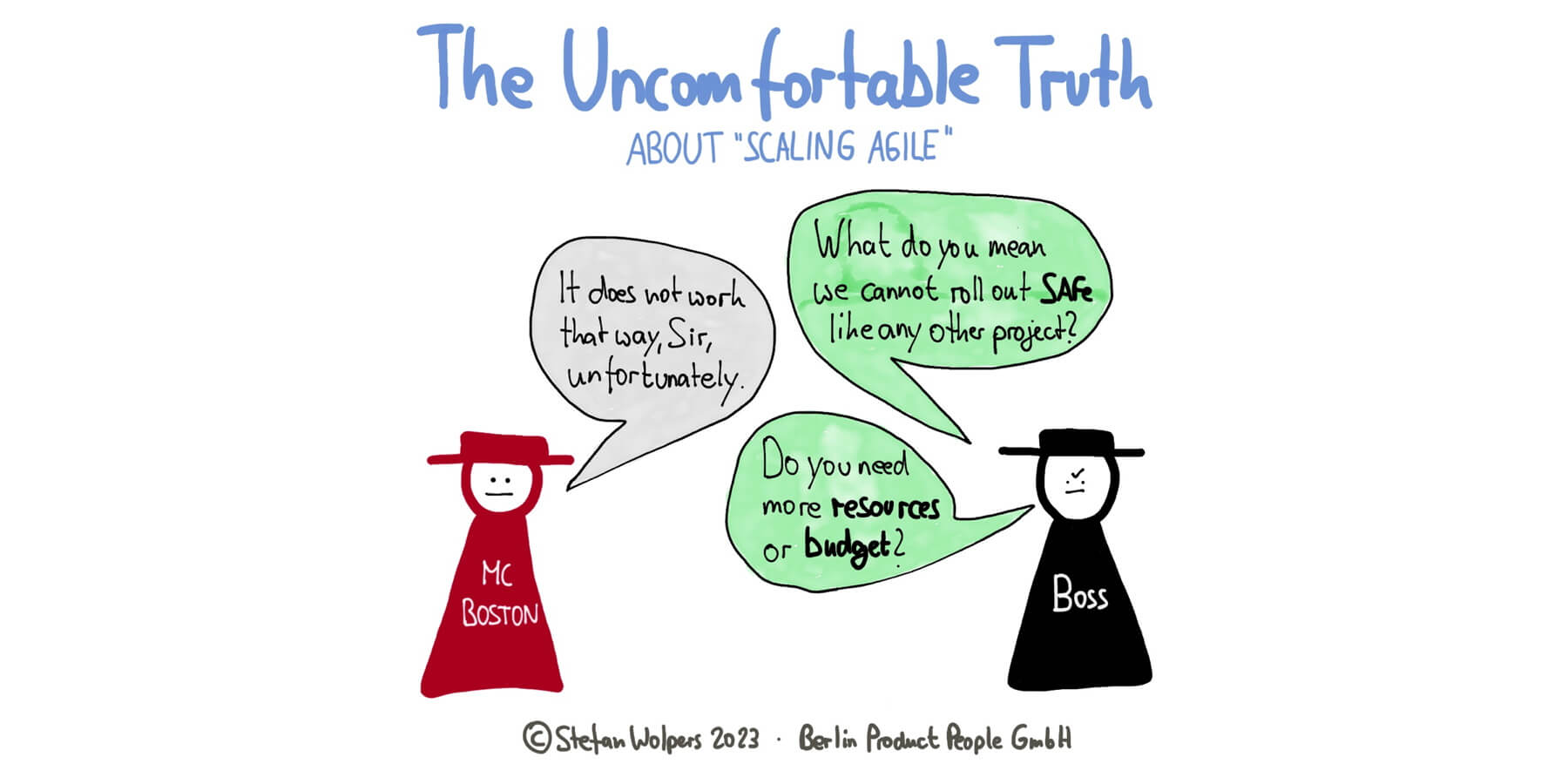
Any agile transformation extends beyond adopting frameworks like SAFe, challenging traditional Taylorist, top-down management styles. Instead of simply rolling out another initiative, probably master-minded by McBoston or another of the usual suspects, Agile transformations require a completely different approach. They are never process-driven but depend on cultural and mind-shift changes.
Consequently, successful Agile transformations necessitate simplifying organizational structures, fostering autonomous teams, and shifting focus from prescriptive processes to people-centric interactions. Flexibility should be encouraged to suit specific organizational contexts rather than rigidly adhering to practices such as Scrum or Kanban. Finally, it’s important to remember, Agile doesn’t promise quicker, cheaper results but emphasizes frequent, sustainable, high-quality value delivery.
These are seven common issues regarding scaling Agile:
- There Is no SAFe Way to unFIX Your Problems: Scaled Agile Framework (SAFe) is often seen as a solution to align complex organizations around Agile delivery. However, it’s crucial to understand that merely implementing SAFe or any other scaling framework will not automatically solve existing issues emerging from aspiring to become Agile. It requires the organization to adopt an Agile mindset and change its culture and organizational structure, with an understanding of its principles and values at all levels, from teams to executives.
- Taylorism Does Not Solve Complex Adaptive Problems: Frederick Winslow Taylor’s principles of scientific management, or Taylorism, focus on optimizing individual tasks through a top-down approach to increase efficiency. The concept worked well for simple, repetitive tasks but falls short when dealing with complex adaptive problems common today. Agile practices, which promote team autonomy, self-management, cross-functionality, iterative and incremental development, and customer collaboration, are not just better suited but indispensable. What worked for GM in the 1920s is no longer a winning strategy.
- Descaling the Organization Is the Way Forward: While “scaling Agile practices” gets much attention, descaling the organization could be a more effective strategy for many organizations. Descaling involves simplifying structures and processes, eliminating bureaucratic obstacles, and promoting lean principles. This strategy empowers teams, reduces waste, increases speed, and fosters a culture of continuous learning and improvement, ultimately leading to higher customer value. It will also spark much resistance due to the vested interests of many stakeholders.
- Empowering Teams to Solve Customer Problems Is the Way Forward: Empowered, autonomous teams are at the heart of Agile. Instead of being directed and micromanaged, Agile teams enjoy the autonomy to self-organize, make decisions, and solve problems. This approach increases motivation and job satisfaction and allows faster, more innovative solutions than decreeing what they should work on to improve their customers’ lives. Think “Autonomy, Mastery, Purpose.”
- Restrain from Prescribing Processes and Tools: While processes and tools have their place, they should be a secondary focus in Agile environments. The Agile Manifesto favors individuals and interactions over processes and tools. Hence, rather than prescribing a one-size-fits-all approach, organizations should foster a culture that empowers individuals, promotes collaboration, and embraces change.
- Scrum, Kanban — the Usual Suspects Are Not Relevant in the Long Run: Scrum, Kanban, and other Agile practices are just tools. They provide guidance but are not an end in themselves. Instead of rigidly sticking to a single practice or framework, organizations should adopt a flexible approach incorporating various concepts’ aspects. The ultimate goal is to find a way of working that best meets the organization’s unique context and needs and delivers the highest value to the customers.
- Agile Means Faster and Cheaper: While Agile can lead to faster delivery of customer value, it doesn’t necessarily mean that the work will be completed more quickly or at a lower cost. Agile emphasizes quality, sustainable work pace, and frequent value delivery, not rushing through tasks or cutting corners. Contrary to popular belief, “Agile” is not about “The Art of Doing Twice the Work in Half the Time.”
Conclusion
Merely implementing one of several frameworks for scaling Agile from the team level to the whole organization won’t fix agility issues without an Agile mindset shift. Success in today’s complex problems requires descaling structures, reducing bureaucracy, and empowering autonomous teams, thus overcoming outdated Taylorist principles.
What issues have you observed during Agile transformations? Please share your thoughts with us in the comments.
Published at DZone with permission of Stefan Wolpers. See the original article here.
Opinions expressed by DZone contributors are their own.
Comments