

Top 5 Use Cases of IoT in Transportation
The Internet of Things is rapidly changing the transportation industry. Check out this post to learn more about the top five uses of IoT in transportation.
The transportation industry is the second-largest segment investing in the Industrial Internet of Things (IIoT), spending approximately $78 billion from 2016. A small portion of this investment goes in monitoring the fleet management. The IoT in smart transportation has rapidly changed the trucking industry with the help of mobile and connectivity advancements. Smart gadgets are playing the vital role as they carry out the important operations and make work more efficient and safer to use. To make trucking a more effective system, IoT has made everything possible — from effective road safety issues to the monitoring of the systems in fleet management.
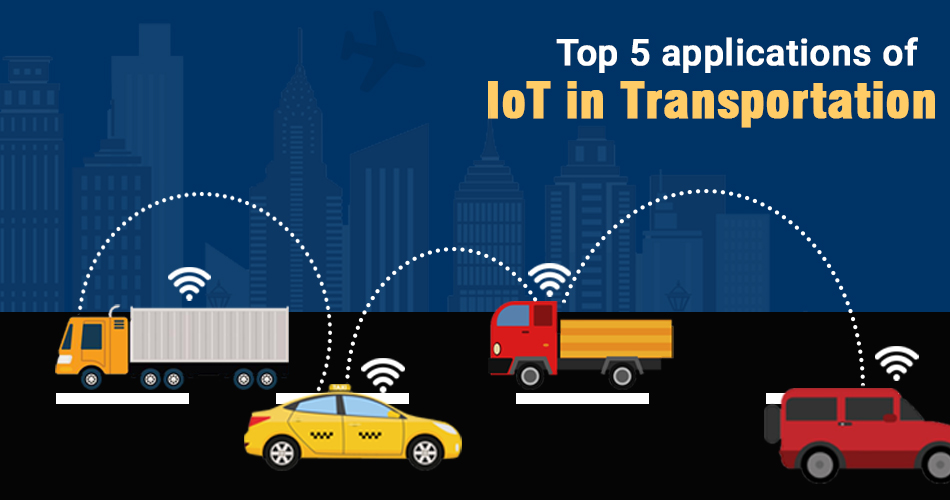
As 70 percent of all freight transportation is done via trucks, the American Trucking Association stresses that the trucking business is a major part of the U.S. economy. Through IoT, we are getting closer to a future where autonomous trucks will become reality. Biz4Intellia, an end-to-end IoT solution provider, has come up with the best salient features in transportation in the following way:
1. Fleet Management
Business leaders look for real-time fleet information so that they can reap business benefits to making intelligent decisions real-time. The Fleet Management technology is slowly and gradually getting adopted with the improvements in operational efficiency, maintenance cost, fuel consumption, regulatory compliance, and speed up accident response. GPS tracking, geo-fencing, customized dashboards, and real-time business decisions are some of the key features fleet management offers.

2. Public Transit Management
Public transit systems offer many benefits to passengers. But, tracking the real-time location of the vehicle and knowing when it will arrive at a particular stop was always a challenge. As real-time tracking of the vehicle is possible with the help of IoT in transportation, the data that is tracked is sent to an engineer or to a central system and, then, to an Internet-enabled mobile device. The Internet of Things has eradicated all the challenges that were faced in a public transit system and has enabled re-routing features to help people make alternate arrangements as real-time tracking of the vehicle is easily done.
3. Smart Inventory Management
IoT in transportation has smart inventory management that acts as a catalyst telling the real-time information across the warehouse, distribution, and production center, which reduces the cost of inventory and improves the predictive maintenance. Smart inventory management systems have lowered the inventory cost and reduced the management errors of the inventory. The quality and depth of data from IoT sensors and systems have strengthened the legalized inventory management system.
4. Optimal Asset Utilization
IoT in transportation enables the asset tracking feature, which keeps track of the physical assets and their information, like location, status, etc. With Biz4Intellia, an end-to-end IoT solution provider, one can track the real-time location of their truck and can know how much load there is on the trailer of the respective truck. Not only this, but the latitude and longitude of an asset can also be known by IoT in transportation. The advanced analytics tracks all the devices like sensors, axels, and tells about the threshold and tolerance of the device.
5. Geo-fencing
IoT in the transportation industry has come up with an advanced form of GPS, i.e. geo-fencing. It captures the location of an asset or device with the coordinates of a particular area. Geo-fencing helps in starting the automated tasks. IoT in the transportation industry is the most benefitted from geo-fencing. It allows you to receive alerts when a driver deviates from the prescribed path, as it can bring delay in delivery time and cause accidental loss.
This technology has manifested the paper logs as it came up with a digital- and cloud-based monitoring system that tells about real-time data of the truck. Increased transparency and accountability has made the IoT in transportation more cost-effective and reduced time. The Internet of Things has changed the business performance of many organizations and is predicted to cut the emissions from trucks in the U.S. by 25 percent.
Opinions expressed by DZone contributors are their own.