

Visual Design vs. Usability
Both visual design and usability are important aspects of any products UI. Find out what makes them different and why they are inseparable.
 ·
·
Join the DZone community and get the full member experience.
Join For FreeYou must be hearing words like UX/UI/VD, and it is quite fascinating that "Visual Design & Usability" are hot topics in Tinsel Town these days.
Usability is a study of the interactive user experience associated with a user interface, such as websites, software and mobile applications. It is about usefulness, competence and the contentment of the user. Usability helps users execute their desired tasks proficiently and successfully.
Visual Design is a method of creating and establishing a user interface through the use of creativity and imagination. It emphasizes the aesthetics of a user interface and stresses its components by innovatively applying design elements.
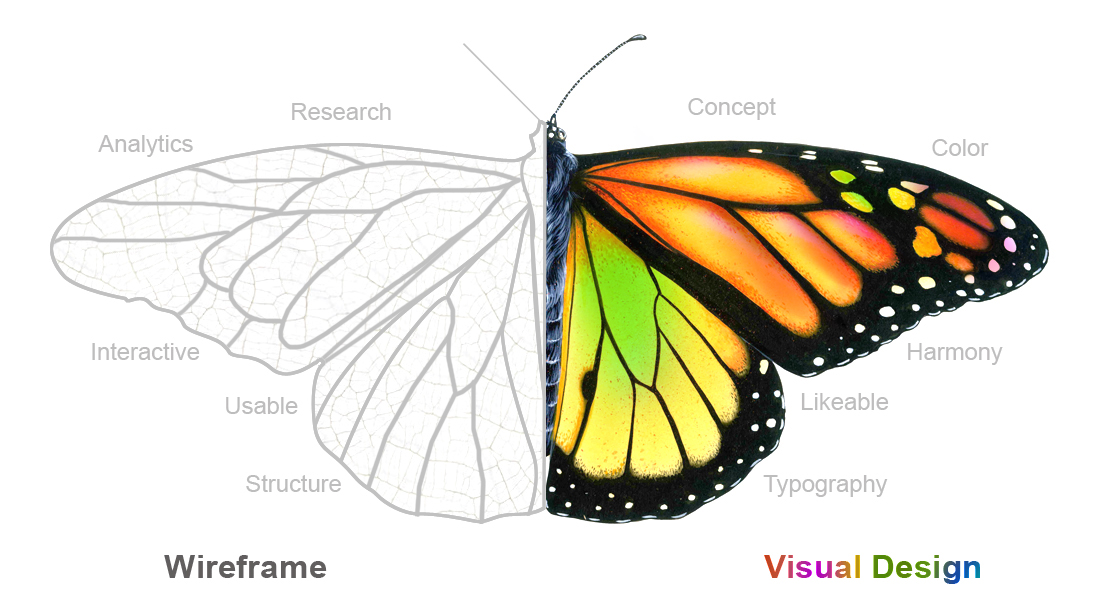
Being a visual designer, I agree that designers usually want to make a UI look visually appealing. On the other hand, usability experts always want to create a UI which is easy to understand from a navigation point of view and which is intuitive as well. As a matter of fact, I can say that visual design and usability are the most important aspects of a well-designed UI.
A few days ago, I met a usability expert and had a healthy discussion with her. She said that if a design was visually pleasing but the application’s usability failed and the objectives for which it was designed were not met, the design would be of no use. I counter-argued that if the usability of the application was foolproof but if the design wasn’t up to standard, then the application has failed in this instance as well.
In this blog, I’m going to try to list the major aspects of Usability and Visual Design.
Usability Evaluation
Ostensibly, we can say that usability is all about usefulness, competence, and the complete satisfaction of the end user. It symbolizes how easily a user can use and navigate while interacting with the websites, software, devices or applications. Frankly, usability is not a solitary one-dimensional value of the user interface but a blend of many. Here are the major ones:
- Easy to learn: A user who has never seen the UI before can still easily achieve the desired task
- Innate scheme: Simple understanding and navigation of the layout of the course/UI
- Process effectiveness: The actual experience of the user as he achieves his tasks with the utmost ease and comfort
- Satisfaction: Having a satisfactory experience of the UI navigation from a user’s point of view
- Momentousness: So intuitive that a user need not think too much about the navigation when using the UI
Visual Design Evaluation
According to my understanding, visual design is about the aesthetics of the UI and its related components by thoughtfully executing images, fonts, lines, shapes, typography, and other essentials. An effective visual design always carries the value of aesthetics by including the value of content. Here are some of the philosophies of visual design:
- Harmony: Harmony describes that each fragment of the artwork communicates and complements one another.
- Alignment: Aligning components permits them to appropriately generate a sense of visual association with each other.
- Balance: Balance is the mental logic of symmetry. It places the parts in an aesthetically pleasing arrangement.
- Color and Texture: Colors produce profoundness and show difference, and help to enhance the dimension of design. In addition, Textures are purposefully used to attract and provide patterns to produce a real experience.
- Dimensional Graphic: 2 or 3 dimensional creations express mass and volume.
We can now see that a visual designer and a usability expert are like neighbors, having altogether separate and significant tasks to achieve the objective. Usability is a significant and primary aspect while starting any design/development work. Visual design is also a fundamental fragment of the user experience. For example, a bare table is indeed usable and accessible, but on the other hand adding a nice designer cover with a beautiful bunch of garden-fresh blossoms will surely complement and enrich the experience, helping build interest, trust, and a superior user experience.
Conclusion
When we want to create successful layouts that provide an effective user experience, it is vital to do with the best usability practices, thinking more like a designer to develop the design sense. It is also equally important to lay down techniques for creating effective visual design being guided by the usability expert, which can help to build a superior user experience. An interface that is both engaging and easy to follow and navigate is one that will gain brand trust, successfully convey a message, and contribute to revenue growth. Finally, I would like to say that Usability and Visual Design are inseparable components of modern design. Balancing usability and graphic design is a high priority these days. I see more and more usability experts being trained in visual design, and creative designers being trained on usability.
Opinions expressed by DZone contributors are their own.
Comments