

Why SAP BDC Is a Game Changer for SAP Data
SAP BDC (Business Data Cloud) is considered a game changer for SAP’s data portfolio, turning SAP into a modern, open, and AI-ready data platform.
 ·
·
Join the DZone community and get the full member experience.
Join For FreeSAP BDC (Business Data Cloud) is considered a game changer for SAP’s data portfolio because it fundamentally changes how SAP data is unified, governed, and consumed for analytics and AI. Instead of data being locked inside individual SAP systems, BDC turns SAP into an open, business-ready data platform.
For many years, SAP data was difficult to use. Data lived in different SAP systems such as ECC, S/4HANA, SuccessFactors, and Ariba. Companies had to move data into SAP BW or BW/4HANA to analyze it. This process was slow, costly, and complex.
SAP Business Data Cloud (BDC) changes this completely. It turns SAP into a modern, open, and AI-ready data platform.
What Is SAP BDC?
SAP BDC (Business Data Cloud) is a cloud-based data platform that lets businesses access SAP and non-SAP data in real time, with business meaning and strong security — without copying data repeatedly.
In simple words:
BDC helps companies use SAP data easily for analytics, planning, and AI.
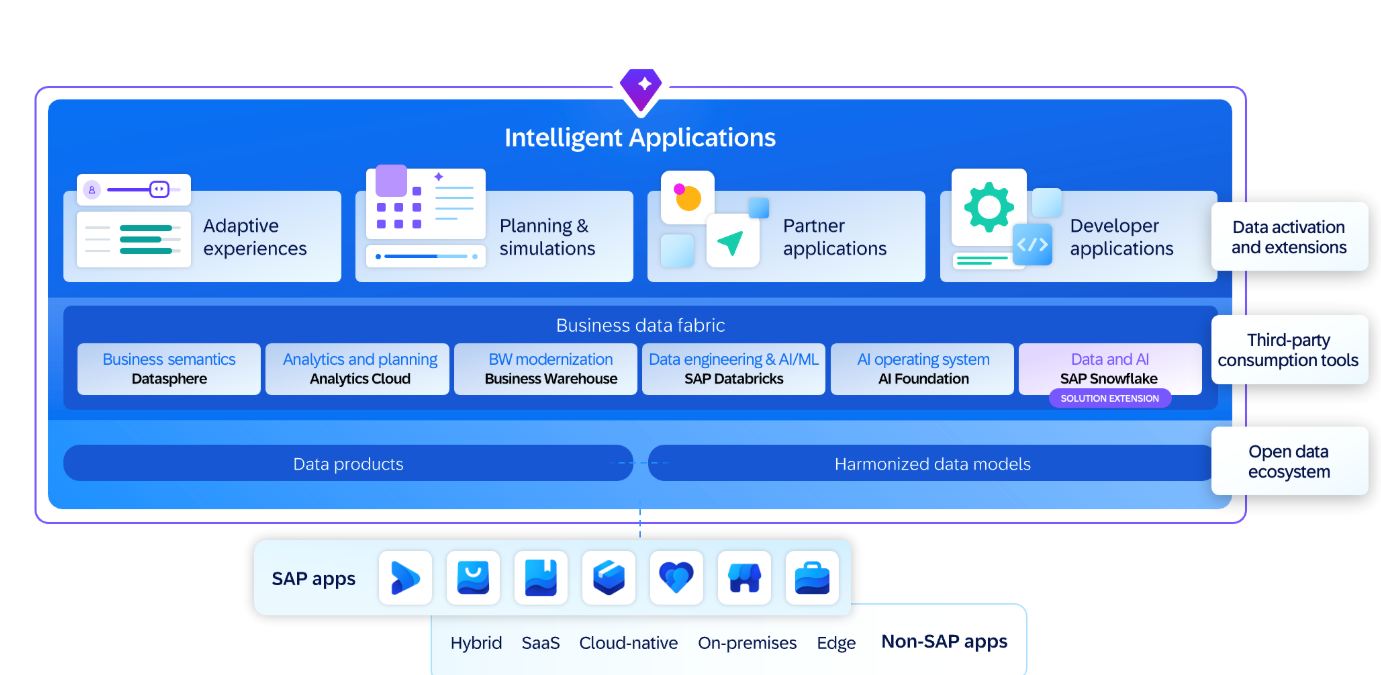
1. Breaks SAP Data Silos (Biggest Shift)
Traditionally:
- SAP ECC, S/4HANA, BW, SuccessFactors, Ariba → separate data silos
- Complex ETL, duplication, and latency
With SAP BDC:
- Data is virtualized and federated
- No need to copy data out of SAP systems
- Real-time access across SAP and non-SAP sources
Result: One logical data layer across the enterprise
2. Business Semantics Built In (Not Just Raw Data)
Most data platforms:
- Focus on tables, schemas, and pipelines
- Business meaning is lost
SAP BDC:
- Preserves SAP business context
- Finance (GL, AR, AP)
- Supply Chain
- HR
- Uses SAP business objects and semantics
Result: Analysts and AI models work with business-ready data, not raw tables.
3. Native Integration with SAP Analytics Cloud (SAC)
BDC is deeply integrated with:
- SAP Analytics Cloud
- Planning, reporting, and predictive analytics
Why this matters:
- No data movement
- Real-time analytics
- Consistent KPIs across dashboards
Result: A single source of truth for analytics and planning
4. Open to Non-SAP Data and Modern Tools
BDC is not SAP-only:
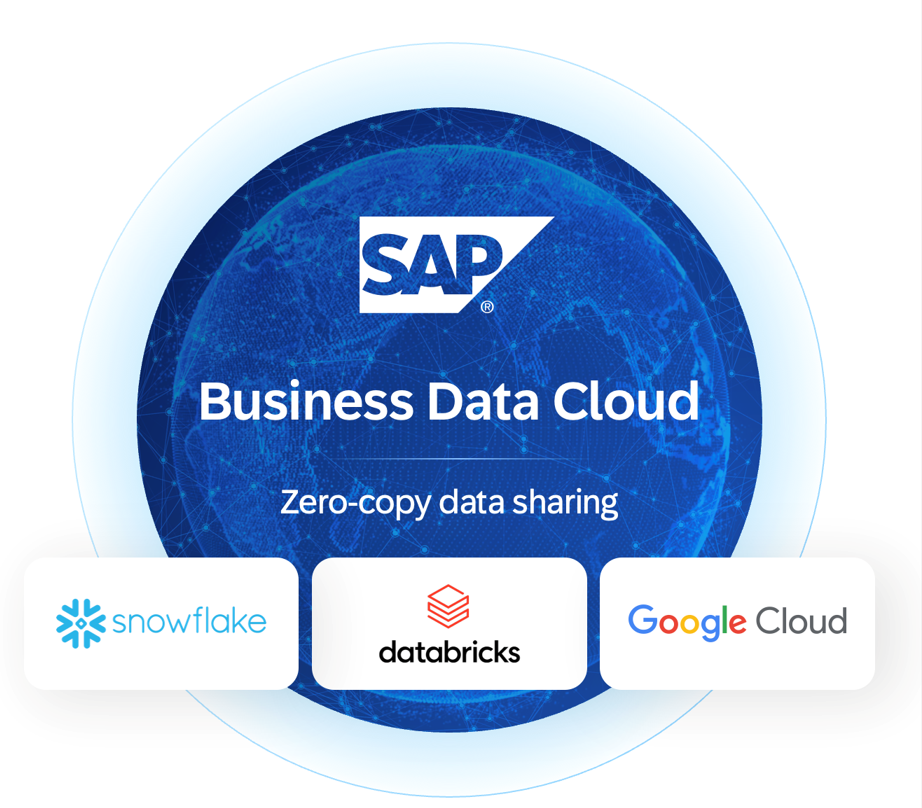
- Integrates with cloud data platforms (Snowflake, Databricks, BigQuery, Azure)
- Supports open standards and APIs
Why it’s a game changer:
- SAP data can be analyzed alongside non-SAP data
- No vendor lock-in
Result: SAP becomes part of a modern data ecosystem, not an island.
5. Built for AI and GenAI Use Cases
AI requires:
- Clean, contextual, governed data
- Real-time access
BDC enables:
- Trusted datasets for ML and GenAI
- Integration with SAP Joule
- Faster AI model development using SAP data
Result: SAP data becomes AI-ready by default.
6. Strong Governance and Security (Enterprise-Grade)
SAP BDC enforces:
- Role-based access
- Lineage and metadata
- Compliance (SOX, GDPR, etc.)
Why this matters:
- Governance travels with the data
- No shadow analytics
Result: Secure analytics at scale
7. Reduces Cost and Complexity
Before BDC:
- Heavy BW systems
- Custom ETL pipelines
- Data duplication
With BDC:
- Less data movement
- Simplified architecture
- Lower infrastructure costs
Result: A lean, future-proof SAP data landscape
8. Strategic Shift for SAP (Why It’s a Portfolio Game Changer)
BDC signals SAP’s move from:
“ERP company” → “Business data and AI platform”
It aligns SAP with:
- Cloud-first strategy
- AI-driven enterprises
- Data mesh and data fabric architectures
Comparing Traditional SAP Data Solutions with BDC
SAP BDC vs. SAP Datasphere
| Topic | SAP Datasphere | SAP BDC |
|---|---|---|
| What it is | Data modeling & semantic layer | Full data + analytics + AI platform |
| Scope | Data integration & business context | Data, analytics, governance, AI |
| Analytics | Via SAC or external tools | Built-in with SAC |
| AI | Limited | Strong (Joule + AI-ready data) |
| Position | Component | Platform(Data Sphere also main component in BDC) |
Datasphere works inside BDC.
SAP BDC vs. SAP BW / BW/4HANA
| Feature | SAP BW/BW4HANA | SAP BDC |
|---|---|---|
| Architecture | On-prem / monolithic | Cloud-native |
| Data loading | Heavy ETL | Minimal data movement |
| Real-time | Limited | Batch + Real - Time + Event Based |
| Non-SAP data | Hard | Easy |
| AI readiness | Low | High |
| Future focus | Maintenance | Innovation |
BW is legacy; BDC is future-ready.
SAP BDC vs. Databricks
| Feature | SAP BDC | Databricks |
|---|---|---|
| Focus | Business data & analytics | AI / ML & GenAI |
| SAP semantics | Built-in | Manual |
| Data engineering | Light | Very strong |
| Machine learning | Medium | Very strong |
| Business users | Friendly | Technical |
Databricks is also a major component within SAP BDC and is tightly integrated with it.
SAP BDC – Simple Summary
SAP Business Data Cloud (BDC) is SAP’s modern platform to connect, understand, govern, and use SAP and non-SAP data for analytics and AI. It helps companies easily use SAP data by connecting SAP and non-SAP systems, preserving business meaning in areas like finance and HR, and enabling real-time reporting and AI use cases.
BDC includes SAP Datasphere for organizing and understanding data, operates in the cloud, and reduces the need to copy data. Compared to SAP BW, BDC is faster and more modern. Compared to platforms like Snowflake or Databricks, it works with them rather than replacing them.
Opinions expressed by DZone contributors are their own.
Comments