

AI-Powered Ransomware and Malware Detection in Cloud Environments
AI is reshaping malware and ransomware detection in cloud environments. It reviews core detection models, highlights technical challenges, and discusses future directions
Cloud platforms have become prime targets for ransomware and malware attacks, which can paralyze businesses by encrypting data or exfiltrating sensitive information. Traditional security tools such as signature-based antivirus and rule-based systems often struggle to detect advanced threats that mutate or exploit unknown vulnerabilities. Organizations are increasingly turning to artificial intelligence (AI) and machine learning (ML) techniques to bolster cloud defenses. These models can analyze massive volumes of cloud logs and network traffic, spot subtle anomalies, and detect known malware and zero-day attacks in real time.
This article reviews the leading AI models for cloud malware detection, outlines technical challenges, and explores cutting-edge innovations shaping AI-powered cybersecurity's future.
AI Models for Ransomware and Malware Detection
Supervised Learning
Supervised learning uses labeled datasets of past threats and benign behavior to train models like decision trees, SVMS, and neural networks. These models perform well in identifying known attack signatures and behaviors. For example, a supervised model can learn what a ransomware payload looks like and quickly flag similar occurrences. However, these models depend heavily on the quality and quantity of training data and often require frequent retraining to stay effective against new, unseen threats.
Unsupervised Learning
Unlike supervised methods, unsupervised models don’t require labeled data. Techniques such as clustering and autoencoders establish baselines for normal cloud behavior and identify outliers that may signal attacks. They are particularly valuable for detecting novel or zero-day threats that don’t match known patterns. However, they can also generate more false positives, which may overwhelm security operations.
Deep Learning
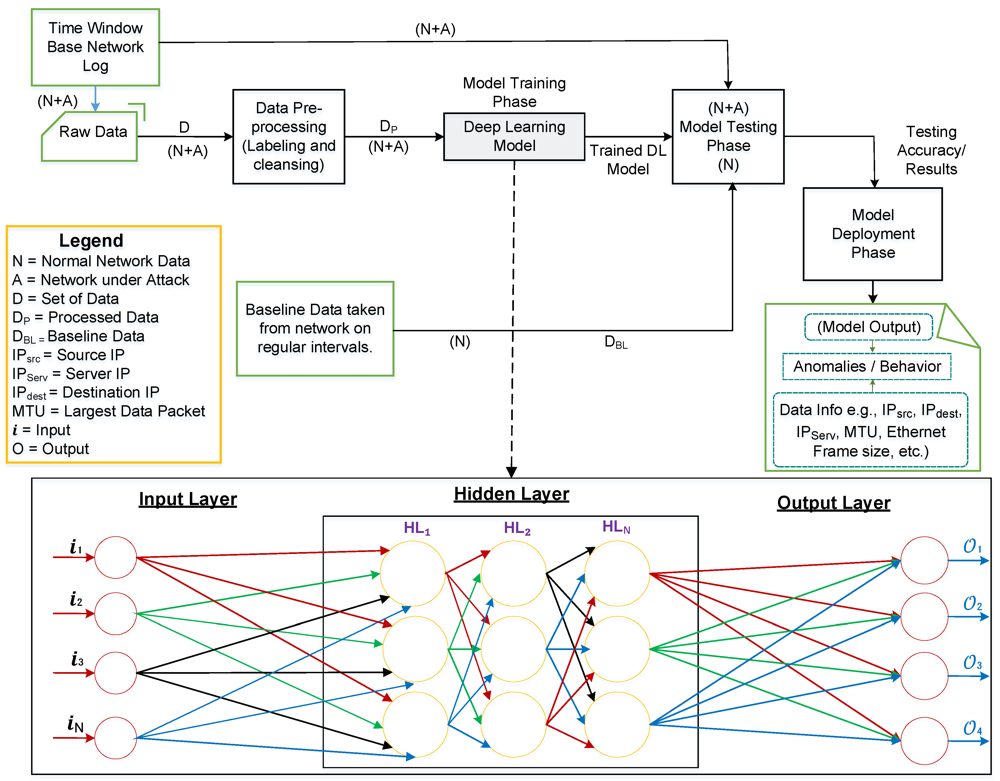
Deep learning models such as convolutional neural networks (CNNs) and long short-term memory networks (LSTMs) are well-suited for detecting complex malware patterns in high-dimensional data like logs, binary files, or encrypted traffic. These models are powerful but computationally demanding. Their black-box nature can also make it difficult to interpret how or why a threat was flagged, which presents challenges for audibility and response.
Reinforcement Learning
Reinforcement learning (RL) involves an agent that learns optimal actions through trial and error. In cybersecurity, RL can dynamically respond to threats, such as isolating an infected server or blocking malicious traffic in real time. While promising for adaptive defenses, RL models require extensive training and simulation environments, and their unpredictability in production environments must be managed carefully.
Technical Challenges in AI-Powered Detection
Despite the promise of AI, several technical barriers must be overcome for successful implementation:
- False positives and negatives: Models can misclassify benign actions as malicious or fail to detect actual threats. This balance between sensitivity and specificity is critical in high-volume environments like the cloud.
- Adversarial attacks: Cyber attackers can design inputs to evade AI detection. These adversarial examples might look benign to the model but perform malicious actions, undermining the system’s effectiveness.
- Privacy and data governance: AI models require access to vast amounts of data. Balancing this need with privacy regulations (like GDPR and CCPA) is a significant challenge. Improper data handling can introduce legal and ethical risks.
- Concept drift: Cloud environments and attack techniques are constantly evolving. This makes it essential to detect and adapt to changes in behavior, lest the AI model become outdated and ineffective.
Future Directions and Innovations
Explainable AI (XAI)
Explainable AI enhances transparency by revealing how a model arrives at its conclusions. Techniques like SHAP and LIME provide insights into which features or signals influenced the model’s decision. This not only aids trust and accountability but also helps fine-tune detection thresholds to reduce false positives.
Federated Learning
Federated learning allows models to train across distributed data sources without aggregating sensitive information into a central location. Each node (e.g., a cloud tenant or data center) trains a local model, and only updates that are not raw data are shared. This approach preserves privacy while improving the diversity and robustness of training data.
Hybrid and Ensemble Models
No single AI model can cover all threat types. Hybrid approaches combine supervised, unsupervised, and deep learning methods into ensemble systems that provide more reliable detection. For instance, a supervised classifier could verify results flagged by an unsupervised anomaly detector, reducing the risk of false alarms.
Edge AI
To reduce latency and process data closer to its source, edge AI is gaining traction. These models run directly on edge nodes or within a distributed cloud infrastructure, enabling real-time detection and rapid response. Optimized by pruning or quantization, lightweight models allow malware detection where threats occur without requiring roundtrips to the cloud.
Conclusion
AI-powered ransomware and malware detection systems are no longer a futuristic concept; they are becoming essential to modern cloud security. By intelligently analyzing data, detecting unknown threats, and automating responses, AI offers a powerful shield against today’s cyber threats. However, challenges like adversarial attacks, privacy concerns, and concept drift mean these systems must be continuously refined. Innovations like Explainable AI, Federated Learning, and Edge AI will be pivotal in making cloud environments smarter, safer, and more secure.
Opinions expressed by DZone contributors are their own.
Comments