

Cloud Migration of Microservices: Strategy, Risks, and Best Practices
Learn about strategies, best practices, and risks for migrating microservices to the cloud using 6R/7R models, Kubernetes, CI/CD, and DevSecOps.
Join the DZone community and get the full member experience.
Join For FreeThe article discusses the principles of microservice architecture and its comparison with monolithic systems. It also covers migration strategies based on the 6R/7R model, as well as analysis of key risks, including budget overruns and security breaches.
Special attention is given to migration planning, monitoring, and automation methods, such as the use of Kubernetes, CI/CD (continuous integration/continuous delivery), DevSecOps (development, security, operations), and the Twelve-Factor App principles. Empirical statistics and comparative analysis of different strategies are also presented in tables. In conclusion, directions for further research are identified, such as using artificial intelligence (AI), multi-cloud approaches, and unifying evaluation methods.
Introduction
Cloud technologies and microservices architecture have become essential elements of digital transformation in recent years. According to the analysis, by 2025, over 94% of companies will be using cloud services to store, process, and scale their data and applications. Meanwhile, the market for microservice architecture continues to grow rapidly, expected to exceed $13 billion by 2033. This growth is driven by businesses' need for increased flexibility, resilience, and faster product launches.
At the same time, there has been a growing interest in moving microservices to the cloud as part of a strategic effort to modernize IT infrastructure. This approach allows organizations to reduce operational costs, adapt to fluctuating loads, and implement modern DevOps and CI/CD processes. However, while there are clear benefits, transitioning to cloud solutions presents several significant challenges.
Organizations face technical difficulties when moving complex dependencies, the risk of losing control over data, security concerns, compliance issues, and significant organizational change.
The relevance of this research is strengthened by the fact that there is currently no unified and systematic methodology for the cloud migration of microservice architectures, as evidenced by the lack of such information in the scientific and applied literature. Most available solutions are based on specific cases and do not consider the full range of strategic, architectural, and managerial factors involved in the migration process. An erroneous strategy could lead to lost productivity, increased costs, or even the abandonment of cloud services, making it crucial to explore this topic in depth through academic research.
Research Purpose and Hypotheses
The goal of this research is to identify and organize the most efficient strategies for moving microservices to cloud-based environments. The study focuses on migration approaches defined in the 6R/7R model, with particular attention to risks, best practices, and long-term architectural sustainability.
Hypotheses:
- Cloud migration based on Refactoring and Replatforming strategies provides more sustainable performance and scalability for microservices than rehosting.
- Incorporating DevOps and CI/CD practices during migration significantly reduces risks such as budget overruns, technical debt, and deployment failures.
Materials and Methods
This study is based on a review of current academic publications and analytical reports, as well as a case study of implementing microservices in a cloud environment.
We employed methods for comparative analysis of architectural designs, classification of migration techniques according to the 6R/7R model, empirical synthesis of risk statistics, and identification of typical mistakes in cloud deployment reports. We also used techniques such as expert analysis, table-based organization, visualizing business procedures, and identifying common errors.
Results
The commonly accepted definition of a microservices architecture describes it as a collection of loosely coupled, small-scale services that interact through lightweight protocols, such as HTTP/REST. Each service is responsible for a specific business function and can be developed and scaled independently. This approach has become increasingly popular for creating cloud-based and native applications, as it provides modularity and flexibility and enables faster delivery of new features.
However, it also increases the overall system's complexity.
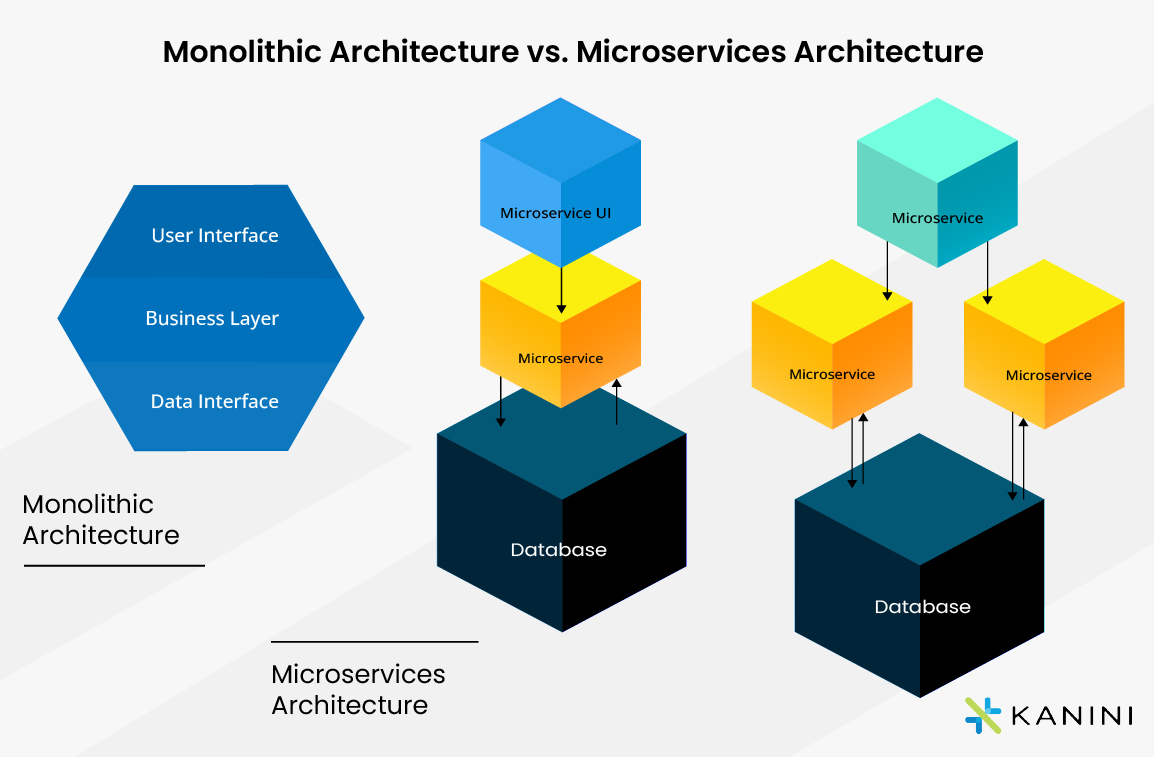
In a traditional monolithic architecture, all components (UI, business logic, and data access) are integrated into a single, unified unit. While monoliths are easy to develop and test in the early stages of an application's development, as the system grows larger, they become more complex, release times lengthen, and technical debt accumulates. Research indicates that as the workload increases, the performance of monolithic systems decreases significantly, whereas microservices remain scalable and efficient.
A comparison of the performance of two identical web applications — one using a monolithic architecture and the other using microservices — under different levels of load revealed that, under moderate traffic, the differences were minimal. However, as the number of concurrent requests increased, the monolithic approach began to fall behind the microservice architecture, especially when load balancing and containerization were employed. This finding supports the hypothesis that microservices are more resilient to increasing workloads, albeit with some initial CPU and memory overhead during deployment.
The figure below illustrates the main difference between monolithic and microservices architectures [6].
Market analysis reveals the rapid growth of microservice architecture. According to forecasts, the market volume is expected to reach $3.1 billion in 2026, with a compound annual growth rate (CAGR) of about 21%. By 2024, it is projected to reach $4.2 billion, and by 2033, up to $13.1 billion. This growth is driven by the increasing interest in flexible and fault-tolerant architectures, which can adapt to changing workloads and business needs [4].
Scientific studies and empirical reports show that the key factors driving the migration to microservices are increased scalability, maintainability, and productivity. They also emphasize the desire for effective change delivery through DevOps and CI/CD practices. However, there are several barriers to migration, such as the need for refactoring, errors in monolith decomposition, difficulties in creating new services, and organizational challenges related to changing company culture and processes.
Special attention is paid to the issue of technical debt. A case study of one large project has shown that, despite the initial increase in technical debt during the development of microservices, debt subsequently starts to grow more slowly, and the quality and stability of the system improve in the long term.
The granularity of a service is determined by a combination of integration and separation factors, verified using suitable functions and metrics for continuous architectural quality assessment. However, the microservice approach has some disadvantages, such as increased complexity in testing and reliable communication, difficulties with data consistency, and a loss of "uniformity" in code due to polyglot development, especially in distributed teams.
The migration of microservices to the cloud is a crucial step in the digital transformation process, requiring a strategic approach to ensure success. The success of the migration depends on carefully selecting the appropriate strategy based on the current architecture's maturity, technical debt, business objectives, and cloud infrastructure capabilities.
To systematize this process, the "6R/7R" model developed by Gartner and Amazon Web Services can be used. The model outlines seven strategies: Rehost, Replatform, Refactor, Rebuild, Replace, Retire, and Retain, each representing a different level of engagement and degree of change involved in the transition to the cloud.
The simplest strategy for migrating to the cloud is Rehost. This involves moving applications as is to virtual machines in the cloud. According to research, around 40% of organizations begin their migration with Rehost, as it allows for a quick transition to the cloud with minimal costs. However, this approach often does not provide significant performance or cost benefits, as it does not fully utilize cloud capabilities.
Replatform is the next level of complexity, where applications are partially adapted. For example, databases may be migrated to cloud services like Amazon RDS or Azure SQL, file storage may be replaced, and containerization may be introduced. Replatform is used in around 22% of cases where there is a need to strike a balance between speed and the depth of changes.
A more time-consuming but strategically beneficial approach is Refactoring (or Rearchitecting), in which the application undergoes a significant redesign: microservices are introduced, Kubernetes, Kafka, and cloud functions (such as Lambda and Azure Functions) are utilized, as well as a service bus. Based on research, by 2026, over 75% of companies are expected to adopt cloud-native architectures, making refactoring the dominant trend.
If the system is outdated and cannot be updated, Rebuilding — a complete rewrite of the code from the ground up, incorporating cloud patterns — is used. This provides maximum flexibility but requires a substantial investment of time and resources.
If there is a cloud-based software solution available that can replace the current system, it may be worth considering using Replace (or Repurchase), which involves replacing the in-house development with a SaaS solution (for example, switching from a local CRM to Salesforce or 1C in the cloud). Alternatively, other strategies could include Retire (removing irrelevant components) or Retain (keeping some services on the local infrastructure for security, legal, or performance reasons).
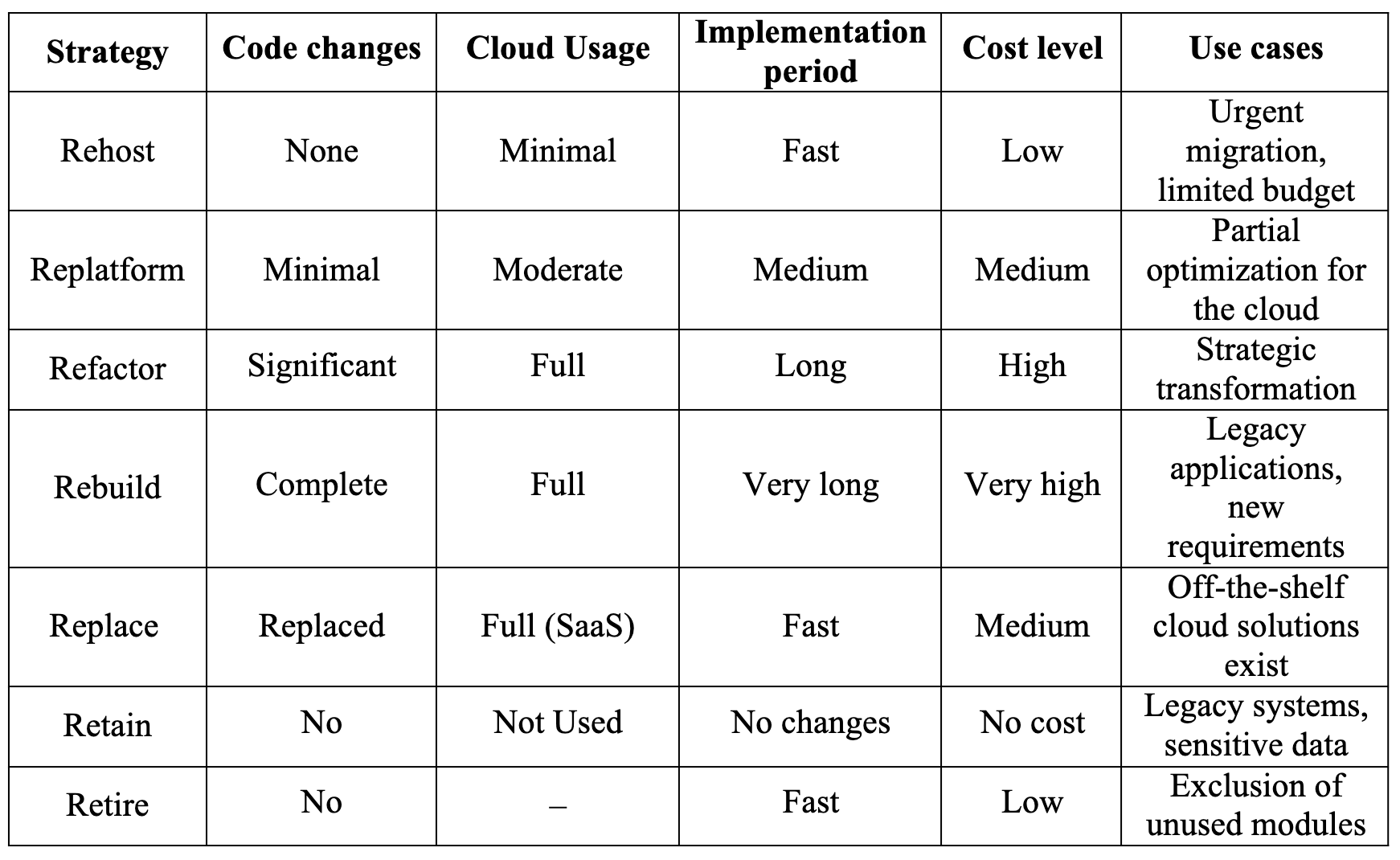
Table 1: Comparison of migration strategies
When choosing a strategy for IT infrastructure migration, several key factors are considered: the maturity of the current system, business priorities, available budget, team readiness, and dependency on legacy components. Companies often combine different strategies in practice, starting with rehosting and moving on to refactoring, especially for monolithic system migrations. For example, SpringerLink's study describes a step-by-step process for a large financial organization. First, a lift-and-shift approach was used, followed by identifying and implementing critical business functions as microservices using Kubernetes and Istio [3].
A wrong choice of strategy can lead to an increase in the cost of a project. According to research, more than 60% of failed migrations are related to insufficient architecture analysis and poorly conceived refactoring. Therefore, it is essential to conduct a preliminary architecture review, create a dependency map, and develop a migration plan. It is also crucial to consider security requirements (such as GDPR compliance and HIPAA) and ensure the availability of resources for the DevOps team.
Migrating microservices to the cloud, while offering obvious technological and economic benefits, involves many risks that can significantly impact the timing, budget, and reliability of critical business systems.
A successful cloud migration requires careful planning and preparation. The study by Cortex emphasizes the importance of clearly defining business goals for the migration, such as reducing costs, increasing productivity, or accelerating market entry. Without clear objectives, an organization may waste resources without achieving any real benefits [2].
Empirical studies confirm that the key factors driving migration to microservices are increased scalability, maintainability, and productivity, and they highlight the importance of DevOps and CI/CD practices in enabling effective change delivery [7, 8].
Table 2 outlines the most common risks companies face during the transition to a cloud infrastructure.
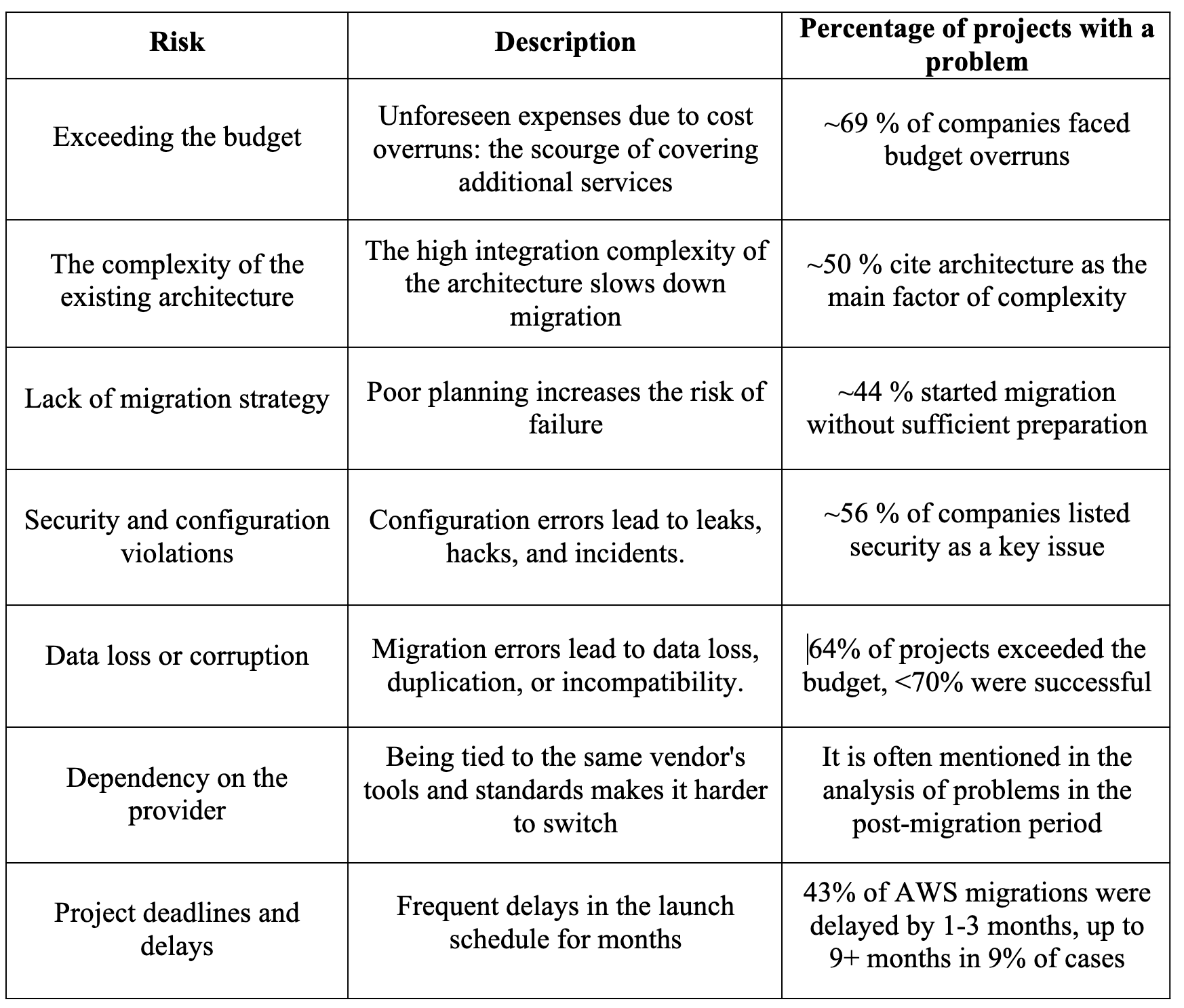
Table 2: The main risks of cloud migration
The first step in the process is a thorough audit of IT resources, which involves collecting data on applications, dependencies, workload, and licensing. This information allows us to categorize components based on complexity, business priority, and security needs.
Next, it is important to choose the right migration strategy. The "6-7R" model can help with this decision, providing an objective assessment of options such as rehosting, replatforming, refactoring, and more. Using scoring matrices and decision trees allows us to correlate the current state of the architecture, business value, and cloud readiness.
Testing and pilot launches are crucial: launching individual services or modules as proof of concept allows for identifying potential problems (dependencies, security issues) before a full-scale launch. This approach helps minimize technical debt and reduce the risk of unexpected failures [5].
Security needs to be considered from the very beginning of the project. This includes access rights management, data encryption, and compliance policies, especially when dealing with microservices and serverless architectures.
It is also important to have a backup and recovery plan in place. Regular recovery tests, automated backups, and rollback procedures are necessary in case of migration errors.
Once services are deployed in the cloud, monitoring, optimization, and financial operations (FinOps) management become critical. This involves tracking performance, costs, and security events, and automating resource optimization based on analytics data. [1].
Regarding microservice architecture, we recommend using containerization and orchestration solutions, such as Kubernetes, for interconnection management. Additionally, it's important to implement CI/CD (continuous integration and continuous delivery) pipelines and automated testing processes. The Twelve-Factor App methodology can help ensure portability and sustainability when deploying applications in the cloud.
To ensure success in cloud migration, it's crucial to train a team on cloud tools, container technologies, DevOps practices, and security principles. This will help prevent common issues, such as a lack of qualifications, that can lead to migration failures. Additionally, consider planning for a future exit from the cloud to avoid becoming locked into a particular provider and maintain flexibility.
Discussion and Conclusions
Thus, cloud migration of microservices is a complex but essential process that ensures the scalability, flexibility, and sustainability of IT infrastructure. The study revealed that the choice of migration strategy should be based on the technical maturity of the architecture, business objectives, and available resources. Replatforming and refactoring have become the most popular and successful approaches, although many organizations begin with rehosting [7, 8].
Budget overspending, skill gaps, compatibility issues, and configuration errors are the main risks associated with migration. Implementing best practices can significantly reduce the risk of failure. Future research prospects include the integration of AI into the migration process, standardization of readiness assessment, and development of hybrid solutions based on distributed cloud and multi-cloud strategies.
This research is primarily based on secondary sources, comparative analysis, and selected case studies. As a result, the findings may be influenced by the scope of available data and may not fully reflect all industry-specific conditions. Future studies should validate these conclusions with large-scale empirical evidence and cross-industry comparisons.
Future research in cloud migration for microservices could focus on developing automated systems to assess architecture readiness for migration. These systems could integrate AI and machine learning tools to optimize migration routes. Additionally, there could be research into hybrid and multi-cloud strategies.
Of particular interest is the development of mechanisms to ensure fault tolerance and security in distributed microservice systems. There could also be research into adapting DevSecOps practices to cloud environments. Finally, there is a need to develop universal methodologies to evaluate the effectiveness of migration across all stages of the life cycle.
References
- 10 Cloud Migration Best Practices | Mertech [Electronic resource]. Access mode: https://www.mertech.com/blog/cloud-migration-best-practices.
- 13 cloud migration best practices: 2025 guide | Cortex [Electronic resource]. Access mode: https://www.cortex.io/post/cloud-migration-best-practices.
- An empirical study of the systemic and technical migration towards microservices | Empirical Software Engineering [Electronic resource]. Access mode: https://link.springer.com/article/10.1007/s10664-023-10308-9.
- Microservices – Wikipedia [Electronic resource]. Access mode: https://en.wikipedia.org/wiki/Microservices.
- Migrating from Monolith to Microservices: Tips and Best Practices [Electronic resource]. Access mode: https://edgedelta.com/company/blog/tips-and-best-practices-for-migrating-from-monolith-to-microservices.
- Monolithic vs. Microservices Architecture – Which is the best for your software development? [Electronic resource]. Access mode: https://kanini.com/blog/monolithic-vs-microservices-architecture/.
- Taibi, D., Lenarduzzi, V., & Pahl, C. (2017). Processes, motivations, and issues for migrating to microservices architectures: An empirical investigation. IEEE Cloud Computing, 4(5), 22–32. https://doi.org/10.1109/MCC.2017.4250931.
- Balalaie, A., Heydarnoori, A., & Jamshidi, P. (2016). Microservices architecture enables DevOps: Migration to a cloud-native architecture. IEEE Software, 33(3), 42–52. https://doi.org/10.1109/MS.2016.64.
Opinions expressed by DZone contributors are their own.
Comments