

Data Governance Essentials: Glossaries, Catalogs, and Lineage (Part 5)
Discover how business glossaries, data catalogs, and data lineage work together to enhance data quality, compliance, transparency, and operational efficiency.
Join the DZone community and get the full member experience.
Join For FreeWhat Is Data Governance, and How Do Glossaries, Catalogs, and Lineage Strengthen It?
Data governance is a framework that is developed through the collaboration of individuals with various roles and responsibilities. This framework aims to establish processes, policies, procedures, standards, and metrics that help organizations achieve their goals. These goals include providing reliable data for business operations, setting accountability and authoritativeness, developing accurate analytics to assess performance, complying with regulatory requirements, safeguarding data, ensuring data privacy, and supporting the data management lifecycle.
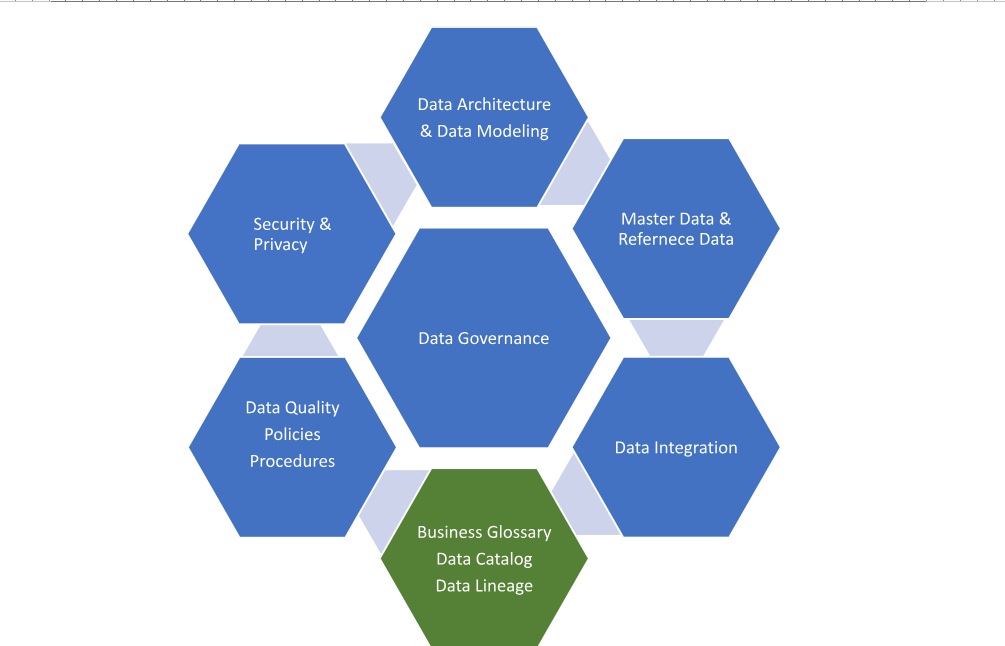
In the field of data governance, business glossaries, data catalogs, and data lineage are essential for effectively managing data across an organization. With an increase in data, finding the right information has become more challenging. Simultaneously, there are also more rules and regulations than ever before. Here's a brief overview of each:
1. What Is a Business Glossary?
A business glossary is a platform that enables the identification of essential business terms, definitions, concepts, and metrics in a consistent way to ensure universal understanding across the organization.
A business glossary is vital in data governance because it ensures standardized definitions for business terms. This enables clear communication and consistent data usage across the organization. It helps prevent misinterpretation, improves data quality, fosters trust in data, and aids in regulatory compliance. By providing a common understanding of data terms, it also facilitates collaboration, efficient decision-making, and smoother data integration across teams. Without a glossary, organizations risk confusion, inconsistent metrics, and non-compliance with data regulations.
The core components of the business glossary are as follows:
- Business terms: Ensuring consistency in the usage of common business terms and eliminating confusion across teams
- Standard definitions: Providing easy-to-understand definitions for both technical and non-technical stakeholders for the common terms
- Data accountability: Identifying who owns and manages specific business terms and the data
- Mapping glossary to data elements: Mapping business terms to each technical data element metadata, which is part of different data assets, so that the data producers and consumers will have clarity on the data usage
A sample of the business glossary is shown in the table below:
| Business Term | Standard Definition | Accountability | Related Terms | Last Updated | Notes |
|---|---|---|---|---|---|
|
Customer |
A person or organization that buys products from the company |
Sales Department |
Buyer, Client |
Jan 15, 2024 |
Used in sales and marketing reports |
|
Product |
An item offered for sale by the company |
Product Team |
Inventory |
Feb 1, 2024 |
Defined in the product catalog |
|
Sales Revenue |
The total monetary value generated from customer purchases over a period |
Finance Department |
Net Sales, Gross Profit |
Dec 10, 2023 |
Reported in monthly financial reports |
2. What Is a Data Catalog?
A data catalog is a structured inventory of an organization's data assets, aiding users in discovering, managing, and utilizing data efficiently. This catalog can be created using third-party tools or developed within the organization.
A data catalog is essential for data governance because it provides an organized inventory of data assets. This makes it easier for users to discover, access, and understand data across the organization. The catalog captures metadata, tracks data lineage, and supports classification, which enhances data transparency and trust. It offers a searchable interface, improving data accessibility, reducing duplication, and supporting compliance by ensuring adherence to governance policies. Without a catalog, data becomes hard to find and manage, leading to inefficiencies, inconsistent usage, and potential compliance issues.
The key components of the data catalog include the following:
- Metadata repository: Captures metadata of organization structure, domains, and the data assets such as technical metadata (e.g., data storage type, data quality levels such as bronze, silver, and gold, schemas, formats), and business metadata (e.g., ownership, definitions)
- Data discovery: Enables users to search for data sets and assets across various departments
- Classification and tagging: Allows data to be categorized for data privacy and security and labeled for easier navigation
- Integration with governance: Facilitates the enforcement of data governance policies by documenting data access, usage, and compliance
A sample of the data catalog is shown below:
| Data Asset | Description | Owner | Data Source | Data Type | Last Updated | Access Level | Notes |
|---|---|---|---|---|---|---|---|
|
Customer Data |
Information about customers, including names, contact details, and purchase history |
Customer Service |
CRM System |
Structured |
Sep 15, 2024 |
Restricted |
Contains personally identifiable information (PII) |
|
Product Inventory |
A list of all products available for sale, including SKU, descriptions, and stock levels |
Inventory Team |
ERP System |
Structured |
Oct 1, 2024 |
Public |
Updated weekly to reflect inventory changes |
|
Sales Transactions |
Records of all sales made, including transaction dates, amounts, and items sold |
Finance Department |
POS System |
Structured |
Aug 30, 2024 |
Restricted |
Used for financial reporting and analysis |
3. What Is Data Lineage?
Data lineage tracks data flow from source through transformation and usage, helping understand data creation, changes, and usage. It ensures data quality, compliance, and impacts of transformations on analytics.
Why Is Data Lineage Important?
The modern data ecosystem is a complex network of systems and processes that requires a dedicated governance tool for successful navigation. Without data lineage, the consequences can be significant. Here are some key issues that arise from the lack of data lineage:
- Lack of trust in data products: Users are increasingly disheartened by data products because the absence of accurate lineage means there's no proof of their authenticity.
- Persistent data quality issues: Without the ability to trace the origin and flow of data, it becomes challenging to enhance its quality. Therefore, the absence of lineage leads to ongoing data quality problems.
- Regulatory compliance: Data privacy regulations are just one aspect of the many compliance statutes that affect businesses across sectors. Auditors require evidence of data lineage to ensure proper data handling by users.
Benefits of Data Lineage
Data lineage provides the following key benefits:
- Visibility into data flow provides a comprehensive understanding of how data is transmitted, modified, and utilized across the organization.
- Auditability and compliance features ensure meticulous tracking of data sources and changes to comply with regulatory requirements.
- Impact analysis enables users to assess the potential consequences of data modifications.
- Improved trust in data allows stakeholders to trust the data by knowing its origin and processing.
A sample of the data catalog is shown below:
| Component | Description | Data Type | Transformation Process | Last Updated |
|---|---|---|---|---|
|
POS System |
Captures real-time sales transactions |
Structured |
Data extracted as-is |
Oct 10, 2024 |
|
ETL Process |
Cleans and prepares data for loading into the warehouse |
Structured |
Data transformed and loaded |
Oct 12, 2024 |
|
Sales Data Warehouse |
Centralized repository for all sales transaction data |
Structured |
Data stored as-is |
Oct 15, 2024 |
|
BI Tool |
Generates reports and dashboards for analysis |
Structured |
Data queried from the warehouse |
Oct 15, 2024 |
|
Data Visualization |
Visualizes sales data for trends and insights |
Structured |
Data visualized for reporting |
Oct 15, 2024 |
|
End Users |
Various teams access and analyze the data for decision-making |
N/A |
Data utilized for reporting |
Ongoing |
Popular Tools
Some of the most popular companies that support business glossaries, data catalogs, and data lineage are:
Conclusion
Here are the main points to take away from this article:
- A business glossary ensures that the terms and concepts used in data are well-defined and understood across the organization.
- A data catalog enables easy discovery, access, and governance of data assets.
- Data lineage provides transparency into the data’s lifecycle, supporting compliance, auditing, and trust in data quality.
These three tools work together to enhance data quality, compliance, transparency, and operational efficiency within the framework of robust data governance practices.
Opinions expressed by DZone contributors are their own.
Comments