

How Rule Engines Transform Business Agility and Code Simplicity
Rule Engines Decoded: From Code Bloat to Business Agility. This separation accelerates change, empowers domain experts, and cleans up complex codebases.
 ·
·
Join the DZone community and get the full member experience.
Join For FreeWhen Simple If-Else Logic Becomes Complex
Most software starts with simple business rules, easily handled with a handful of if-else statements. But as a product scales, requirements snowball: new promotions, compliance tweaks, and shifting user segments pile on more logic. Eventually, shipping a minor change such as adjusting a discount or updating eligibility means risking the stability of your codebase. If you’ve ever feared modifying conditional logic, you’re not alone.
Enter the rule engine: a specialized system designed to pull business rules out of your application code, making them easier to manage, change, and audit.
What Is a Rule Engine?
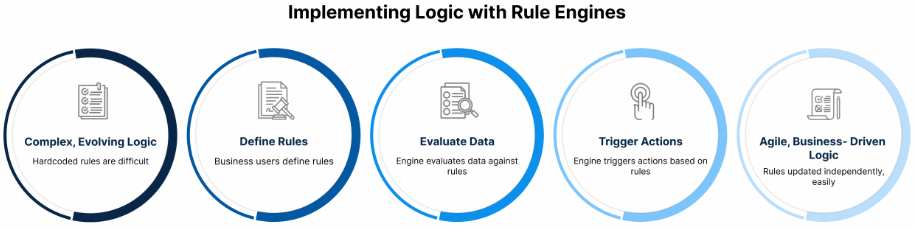
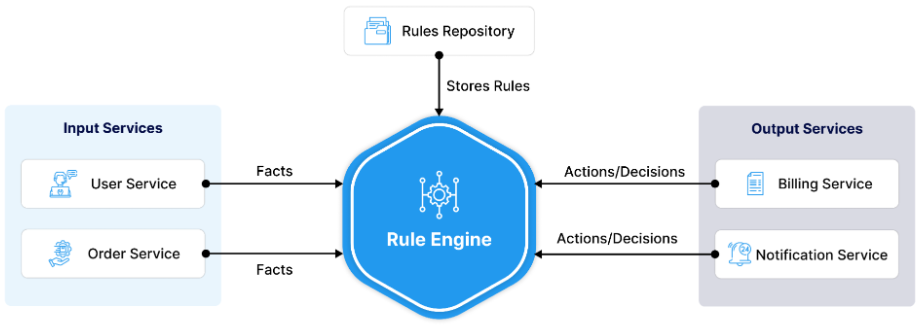
A Rule Engine is a specialized software component that acts as a sophisticated, external inference engine. Its core function is to separate business rules from the application’s process flow.
The process is simple:
- Input: Your application gathers data (the “facts,” e.g., a customer’s loyalty tier, an order total).
- Evaluation: It feeds these facts to the Rule Engine.
- Output: The engine evaluates the facts against a set of independent rules and returns a decision.
The rules themselves follow the classic IF-THEN structure, known as production rules:
- Condition (The “IF” side): The patterns that must be matched against the input data.
- Example: IF customer.tier = ‘GOLD’ AND order.total > 100
- Action (The “THEN” side): The operation(s) to execute when the conditions are met.
- Example: THEN apply 15% discount AND notify manager
This fundamental decoupling transforms business logic from scattered code fragments into manageable, version-controlled assets.
Why Use a Rule Engine? Real-World Advantages
Rule engines excel in scenarios where rules are both crucial and frequently change.
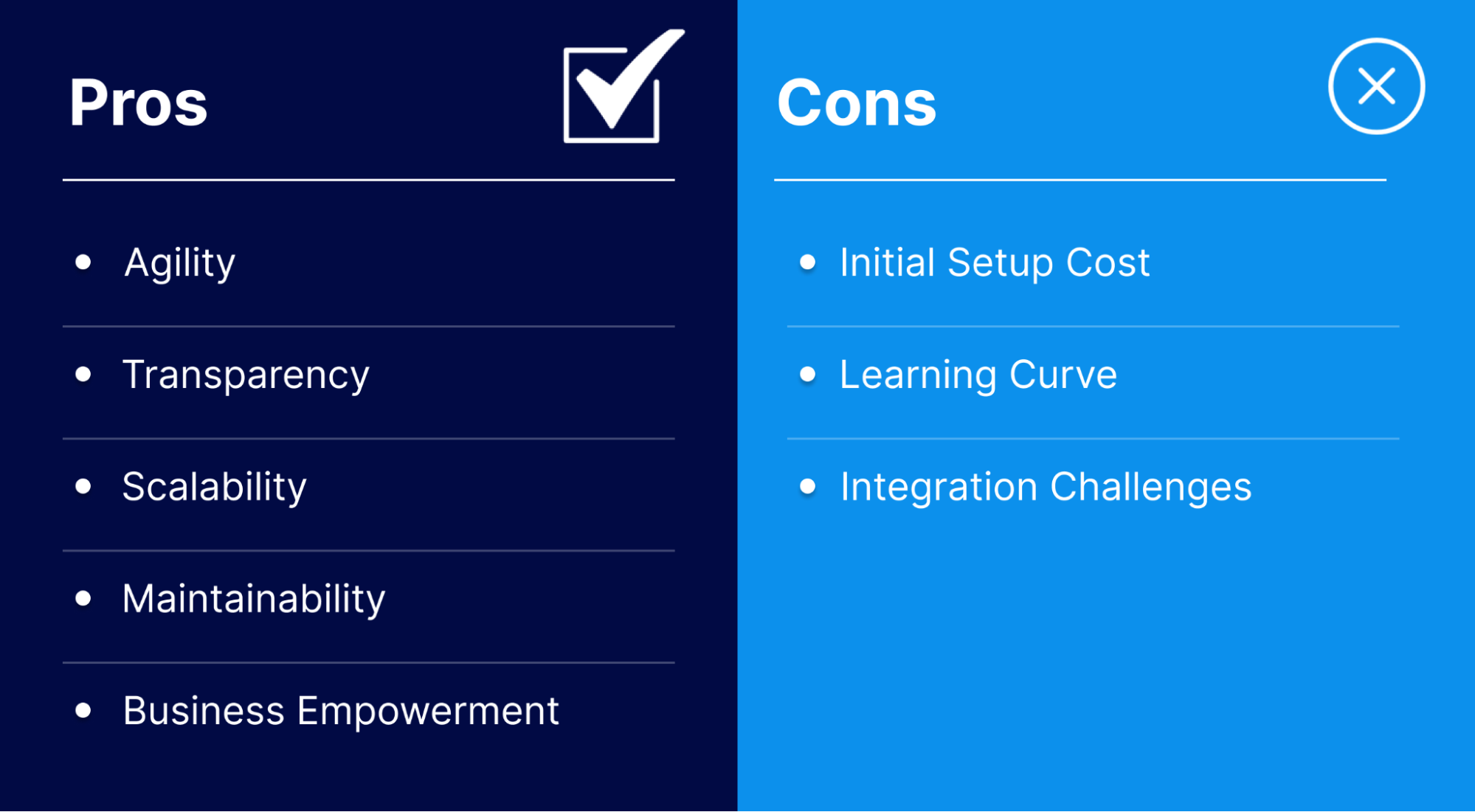
- Agile Business Changes: Business experts can update policies themselves, drastically shortening the time from decision to deployment.
- Easier Maintenance: You can avoid code littered with complex conditionals. Instead, the app code collects the facts, and the rule engine chooses the outcome.
- Transparency: Each decision is traceable, which is essential for compliance-intensive fields.
- Scalable Rule Management: Handling 200+ rules? No problem. Rule engines thrive here, while procedural code crumbles.
Example Scenario:
A fintech startup regularly updates its loan eligibility criteria. With a rule engine, compliance teams roll out changes instantly, with minimal developer intervention.
Trade-offs and Implementation Considerations
While rule engines provide business agility, they introduce their own engineering challenges:
- Performance: Evaluation at runtime is slower than hard-coded logic, potentially a dealbreaker in latency-critical systems.
- Learning Curve: Teams must master new rule formats, APIs, and testing patterns.
- Debugging: Tracing through dozens of rules is harder than following a stack trace.
- Rule Sprawl: Without governance, your rule repository can become a tangled mess, just like the one you wanted to escape.
When Should You Use a Rule Engine?
Consider a rule engine when your application’s logic is:
- Constantly Evolving: Changing frequently due to market shifts, regulations, or business strategies.
- Inherently Complex: Involves numerous nested conditions and potential outcomes.
- Business-Driven: Defined and modified by non-technical experts who need autonomy.
Think about these common scenarios:
- Fraud Detection: Spotting suspicious transactions based on evolving patterns. (e.g., Identifying fraudulent credit card transactions based on location, amount, and time of day)
- Insurance Underwriting: Evaluating applications based on complex policy criteria. (e.g., Determining insurance premiums based on age, driving record, and vehicle type)
- E-commerce Personalization: Tailoring pricing, discounts, and shipping options. (e.g., Displaying personalized product recommendations based on browsing history and past purchases)
- Medical Decision Support: Recommending treatments based on patient data and medical guidelines. For example, alerting doctors to potential drug interactions based on a patient’s medical history.
The Impact: Rule Engine vs. Traditional Approach
| Aspect | Traditional Approach (Hard-coded Logic) | Rule Engine Approach | Impact Analysis |
|---|---|---|---|
| Change Management | Requires code changes, testing, and deployment cycles (weeks) | Business users update rules via UI/configuration (hours) | 10x faster adaptation to market changes |
| Business Ownership | Developers act as intermediaries for all logic changes | Domain experts directly manage business rules | Eliminates translation errors and reduces dependency on IT |
| Complexity Scaling | Nested if-else statements become unmaintainable beyond 10–20 conditions | Rules remain manageable even with 1000+ conditions | Scalable to enterprise-level complexity |
| Audit & Compliance | Logic scattered across codebase; hard to trace decisions | Complete audit trail with versioned rules | Regulatory compliance becomes straightforward |
| Testing Impact | Full regression testing needed for any logic change | Isolated rule testing with immediate validation | 80% reduction in testing overhead |
| Error Rate | High risk of introducing bugs when modifying complex conditionals | Rules validated independently; changes are localized | Significantly lower production incidents |
| Team Productivity | Developers modifying business logic instead of core features | Developers focus on platform capabilities | 2–3x improvement in feature delivery |
A Landscape of Popular Frameworks
The ecosystem is rich, offering options for various stacks:
- For Java/JVM:
- Drools: The powerful, open-source industry leader ideal for large enterprises.
- Easy Rules: A lighter, simpler choice for more modest rule workloads.
- For .NET Stack:
- NRules: A mature, open-source production rules engine, inspired by Drools.
- For Python & JavaScript:
- Durable Rules: Supports defining complex, multi-language rule sets in code.
- JSON Rules Engine: Excellent for rules managed via JSON, facilitating headless rule editing and storage.
- Enterprise & Standards:
- IBM ODM (Operational Decision Manager): An enterprise-grade commercial suite for large-scale integration.
- DMN (Decision Model and Notation): A vendor-neutral standard for modeling and executing decisions (supported by tools like Camunda).
Conclusion: Embracing Change with Rule Engines
Modern, competitive businesses can’t afford rigid, hard-coded decisions. A rule engine is a strategic investment that treats business logic as a first-class, managed resource.
By adopting a rule engine, you treat business logic as a living, managed entity for unleashing agility, maintainability, and auditability at scale. For teams facing the daily pain of ever-changing conditional code, moving to a rule engine could be the transformation that unlocks rapid innovation and resilient architecture.
Before leaping into rule engines, start with process mapping and a rules inventory. This sets your team up for smoother adoption and quicker ROI.
Published at DZone with permission of Venkatesh S. See the original article here.
Opinions expressed by DZone contributors are their own.
Comments