

Modernizing Applications with the 7 Rs Strategy – A CTO's Guide
The 7 Rs framework helps you choose the smartest path to modernize every application, reduce legacy risk, and align your tech stack with future business goals.
Join the DZone community and get the full member experience.
Join For FreeThink about the time CTOs spent most of their time fixing old systems. Updates were slow, servers were expensive, and adding new features took time.
Now, things have changed. Cloud technology applications can grow fast, collaborate, and meet business demands quickly.
CTOs now focus on enhanced systems and helping businesses grow. Using the right app modernization strategy and modernization frameworks, old systems can become faster, safer, and more useful.
In this blog, we will explain the 7 Rs of application modernization. You will learn how to update legacy applications, reduce risk, leverage application modernization services, and follow simple steps for success.
What Are the 7 Rs of App Modernization?
Every organization has a mix of old and new applications. Some still work well, while others hold back progress. The 7 Rs of application modernization help CTOs decide what to do with each system: keep, improve, move, or replace.
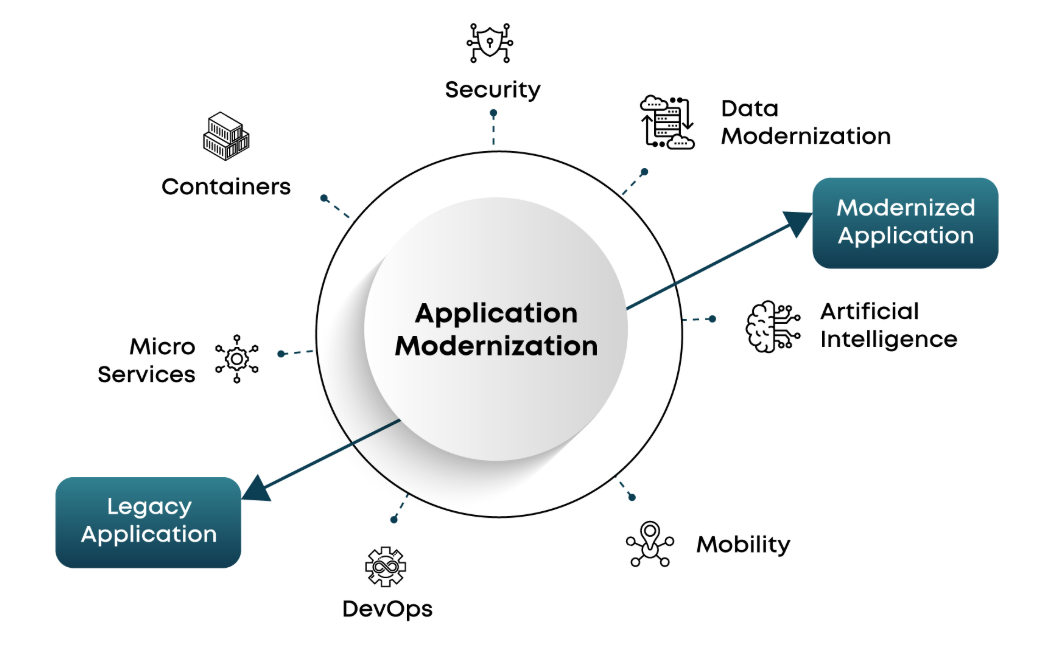
Let’s look at each of the 7 Rs in simple terms:-
Retire
What Does Retiring an App Mean?
Retiring means removing applications that are old-fashioned, unused, or no longer support business goals. It helps simplify your IT environment and reduce unnecessary costs.
When Should You Consider Retiring a Legacy System?
When a legacy system becomes costly to maintain, has security risks, or is replaced by modern tools in your app modernization strategy, it's time to retire it..
Business Benefits of Letting Go of Outdated Tools
Retiring legacy systems enables organizations to save money, reduce risk, and focus resources on modern technology as part of a strong application modernization roadmap.
Example Case Study
A retail company retired its legacy inventory-tracking app after migrating to a cloud-native modernization platform. This reduced server costs and improved real-time stock visibility.
Retain
What Is Retaining in App Modernization?
Retaining means keeping an existing system that performs well and supports business operations.
How to Decide if an App Is Still Useful As Is
If an app is stable, secure, and fits your modernization framework, it may not require immediate changes.
Risks and Rewards of Keeping Legacy Systems Unchanged
The reward is cost savings and stability. The risk is falling behind in performance or missing out on new features of enterprise app modernization.
Example Case Study
A logistics company decided to retain its ERP system because it met all enterprise needs and instead focused on modernizing its legacy applications for customer service.
Rehost
What Is “Lift and Shift” Cloud Integration?
Rehosting means migrating your application to the cloud while preserving its code and features, without refactoring. It is usually the early stage in a cloud integration strategy.
Why Rehosting Is a Quick Win for CTOs
Rehosting allows faster cloud adoption without risk and helps teams realize the benefits of app modernization quickly.
When Rehosting Makes Sense for Your Business
When your system works well but needs better speed, scalability, and security through cloud-native modernization.
Example case study
A healthcare company has migrated its payment system to Azure, improving productivity and streamlining management.
Replatform
What is the Difference Between Replatforming and Rehosting?
Replatforming is the process of migrating an app to the cloud and making various changes to improve performance. Unlike rehosting, some adjustments are made to improve compatibility and performance.
How to Upgrade Without Rewriting Your App
By updating certain components, such as the database or web server, while keeping the core logic the same.
Business Value of Moving to a Better Platform
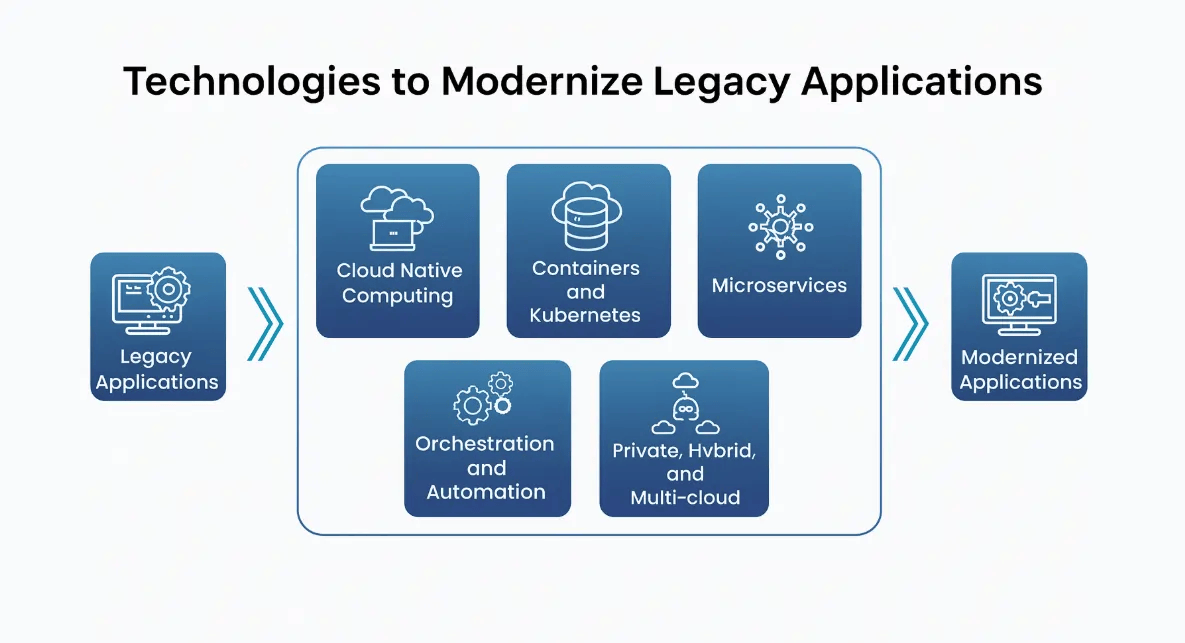
Replatforming can make the app faster, more efficient, and easier to update without reformation. This makes it an important step in modernizing outdated systems.
Example Case Study
A retail company moved its online store to a new system. This improved website speed and reduced maintenance costs.
Refactor
What Is Refactoring?
Refactoring means improving the structure of your code without introducing additional changes.
Why Improving Code Matters for Performance
When the code is clear, the app runs faster, is easier to fix, and remains free of problems.
When Refactoring Helps Reduce Tech Liability
When outdated code slows down development or affects the quality of modernizing legacy applications.
Example Case Study
A software firm reorganized its sales management system, making it easier to maintain and improve customer response times.
Rearchitect
What Is Re-Architecting?
Rearchitecting means reorganizing an application to meet future desires. It often involves moving from a monolithic to an adaptable cloud architecture.
How Re-Architecting Your App Supports Scalability
It allows the system to handle more users, integrate easily, and support digital transformation for CTOs.
When to Consider Re-Architecting for Long-Term Growth
When the current system cannot support expansion, high performance, or security goals.
Example Case Study
A banking company rearchitected its transaction system using Azure app services. This helped process more transactions faster and more reliably.
Replace
What Does Replacing an App Involve?
Replacing means completely removing an outdated system and selecting a new one that better meets business needs.
Why Starting Fresh Can Be the Smartest Move
Replacement gives organizations access to modern features, reduces maintenance, and aligns with modernization best practices.
How to Choose the Right Replacement Solution
Select a cloud-based system that supports your enterprise app modernization goals and can grow your business.
Example Case Study
An insurance company replaced its outdated claims system. The new system improved data precision and customer satisfaction while simplifying management.
Modernizing Applications with the 7 Rs Strategy – Summing Up
The 7 Rs strategy of app modernization helps CTOs build a clear modernization framework. From retiring old systems to replacing them with modern cloud solutions, each step supports faster, safer, and smarter business operations.
CTOs can simplify legacy system transformation, improve performance, and reduce long-term costs. It is not just about moving to the cloud but about creating a flexible system that grows with your business.
FAQs
How Do CTOs Plan Application Modernization?
CTOs start by assessing current systems, identifying performance gaps, and choosing the right 7 R approach based on business goals and technical needs.
2. Which Strategy is Best for Legacy App Modernization?
The best strategy depends on your goals. Some systems only require rehosting, while others may require rearchitecting or replacement to improve performance.
3. What is the Difference Between Rehosting and Re-Architecting?
Rehosting moves applications to the cloud with minimal changes, while re-architecting redesigns the system to make it more scalable and efficient.
4. Why is App Modernization Important for CTOs?
App modernization enables CTOs to reduce maintenance costs, enhance system performance, and prepare their business for future digital transformation needs.
Opinions expressed by DZone contributors are their own.
Comments