

DZone
Thanks for visiting DZone today,
Edit Profile
  • Manage Email Subscriptions
  • How to Post to DZone
  • Article Submission Guidelines
Sign Out View Profile
  • Post an Article
  • Manage My Drafts
Over 2 million developers have joined DZone.
Log In / Join
Refcards Trend Reports
Events Video Library
Refcards
Trend Reports

Events

View Events Video Library

Related

  • Why APIs Will Be This Year’s Most Targeted Service
  • Your API Authentication Isn’t Broken; It’s Quietly Failing in These 6 Ways
  • Designing Secure APIs: A Developer’s Guide to Authentication, Rate Limiting, and Data Validation
  • API and Security: From IT to Cyber

Trending

  • Dear Micromanager: Your Distrust Has a Job; It’s Just Not the One You’re Doing
  • Why Your Test Automation Is Always Behind the Code And the Architecture That Fixes It
  • Beyond Manual Annotation: Engineering Self-Correcting Pseudo-Labeling Pipelines
  • Building a Production-Ready AI Agent in 2026: Beyond the Hello World Demo
  1. DZone
  2. Software Design and Architecture
  3. Integration
  4. OAuth API Testing With JMeter

OAuth API Testing With JMeter

This article talks about how to test OAuth API's using JMeter 5.1. There are two major steps involved in OAuth testing. Find out more!

By 
Bhaskar Gara user avatar
Bhaskar Gara
·
Jul. 02, 20 · Analysis
Likes (2)
Comment
Save
Tweet
Share
17.9K Views

Join the DZone community and get the full member experience.

Join For Free

For Installing and Overview of JMETER. Please check

https://dzone.com/articles/jmeter-tutorial-for-beginners-jmeter-load-testing

This article talks about how to test OAuth API's using JMeter 5.1

There are two major steps involved in OAuth testing:

1. Request for Token.

2. Use that token in Subsequent API as Bearer Token in the Header.

Assumption

You already reviewed the above Article before proceeding to the next steps.

Step 1: Request for a Token.

a) Right-Click the "Test Plan" and Add a new thread group. Name it as "Demo Group"

test plan

b) Right-Click the "Thread Group" --> Add --> Sampler --> HttpRequest

http request

c) Add Request details and "Save"
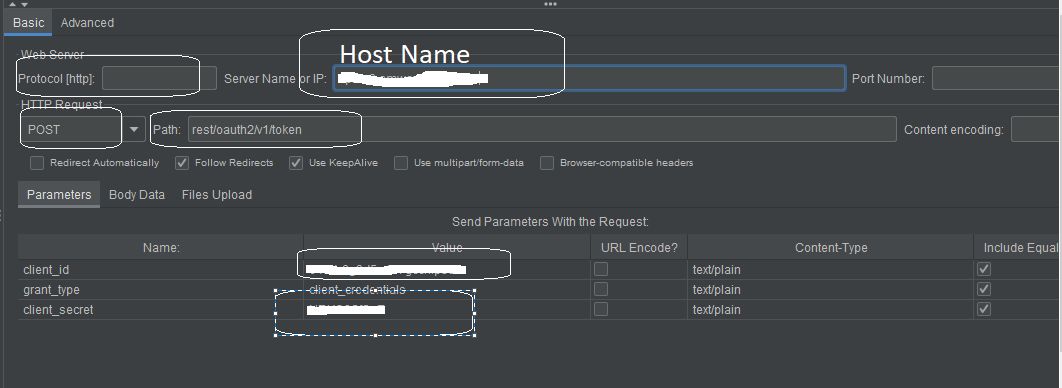
host name

d) Add "View Result Tree" & "JSON Token Extrator"
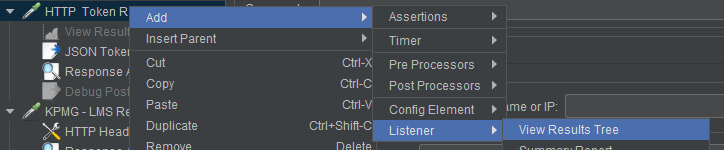
view results tree

json extractor

e) Now add the JSON Path Expression where you can find the token (from View Result tree --> Response).

This is my response in "View Result Tree".

JSON


x


1
{"user_context":null,"return_type":"json","access_token":"qubyczsmjbttg49rtwvbka","token_type":"bearer","expires_in":3600,"refresh_token":"cjpam8qgsd3kkbyypkfrvq6e","scope":null,"state":null,"uri":null,"extended":null}


So I added $.access_token path to the variable C_Token.
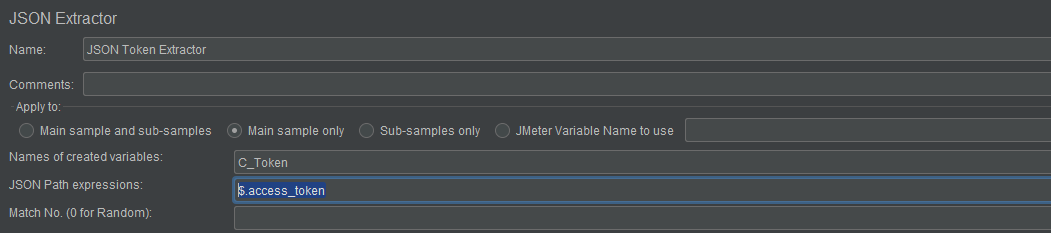
S_access_token

Step 2: Pass that Token to the Subsequent API's

a) Follow the same Step above to create an HTTP Request and add the second API
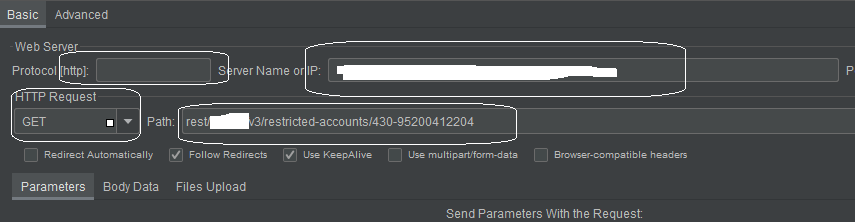
parameters

b) Add "HTTP Message Header" and "View Result Tree"

http header manager

c) Now Add the token value which you got in Step 1 - e as ${C_Token}

C_token

Follow similar steps for the remaining API.

Happy testing!

API API testing security authentication

Opinions expressed by DZone contributors are their own.

Related

  • Why APIs Will Be This Year’s Most Targeted Service
  • Your API Authentication Isn’t Broken; It’s Quietly Failing in These 6 Ways
  • Designing Secure APIs: A Developer’s Guide to Authentication, Rate Limiting, and Data Validation
  • API and Security: From IT to Cyber

Partner Resources

×

Comments

The likes didn't load as expected. Please refresh the page and try again.

  • RSS
  • X
  • Facebook

ABOUT US

  • About DZone
  • Support and feedback
  • Community research

ADVERTISE

  • Advertise with DZone

CONTRIBUTE ON DZONE

  • Article Submission Guidelines
  • Become a Contributor
  • Core Program
  • Visit the Writers' Zone

LEGAL

  • Terms of Service
  • Privacy Policy

CONTACT US

  • 3343 Perimeter Hill Drive
  • Suite 215
  • Nashville, TN 37211
  • [email protected]

Let's be friends:

  • RSS
  • X
  • Facebook
