

Smart City With an Event Streaming Platform Like Apache Kafka
This post covers an extended version of a webinar. At the end of the article, I give a quick overview and share the slides + video recording.
 CORE
·
CORE
·
Join the DZone community and get the full member experience.
Join For FreeA smart city is an urban area that uses different types of electronic Internet of Things (IoT) sensors to collect data and then use insights gained from that data to manage assets, resources, and services efficiently. This includes data collected from citizens, devices, and assets that are processed and analyzed to monitor and manage traffic and transportation systems, power plants, utilities, water supply networks, waste management, crime detection, information systems, schools, libraries, hospitals, and other community services.
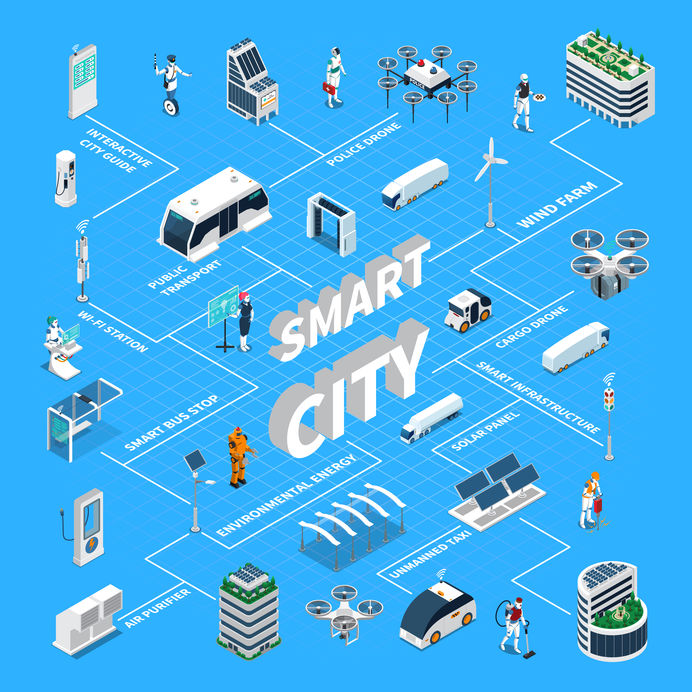
I did a Confluent webinar about this topic recently together with my colleague Robert Cowart. Rob has deep experience in this topic from several projects in the last years. I face this discussion regularly from different perspectives in customer meetings all over the world:
- Cities/governments: Increase safety, improve planning, increase efficiency, reduce cost
- Automotive/vehicle vendors: Improve customer experience, cross-sell
- Third-party companies (ride-sharing, ticket-less parking, marketplaces, etc.): Provide innovative new services and business models
This blog post covers an extended version of the webinar. I give a quick overview and share the slides + video recording.
Benefits of a Smart City
A smart city provides many benefits for civilization and city management. Some of the goals are:
- Improved Pedestrian Safety
- Improved Vehicle Safety
- Proactively Engaged First Responders
- Reduced Traffic Congestion
- Connected/Autonomous Vehicles
- Improved Customer Experience
- Automated Business Processes
"Smart City" is a very generic term and often used as a buzzword. It includes many different use cases and stakeholders. In summary, a smart city provides the right insights (enriched and analyzed) at the right time (increasingly “real-time”) to the right people, processes and systems.
Innovative New Business Models Emerging
A smart city establishes exciting new business models. Many of these make the experience for the end-user much better. For instance, I am so glad that I don't have to pay for parking with pocket changes anymore. A simple app really makes me very happy.
Here are a few arbitrary examples of innovative projects and services related to building a smart city:
- Wejo is offering a platform designed specifically for connected car data.
- Park Now provides cities and operators a cashless mobile parking and payment solution
- Scheidt and Bachmann offer a ticketless parking management system.
- The government of Singapore created Virtual Singapore; an authoritative 3D digital platform intended for use by the public, private, people and research sectors for urban planning, collaboration and decision-making, communication, visualization, and other use cases.
The latter is a great example of building a digital twin outside of manufacturing.
Technical Challenges for Building a Smart City
Many cities are investing in technologies to transform their cities into smart city environments in which data collection and analysis are utilized to manage assets and resources efficiently.
The key challenges are:
- Integration with different data sources and technologies.
- Data transformation and correlation to provide multiple perspectives.
- Real-time processing to act while the information is important.
- High Scalability and zero downtime to run continuously even in case of hardware failure (life in a city never stops).

Modern technology can help connect the right data, at the right time, to the right people, processes and systems.
Learn How to Build a Smart City With Apache Kafka
Innovations around smart cities and the Internet of Things give cities the ability to improve motor safety, unify and manage transportation systems and traffic, save energy and provide a better experience for the residents.
By utilizing an event streaming platform, like Apache Kafka, cities are able to process data in real-time from thousands of sources, such as sensors. By aggregating that data and analyzing real-time data streams, more informed decisions can be made and fine-tuned operations developed for a positive impact on everyday challenges faced by cities.
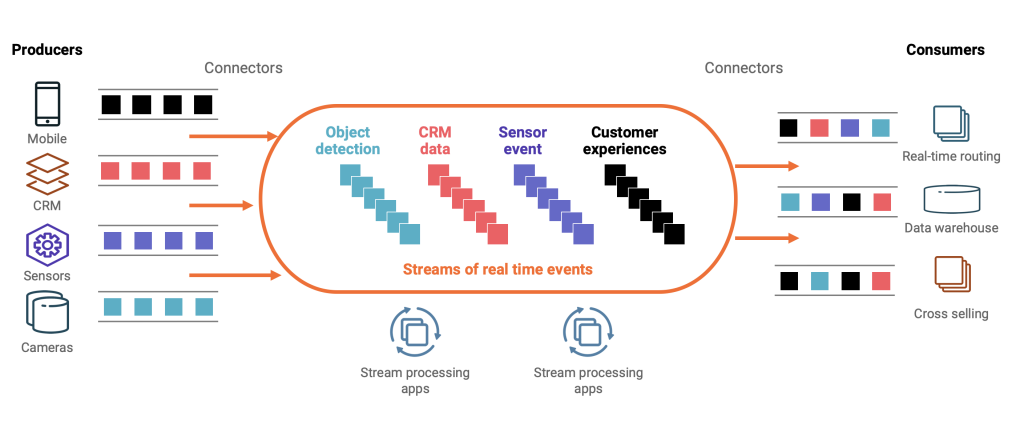
Learn how to:
- Overcome challenges for building a smart city
- Connect thousands of devices, machines, and people
- Build a real-time infrastructure to correlate relevant events
- Leverage open-source and fully managed solutions from the Apache Kafka ecosystem
- Plan and deploy hybrid architectures with an edge, on-premise and cloud infrastructure
The following two sections share a slide deck and video recording with lots of use cases, technical information, and best practices.
Slide Deck — Smart City with the Apache Kafka Ecosystem
Here is the slide deck:
Video Recording — Event Streaming and Real-Time Analytics At Scale
The video recording is an extended version of the recent Confluent webinar:
Further Reading
Published at DZone with permission of Kai Wähner. See the original article here.
Opinions expressed by DZone contributors are their own.
Comments