

Implementing a Weekly Release Cycle for Mobile Apps
Weekly app updates aren’t just fast, they’re smart. With automation, testing, and feedback loops, top apps like Calm and Spotify keep improving without chaos.
 ·
·
Join the DZone community and get the full member experience.
Join For FreeMobile app development has moved from occasional, significant updates to a point where users constantly expect new improvements. While weekly launches for mobile apps can be a substantial benefit, it’s not only about how fast you release. The goal is to keep improving over time, allowing teams to deliver value faster, repair errors faster, and maintain the user base without compromising quality.
Still, making a weekly release model sustainable is not only about increasing work speed. It is all about changing the process of creating, testing, releasing, and monitoring your app. Big names in the app world, such as Instagram and Spotify, now release updates each week. This is not because they are more efficient in coding. They can do this because they have perfected a culture of rapid changes with no chaos.
Why Making New App Updates Weekly Is Important in Mobile Development
Weekly releases are about more than simply keeping up with others. They are about learning faster. If you send updates every week, you can see how users respond, try out new features, and fix bugs right away.
Notice how Instagram adds new features to the app. The latest updates usually include new interface features, stickers, and filters on a weekly basis. If a feature change causes trouble or worsens the user experience, it can be changed or reversed within seven days. For example, if updates are released monthly or quarterly, the same problem might take a long time to go away.
Switching to weekly updates changes the basic approach to developing apps.
- Shorter development cycles: Features should be made small, targeted, and done within a week.
- Automated testing and quality control: Doing manual testing every week is impossible.
- Strong monitoring and feedback: Use user input and crash data when working on your next version.
Creating a Weekly Release Pipeline That Works
The key to publishing every week is to use automation. Typically, a traditional model means that every release is big and time-consuming, with code freezes, lengthy tests, and difficult app store reviews. Weekly releases are different. They move quickly and are easy to manage since they rely on continuous integration and delivery.
An example of this is a popular food delivery app that moved to releasing new features every week by using trunk-based development. The engineers put their code straight into the main branch. Even so, bugs are spotted by automated tests before they can reach the users. When the code has been verified, a build process is set off automatically, and the latest version of the app is sent to the app store without anyone having to do it manually.
In this model, feature flags are significant. Rather than waiting to perfect every part of the code, you can release features that users have yet to see. You can turn these features on for a chosen group of testers or for everyone after they are finished. Airbnb is an example of a company that tests UI modifications on a small group of users before making them available to the whole user base.
Automating Testing Without Sacrificing Quality
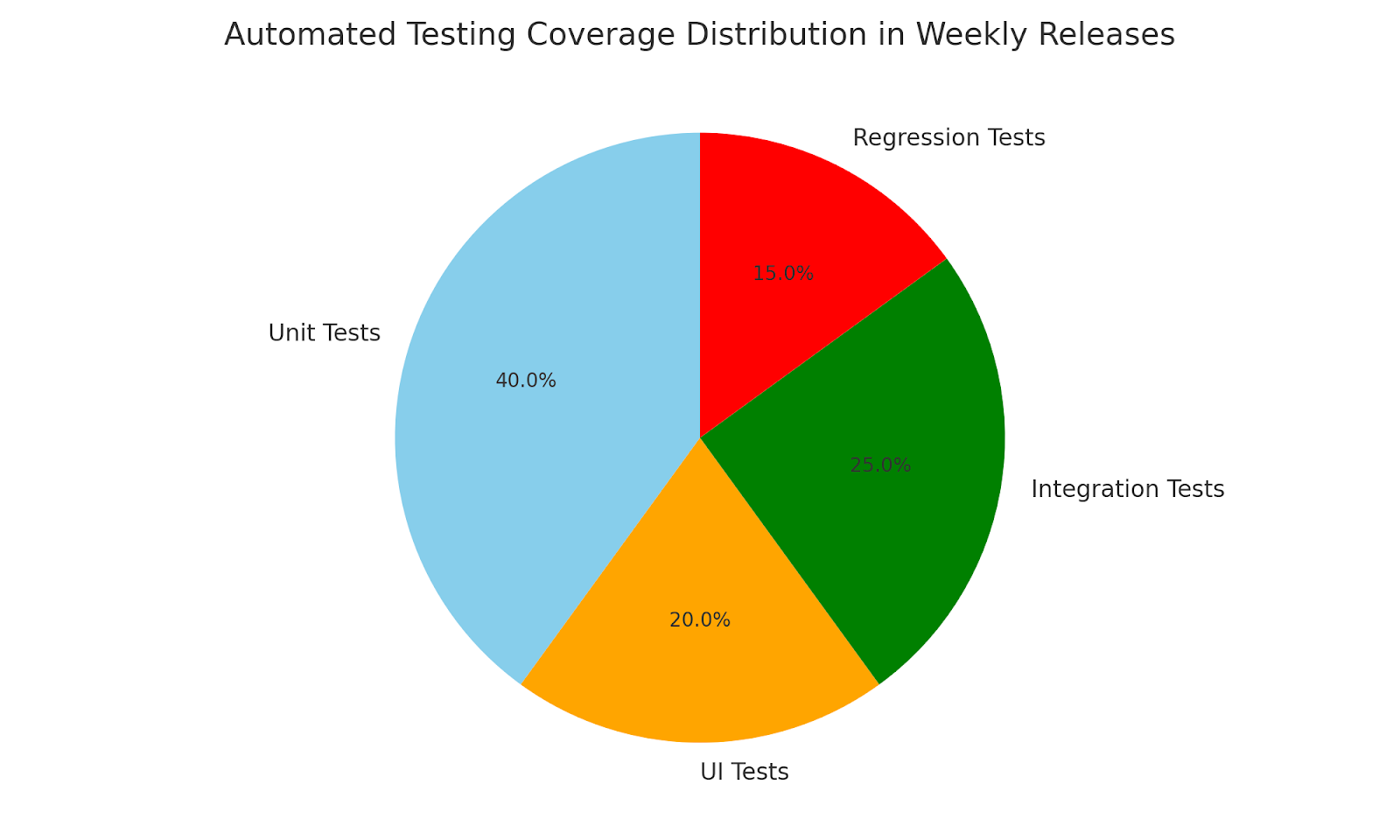
Maintaining quality is the biggest problem with a weekly release schedule. It does not matter how fast you develop if your app has many bugs. The answer is automated testing. It is also necessary to focus on more than just unit tests to ensure each function works.
- UI tests: Using the app to ensure the user experience is as planned.
- Integration tests: Make sure all the app parts are working smoothly together.
- Regression tests: Ensuring that the changes in the new code do not break the old features.
One of the biggest ride-sharing companies automated UI testing using Espresso for Android and XCTest for iOS. As soon as a feature is ready, it is tested against numerous simulated ways in which users might interact with it. If a bug is found, the release stops.
Managing App Store Approval Process in a Weekly Cycle
The review process for apps in the store worries developers. If Apple or Google does not approve your app in time, your regular weekly release schedule will be broken. Nevertheless, this issue can be dealt with.
Spotify builds a good relationship with app store reviewers to have its apps reviewed as quickly as possible. They also carry out their updates in stages. They start by sending the new version to only a small number of users rather than the whole community. If everything is found to be working fine, they start gradually rolling out the update more widely.
This approach has two valuable results. It guarantees that critical bugs are spotted quickly and only affect a small number of users, and it makes it possible to collect user feedback slowly.
A Real-World Example: How the Calm App Releases New Material Every Week
Calm, a well-known meditation app, shows how a weekly release model can be done well. The team decided to use a model where features were created with a feature flag, tested in isolation, and included in the weekly release. This way, they can frequently try out new meditations, change the user interface, and add new wellness features.
If the sleep story feature was not used as much as they wished, they didn’t have to wait a whole month to improve it. In just a week, they fine-tuned the algorithm for content recommendations to increase engagement, and as a result, user retention went up in two weeks.
Using Feedback From Users as a Regular Direction
Rapid releases are not only meant to speed up the process; they are also about learning faster. Every week, new information is available about how people use your app, what features they like, and which ones they don’t use. Still, it calls for clear communication between the teams.
Firebase Crashlytics helps developers find bugs that are not spotted during testing. For example, a well-known mobile game developer saw that older Android phones were experiencing more problems with crashing. Two days later, they located the problem, fixed the bug, and made the update available to users.
Surveys in the app can quickly gather user opinions. In this way, Duolingo, a famous language learning app, keeps improving its courses. If people rapidly notice difficulties with a lesson, it will be enhanced in the following release.
Telling Users What to Expect With Clear Information
Users may get annoyed with the constant need to update the app every week. However, this can be dealt with by talking things over clearly. The “What’s New” section on Calm and Headspace tells users exactly what each update brings — whether it’s fixing bugs, offering new material, or improving the app’s features.
Also, staging the updates ensures that not all users are hit with the changes at once. If a serious bug is found during the rollout, the process can be stopped, fixed, and continued.
Conclusion
Keeping a weekly release schedule for mobile apps is essential for being agile, not just for being fast. They enable teams to respond quickly to users, try out new ideas, and preserve sound quality. However, only a fast release schedule is not enough to achieve this. It demands:
- A solid CI/CD system that automates the building and testing process.
- Feature flagging for safe experimentation.
- Strong automated testing coverage.
- Gathering and watching over user feedback as soon as it is available.
The companies that do well with weekly releases consider them both a process and a product. They are able to learn and grow constantly, and users notice the difference this makes.
Opinions expressed by DZone contributors are their own.
Comments