

What Is BDD? - A Complete Guide
In this article, we will learn what is BDD, why to use the BDD framework, how to implement BDD, the advantages of BDD, and the difference between TDD vs BDD.
Join the DZone community and get the full member experience.
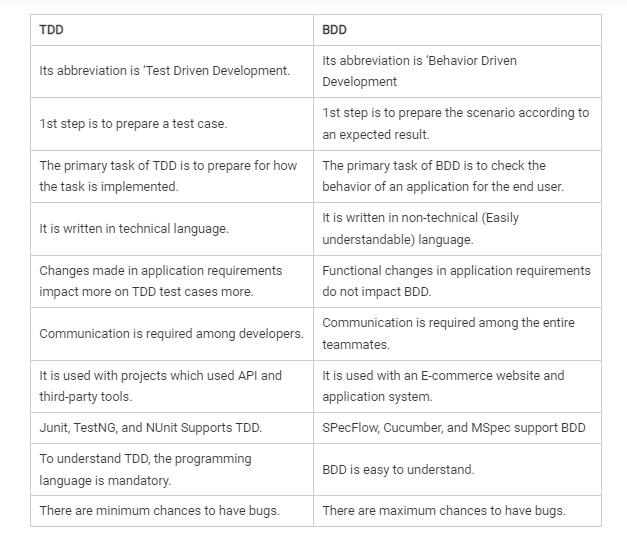
Join For FreeBehavior Driven Development, or BDD for short, is a subset of the values outlined by Test Driven Development. We create the object correctly when using test-driven development. Contrarily, behaviour-driven development makes sure we create the right object. Essentially, TDD is extended by behaviour-driven development.
Using Cucumber and SpecFlow in a BDD testing framework enables non-technical product owners to specify application behaviour as human-readable text.
Why Use BDD Framework?
Before the BDD framework arrived in the industry, companies were using TDD. TDD is effective in software development as long as the stakeholders have sufficient technical knowledge and are comfortable with the framework.
BDD is a method for bridging the gap between technical and non-technical teams because the test cases were written in plain text that everyone can comprehend, namely English. The key benefit of BDD is its uncomplicated, low-grime style that is simpler to comprehend.
How To Implement the BDD Approach?
Written in clear, intelligible English, test scenarios should include a general explanation of the test, including instructions on how to test the application and the behaviour of the application.
We will learn how to practically develop Cucumber, a software testing tool for BDD, using its language, Gherkin, in this lesson.
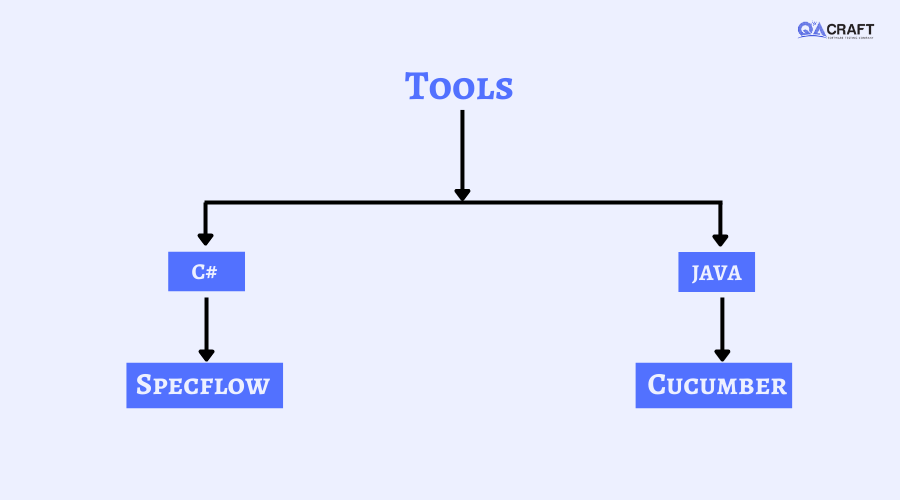
Cucumber – A BDD Framework Tool
The Behavior Driven Development (BDD) framework uses the software testing tool Cucumber to create test cases.
Given – When – Then Approach
- Given: Preconditions.
- When: Actions.
- Then: outcome.
Feature: Using Cucumber to implement BDD
Scenario: Login to Facebook using the Cucumber plugin
A given user is going to the login page of any e-commerce website.
When entering credentials, the user enters "email" as the username and "password123" as the password.
Then User successfully logs in to their Amazon Account.
Sample Step Definition Files
import cucumber.api.java.en.Given;
import cucumber.api.java.en.Then;
import cucumber.api.java.en.When;
public class Sample {
[Given(@" User is navigating to Any Ecommerce Website Login Page ")]
public void GivenUserIsNavigatingToAnyEcommerceWebsiteLoginPage()
{
//write code here
}
[When(@" User enter credential Username as ""([^""]*)"" and password as ""([^""]*)""")]
public void WhenUserEnterCredentialUsernameAsAndPasswordAs(string username, string password)
{
//write code here
}
[Then(@" User successfully Login to Amazon Account")]
public void ThenUserSuccessfullyLoginToAmazonAccount()
{
//write code her
}
}
Advantages of BDD Framework
Find the advantages of the BDD Framework below:
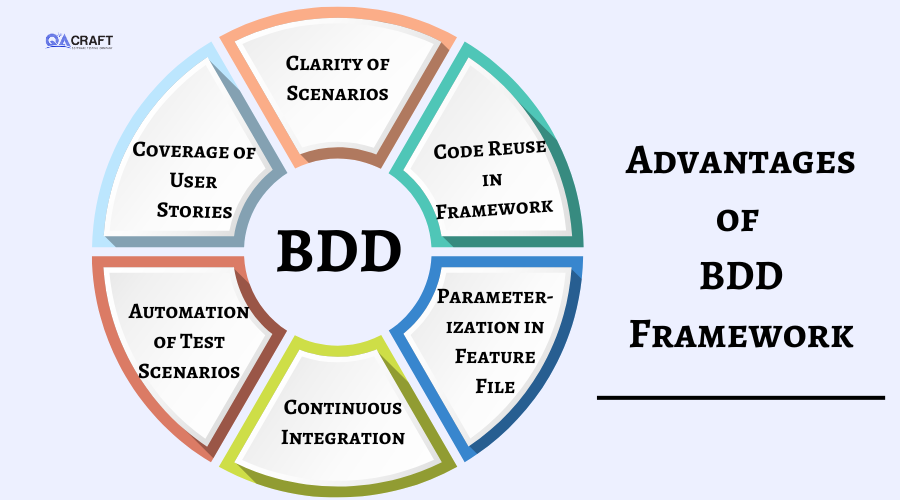
1) User story coverage: A hybrid framework with behaviour-driven development is designed to be integrated with a variety of features. The stakeholders of technical resources are able to construct scenarios in Gherkin utilizing user stories because of the feature file's simple layman's English in the form of feature text. Gaining the most testing coverage is made possible by the concordance of the plain text.
2) Clarity of Scenarios: Gherkin language employs straightforward, everyday text that concentrates on the result of the product being tested using BDD.
It merely makes it easier for a non-technical person to understand the automated test as a feature file separate from the technical description in a different step definitions file for the testers.
Each of its consumers receives clear situations because of Gherkin's readability capability, which also aids in creating the ideal product.
3) Automation of Test Scenarios: Using Cucumber in a BDD framework enables an automation tester to start the scripting process quickly and from the correct angle. They are better able to understand the functionality because of the cucumber scenarios' simple language.
Java, Python, and other computer languages are all compatible with Cucumber, a language-independent plugin.
4) Code reuse in Framework: Given - When - Then technique allows testers the freedom to reuse the same steps as frequently as the user desires in the feature files, ultimately assisting automation testers in saving time.
Example:
Scenario 1:
Given User is navigated to google.com
When the User searched “webdriver” in the search engine
Then Clicked on the Search Button
And User can see search results related to webdriver
Scenario 2:
Given User is navigated to google.com
When the User searched “Remote webdriver” in the search engine
Then Clicked on the Search Button
And User can see search results related to Remote webdriver
In the above two scenarios, we can use the “Given”, “When” and “Then” steps reusable in the second scenario.
5) Parameterization in Feature File: To achieve reusability in the feature file, BDD users should employ the notion of parameterization in the gherkins phases.
As an illustration, imagine that a person is logging in repeatedly while using a bank application. Such stages may, in this case, be parameterized using a different set of data, saving the tester time.
When creating all of the test scenarios, the feature steps file must be defined in a way that makes it simple to access shared functionality in a single location.
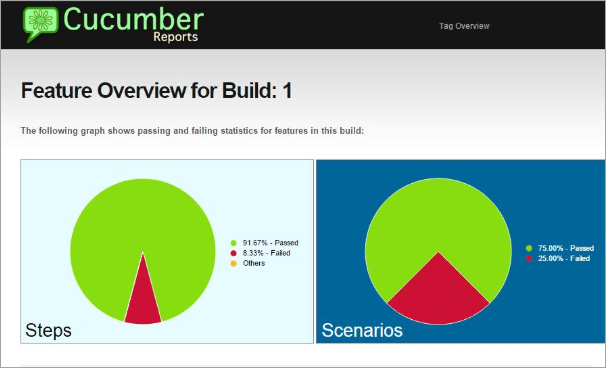
6) Easy to Integrate Continuous Integration: Cucumber also supports using Jenkins. Jenkins allows us to execute cucumber tests and implement them on Jenkins slave computers. Users can observe trace test cases in their entirety thanks to the cucumber reporting plugin.
Difference Between TDD Vs BDD
Conclusion
Agile methodology's BDD concept is extremely lovely. As employing it gives you a platform to operate freely with numerous technologies, Behavior Driven Development is always used to begin either your development or testing.
One of the best tools for using the BDD technique in software projects is cucumber. This enables us to operate with several technologies, including Python and Java.
Many businesses and independent contractors use cucumber, and it also offers a large number of groups where people can share their problems and readily find solutions.
Published at DZone with permission of Deepali chadokar. See the original article here.
Opinions expressed by DZone contributors are their own.
Comments