

7 API Integration Patterns: REST, gRPC, SSE, WS, and Queues
There are multiple API integration patterns. Today, I will compare seven of them across ten axes and dive deep into where they will shine.
 CORE
·
CORE
·
Join the DZone community and get the full member experience.
Join For FreeThere are multiple API integration patterns. I have already mentioned and described some of the differences in different articles: gRPC vs REST, WebSockets vs SSE.
This text is a kind of One Ring article — one to rule them all. I want you to have a single place where you can find a comparison of all the API integration patterns done in a clear and consistent manner. Thus, I have put here all the previous comparisons, and added some more into this text.
I will compare a total of seven API integration patterns across 10 axes.
Tools:
- REST
- gRPC
- WebSockets
- SSE
- GraphQL
- Webhooks
- Message-Queue Base
Axes:
- Communication Direction
- Underlying protocols
- Message Structure
- Complexity
- Security
- Data size
- Throughput
- Latency
- Ease of adoption
- Tooling
Let's start today's journey from REST. It is probably the most common of API integration patterns. Thus, I would use it as a baseline for all the comparisons.
API Integration Patterns
1. REST
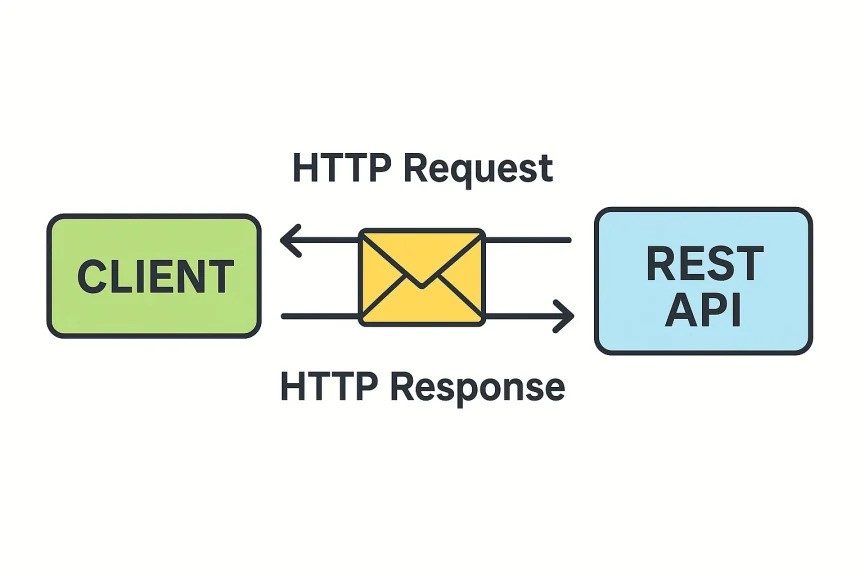
REST, or Representational State Transfer, is an architectural style. It uses HTTP as the underlying communication medium; thus, it is stateless by nature and can benefit from all the advantages of HTTP, like caching. It can utilize both HTTP/1.1, HTTP/2.
- Shines when: you need a simple, cache-friendly, web-native API consumed by every language or tool.
- Struggles when: you need full-duplex streams or extremely low latency.
2. gRPC
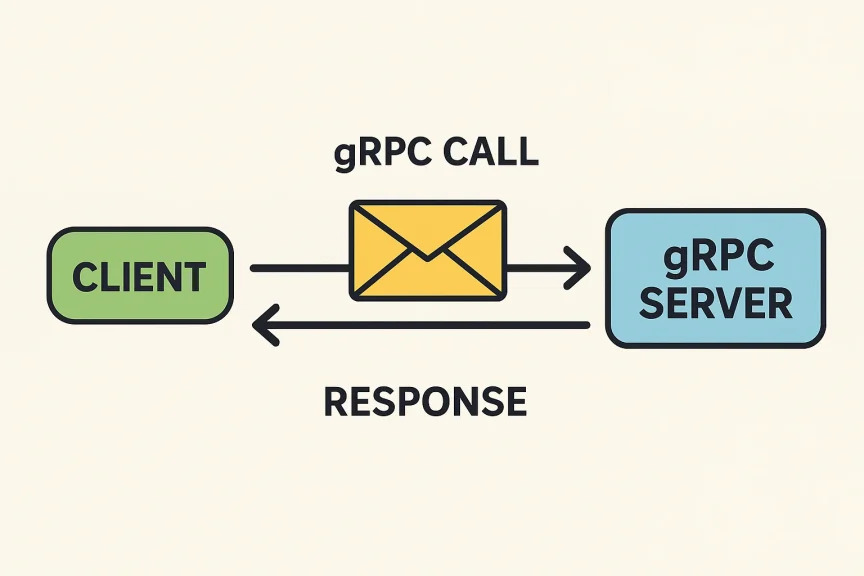
gRPC is probably the most modern implementation of the relatively old concept of Remote Procedure Call. gRPC uses Google’s Protocol Buffers as a serialization tool. By default, it utilizes HTTP/2 as a transport medium for data exchange in a binary format.
- Shines when: services need compact binary messages, strong typing, and bidirectional streaming.
- Struggles when: you must expose an API directly to browsers without extra tooling.
3. WebSockets
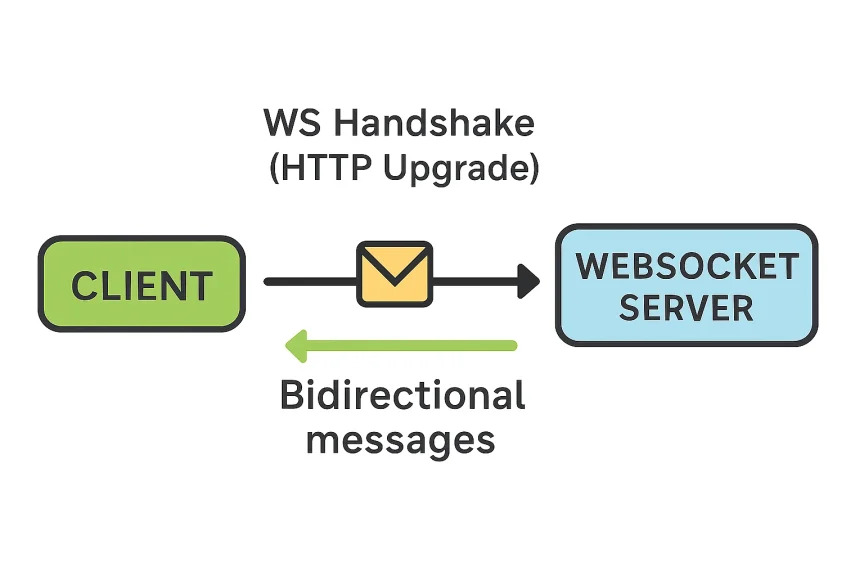
WebSockets provides a bidirectional communication between a server and client with the usage of a single long-lasting TCP connection. Thanks to this feature, the data is exchanged between interested parties in “real-time.” Each message is sent as binary frame data or Unicode text. While WebSockets utilize a custom protocol most of the time, they still use HTTP for the initial handshake.
- Shine when: both client and server need real-time, low-latency push in either direction.
- Struggle when: intermediaries (CDNs, firewalls) or strict request-response patterns dominate.
4. SSE
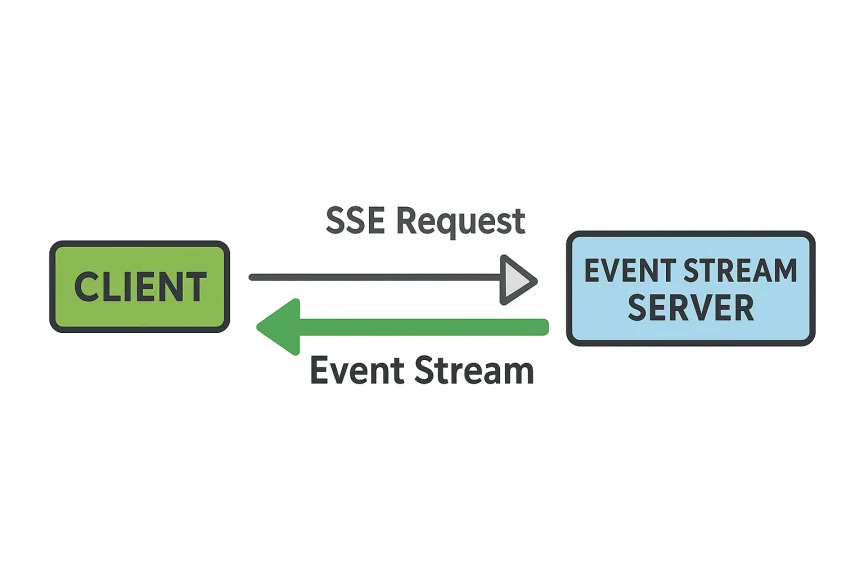
SSE is a technology that allows a web server to send updates to a web page. It is a part of the HTML 5 specification and utilizes a single long-lived HTTP connection to send data in “real-time.” It can use both HTTP/1.1 and HTTP/2. SSE also has its unique MIME type: text/event-stream. The important thing here is that it can only be used for server-browser communication.
- Shines when: the server pushes one-way event streams to browsers with a minimal setup.
- Struggles when: you need client-to-server push or non-browser consumers.
5. GraphQL
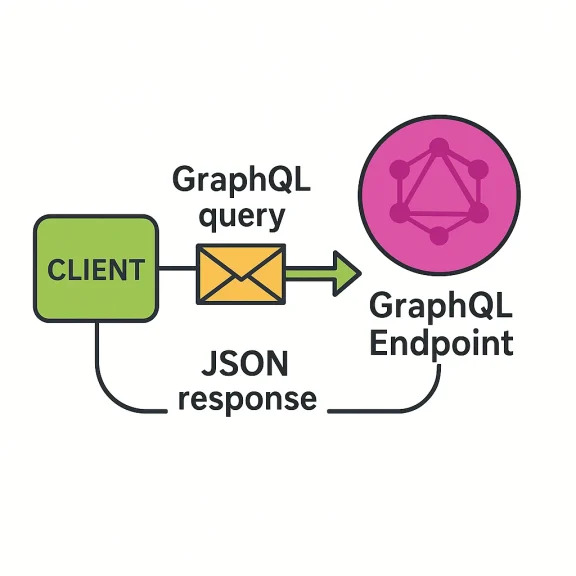
GraphQL is a query language for your API. It allows clients to request only the subset of data they need. The client knows the server’s endpoint, and the endpoint provides a schema. The schema defines the communication protocol, inputs, and outputs. The request is validated with the schema; thus, malformed requests would be rejected by the server with a proper error message.
- Shines when: clients must trim over-fetching and compose rich queries from one endpoint.
- Struggles when: the workload is write-heavy or teams cannot maintain a strict schema discipline.
6. Webhooks
Webhooks address the question — Has anything changed yet?. It is a push-style HTTP callback that lets another service tell your app when something relevant happens. It works in “real” time, no polling, no sockets, just an outbound POST.
- Shines when: you want lightweight server-to-server notifications without polling.
- Struggles when: delivery guarantees must be exactly-once, or the receiver is offline for long periods.
7. Message-Queue
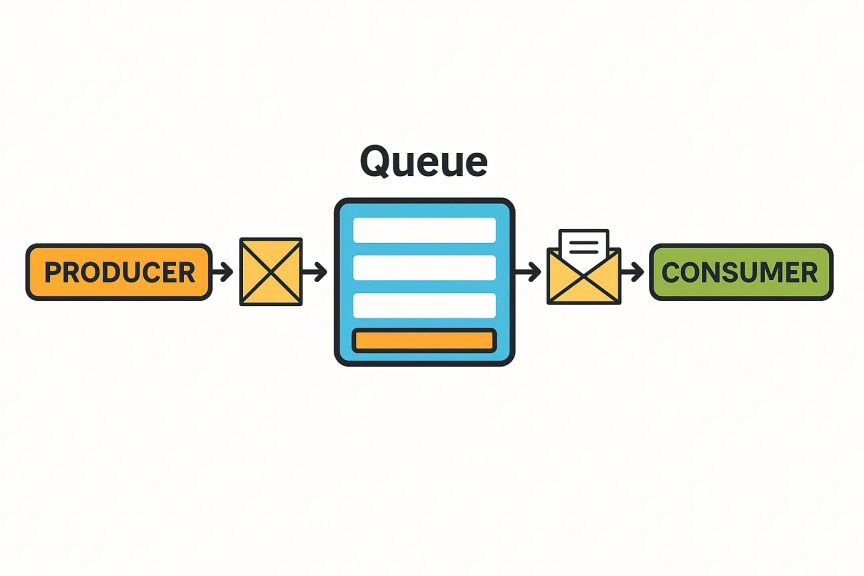
The message queue-based approach uses a middleware as a way to communicate between services, usually in the form of a platform such as Kafka or RabbitMQ. The main idea behind message queues is to provide asynchronous communication. Messages are sent to a queue, which acts as a buffer between the sender and receiver. This decouples the sender and receiver and allows them to operate independently of each other.
- Shine when: you need high-throughput, decoupled, async processing with a replay.
- Struggle when: you require simple, stateless request-response or openly exposed public APIs.
API Integration Patterns: Comparison
Below is the most important takeaway from this article. For traits scaled from Very Low to Very High I am using REST a baseline. Thus, for example, if the complexity of the API integration patterns is described as Very High, you can think of it as far more complex than REST.
| Technology | Communication Direction | Underlying Protocols | Message Structure | Complexity | Security² | Data Size | Throughput | Latency | Ease of Adoption | Tooling |
|---|---|---|---|---|---|---|---|---|---|---|
| REST | Unidirectional | HTTP/1.1 or HTTP/2 | Mostly JSON or XML (text) | Very Low | HTTPS | Large | Moderate | High | Very High | Extensive (Postman, Swagger/OpenAPI, cURL) |
| gRPC | Unidirectional or Bi-directional | HTTP/2 | Protocol Buffers (binary) | Moderate | mTLS | Very Small - binary | Very High | Very Low | Moderate but growing | Decent (gRPCurl, Postman) |
| WebSockets | Bi-directional | WebSocket (upgrade from HTTP/1.1 or HTTP/2) | Text or binary frames | Low | WSS | Small - binary frames | High | Very Low | Moderate | Good |
| SSE (Server-Sent Events) | Unidirectional | HTTP/1.1 | text/event-stream (UTF-8) |
Very Low | HTTPS | Moderate - plain text | Moderate | Low | Moderate | Good |
| GraphQL | Unidirectional, Bi-directional with subscriptions | HTTP/1.1, HTTP/2; WebSocket for subscriptions | JSON (text) | Moderate | HTTPS | Large | Variable; fewer round-trips | Medium–high | Moderate but rapidly growing | Very Good (Apollo, GraphiQL) |
| Webhooks | Unidirectional | HTTP/1.1 or HTTP/2 | JSON, form-encoded, or custom | Low | HTTPS | Large | Depends on event volume (bursty) | Moderate | Very High | Good (ngrok, request-bin) |
| Message-Queue | Unidirectional | Kafka TCP, AMQP, MQTT, NATS, ... | Binary records, Avro, JSON ... | Very High | ACLs, TLS | Small to medium - highly tunable | Very High | Very Low | Low | Extensive |
Summary
There are no good or bad here, nor any silver bullets; it's just a couple of API integration patterns you can use. Nonetheless, if you want to know my recommendations, here they are: 
Remember, if you will be building anything more complex than a very focused microservice, the odds are that you will be using more than one approach. Mixing different tools to get the best design is part of our daily struggle, just please do not overengineer your solution.
Thank you for your time.
These articles may also interest you:
Published at DZone with permission of Bartłomiej Żyliński. See the original article here.
Opinions expressed by DZone contributors are their own.
Comments