

Optimizing Your IDP Using Centralized Configuration Management With IBM Cloud App Configuration: A Complete Guide
Centralize config, enable feature flags, and scale securely—IBM Cloud App Config powers agile, controlled IDP development.
 CORE
·
CORE
·
Join the DZone community and get the full member experience.
Join For FreeInternal Developer Platforms (IDPs) are becoming essential for boosting efficiency, scalability, and security. These platforms are designed by platform engineering teams with developers in mind, ensuring they have the right tools to streamline their workflows. At the heart of every IDP are five key components (next section) that keeps everything running smoothly.
IBM Cloud App Configuration (IBM Cloud AC) plays a crucial role in this ecosystem to do centralized configuration management. It offers a scalable, fault tolerant, and secure way to manage dynamic configurations, feature flags, and access (allow listing) management which is all access controlled. It seamlessly aligns with the core components of an IDP, helping teams maintain flexibility and control.
In this blog, we’ll dive into how IBM Cloud AC enhances each of these IDP components, share best practices for seamless integration, and explore the real impact it has on IDP performance and overall DevOps efficiency.
5 Core Components of IDP
The five core components of IDP are:
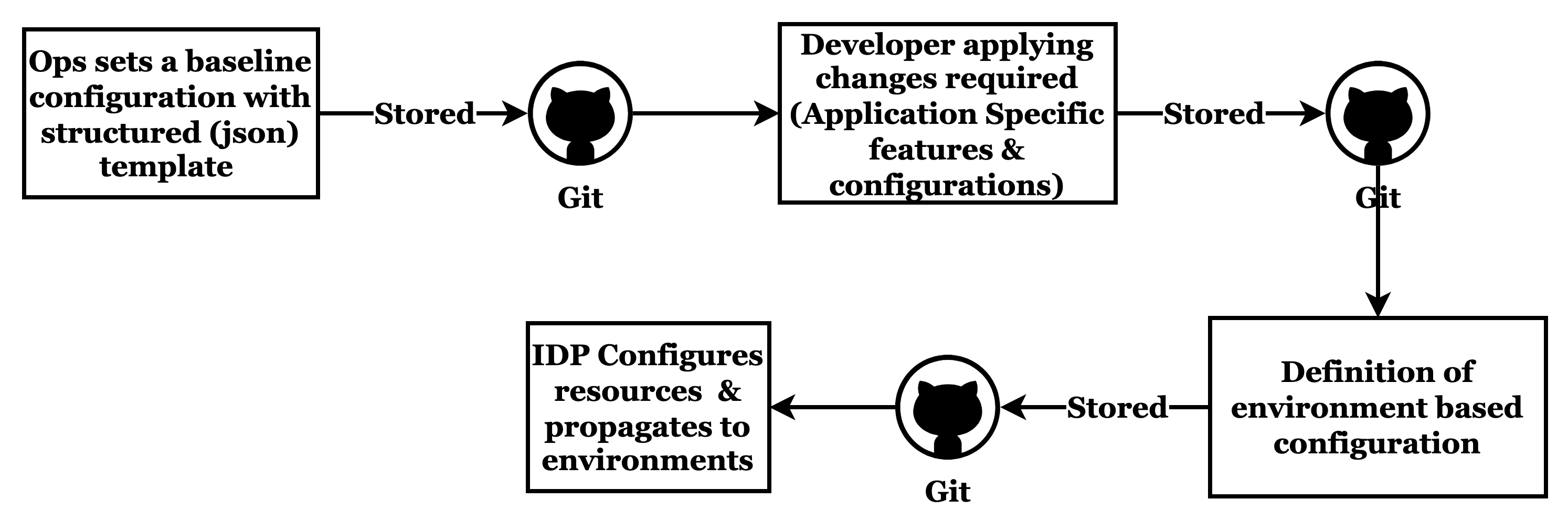
- Application Configuration Management—Centralized handling of application settings, feature flags, and runtime parameters to enable dynamic feature updates without code changes or redeployments.
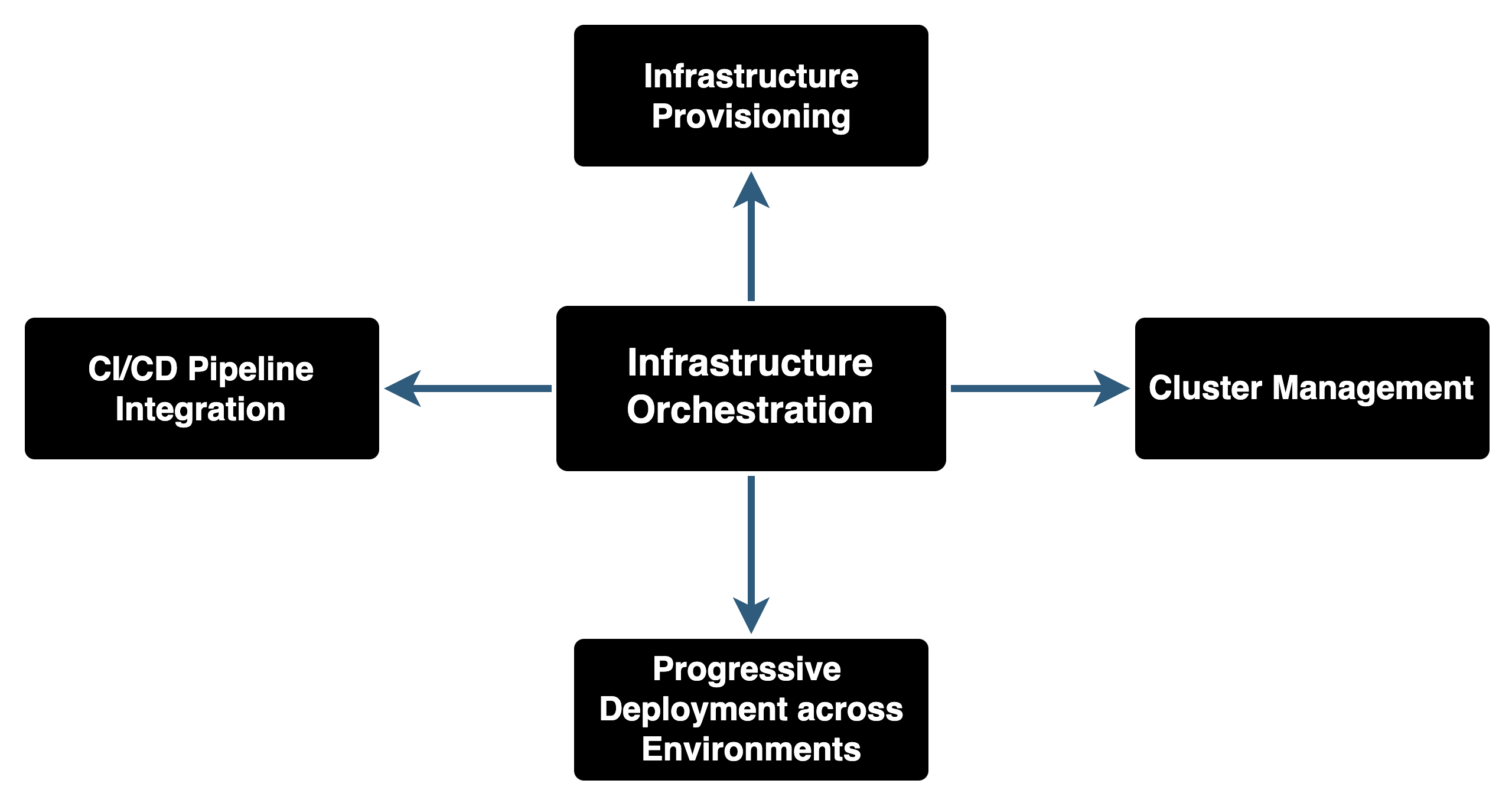
- Infrastructure Orchestration—Automated management and provisioning of infrastructure resources to ensure scalability, reliability, and consistency across environments.
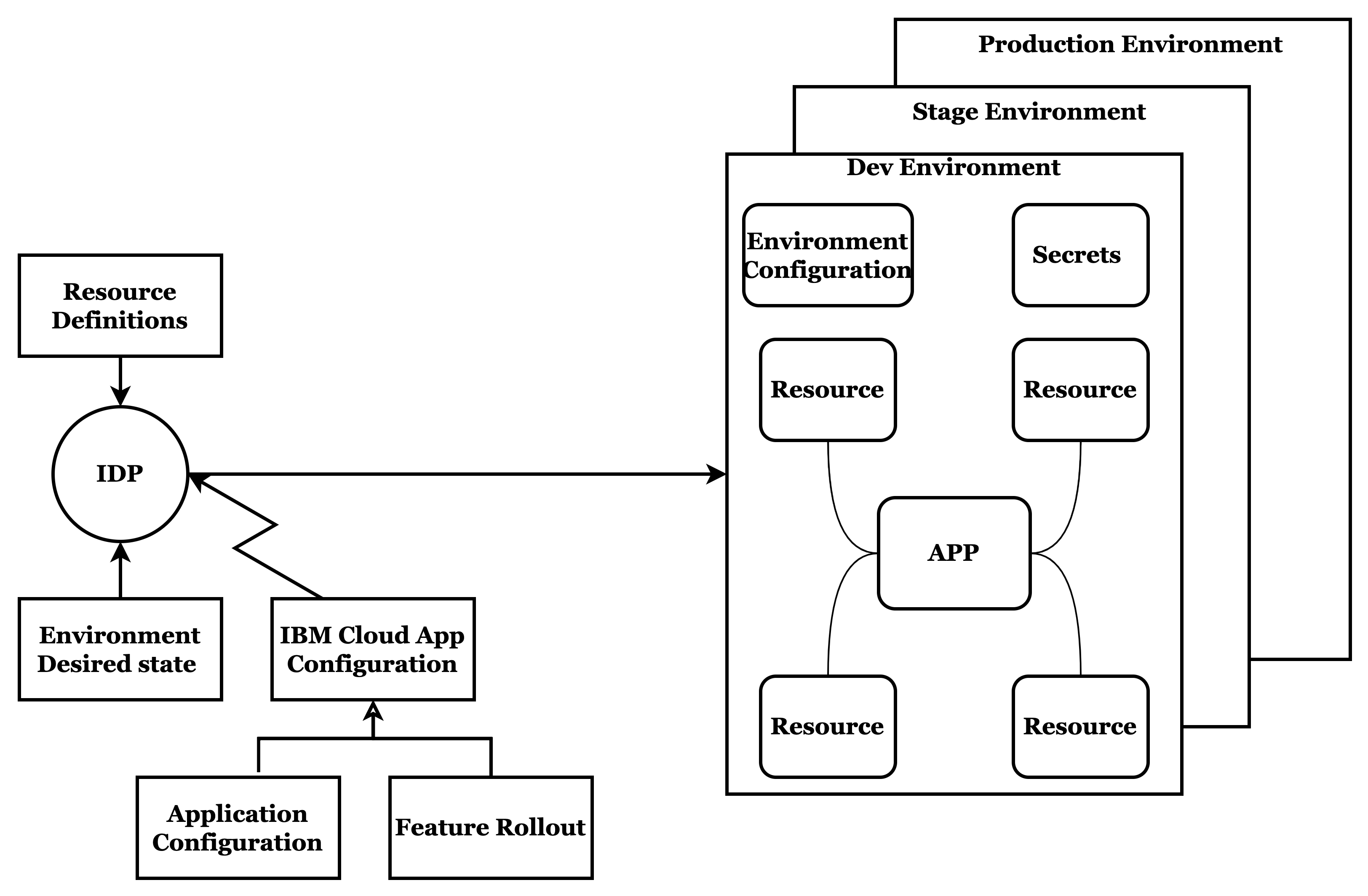
- Environment Management—The process of maintaining parity across development, testing, staging, and production environments by managing configurations, dependencies, and progressive feature rollouts (allow listing).
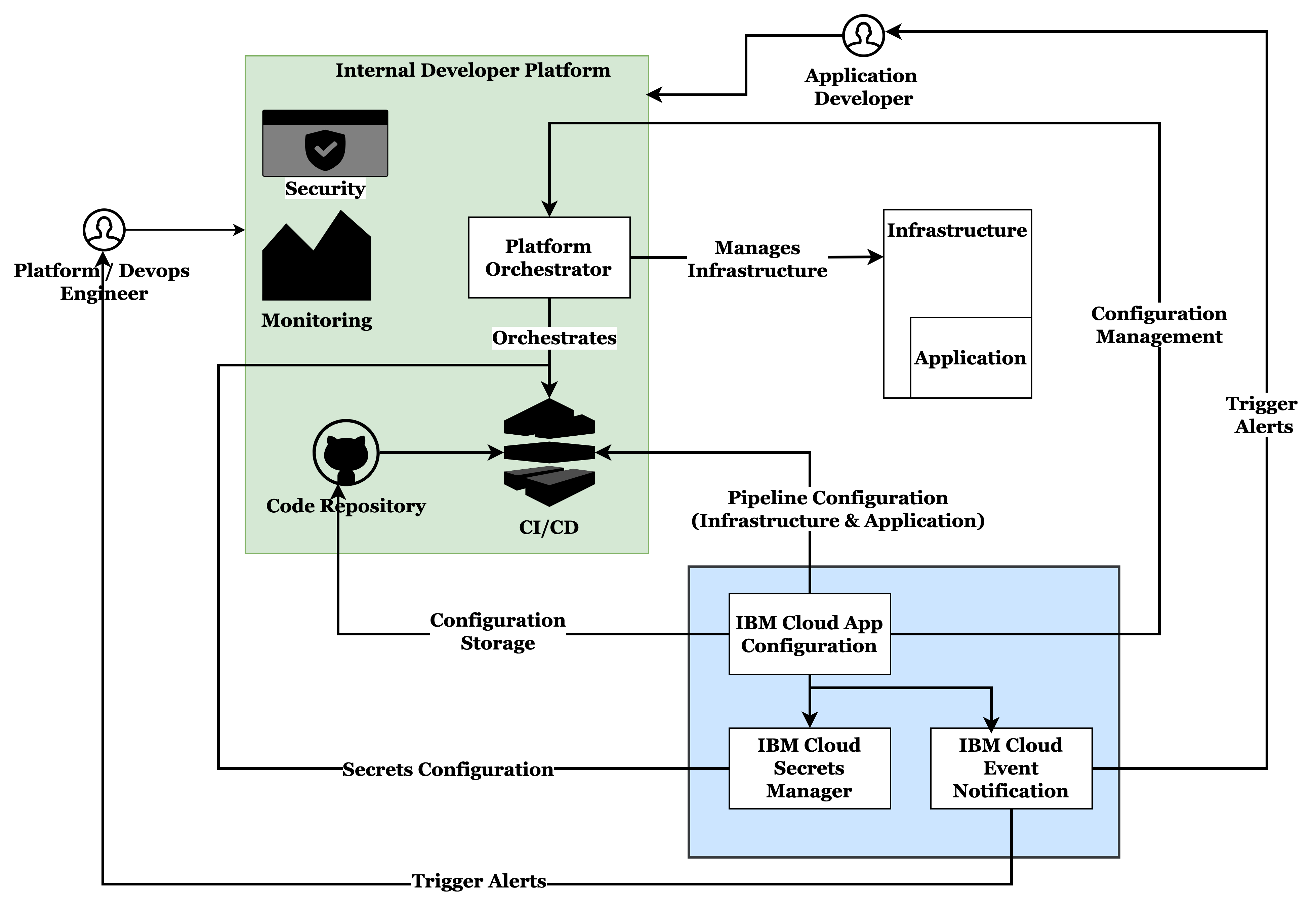
- Deployment Management—Automated process of releasing, monitoring, and rolling back applications across environments to ensure seamless, controlled, and reliable delivery.
- Role-Based Access Control—A security framework that restricts system access based on user roles, ensuring granular control over permissions and configurations to perform configuration management actions.
How Does IBM Cloud App Configuration Strengthen the Components?
IBM Cloud App Configuration helps improve governance, security, and operational control in Internal Developer Platforms (IDPs) through powerful feature flag management and dynamic application configuration. Here's how it supports each of the five core components of an IDP:
Application Configuration Management
- Centralized Application Settings – Store configurations like API endpoints, logging levels, and other application configurations in App Configuration using the properties capability. Modify the configurations at runtime without redeploying the applications.
- Environment-specific configuration—Supports different values based on environments.
- Real-time config updates—Dynamically update the configuration and make them available to applications in real-time without a redeploy.
Infrastructure Orchestration
- Dynamic Configuration for Provisioning—Acts as a centralized store for managing configuration across multiple provisioning tools.
- Infrastructure Orchestration with dynamic configuration—Enables real-time updates to infrastructure without requiring downtime. Use feature flags to enable/disable scaling.
- Environment-specific configuration—Allows defining different configurations per environment (Dev, Staging, Prod) without modifying IaC scripts.
- Decoupling configuration from code—Reduces configuration drift between environments by ensuring consistency across deployments.
Environment Management
- Centralized Configuration Management—Reduces environment-specific configuration files or hardcoded values.
- Progressive Deployment of Features—Supports gradual rollout of new features to different environments before a full production release.
- Environment-Specific Deployment Configurations - Ensures that each environment gets the right settings during deployment.
- Secure and Policy-Driven Configurations—Prevents configuration drift by ensuring all environments adhere to predefined policies. Developers can only modify non-sensitive configurations, while sensitive settings are controlled by platform engineers.
Deployment Management
- Progressive Feature Releases—Supports dark launches/canary deployment, A/B testing, and phased rollouts.
- Instant Rollbacks Without Redeployment—When an issue is detected, feature flags can be used to disable the feature code without redeploying.
- CI/CD Integration for Automated Feature Deployment—Integrates with IBM Cloud Toolchain to automate configuration management and feature releases.
- Automated Event-Driven Deployment Responses—Helps to trigger alerts and actions based on deployment status changes.
- Secure Secret Management—Secures and enables rotating your deployment-related sensitive configurations.
- Change Management—Track changes deployed to your IDP using App Configuration with integration to ServiceNow.
Role-Based Access Control (RBAC)
- Fine-Grained Access Control for Configurations—Supports fine-grained role-based access to configurations and feature flags.
- Separation of Duties in Configuration Management—Ensure separation of concerns between different roles managing different parts of the IDP. Fine-grained access at the environment level, collection level, configurations, and feature flags level.
- Enforcing Compliance & Auditability—Monitors all configuration changes with detailed logs for compliance and auditing. Tracks who modified which configuration and when to improve accountability.
- Integration with IBM Cloud IAM for Enterprise-Wide Security—Leverages IBM Cloud Identity and Access Management (IAM). Supports federated authentication, ensuring users from Active Directory, Okta, or IAM providers can access feature management securely.
Best Practices for Integrating IBM Cloud App Configuration with Your IDP
- Application Configuration Management
- Keep all environment-specific configurations in IBM Cloud App Configuration instead of hardcoding them in code or using environment variables.
- Use typed & structured configurations. Store configurations as JSON and YAML for better readability and validation, like
{ "featureRLEnabled": true, "apiRateLimit": 500 } - Use real-time configuration updates. Listen to App Configuration events using the appropriate SDKs of App Configuration and receive real-time configuration updates.
- Infrastructure Orchestration
- Use feature flags for infrastructure scaling. Dynamically adjust resource allocations, caching, and database scaling settings based on traffic patterns.
- Maintain environment-specific infrastructure flags to support multi-regional deployments
- Integrate App Configuration with IaC tools like Terraform, Ansible or Kubernetes config maps to automate infrastructure management.
- Environmental Management
- Isolate configurations per environment to prevent cross-environment contamination
- Regularly compare and sync configurations across environments to ensure consistency.
- Deployment Management
- Decouple feature releases from deployments, and if a feature causes issues, disable it dynamically.
- Integrate with GitHub Actions, IBM Cloud Toolchain, Jenkins, and ArgoCD to manage feature flags automatically.
- Role-Based Access Control
- Implement the Principle of Least Privilege (PoLP) by defining granular permissions to restrict who can modify configurations and feature flags.
- Audit & monitor feature flag changes to track.
IBM Cloud App Configuration Impact on IDP Metrics
Metrics are crucial for IDP as they help monitor performance, improve developer productivity, optimize system reliability, and ensure security. They provide real-time insights into platform usage, deployment efficiency, and operational health. It also enables teams to make data-driven decisions to enhance the developer experience.
- Deployment Frequency (DF)
- Feature flags enable continuous deployment and reduce waiting time for releases, allowing more frequent deployments.
- Decouples code from feature releases, allowing the development teams to push code changes multiple times a day.
- Lead Time for Changes (LT)
- Shortens the testing cycles with environment-specific configurations.
- Enables features without any redeployment.
- Change Failure Rate (CFR)
- Reduces risks with progressive rollouts and supports early detection of failures.
- Instant rollback without deployments, as issue-causing features can be disabled immediately without any redeployment.
- Mean Time to Recovery (MTTR)
- Instant recovery by disabling the faulty features.
- Enable debugging production environments on a need basis to facilitate faster error analysis.
- Faster troubleshooting with audit logs.
- Security & Compliance Metrics
- Improved access control using RBAC
- Audit logs for compliance.
- Developer Productivity Metrics
- Developers don’t need to wait for the ops teams to modify configurations.
- By managing configuration centrally, teams can ensure consistency across environments, reducing debugging time.
- Cost Optimization & Resource Utilization Metrics
- Enable/disable features dynamically based on traffic spikes, ensuring efficient resource allocation and preventing overloading of infrastructure.
- Use configurations to control auto-scaling rules, enabling dynamic infrastructure scaling only when necessary, preventing waste.
- By tuning application settings without restarting services, organizations can avoid downtime, enhance performance, and optimize resource usage efficiently.
Conclusion
Agility, security, and scalability have become essential for modern development. IBM Cloud App Configuration supports these goals by simplifying configuration management, strengthening access control, and enabling safe, dynamic feature releases. Integrating it into your IDP helps streamline operations, reduce risk, and give developers the flexibility they need to move quickly and confidently.
Opinions expressed by DZone contributors are their own.
Comments