

Installing or Upgrading to Fedora 37 on MacBook Pro 13-Inch (Late 2011)
This tutorial guides you through how to update to the latest Fedora on your old Macbook Pro 13 inch from late 2011!
 CORE
·
CORE
·
Join the DZone community and get the full member experience.
Join For FreeThis weekend I decided to update my old MacBook Pro 13 inch from late 2011, with 125GB SSD and 8GB RAM. It's a machine I've taken on trips around the world and back in the day ran many a session, workshop, or demo on sharing all that developer goodness.
Last time we checked, this was installed using Fedora 36, so how about an update to Fedora 37?

Below are the steps and adjustments needed to get Fedora 37 working on these laptops in under an hour.
 Get Fedora 36
Yes, you read that right.
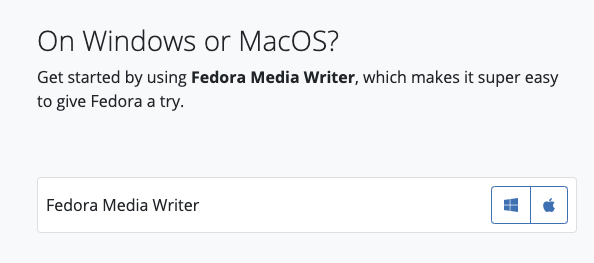
You need to first install Fedora 36, and then I'll share with you how to update to Fedora 37 afterward. The reason for this is that the current Fedora 37 ISO on a USB stick with the Fedora Media Writer is broken. During the installation you will be presented with the following error message:
Bootloader installation has failed: Failed to set new efi boot target. This is most likely a kernel or firmware bug.For a complete guide on the Fedora 36 installation, see my previous article in this series linked earlier.
Updating to Fedora 37
This part is best done on the command line to ensure each step of the process is run without problems. Log in and open a terminal to start (note, you might need to set a new root user password with sudu passwd root):
$ sudo dnf --refresh update
$ sudo dnf upgrade
Now reboot your system to start the upgrade:
$ sudo reboot
dnf command:
$ sudo dnf install dnf-plugin-system-upgrade
$ sudo dnf system-upgrade download --releasever=37
$ sudo dnf system-upgrade reboot

You will see a reboot and then upgrading tasks will commence. Once completed, your machine will reboot automatically into Fedora 37.

Now let's see what the deal is with our missing wifi card as we've been doing this install from a wired network line and the upgrade lost our Fedora 36 wifi setup.
Wi-Fi Setup
Now the only thing missing is a Wi-Fi driver, so there are a few things to be done that require that the network cable be connected as we install the development packages for the kernel we are running and then build the broadcom-wl driver for that kernel.
Let's verify the actual card we need for wifi in a terminal:
$ lspci -vnn -d 14e4:
The output will be several items, one of which should be listing something like:
Network controller [0280]: Broadcom Inc. and subsidiaries...
Subsystem: Apple Inc. AirPort Extreme...
We now need to install a few repositories to pull all the Broadcom stuff from:
$ su -c 'dnf install -y http://download1.rpmfusion.org/free/fedora/rpmfusion-free-release-$(rpm -E %fedora).noarch.rpm'
And also the non-free version:
$ su -c 'dnf install -y http://download1.rpmfusion.org/nonfree/fedora/rpmfusion-nonfree-release-$(rpm -E %fedora).noarch.rpm'
We are going to need the development kernel packages to build our Broadcom wireless driver, so let's explore the available kernels:
$ sudo dnf list kernel

kernel.x86_64            5.17.5-300.fc36
kernel.x86_64            6.0.15-200.fc36
kernel.x86_64            6.0.15-300.fc37
Install the development packages with the following:
$ sudo dnf install -y akmods kernel-devel
You'll see a lot of packages scroll by and then the development kernel package install, which is the kernel-devel-6.0.15-300.fc37 package:

Now install the Broadcom Wireless package:
$ sudo dnf install -y broadcom-wl
Then build the kernel module:
$sudo akmods

Checking mods exist for 6.0.15-300.fc37.x86_64    [OK]
Next, reboot your machine and you should be able to view the wireless driver (wl) with the following:
$ lsmod | grep wl
Now set up your wireless connection in Fedora in the top right drop-down menu.
This is a bit of a different type of installation from if you were following along the last time, but we still made it to Fedora 37. I hope you enjoyed this starting-the-year update to the latest Fedora on your old MacBook Pro 13 inch from late 2011!
Published at DZone with permission of Eric D. Schabell. See the original article here.
Opinions expressed by DZone contributors are their own.
Comments