

Networking’s Open Source Era Is Just Getting Started
Open source is transforming networking from slow, standards-driven protocols into agile, programmable, Kubernetes-ready infrastructure.
 ·
·
Join the DZone community and get the full member experience.
Join For FreeFor most of its history, networking has been a standards-first, protocol-governed domain. From the OSI model to the TCP/IP stack, progress was measured in working groups and RFCs, not GitHub commits. But that is changing fast. Projects like eBPF and Cilium, along with the architectural demands of Kubernetes, are moving networking from a specification-bound world into a software-driven, open source ecosystem. What happened to servers, developer tooling, and CI/CD pipelines is now happening to the network layer.
The open source future has arrived, and it is finally catching up to the packet path.
Open Source Won the Rest of the Stack
Open source’s role as enterprise technology’s primary innovation engine is so well established that it almost feels redundant to point it out. Linux replatformed the server world. Containers, born from core Linux primitives, gave rise to DevOps, distributed systems, and modern deployment methods. Kubernetes became the dominant control plane for cloud-native computing. All of this came from the open source community.
But while open source redefined compute, build pipelines, and application architecture, it has not yet hit full stride in networking. Consider how quickly ecosystems like Python, JavaScript, and Kubernetes have matured.
That’s what led to open source’s complete and total domination as the disruptive agent across server infrastructure, programming languages, developer tooling, and frameworks. Within the CNCF alone, there are more than 220,000 contributors on nearly 200 CNCF projects that have become the bedrock of cloud-native infrastructure. The npm registry for the JavaScript ecosystem has more than two million packages. There are more than 100,000 Python libraries and more than 200,000 Python packages. There really aren’t many significant layers in software development, language primitives, or any stage from build to staging to production that have not transformed user expectations toward open source-paced innovation.
Networking, however, stayed grounded in standards. Understandably so. It had to work across vendors and continents, between fiber optics and firmware. But in today’s era of dynamic infrastructure and developer-first platforms, that conservatism is beginning to hold things back.
Why Networking Stayed Conservative
Networking was never built to move fast and break things. It had to interoperate across organizational and geographic boundaries, tolerate hardware failures, and support performance-intensive workloads where any misstep could disrupt critical business operations.
When things go wrong, the network gets blamed, often incorrectly. That built a culture of risk aversion and an ethos of minimal change. No surprise then that major transitions like the adoption of IPv6 took decades.
IPv6 was initially defined in RFC1883, nearly 30 years ago. Back then, it was just known as IP Next Generation or IPng. It took until RFC8200, ratified in July 2017, for IPv6 to become the standard it is today. It is not a criticism of standard bodies like IETF and IEEE, by the way. They are not to be blamed for the slow adoption of IPv6. The human-unfriendly IPv6 addressing scheme and lack of IPv6 support across networking equipment would be my scapegoats. But it is just evident that while a standards-based approach was necessary to keep networking equipment from competing companies interoperating, it stalled the progress we saw in other parts of the stack.
The result has been a layer of infrastructure that evolved at a far slower pace compared to the rest of the ecosystem.
Reliability Over Agility… Until Now
The Linux kernel’s development philosophy reflects a similar pattern. Kernel developers follow a strict “never break user space” rule, prioritizing compatibility over innovation. Changes to core interfaces require permanent support and are subject to slow and careful consideration, especially where networking is concerned.
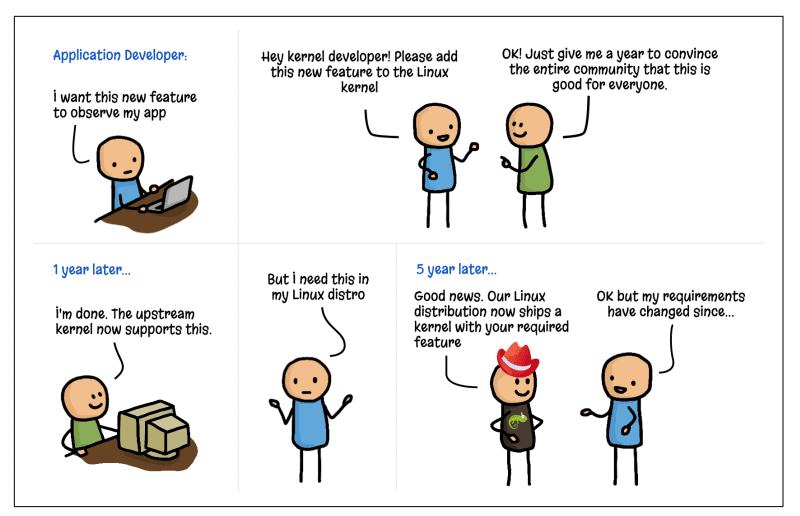
That is why eBPF, short for extended Berkeley Packet Filter, has become such a turning point. It allows developers to safely run sandboxed programs inside the kernel, unlocking real-time visibility, enforcement, and observability without needing to change kernel source or load custom modules. It preserves stability while enabling flexibility.
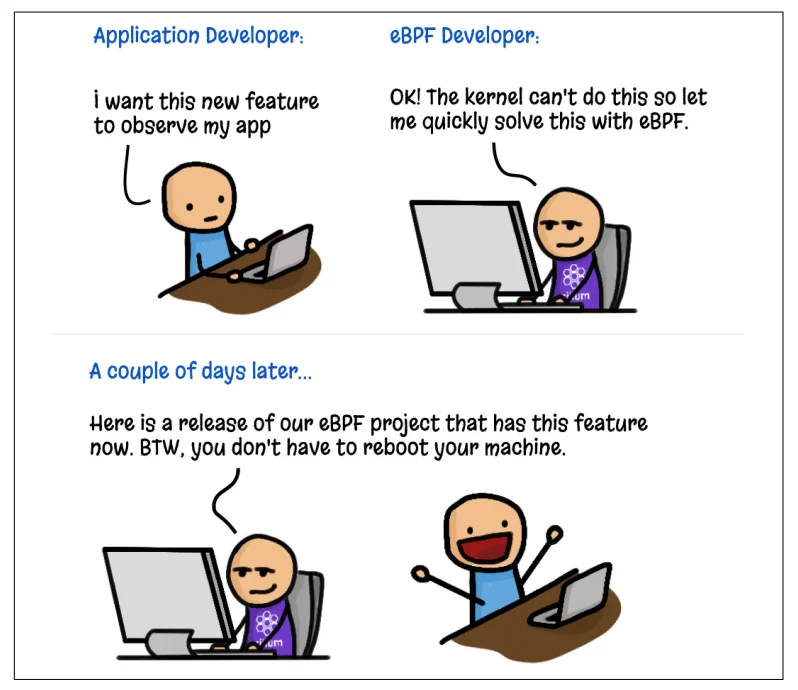
This is what makes Cilium, a networking platform powered by eBPF, so transformative. Instead of relying on static, standards-bound behaviors, Cilium delivers programmable networking, zero-trust policies, and advanced observability designed for Kubernetes and other dynamic environments. The combination of Cilium and eBPF redefines the network as software. It is composable, policy-driven, and constantly improving.
Kubernetes Is Turning Up the Pressure
Cloud-native workloads have flipped the script. The move to microservices and orchestrated infrastructure introduced a level of dynamism that traditional networking tools were not designed for. Pods come and go in seconds. Service discovery must adapt instantly. IP addresses lose their meaning. And policy enforcement requires context far beyond source and destination.
Legacy networking stacks were not built for this world. The primitives underneath container orchestration were developed decades ago. They struggle to deliver the observability, security, and agility that platform teams now expect. Retrofitting those systems to meet modern requirements has hit a ceiling.
This is exactly where eBPF and Cilium shine.
eBPF gives developers the hooks they need to extract metrics, enforce rules, and redirect traffic inside the kernel without disrupting the rest of the system. Cilium operationalizes that capability through Kubernetes-native constructs like network policies, service meshes, and encrypted connectivity under a single control plane.
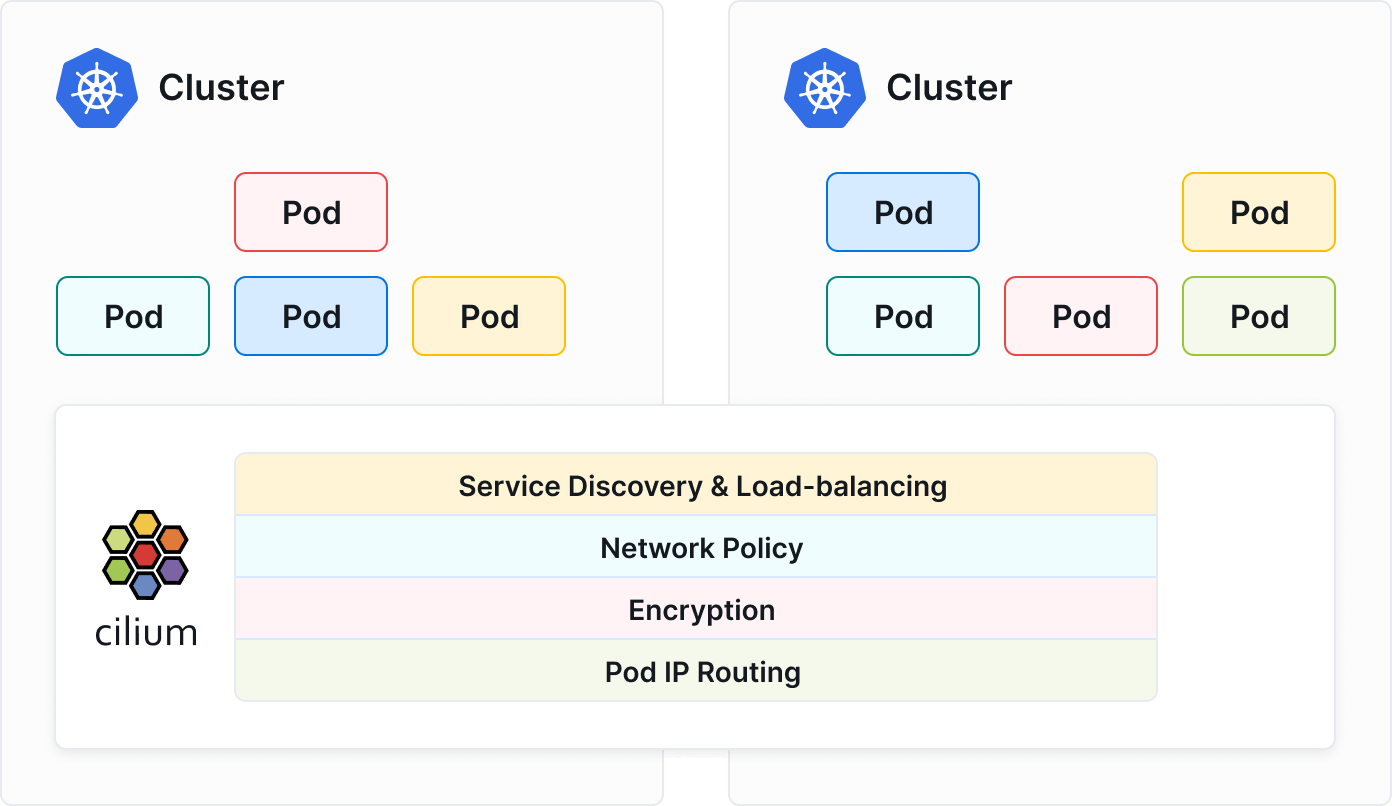
Unlike closed and opaque solutions, these open source tools allow operators to audit, extend, and improve them over time. And because they are built for open collaboration, platform teams can adopt them incrementally across containerized apps, virtual machines, and even Windows environments without fragmenting their policy model or duplicating enforcement logic.
The Open Networking Model Is Expanding
What is happening now is more than a tooling upgrade. It is a platform shift. Organizations are increasingly unifying their infrastructure around open and programmable networking layers. These teams are not just using eBPF and Cilium in Kubernetes. They are extending those capabilities to virtual machines, bare metal, and hybrid environments. They want one way to define, secure, and observe their networks regardless of where workloads run.
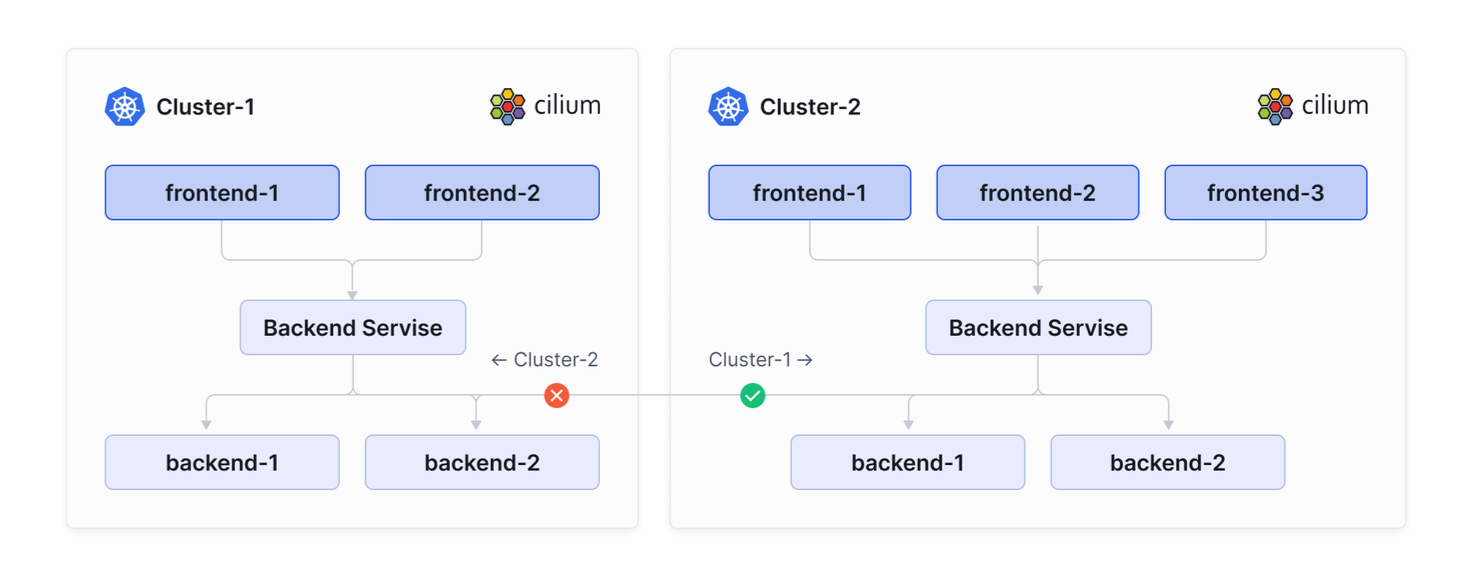
Just as developers no longer think twice about using Git, Docker, or Helm, infrastructure and security teams are beginning to treat eBPF and Cilium as foundational. The line between the network and the platform is blurring. Networking is no longer just cables and switches. It is an extension of code.
And that is driving real architectural change. Platform teams want fewer silos. Security teams want microsegmentation without hardware sprawl. Observability teams want access to real-time data without overhead.
Hubble, the observability layer of Cilium, provides real-time visibility into how containerized applications communicate across networks. Built on eBPF, it surfaces rich flow data directly from the Linux kernel without modifying applications or containers.
$ hubble observe -t policy-verdict
Mar 21 11:18:51.917: default/netshoot-client:34898 (ID:11661) -> default/nginx-deployment-979f5455f-bnxh7:80 (ID:5834) policy-verdict:L3-L4 INGRESS ALLOWED (TCP Flags: SYN)
Mar 21 12:12:27.525: default/netshoot-client-worker2:48768 (ID:11661) -> default/nginx-deployment-979f5455f-bnxh7:80 (ID:5834) policy-verdict:L3-L4 INGRESS ALLOWED (TCP Flags: SYN)
Mar 21 12:15:40.016: default/unauthorized-client:41212 (ID:8087) <> default/nginx-deployment-979f5455f-bnxh7:80 (ID:5834) policy-verdict:none INGRESS DENIED (TCP Flags: SYN)
The Open Era of Networking Has Arrived
Open source in networking is not a fringe movement. It is fast becoming the default approach for modern infrastructure. As enterprises modernize their platforms, they are no longer content with slow standards cycles or siloed systems. They want networking that is programmable, observable, and secure by design. This applies across Kubernetes, virtual machines, cloud environments, and data centers.
eBPF and Cilium have arrived at the right moment. They allow networking teams to meet the agility and security needs of today’s distributed applications without giving up performance or control. And as organizations expand their use of microsegmentation, runtime security, and service-aware networking, these open technologies are becoming central to the operating model of modern infrastructure.
The shift underway is more than technical. It is cultural. Developers expect infrastructure to be as dynamic and software-defined as their code. Platform teams need unified policy models that span containers and virtual machines. Security and observability must be built in, not bolted on.
Networking, long the most conservative layer of the stack, is now being reshaped by the same forces that transformed compute and application delivery. The open source era of networking is not a future vision. It is here and gaining momentum.
Opinions expressed by DZone contributors are their own.
Comments