

Designing Scalable Ingestion and Access Layers for Policy and Enforcement Data
Build a scalable, low-latency architecture for ingesting and accessing policy and enforcement data using Apache Spark and in-memory data grids.
Join the DZone community and get the full member experience.
Join For FreeIn trust and safety systems, the ability to access real-time signals — such as risk scores, policy flags, or enforcement states — is critical for preventing abuse and enabling secure, automated decision-making. These systems must ingest and expose high-volume data at low latency, often to serve machine learning models, rules engines, or enforcement workflows.
Traditional database systems often fail to meet the low-latency, high-throughput demands of these workloads. In response, platforms are increasingly combining Apache Spark for scalable data ingestion with in-memory data grids to support sub-second access to mission-critical data.
This article outlines the architecture and operational strategies for building such a system. We explore how to design a fault-tolerant ingestion pipeline using Spark, how to structure and partition enforcement-related data in a distributed grid, and how to deliver consistent, low-latency access for integrity-sensitive workflows — such as abuse prevention, account reviews, or policy evaluation services.
In my experience working on large-scale trust and safety systems, one of the biggest challenges isn’t just ingesting massive datasets — it’s ensuring that the right data is available at the right latency tier for different decision-making systems. In one implementation, we designed a system where enforcement signals, risk annotations, and policy decisions were ingested into a shared, in-memory layer that served both machine learning models and real-time gating logic. The architectural separation of ingestion from access was critical in ensuring both scalability and enforcement correctness.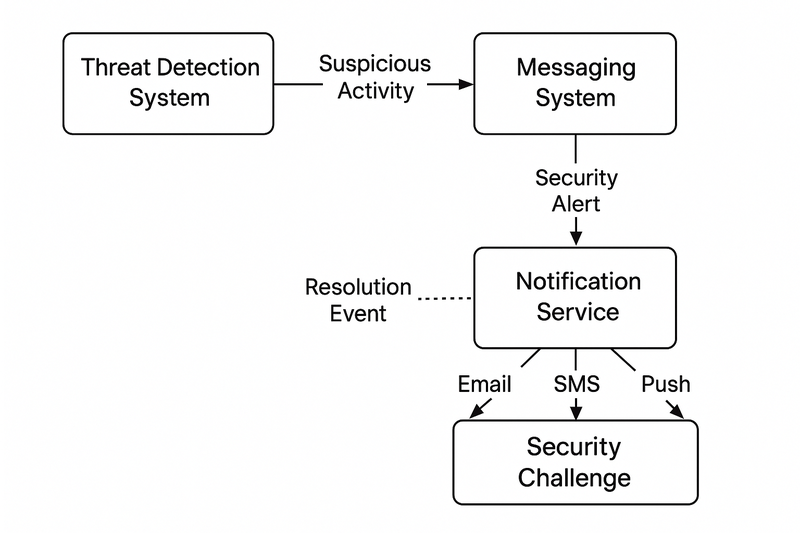
Architectural Overview
Through the experience gained from the past, it was found that a system with separate components for data ingestion and access made it possible to scale Spark jobs to a very large number of events without interrupting the availability of the data grid to downstream applications. On the other hand, decoupling was of great help in dealing with backfills that brought no negative impact on the queries' execution time.
The outlined blueprint generally includes a data source, Apache Spark ingestion jobs, an in-memory data grid for fast access, and consumer-facing applications.
[Data Source] -> [Apache Spark Jobs] -> [In-Memory Data Grid] -> [Consumer Applications]
Key Design Considerations
We added metadata tags to each record upon ingestion (e.g., ingestion timestamp, job version) to be able to track the data across the supply chain. This recording of the process enabled us to effectively find the source of errors in production and keep data governance intact in production environments.
One practical learning was to embed metadata directly into ingested records — including ingestion timestamps, detection source, and enforcement versioning. This not only helped with lineage tracking in post-incident analysis but also enabled consumer systems to apply time-bound policies more effectively.
One way to make the error recovery approach simple is to not integrate retry loops into Spark jobs. As an alternative, we used checkpointing and idempotent operations to ensure that the failure of one or more nodes would not impact the system greatly, and it could be made up and running after the restart of the job.
- Data modeling: Implement feature-efficient key-value models, build proper partitioning strategies, and serialize data in efficient and easy-to-access formats.
- Ingestion strategy: Deploy either batch or streaming jobs with parallel writes to the grid.
- Consistency and freshness: Ensure data accuracy by using TTLs, overwrites, or CDC patterns.
- Query optimization: Take advantage of the indexes, and pay attention to the amount of data pulled, using near caching for the rest.
- Fault tolerance: Ensure the maintainability of the system by means of Spark retries and data grid replication.
// Spark write to data grid
dataset.foreachPartition(partition -> {
	HazelcastInstance hz = HazelcastClient.newHazelcastClient();
    IMap<String, CustomObject> map = hz.getMap("data-map");
    partition.forEachRemaining(record -> map.put(record.getKey(), record));
   }
);
Operational Patterns
We discovered that cluster rebalancing during high-ingestion windows caused cascading latency issues across downstream systems. To mitigate this, we designed a throttling mechanism for rebalancing operations and time-shifted bulk jobs to lower-traffic periods. Additionally, tracking ingestion freshness at a per-entity level allowed us to alert on partial ingestion issues before they affected decision logic.
To address the challenges of frequently accessed data freshness and keys, we implemented a lightweight invalidation and pre-warming mechanism that recognizes access patterns. The activity of the hot data was kept up without constant re-ingestion due to the proposed solution.
- Monitoring: Data ingestion lag, RAM consumption, and query execution timing are the items to look at over dashboards to find out the health of the service.
- Scaling: It is directed to adjust the number of Spark executors and data grid nodes in response to the growth of the load.
- Caching and TTL: The time to live, churning out of the cache, and write-behind when needed must be infused with the place on the data side.
- Failure Recovery: Have it confirmed that Spark checkpoints and grid backup copies are put into operation.
- Deployment: What you need to emphasize is the side of automation with Kubernetes and test the failure scenarios as part of the simulation process.
Best Practices and Lessons Learned
- Always keep your data model simple, and the operations with access patterns should be well matched.
- Ensure that Spark ingestion is optimized by using partition-aware writes.
- Always choose the logic of overwrite, merge, or upsert beforehand.
- Make sure that the monitoring is detailed enough so you are not kept in the dark about the failures.
- Be prepared for resuming-capable recovery rather than restarting.
- Stay clear of the zones where the ingestion, storage, and access logic take place.
- Perhaps the most important takeaway is that trust and safety workflows don’t just need fast data — they need reliable, explainable, and scoped data. Building a pipeline that enforces schema contracts, supports
- TTL-based purging and targeted reprocessing enabled our teams to respond to abuse scenarios faster and with more confidence.
Conclusion
The combined use of Apache Spark and in-memory data grids permits achieving a fault-tolerant and highly scalable ingestion and access architecture.
Isolating the process of data ingestion from the process of data serving and making the right data modeling, retry, and scalability choices makes it possible for developers to create high-speed, fault-tolerant, and resource-efficient systems. Such practices can be commonly used in a wide range of modern distributed systems, which require the ability to quickly transfer and distribute data.
Opinions expressed by DZone contributors are their own.
Comments