

Frontier Agents: The Next Evolution of AI Applications
Learn how autonomous AI agents are evolving from reactive execution to self-aware, multi-agent systems with real-time evaluation and adaptive learning.
 ·
·
 ·
·
Join the DZone community and get the full member experience.
Join For FreeThe autonomous AI agent landscape is evolving rapidly. From Geoffrey Huntley's Ralph Wiggum loops enabling Claude Code to run for hours without intervention, to Steve Yegge's Beads and Gas Town pioneering multi-agent "factory farming" of code, to Block's Goose providing extensible local agents with graduated safety controls, the industry is converging on a set of patterns for building truly autonomous systems.
Today's AI agents can reason, plan, and execute. What they can't do is watch themselves work. They don't notice when their tools have changed, when their knowledge has gaps, or when they've drifted from the goal. The next generation of autonomous systems closes this awareness gap, and that shift is already underway.
This article examines an architectural direction for frontier agents emerging from the convergence of several proven and upcoming patterns:
- Ralph Wiggum loops – Iterative execution with context rotation and guardrails
- Beads and Gas Town – Structured work tracking and multi-agent swarm coordination
- Block's Goose – MCP-based extensibility, error-as-response patterns, and permission spectrums
- Production learnings – Real-world deployments revealing what works at scale
These systems are evolving beyond execution and coordination toward something more fundamental: self-awareness. The ability to know what capabilities exist, recognize what's missing, detect what's changed, and assess whether progress toward the goal is real or illusory. This is the trajectory to the next level of autonomy, and it's already happening.
TL;DR: Current agents execute but can't observe themselves. We examine how patterns from Ralph Wiggum, Beads/Gas Town, and Goose are evolving toward self-aware architectures and what builders need to focus on to reach the next level: autonomous agents.
The Current State of Autonomous Agents
Autonomous Agents Are Already Here
The shift from reactive AI to autonomous agents is no longer theoretical. According to Berkeley's California Management Review, the "agentic enterprise" represents an organizational model leveraging autonomous, intelligent agents to handle tasks with minimal human intervention. These agents operate through cycles of thinking, planning, acting, and reflecting. These systems exhibit "autonomy, goal-directed behavior, and the ability to act independently." Unlike generative AI that produces outputs based on prompts, agentic systems proactively plan, reason, and adapt to accomplish specific goals.
The Ralph Wiggum Revolution
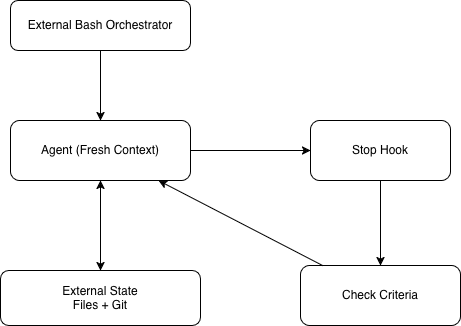
Perhaps no development has done more to prove the viability of autonomous coding agents than the Ralph Wiggum loop, named after the Simpsons character to represent persistent, stubborn determination. Pioneered by Geoffrey Huntley, the technique is elegantly simple: "Ralph is a Bash loop" — a while loop that feeds prompts to Claude repeatedly until completion criteria are met.
Ralph Wiggum gets context management right by forcing every iteration to start fresh, eliminating cumulative reasoning decay while persisting progress externally. It also cleanly separates reasoning from orchestration, using deterministic scripts and files as the source of truth rather than trusting the agent’s memory.
Beads and Gas Town: The Colony Approach
Steve Yegge discovered a fundamental problem with single-agent systems. After building an orchestrator that tracked work in markdown files, he ended up with hundreds of decaying plans and agents that forgot what they were supposed to do next. He calls this the "dementia problem", agents that declare projects complete when they've only finished half the work. The root cause? Agents were writing notes that they could never effectively read back. A markdown file saying "TODO: fix auth (blocked on ticket 3)" requires human interpretation. The agent can't easily ask: "What can I work on right now?"
Beads solves this by replacing prose notes with a structured database. Instead of reading through scattered TODOs, an agent can simply query for all unblocked tasks and get a definitive answer. Dependencies between tasks become explicit relationships, not sentences that a human has to parse. The agent always knows what's done, what's blocked, and what's ready to work on.
Gas Town takes this further with a philosophical shift, articulated by Yegge's colleague Brendan Hopper: "When work needs to be done, nature prefers colonies. Claude Code is 'the world's biggest ant.' Everyone is focused on making their ant run longer... But colonies are going to win. Factories are going to win." Gas Town runs many short-lived agents in parallel, all pulling from the same Beads database. By killing agents after small tasks instead of letting them run until they forget, it avoids context decay entirely. The result: better decisions, lower costs, and work that actually gets finished.
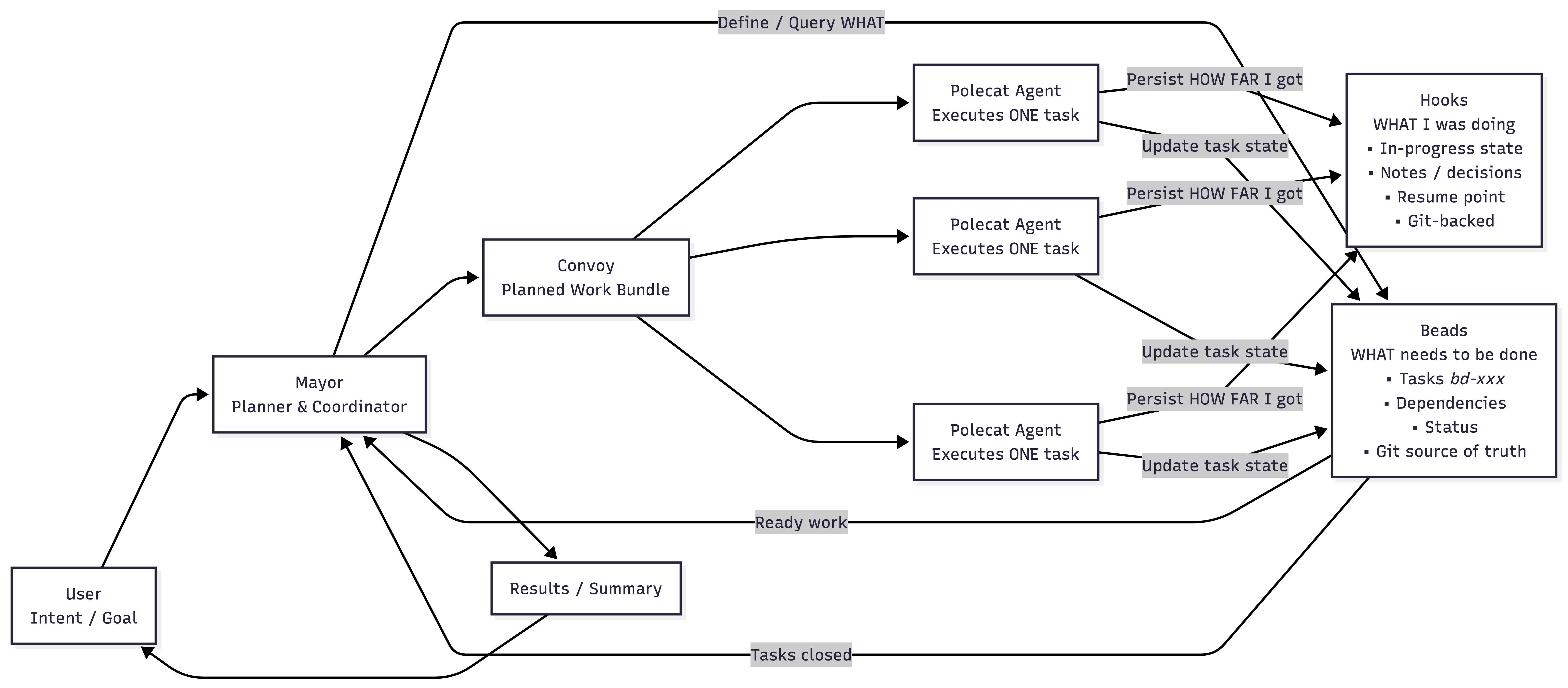
Figure 2: Beads and Gas Town multi-agent queryable orchestration
Block's Goose: The Extensible Local Agent
Goose is Block’s local AI agent for automating engineering tasks. It runs a compact interactive loop where the LLM plans, executes tool calls, observes results, and iterates until the task completes. Errors are returned to the LLM for self-correction, short context windows are favored, and shared MCP-based extensions provide tools, UI, and persistent memory. Goose supports graduated permissions from autonomous execution to chat-only mode and uses the Ralph Wiggum loop, fresh context per iteration with external state persistence, for reliable, iterative task execution.
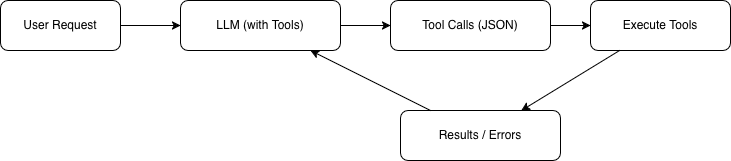
Figure 3: Block's Goose architecture using errors as feedback
Key Insights From the Current Architecture
The Ralph Wiggum pattern, Beads, Gas Town, Goose, and related approaches have proven several key insights:
| Pattern / Principle | General Meaning | Implementation Examples | Maturity |
|---|---|---|---|
| Iterative Refinement with Error Correction | Complex tasks require repeated attempts with accumulated feedback. Errors are returned to agents for self-correction rather than halting execution. | Ralph Wiggum: Bash loop with persistence Goose: Iterative tool calls with error-as-feedback |
Established |
| Persistent, Queryable State Management | External storage (files, databases, git) preserves state beyond transient context windows. Structured data formats enable querying and coordination. | Ralph: File-based persistence with git checkpoints Beads: JSONL database for structured work items Gas Town: Shared state via Beads |
Established |
| External, Machine-Verifiable Success Criteria | Explicit validation (tests pass, builds succeed, status checks) is more reliable than agent self-assessment. | Ralph: Evaluates against success signals Goose: Explicit criteria checks |
Established |
| Context Window Management | Managing context accumulation through fresh starts or selective context injection to avoid token limits. | Ralph: Fresh context per iteration, summaries stored in files General: Context pruning |
Established |
| Multi-Agent Role-Based Coordination | Multiple agents work concurrently or sequentially with defined roles, outperforming single-agent approaches through parallelism and specialization. | Gas Town: Specialized agents coordinated via Beads General: Parallel execution, sequential handoff |
Emerging |
| Context Sharing & Propagation | Sharing relevant context (plans, state, decisions) across agents or sessions to prevent redundant work and align toward goals. | Beads: Queryable database Ralph: Coordinated checkpoints Goose: Shared context across tools |
Established |
| Standardized Tool & Data Protocols | Protocols enabling agents and tools to interoperate across frameworks, reducing integration friction and enabling ecosystem growth. | MCP: Adopted by Anthropic, OpenAI, DeepMind; complements frameworks like LangChain | Industry Standard |
| Framework-Specific Extensibility | Custom extension mechanisms optimized for particular frameworks or architectures. | Ralph/Anthropic: Skills-based Goose: Custom tooling Beads/Gas Town: Framework-native extensions |
Emerging |
| Human-in-the-Loop at Decision Boundaries | Humans intervene at critical points (approvals, reviews, corrections) rather than constantly, balancing autonomy with safety. | Ralph: Manual/mixed permission modes Goose: Graduated approvals General: Review cycles |
Established |
| Graduated Safety & Permission Modes | Multiple runtime safety levels with dynamic switching, offering finer-grained control than simple binary approval. | Goose: Runtime-switchable modes Enterprise systems: Role-based, tiered permissions |
Emerging |
These frameworks have shown significant progress toward autonomous systems. Agents can now persist across sessions, coordinate in parallel, and self-correct through errors. But true self-direction requires more than execution and coordination. The question now is: what does it take to mature here and move beyond?
Agentic AI Maturity Levels
The progression of AI agents follows a 5-level framework, from basic tools to fully autonomous organizations
- Level 1: Basic tools – Simple, stateless functions like APIs, lacking reasoning or memory.
- Level 2: Standard agents – Integrate models with tools for multi-step tasks, but limited by fixed plans.
- Level 3: Frontier agents – Incorporate memory, evaluation, and self-evolution to identify gaps and dynamically create tools or agents.
- Level 4: Innovators – Achieve creative invention beyond human baselines, with proactive self-improvement.
- Level 5: Organizations – Form autonomous ecosystems scaling like companies, with minimal oversight.
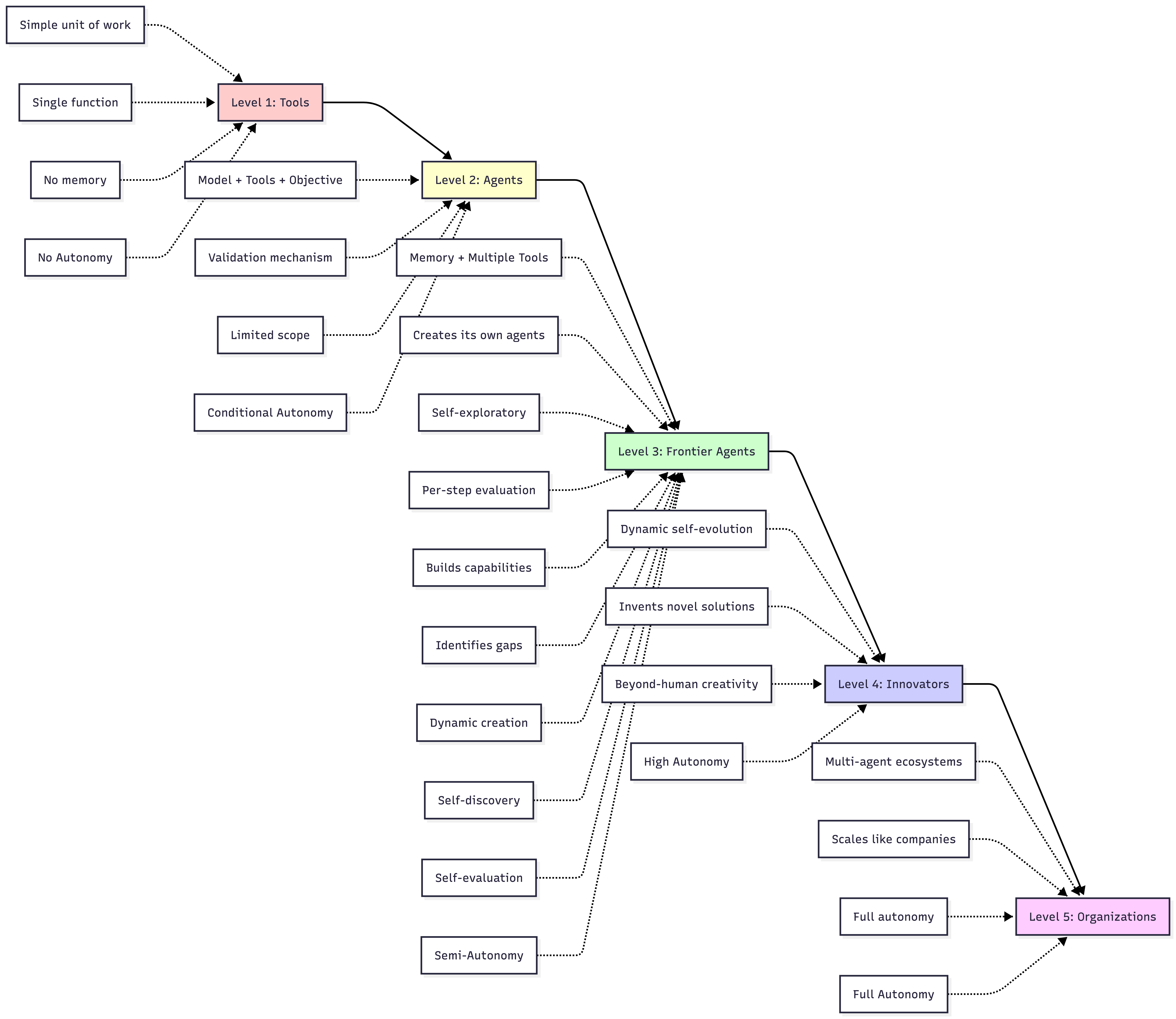
Figure 4: 5 levels of AI Agents Maturity Model
Where Do Current Patterns Fit?
Ralph Wiggum and Goose established Level 3 foundations — persistent execution, self-correction, and external state. Beads and Gas Town push toward mature Level 3 and early Level 4, multi-agent coordination with shared awareness. Though they still require human orchestration at the colony level.
From Partial Autonomy to Fully Autonomous Frontier Systems
Current agentic architectures are increasingly operating at Level 3 autonomy, but it remains fragile. They are capable of executing complex, multi-step tasks with adaptive reasoning, coordinating tools and sub-agents, and adjusting plans based on intermediate outcomes. In many cases, these systems already demonstrate contextual awareness and limited self-correction, while still relying on user approvals for high-impact actions, bounded execution scopes, and periodic human oversight to prevent failure modes such as runaway loops, context drift, or destructive coordination.
However, progressing from partial autonomy to fully autonomous operation characterized by reduced human intervention, independent operation in complex environments, minimal oversight, and resilience under ambiguity requires architectural evolution beyond today’s execution- and loop-centric designs. The trajectory toward this next level is already visible through a set of emerging capabilities that collectively shift agents from reactive task execution toward continuous self-regulation and self-improvement. 2026 stands out as a turning point for these architectures, with rapid advancements in multi-agent collaboration and iterative refinement techniques driving greater autonomy, though challenges such as ethical governance, resource optimization, and integration hurdles persist.
Emerging Capabilities Driving the Transition to Full Autonomy
1. Real-Time Environment Awareness
Agent systems are increasingly moving toward continuous awareness of their operational environment. Rather than working against static context, the agents are now able to perceive their entire environment, including its current progress and state, evolving memory, and evolving tools and capabilities during execution. This reduces duplicated work, coordination conflicts, and context loss in multi-agent settings, while improving continuity across long-running or interrupted tasks.
2. Continuous Evaluation During Execution
Instead of evaluating success only at loop boundaries or task completion, architectures are evolving toward ongoing assessment during execution. Progress, assumptions, and intermediate outputs are monitored in real time, allowing early detection of unproductive paths, misalignment, or compounding errors. Agents are increasingly capable of reassessing their own state during execution at checkpoints. This shift directly reduces overbaking, token waste, and cascading failures.
3. Dynamic Capability Expansion
Where earlier systems rely on fixed toolsets, newer approaches increasingly enable agents to recognize capability gaps at runtime. This includes synthesizing new tools, spawning specialized sub-agents, or restructuring workflows on the fly. Capability expansion becomes an operational behavior rather than a design-time constraint, enabling adaptation to novel or unforeseen tasks.
4. Self-Evolving Knowledge Accumulation
While semantic, episodic, procedural, and summary memories are becoming the norm, architectures are beginning to integrate memory and learning more deeply into execution. Knowledge is no longer static but gets updated in real time through real task outcomes, including failures, rejected approaches, and edge cases. Learning becomes embedded in operation, not confined to post-task analysis. This enables agents to refine judgment under ambiguity and reduces the propagation of incorrect assumptions across runs.
5. Intrinsic Safety and Bounded Autonomy
As autonomy increases, safety mechanisms are shifting inward. Loop detection, guardrails, negative knowledge tracking, and recovery mechanisms are increasingly treated as first-class system components. This allows agents to explore and adapt while remaining bounded, reducing the need for constant human supervision.
6. Improved Multi-Agent Coordination
Multi-agent systems are evolving toward shared state awareness, clearer task ownership, and proactive conflict detection. This reduces coordination chaos such as accidental overwrites, interference, or deletion of valid work, enabling agents to scale collaboratively rather than competitively.
Collectively, these emerging capabilities mark a transition away from reactive iteration loops toward proactive self-regulation. Agents increasingly detect when assumptions are wrong, identify missing capabilities, restructure plans, and improve future behavior based on lived experience rather than static prompts.
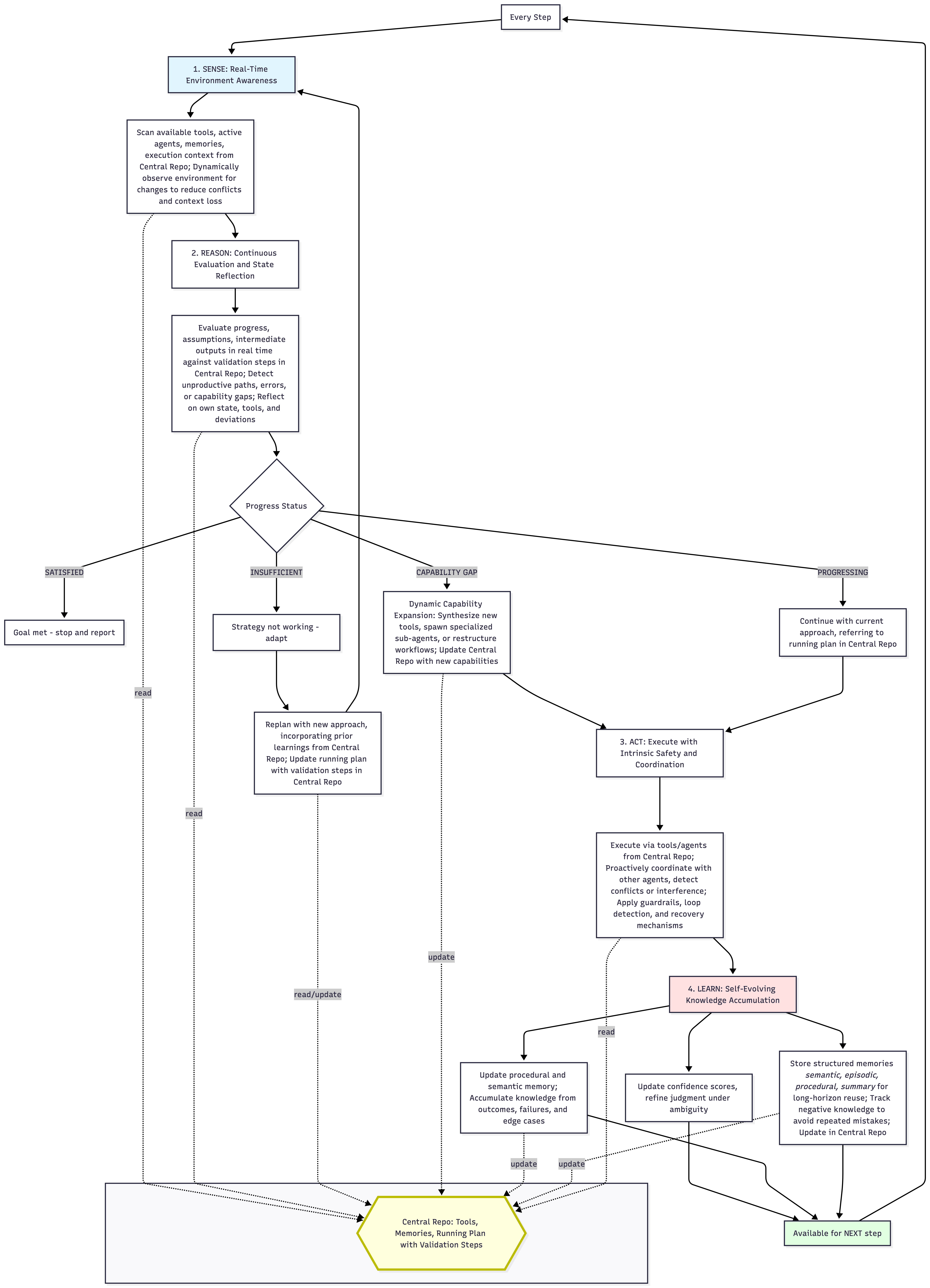
Figure 5: Emerging architecture (Self-Evolving) for Frontier agents
Summary
Ralph Wiggum, Beads/Gas Town, and Goose proved three core principles: persistence beats memory, colonies beat individuals, and extensibility beats completeness. From these, ten architectural patterns have emerged as foundations for Level 3 autonomy. But Level 3 remains fragile. Agents react to errors rather than anticipate them. They can't see when their tools have changed, their knowledge has gaps, or their progress has stalled. True self-direction requires closing this awareness gap.
Six emerging capabilities will help Frontier Agents mature Level 3 and open the path to Level 4:
| Capability | What It Solves | Level Impact |
|---|---|---|
| Real-Time Environment Awareness | Context drift, duplicated work | Matures L3 |
| Continuous Evaluation | Overbaking, cascading failures | Matures L3 |
| Dynamic Capability Expansion | Fixed toolset limitations | Enables L4 |
| Self-Evolving Knowledge | Repeated mistakes across runs | Enables L4 |
| Intrinsic Safety | Constant human supervision needs | Matures L3 |
| Improved Multi-Agent Coordination | Interference, accidental overwrites | Enables L4 |
The next step isn't longer loops or more agents, it's architectures that treat awareness, evaluation, and evolution as first-class capabilities. Systems that don't just execute, but perceive. Don't just correct, but anticipate. Don't just remember, but learn. This is the path from partial autonomy to genuine self-direction.
Opinions expressed by DZone contributors are their own.
Comments