

Introduction to Git Flow
Git Flow is an abstract idea of a Git workflow. It is an ideal workflow for release-based software and to maintain multiple versions in production.
Join the DZone community and get the full member experience.
Join For FreeOverview
Git Flow is an abstract idea of a Git workflow. It helps with continuous software development and implementing DevOps practices. The Git Flow Workflow defines a strict branching model designed around the project release. This provides a robust framework for managing larger projects.
Git Flow is ideally suited for projects that have a scheduled release cycle and for the DevOps best practice of continuous delivery. It assigns very specific roles to different branches and defines how and when they should interact. It uses individual branches for preparing, maintaining, and recording releases.
Working of Git Flow
1. Develop and Master Branches
Instead of a single master branch, Git Flow uses two branches to record the history of the project. It is based on two main branches with infinite lifetime namely master and develop.
- Master Branch: The master branch contains the production code and stores the official release history.
- Develop Branch: The develop branch contains pre-production code and serves as an integration branch for features.
Master and develop branch workflow is demonstrated in the given diagram:
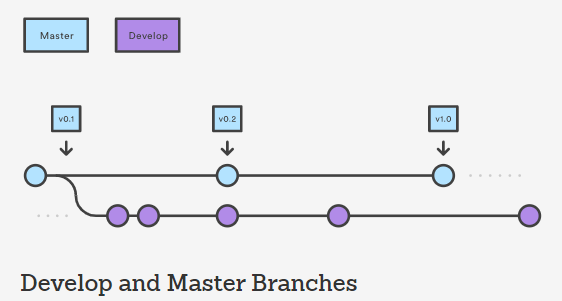
It’s also convenient to tag all commits in the master branch with a version number.
Assuming we have a repo set up with a master branch. The first step is to complement the default master with a develop branch. A simple way to do this is for one developer to create an empty develop branch locally and push it to the server. This branch will contain the complete history of the project. Other developers should now clone the central repository and create a tracking branch for develop.
1.1. Creating a Develop Branch
- Without the git-flow extensions:
git branch developgit push -u origin develop
- When using the git-flow extensions:
git flow init
When using the git-flow extension library, executing git flow init on an existing repo will create the develop branch.
2. Feature Branch
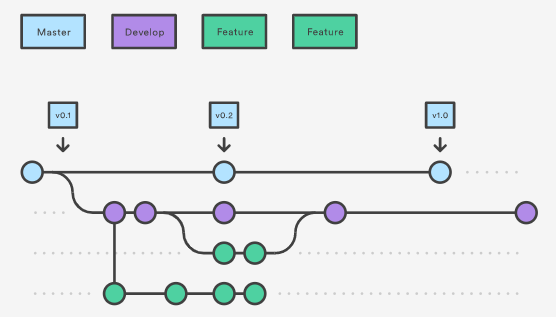
Each new feature should reside in its branch, which can be pushed to the central repository for backup/collaboration. Feature branches use the latest develop as their parent branch. When a feature is complete, it gets merged back into develop. Features should never interact directly with the master branch.
Feature branch workflow is demonstrated in the given diagram:
2.1. Creating a Feature Branch
- Without git-flow extensions:
git checkout developgit checkout -b feature_branch
- With git-flow extensions:
git flow feature start feature_branch
2.2. Finishing a Feature Branch
- Without git-flow extensions:
git checkout developgit merge feature_branch
- With git-flow extensions:
git flow feature finish feature_branch
3. Release Branch
Once develop has acquired enough features for a release (or a predetermined release date is approaching), we fork a release branch off of develop. Creating this branch starts the next release cycle, so no new features can be added after this point—only bug fixes, documentation generation, and other release-oriented tasks should go in this branch. Release branch may branch off from develop and must merge into both master and develop.
Release branch workflow is demonstrated in the given diagram:
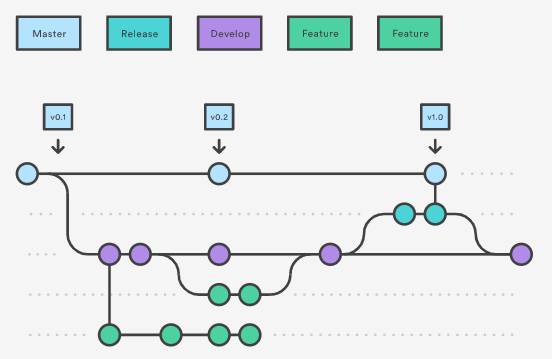
Once the release branch is ready to ship, it gets merged into master and tagged with a version number. In addition, it should be merged back into develop because critical updates may have been added to the release branch and they need to be accessible to new features. So, once the release is ready to ship, it will get merged into master and develop, then the release branch will be deleted.
Using a dedicated branch to prepare releases makes it possible for one team to polish the current release while another team continues working on features for the next release.
3.1. Creating a Release Branch
- Without the git-flow extensions:
git checkout developgit checkout -b release/0.1.0
- When using the git-flow extensions:
git flow release start 0.1.0Switched to a new branch 'release/0.1.0'
3.2. Finishing a Release Branch
- Without git-flow extensions:
git checkout mastergit merge release/0.1.0
- With git-flow extensions:
git flow release finish 0.1.0
4. Hotfix Branch
Maintenance or “hotfix” branches are used to quickly patch production releases. Hotfix branches are necessary to act immediately upon an undesired status of master. Hotfix branches are a lot like release branches and feature branches except they’re based on master instead of develop. This is the only branch that should fork directly off of master. As soon as the fix is complete, it should be merged into both master and develop (or the current release branch), and the master branch should be tagged with an updated version number.
Hotfix branch workflow is demonstrated in the given diagram:
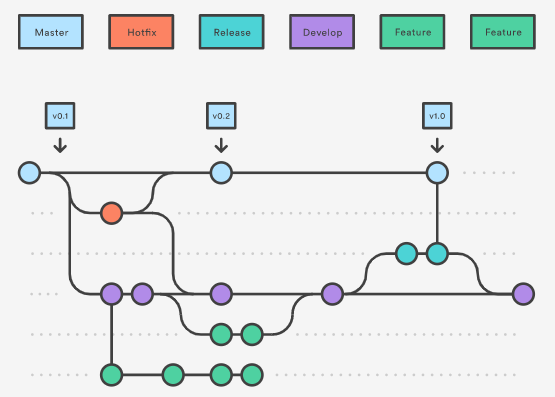
Having a dedicated line of development for bug fixes lets your team address issues without interrupting the rest of the workflow or waiting for the next release cycle.
4.1. Creating a Hotfix Branch
- Without git-flow extensions:
git checkout mastergit checkout -b hotfix_branch
- With git-flow extensions:
git flow hotfix start hotfix_branch
4.2. Finishing a Hotfix Branch
- Without git-flow extensions:
git checkout mastergit merge hotfix_branchgit checkout developgit merge hotfix_branch
- With git-flow extensions:
git branch -D hotfix_branchgit flow hotfix finish hotfix_branch
Advantages of Git Flow
Now let’s talk summarize the major advantages provided by Git flow:
- Ensures a clean state of branches at any given moment in the life cycle of a project
- The naming convention of branches follows a systematic pattern making it easier to comprehend
- Has extensions and support on most used git tools
- Ideal in case of maintaining multiple versions in production
- Great for a release-based software workflow.
- Offers a dedicated channel for hotfixes to production.
Disadvantages of Git Flow
Well nothing is ideal, so Git Flow holds some disadvantage as well like:
- Git history becomes unreadable
- The master/develop branch split is considered redundant and makes the Continuous Delivery/Integration harder
- Not recommended in case of maintaining a single version in production
Summary
Here we discussed the Git Flow Workflow. Git Flow is one of the many styles of Git workflows you and your team can utilize. Let’s summarize the whole workflow of Git Flow:
- A develop branch is created from master
- Feature branches are created from develop
- When a feature is complete it is merged into the develop branch
- A release branch is created from develop
- When the release branch is done it is merged into develop and master
- If an issue in the master is detected a hotfix branch is created from master
- Once the hotfix is complete it is merged to both develop and master
Published at DZone with permission of Mansi Babbar. See the original article here.
Opinions expressed by DZone contributors are their own.
Comments