

Why Small Language Models Are Transforming AI Adoption for Everyone
Small language models (SLMs) enable faster, efficient, and on-device AI, reducing costs while making advanced AI accessible to more users and businesses.
Join the DZone community and get the full member experience.
Join For FreeYou’ve probably seen it yourself over the last couple of years: whenever people talk about artificial intelligence (AI), the spotlight almost always lands on large language models (LLMs). Tools like ChatGPT, Claude, and Gemini have practically become the poster children for modern AI — and it’s not hard to understand why.
These systems have been remarkable in pushing natural language processing forward, and they continue to capture headlines and imagination across industries, including IT and software, marketing, manufacturing, and e-commerce.
At the same time, you may have also felt the reality: they’re expensive to train, complex to maintain, and difficult for most organizations to bring into day-to-day work. Interestingly, a quiet shift is starting to take hold.
The 2025 AI Index Report from Stanford highlights the cost of querying an AI model that scores the equivalent of GPT-3.5 (64.8) on MMLU dropped from $20.00 per million tokens in November 2022 to just $0.07 per million tokens by October 2024.
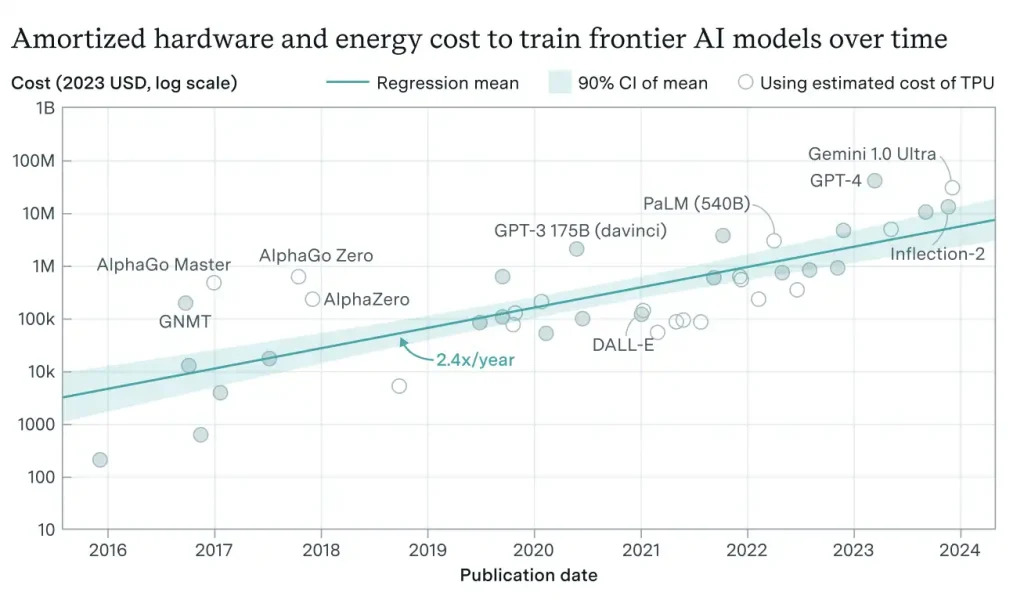
Source: Hai AI Index Report AWS
That’s a 280-fold reduction in approximately 18 months!
Efficiency is as important as accuracy and raw power. That’s where small language models (SLMs) enter the picture. They’re leaner, faster to adapt, and easier to fit into real testing, automation, and product development environments.
In this blog post, you’ll learn why large models carry serious limitations, what sets SLMs apart, where they’re being applied in practice, and where tools like CoTester sit in this landscape.
The Limitations of Large Language Models in Real-World Use
1. Performance Issues
LLMs by design aren’t built for speed. Latency becomes noticeable in automation pipelines, testing environments, and customer-facing apps where milliseconds matter.
2. Complicated Deployment
LLMs aren’t plug-and-play. They’re generalists that demand layers of fine-tuning, retrieval, monitoring, and guardrails to work reliably in domain-specific contexts. That adds engineering overhead and maintenance debt, slowing adoption.
3. Data Privacy and Compliance Risks
Sending sensitive data to external LLMs creates challenges around governance and regulation. For industries like banks, healthcare providers, and telcos, that’s a non-starter without strict controls and on-premise alternatives.
4. Energy and Sustainability Concerns
Did you know a single ChatGPT query consumes 6–10x more energy than a Google search?
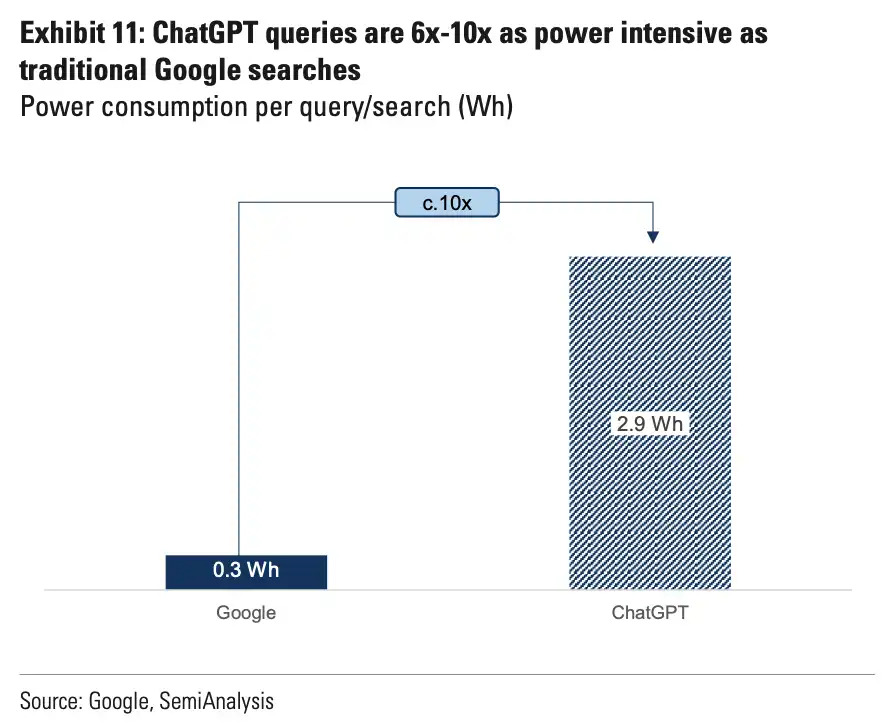
Source: goldmansachs.com
On top of that, Goldman Sachs reports data centers are expected to more than double their share of US electricity use, from about 3% today to 8% by 2030. That translates into roughly a 160% increase in power demand (base case) in just seven years.
Enterprises under pressure to meet Environmental, Social, and Governance (ESG) goals can’t ignore the energy footprint of large models.
What Makes Small Language Models Different
1. Lightweight by Design
Because of their smaller size, SLMs can run on hardware you already have. Some are designed to work on laptops or even mobile phones. Microsoft’s Phi-3 Mini, a 3.8 billion parameter model, can run locally on an iPhone 14 and process more than 12 tokens per second completely offline. That puts real AI capability into devices people use daily.
2. Proven Performance
Compact doesn’t mean underpowered. Phi-3 Mini scores 69% on the MMLU benchmark and 8.38 on MT-Bench, rivaling models that are many times larger, including GPT-3.5 and Mixtral. Other examples, such as Apple’s OpenELM and TinyLlama, show that SLMs are becoming competitive with far larger systems in reasoning and accuracy when trained for specific tasks.
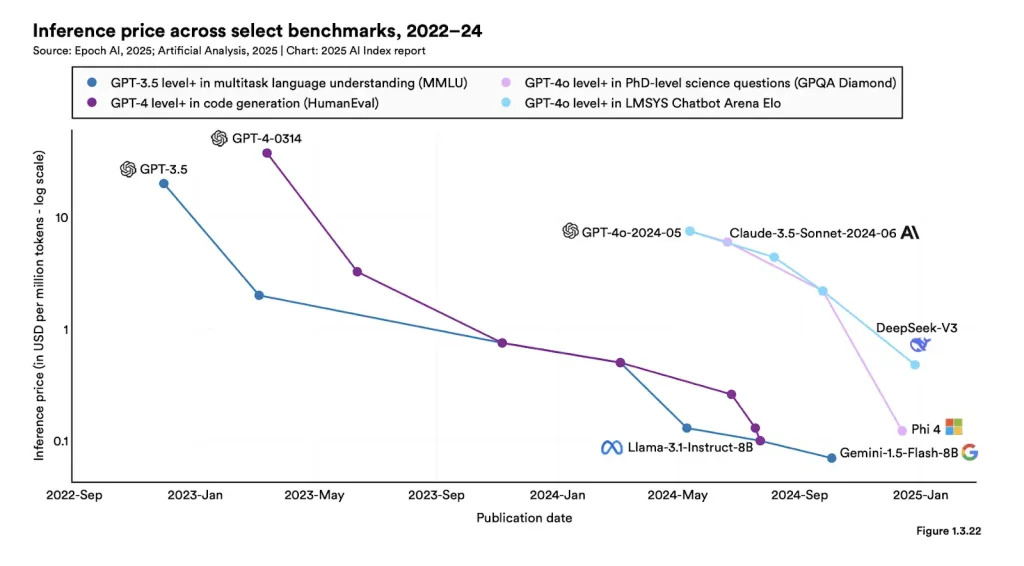
Source: Hai AI Index Report AWS
3. Lower Footprint
Smaller models require less memory, power, and cooling. That reduces cost, extends hardware life, and shrinks the overall environmental impact of running AI systems. Offloading even part of the workload to SLMs can have measurable benefits.
4. Adaptability
SLMs can be fine-tuned quickly with project or domain-specific data. That flexibility makes them easier to align with the real work your team is doing, without the high costs or long lead times associated with LLMs.
Practical Applications of SLMs Across Roles
1. Product Decision-Making
Product owners frequently juggle feedback from customers, stakeholders, and backlogs. Sorting through this volume of information is time-consuming, and LLMs tend to produce generic summaries.
An SLM trained on domain-specific product data can highlight patterns that are most relevant to that product: recurring complaints, priority requests, or unaddressed dependencies.
2. Regression Testing at Scale
In many QA teams, regression testing consumes entire sprints. Testers manually recreate test steps across dozens of modules, while automation engineers maintain test scripts that are often fragile and break when the UI changes.
An SLM trained on a team’s existing test assets can automatically generate the bulk of a regression suite. Instead of spending a week building and updating scripts, the team can validate coverage in hours and focus on exploratory scenarios where human insight is vital.
3. CI/CD Automation Support
For SDETs and automation engineers, building CI/CD pipelines often breaks not because of code quality but because of brittle test scripts.
An SLM embedded in the pipeline can detect patterns of failure, suggest script corrections, and auto-generate new test snippets whenever a new module is added.
Unlike an LLM, which requires cloud calls and larger infrastructure, the smaller model can run within the pipeline itself, providing feedback in real time without delaying delivery.
4. Processing Structured But High-Volume Data
Imagine a mid-sized accounting firm handling over 10,000 invoices every month, each with slightly different formats. Manually extracting data and cross-checking it against purchase orders is not only tedious but also prone to mistakes.
Sure, a large language model (LLM) could handle this, but doing so would mean constant calls to a costly API, and sensitive financial data leaving the organization could raise compliance concerns.
Now, consider a specialized language model (SLM) trained specifically on invoice formats. It can run locally, extract line items, validate totals, and integrate directly with ERP systems. Over time, the model gets more accurate as it processes more invoices, all while keeping costs predictable and low.
Published at DZone with permission of Sanjaykumar Ghinaiya. See the original article here.
Opinions expressed by DZone contributors are their own.
Comments