

A Pulse on Generative AI Today: Navigating the Landscape of Innovation and Challenges
This article explores GenAI's rapid evolution, highlighting key breakthroughs, industry applications, and emerging trends.
 CORE
·
CORE
·
Join the DZone community and get the full member experience.
Join For FreeEditor's Note: The following is an article written for and published in DZone's 2025 Trend Report, Generative AI: The Democratization of Intelligent Systems.
Generative AI (GenAI) has become a transformative force, redefining how machines generate, retrieve, and process information across industries. This article explores its rapid evolution, highlighting key breakthroughs, industry applications, and emerging trends. From the rise of large language models (LLMs) and retrieval-augmented generation (RAG) to the growing role of agentic AI, the analysis delves into innovations driving AI's transformation and the challenges shaping its responsible adoption. Early breakthroughs like GPT-3 and DALL-E paved the way for GPT-4o, Claude 3.5, and Gemini Ultra, enabling real-time memory-augmented reasoning and cross-modal capabilities. Figure 1 shares the key developments across the timeline.
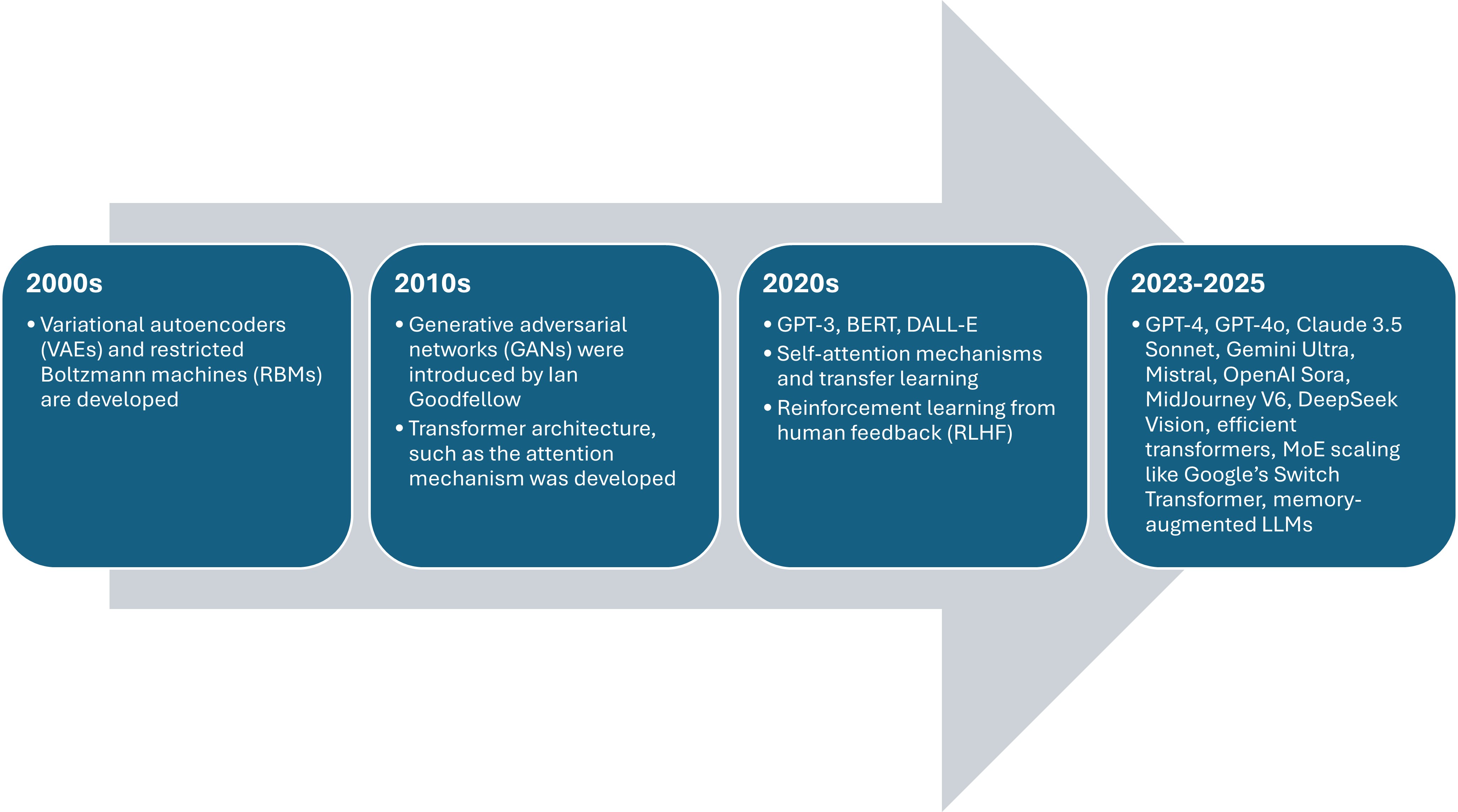
Figure 1: The evolution of generative AI
Advancements in Model Architectures and Efficiency
As demand for scalable, cost-efficient, and explainable AI increases, model architectures have evolved to address challenges in speed, interpretability, and computational efficiency. Table 1 summarizes the key advancements:
| Trend | Description |
|---|---|
| Scaling LLMs efficiently |
|
| The rise of multimodal models |
|
| Latency and cost optimization in AI deployments |
|
Table 1. Key trends in GenAI development and deployment
Latest Developments in Generative AI (Early 2025)
Generative AI continues to advance at an unprecedented pace, with the latest breakthroughs in LLMs, RAG, and multimodal AI pushing the boundaries of efficiency, accuracy, and real-world applicability. In early 2025, significant advancements have been made in GenAI tooling, particularly in LLMs and multimodal AI.
- Advancements in LLMs include:
- OpenAI o1 — designed to enhance reasoning capabilities beyond traditional prediction-based models, improving performance in complex tasks like coding, mathematics, and scientific problem solving
- Google Gemini 2.0 — focused on autonomous agents capable of multi-step problem solving, featuring "Deep Research" for efficient information gathering and enhanced AI overviews for multimodal query handling
- Amazon Nova — comprises models like Nova Micro, Nova Lite, and Nova Pro, each tailored for specific applications ranging from cost-effective text processing to advanced multimodal tasks
- As for multimodal AI, recent advancements include:
- DeepSeek Janus Pro — a multimodal AI model with an image generator reportedly surpassing OpenAI's DALL-E 3 in multiple benchmarks
- Meta Llama 3.2 —features multimodal capabilities that process both text and visual data simultaneously, marking a significant leap in AI's ability to comprehend complex, context-aware prompts
These developments collectively contribute to more intelligent, context-aware, and versatile AI systems, poised to transform various industry sectors.
The Emergence of Agentic AI
Agentic AI is redefining how AI systems operate — moving from passive assistants to autonomous decision makers. By integrating real-time retrieval, multi-step reasoning, and goal-driven execution, AI agents are now capable of self-directed actions, dynamic problem solving, and workflow automation across industries. The agentic AI workflow, shared in Figure 2, follows a structured progression, where AI agents continuously interact, learn, and optimize tasks through a dynamic, goal-driven process.
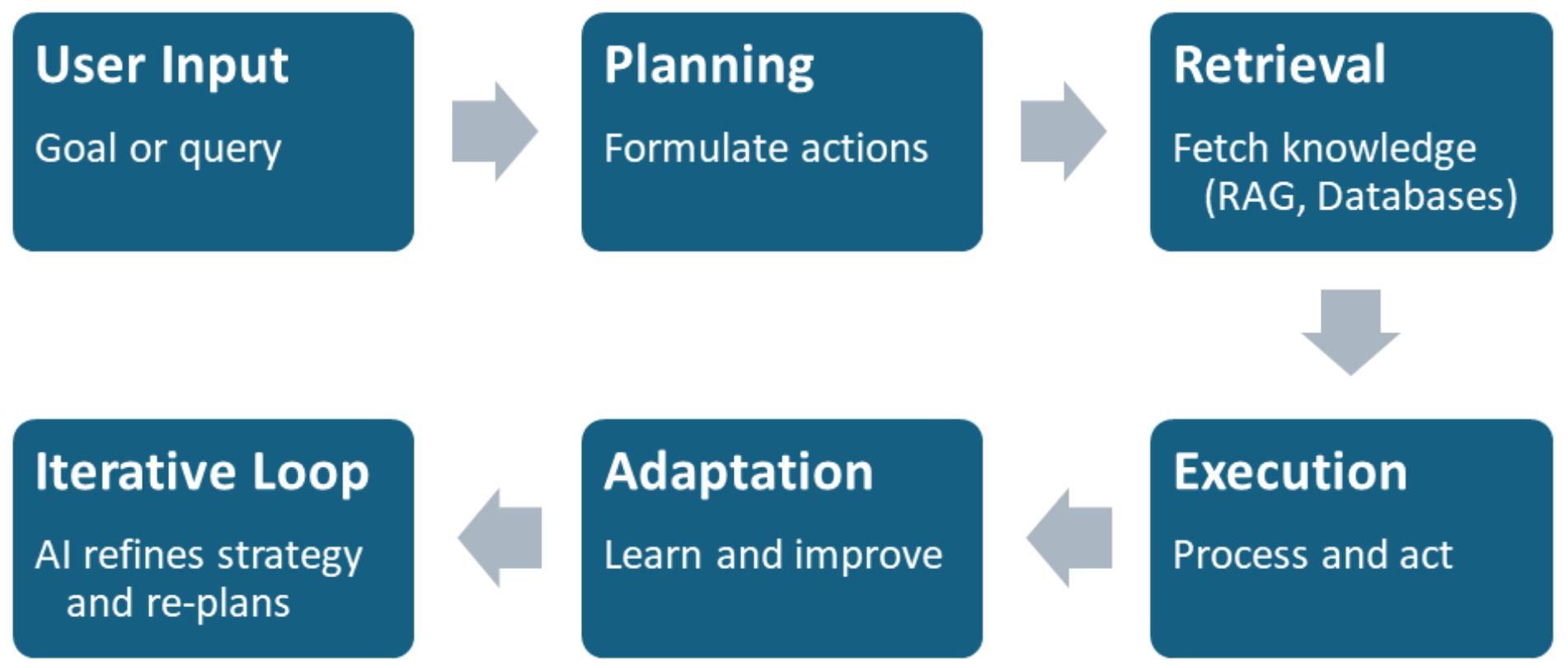
Figure 2. Agentic AI workflow
Various agentic AI frameworks have emerged, enabling autonomous task execution, multiagent collaboration, and dynamic knowledge retrieval. Table 2 below highlights some of the key frameworks driving the evolution of AI agents and their core functionalities.
| Agentic Framework | Features |
|---|---|
| OpenAI Swarm | Collaborative agent framework for task execution |
| LangGraph | Framework for creating multi-agent workflows with integrated language models |
| AutoGen | Automated generation of agent behaviors and interactions |
| CrewAI | Team-based agent collaboration |
| DeepSeek R1 | An open-source AI model emphasizing reasoning capabilities and efficiency |
Table 2. Overview of leading frameworks and their architectures
Agentic RAG: AI Agents Enhancing Information Retrieval
Traditional RAG systems retrieve information from external knowledge sources to reduce hallucinations and improve response accuracy. However, agentic RAG takes this a step further by integrating AI agents that autonomously search, verify, and synthesize knowledge, making retrieval more context-aware, adaptive, and multi-step. The agentic RAG workflow, shared in Figure 3, enhances information retrieval by leveraging AI agents to iteratively refine searches, verify sources, and synthesize knowledge, ensuring accurate and context-aware responses.
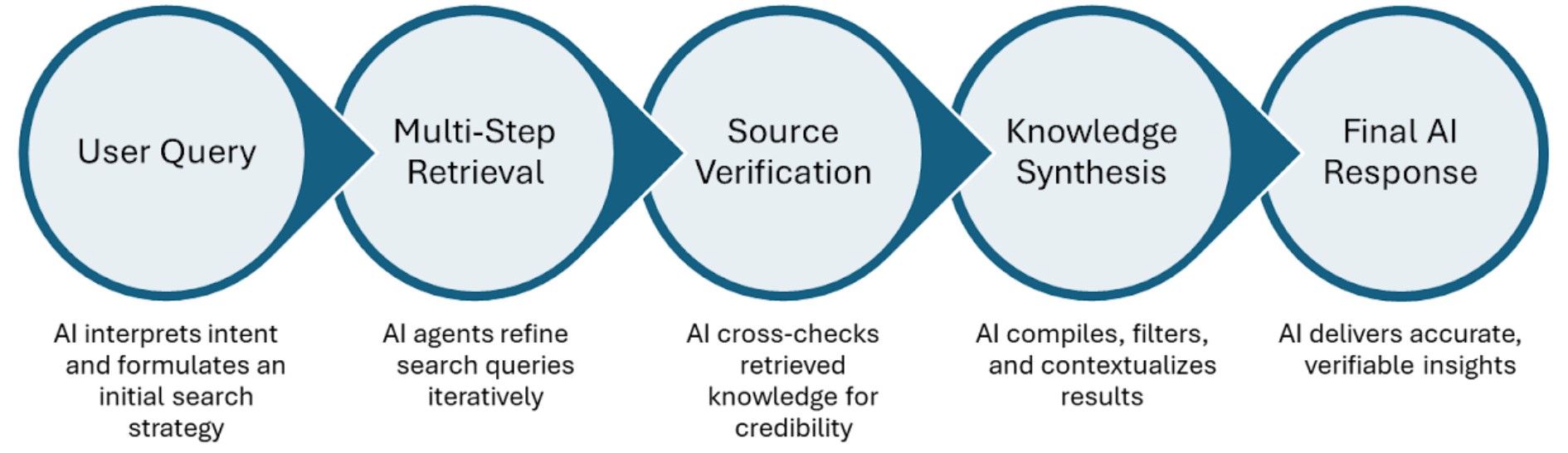
Figure 3. Agentic RAG workflow: AI-driven knowledge retrieval and verification
Generative AI in Industry Use Cases
The impact of GenAI is becoming increasingly tangible across industries, from automating workflows to enhancing decision making. To illustrate how generative AI is transforming industries, practical demonstrations and code snippets are presented in the following sections to showcase the application of LLMs, RAG, and agentic AI in several domains.
Legal and Compliance Use Case: AI-Powered Document Summarization
Law firms and compliance teams often deal with lengthy contracts and regulatory documents. AI can summarize key clauses and identify risks instantly.
The following Python code summarizes legal documents using GPT-4 and LangChain:
from langchain.llms import OpenAI
from langchain.chains.summarize import load_summarize_chain
from langchain.document_loaders import PyPDFLoader
from langchain.text_splitter import RecursiveCharacterTextSplitter

# Load the legal document
pdf_loader = PyPDFLoader("contract.pdf")
docs = pdf_loader.load()

# Split text into manageable chunks
text_splitter = RecursiveCharacterTextSplitter(chunk_size=1000, chunk_overlap=200)
split_docs = text_splitter.split_documents(docs)

# Initialize GPT-4 model (Ensure API key is configured)
llm = OpenAI(model="gpt-4", openai_api_key="your_api_key")

# Load summarization chain using the correct method
summarizer = load_summarize_chain(llm, chain_type="map_reduce")

# Summarize the contract (Ensuring correct input format)
summary = summarizer.run("\n".join([doc.page_content for doc in split_docs]))

# Print the summarized output
print(summary)
This command extracts key points from a legal contract or compliance document and saves hours of manual review time for legal professionals.
Banking and FinTech Use Case: AI-Powered Financial Fraud Detection
Banks and financial institutions require real-time fraud detection to prevent unauthorized transactions. The Python code in the block on the following page is used to detect anomalous transactions using AI.
import pandas as pd
from sklearn.ensemble import IsolationForest
from sklearn.preprocessing import LabelEncoder

# Load financial transaction dataset
df = pd.read_csv("transactions.csv")

# Ensure datetime is properly handled if present
if "transaction_time" in df.columns:
	df["transaction_time"] = pd.to_datetime(df["transaction_time"])
	# Convert datetime to a numerical representation (e.g., timestamp)
	df["transaction_time"] = df["transaction_time"].apply(lambda x: x.timestamp())

# Encode categorical variables
categorical_cols = ["location"] # Add more categorical columns as needed
for col in categorical_cols:
	if col in df.columns:
		df[col] = pd.Categorical(df[col]).codes

# Train anomaly detection model
model = IsolationForest(contamination=0.01, random_state=42)

# Select relevant features
features = ["amount", "transaction_time", "location"]
if not all(feature in df.columns for feature in features):
	print("Not all required features are present in the dataset.")
else:
	# Fit and predict anomalies
	df["fraud_score"] = pd.Series(model.fit_predict(df[features]), index=df.index)

	# Identify suspicious transactions
	suspicious = df[df["fraud_score"] == -1]

	# Display suspicious transactions
	print(suspicious)
This code uses unsupervised learning (Isolation Forests) to detect fraudulent transactions, thereby identifying anomalous spending behavior for real-time fraud prevention.
Real-World Implementations Across Sectors
Generative AI has rapidly transitioned from theoretical models to practical applications, transforming various industries by enhancing efficiency, creativity, and decision-making processes. Table 3 showcases the examples of how different sectors are leveraging generative AI.
| Industry | Application of GenAI |
|---|---|
| Healthcare |
|
| Finance |
|
| Manufacturing |
|
| Entertainment |
|
| Customer service |
|
Table 3. Applications of GenAI across industries
Regulatory and Ethical Considerations
To ensure responsible deployment, organizations must navigate evolving regulatory frameworks and ethical considerations that safeguard against bias, misinformation, and security risks. This section explores the regulatory frameworks shaping AI governance and the ethical principles necessary to mitigate risks while fostering innovation.
Emerging Regulatory Frameworks
Governments worldwide are implementing AI regulations to ensure responsible innovation while mitigating risks:
- European Union (EU) — The AI Act establishes a risk-based classification system, defining high-risk, limited-risk, and prohibited AI applications, with strict compliance requirements for high-risk AI deployments.
- United States (US) — AI regulation is evolving through a combination of federal initiatives and statelevel legislation. At the state level, California has been proactive in enacting AI-related laws enhancing AI transparency and protecting individuals from AI-generated harms. These include laws requiring developers to disclose training data used in AI systems and measures to combat deceptive AI-generated content in political advertisements.
- Singapore — Introduced the Model AI Governance Framework, providing best practices for ethical AI development and corporate AI governance.
- China — Enforced Interim Measures for Generative AI Services, setting strict compliance requirements for AI deployment, content moderation, and risk assessment. These global regulatory efforts reflect an ongoing shift toward ensuring AI safety, transparency, and fairness while fostering technological advancement.
These global regulatory efforts reflect an ongoing shift toward ensuring AI safety, transparency, and fairness while fostering technological advancement.
Ethical AI Development Developing ethical AI necessitates adherence to core principles that ensure technology serves humanity responsibly:
- AI systems should operate transparently, allowing users to understand how decisions are made.
- Ensuring AI applications are free from biases that could lead to unjust outcomes is crucial.
- Safeguarding personal information throughout the AI lifecycle is essential.
- Clear guidelines must define who is accountable for AI-driven decisions and their societal impacts.
Implementing these principles fosters trust and aligns AI innovations with human values.
Future Trends and Predictions for 2025
The rapid advancements in GenAI are paving the way for more intelligent, personalized, and secure systems, with next-generation LLMs and AI-powered digital identities set to redefine user interactions and data protection.
In 2025, LLMs are revolutionizing AI with enhanced capabilities:
- Multimodal integration — Models like Baidu's upcoming Ernie 5 can process and convert between text, video, images, and audio, enabling more dynamic applications.
- Advanced reasoning — OpenAI's o3-mini model demonstrates improved logical reasoning, excelling in complex tasks such as coding and scientific problem solving.
The Rise of Memory-Augmented LLMs
Traditional stateless LLMs treat every query independently, but next-gen AI models are developing long-term memory capabilities, enabling context-aware and personalized interactions. For example, models like DeepSeek R1, Claude 3.5, and upcoming GPT-5 introduce long-term contextual awareness. In edge AI deployments, there is a decrease in cloud dependence thanks to models such as Mistral and DeepSeek Vision, which run on local devices.
AI-Powered Digital Identities and Secure Authentication
The integration of AI with blockchain-based identity management is creating secure, tamper-proof digital identities. This will redefine how users interact with AI systems while ensuring privacy and security. Key innovations include decentralized AI identity systems — where AI profiles stored on blockchain or federated learning networks prevent identity fraud — and personal AI agents managing digital identities — meaning users will have AI-driven digital twins that act as personal representatives in the metaverse, finance, and legal domains.
Evolution of AI Agents and AI-Driven Scientific Discoveries
AI is transforming scientific research by automating hypothesis generation, experimentation, and analysis, leading to groundbreaking discoveries. In the material science realm, AI-driven quantum simulations are optimizing battery technology, superconductors, and nanomaterials. Meanwhile, in climate science, machine learning models are predicting climate trends, optimizing energy efficiency, and accelerating carbon capture research.
Actionable Steps for Enterprises and Developers
Enterprises should invest in AI infrastructure and optimize RAG pipelines and multi-agent AI frameworks for scalability. It is also important that they ensure AI compliance by aligning with evolving AI regulations. As for AI developers and researchers, they should develop modular AI architectures that combine LLMs, real-time retrieval, and multimodal reasoning. Another key step is optimizing AI for real-time applications via quantization, LoRA finetuning, and low-latency inference techniques.
Conclusion and Call to Action Generative
AI is rapidly transforming into autonomous, multimodal, and memory-augmented systems, driving advancements in LLMs, RAG, and agentic AI across industries. Breakthroughs in context-aware AI, efficient model architectures, and regulatory frameworks are shaping the future of responsible AI adoption. As enterprises integrate AI-driven automation and scientific discovery accelerates, the focus must remain on balancing innovation with ethical governance, security, and fairness to ensure AI serves as a force for positive transformation. Ensuring transparency, fairness, and security will be crucial in fostering trust and accountability. AI should augment human intelligence, not replace it, and drive progress while upholding ethical principles.
As we step into the future, the focus must remain on harnessing AI's potential responsibly, ensuring it serves as a catalyst for positive transformation across industries and societies.
References:
- Getting Started With Large Language Models by Dr. Tuhin Chattopadhyay, DZone Refcard
- AI Automation Essentials by Dr. Tuhin Chattopadhyay, DZone Refcard
- AI Act, European Commission
- Getting Started With Agentic AI by Lahiru Fernando, DZone Refcard
- "AI Regulation in the U.S.: Navigating Post-EO 14110" by Frederic Jacquet
- Model Artificial Intelligence Governance Framework, Second Edition, Info-communications Media Development Authority (IMDA) and Personal Data Protection Commission (PDPC)
- "Baidu to release next-generation AI model this year, source says" by Reuters
- "China's Interim Measures on generative AI: Origin, content and significance" by Sara Migliorini
This is an excerpt from DZone's 2025 Trend Report, Generative AI: The Democratization of Intelligent Systems
Read the Free Report
Opinions expressed by DZone contributors are their own.
Comments